
Steady Heat for Portage's Long Wisconsin Winters.
With 7,342 heating degree days and winter lows averaging 10°F, Portage homes need heat that runs for months, not weeks. A pellet stove delivers that without a wood pile to split and stack—find the right unit and a trusted local dealer to install it.
Every Project Starts From One of These Five Situations
Thermostat-simple heat built for a 7,342-HDD winter.
Portage sits along the Wisconsin River in Columbia County at 811 feet, in climate zone 6A. Winters here run colder and longer than Madison's just up the road, though not as brutal as Duluth, MN or International Falls—still, a 7,342 HDD load means whatever you're heating with needs to work hard from November through March. Oak, maple, birch, and aspen are the common firewood species locally, and plenty of Portage households still burn wood—but a growing number are switching to pellet stoves for the hopper-and-thermostat simplicity.
There's no air quality non-attainment designation or winter burn-ban concern in Portage, which means pellet stoves here aren't competing with curtailment rules the way they can in parts of the West—you can run one on a cold snap without checking an advisory. Regional pellet supply is solid too: Wisconsin and Great Lakes producers like Lignetics, Indeck Energy Services, and Somerset Pellet Fuel supply the upper Midwest, so sourcing bags locally through the heating season generally isn't a problem. A pellet stove gives you a set-it-and-forget-it burn, a cleaner-looking flame than a wood stove, and hopper capacity that can run 24-plus hours without reloading—a real advantage during a stretch of single-digit nights.
Three steps. No salesperson until you're ready.
Tell us about your project
Your zip code, your situation, and the fuel you're leaning toward—or let the answers point you to one.
See what's actually available
The brands dealers within 100 miles genuinely carry—real options, never a catalog mirage.
Get your dealer & Project Guide
A trusted local dealer, plus the free Project Guide & Parts List that names every component of the job.
Frequently Asked Questions
How much does a pellet stove installation cost in Portage?
A freestanding pellet stove installation in Portage typically runs $3,000 to $6,500, depending on the unit, whether you need new venting run through an exterior wall, and any hearth pad work required for clearances. A pellet insert going into an existing masonry fireplace tends to land in a similar range once the flue liner and venting kit are factored in. New construction with no existing chimney or vent path will sit toward the higher end. A local dealer will give you a firm number after seeing your install location.
Pellet stove vs. wood stove—which makes more sense in Portage?
Wood is abundant here—oak, maple, birch, and aspen are all common firewood species around Columbia County, and plenty of longtime Portage residents already have a system for cutting, splitting, and stacking it. But that work is real, and wood stoves need tending every few hours. A pellet stove trades that labor for a bag you pour into a hopper and a thermostat you set—most models will hold a steady burn for 24 hours or more on a single load. The tradeoff is that pellet stoves need electricity to run the auger and blower, so they won't function as backup heat during a power outage the way a wood stove will. If reliable grid power is a given for your home, pellet is usually the lower-effort choice.
Where do I buy pellets locally in Portage?
Wisconsin and the broader Great Lakes region have solid pellet production, with brands like Lignetics, Somerset Pellet Fuel, and Indeck Energy Services supplying dealers across the upper Midwest. Farm supply stores, hardware stores, and hearth retailers in and around Columbia County typically stock bagged pellets during heating season, and many will do bulk or pallet delivery if you're buying enough to last the winter. Prices fluctuate year to year with wood pellet demand, so it's worth asking your local dealer about current per-ton pricing and whether they recommend stocking up early—cold Wisconsin winters can create late-season supply crunches at retail stores that don't restock as often as pallet distributors.
How much does it cost to run a pellet stove with Alliant Energy rates?
Pellet stoves in Portage are served by Wisconsin Power & Light (Alliant Energy), where residential rates run about 16.9 cents per kWh. Most pellet stoves draw somewhere between 100 and 400 watts during normal operation to run the auger motor, igniter, and combustion blower—that typically works out to a few cents an hour, a small fraction of your fuel cost. The bigger consideration for Portage winters is that a pellet stove is fully electricity-dependent: no power, no heat. If winter storm outages are a real concern for your property, ask your dealer about battery backup options or pair the stove with a generator plan.
Do I need a permit to install a pellet stove in Portage?
Most pellet stove installations require a building permit, whether through the City of Portage or Columbia County depending on your address, since the unit involves a through-wall vent penetration and clearance-to-combustible requirements. Portage doesn't carry an air quality non-attainment designation, so unlike some western towns, you won't run into winter burn curtailment rules once the stove is installed. Reputable local dealers typically handle the permit application and inspection scheduling as part of the installation, so it's worth confirming that's included in your quote.
What size pellet stove do I need for a Portage home?
With Portage's 7,342 heating degree days, sizing matters more than it would in a milder climate. Small pellet stoves (rated for roughly 1,000 to 1,300 sq ft) suit a single zone or a well-insulated smaller home. Mid-size units (1,300 to 2,000 sq ft) cover most Portage main living areas. Larger stoves (2,000+ sq ft) can serve as primary heat in bigger or older, less-insulated homes, though they'll run through more pellets per week doing it. A local dealer will factor in your home's insulation, ceiling height, and layout during an in-home visit—that's the step that actually determines whether the stove keeps up on a 10°F night.
Pellet stove vs. pellet insert—what's the difference?
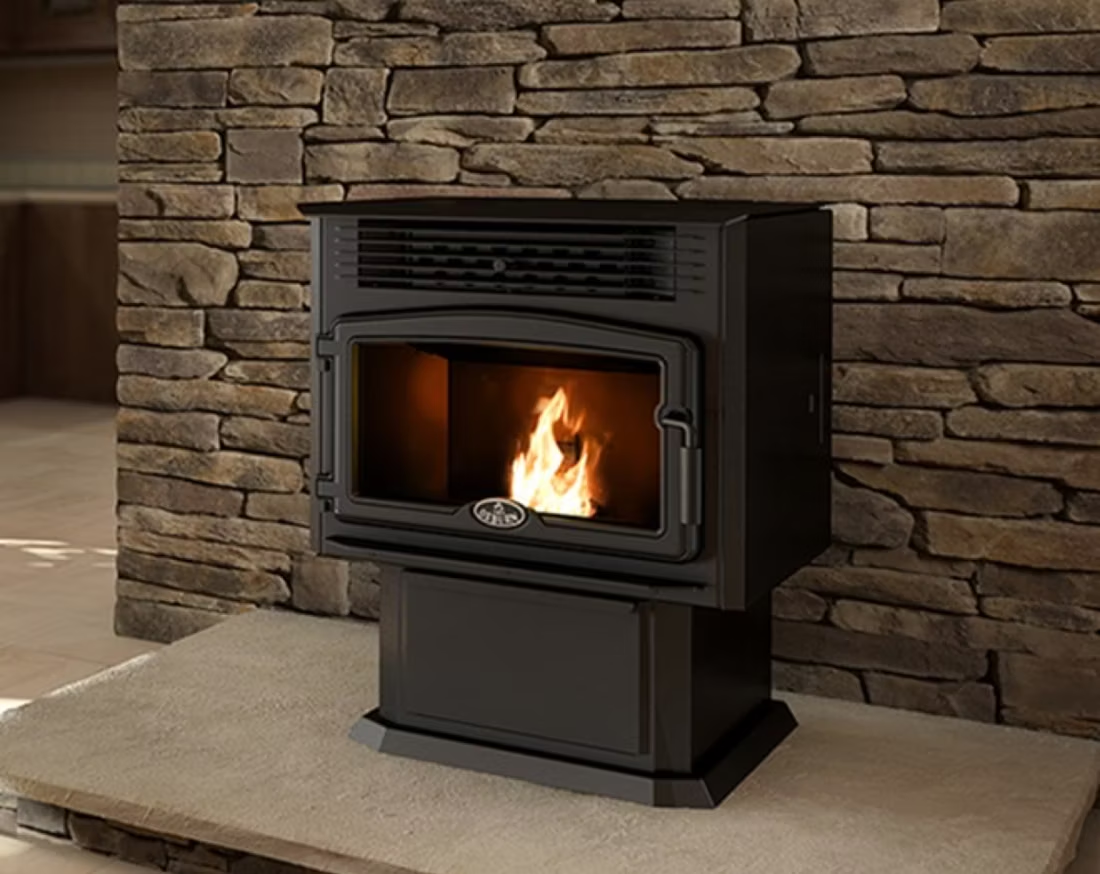
A pellet stove is a freestanding unit on its own hearth pad, vented through a wall or existing chimney—it can go almost anywhere with the right clearances. A pellet insert is built to slide into an existing masonry fireplace opening, using a liner run up your existing chimney for venting. If your Portage home already has a wood-burning fireplace you don't use much, an insert is usually the more cost-effective route since it reuses the masonry structure you already have. Homes without an existing fireplace, or new construction, are better suited to a freestanding stove.
How much maintenance does a pellet stove need?
Pellet stoves need more routine attention than gas but less than wood. Expect to empty the ash pan every few days during heavy winter use, clean the burn pot and glass weekly, and vacuum the hopper and auger area periodically. An annual professional service—checking the exhaust blower, gaskets, and venting—is recommended before each heating season, ideally in early fall before Portage's cold sets in. Skipping the annual service is the most common cause of pellet stoves losing efficiency or throwing error codes mid-winter.
Pellet stove vs. gas fireplace—which is right for my Portage home?
Gas fireplaces offer instant on-off convenience and don't require any fuel storage, but access to piped natural gas varies by property in and around Portage, and propane tank setups add cost if gas service isn't available at your address. Pellet stoves sidestep that issue entirely—a bag of pellets can be delivered and stored regardless of what utilities run to your home, and the stove itself provides a more substantial, radiant heat output than most gas units, which matters over a 7,342-HDD winter. Gas tends to win on hands-off convenience and instant startup; pellet tends to win on heat output per dollar and fuel flexibility. A local dealer can walk through both options against your specific utility situation.
What's the difference between an insert and a zero-clearance fireplace?
An insert is a fireplace that slides into a pre-existing wood-burning fireplace—if you don't have one, there's nothing to insert it into. A zero-clearance fireplace is built into a framed wall, which makes it the answer for remodels and new construction. Simple test: existing masonry fireplace means insert; blank or framed wall means zero-clearance.
Why is a fireplace insert so efficient?
An insert does two things: it seals the chimney completely, so you stop losing air you already paid to heat, and it radiates warmth into the room through the firebox and glass. Most add a heat-exchange fan that pulls cool room air underneath, wraps it around the hot firebox, and pushes it back out warm. Your home is more efficient before you've even lit the first fire.
Does a fireplace add value to my home?
On average, a fireplace adds back to the home about the same amount you spent installing it. Add the monthly savings from heating the rooms you actually use instead of the whole house—often hundreds of dollars a year—and the value case is strong before you even count what a fire does for how your family uses the room.
What is an in-home preview and do I need one?
It's a visit where a hearth professional measures your space, confirms the model you picked actually works in your home, and walks the specs—framing, gas line, venting, finish work—before anything is ordered. Some details you just can't know until you see the house. Never make a down payment without one; it's the single most-skipped step that burns buyers.
Nearby Dealers
Hearth shops serving Portage and the surrounding area. Every listing shows whether it is a WhyFire partner, a dealer we have verified as authorized for the brands we recommend, or a local business carrying hearth products. No manufacturer pays for placement. How we verify dealers →
Shields Fireside Hearth & Home Of Baraboo
Dischler Heating – Cooling & Fireplaces, Inc.
Pellet Brands Stocked Around Portage
Manufacturers will point you to the nearest stocking dealer.
Find your pellet stove in Portage.
Tell us about your home and heating goals, and we'll match you with a trusted local Portage dealer plus a free Project Guide & Parts List—the exact stove or insert, venting kit, and installation plan for your space.
Find Your Fireplace →