
Instant ambiance for Portage's long, cold winters.
With a long, demanding heating season and winter lows averaging 10°F, Columbia County homeowners often want a zone-heat option that installs in an afternoon. I'll match you with a trusted local dealer who knows what Wisconsin Power & Light service can support and what's actually available near Portage.
Every Project Starts From One of These Five Situations
Electric heat that fits the budget and the wiring.
Portage sits where the Wisconsin and Fox Rivers nearly meet, and its winters track close to nearby Madison's—a climate zone 6A profile with an average winter low of 10°F and a long, demanding heating season, on par with what you'd see farther north in Minneapolis or Fargo. Wood heat has deep roots here too, with oak, maple, birch, and aspen all common in Columbia County woodlots, but a growing share of Portage homeowners—renters, condo owners downtown, and people finishing a basement or adding a den—want a heat source that doesn't involve a flue, a chimney sweep, or a cord of split wood.
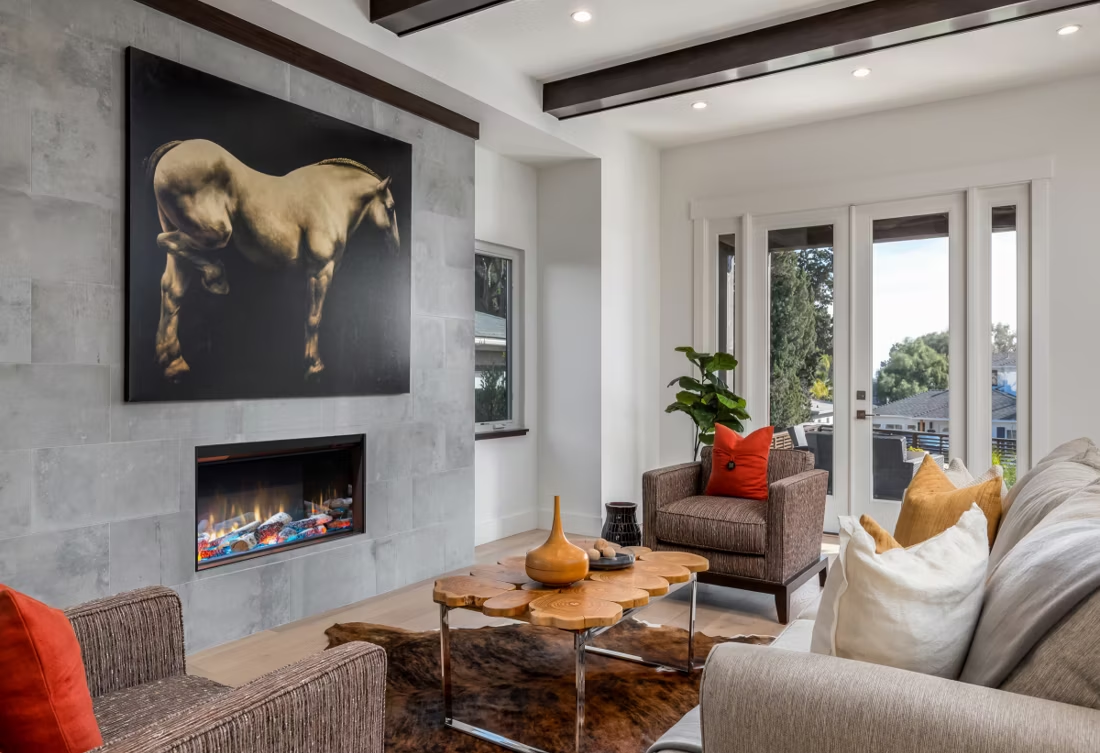
That's where electric fireplaces earn their place. Wisconsin Power & Light serves the city at a residential rate around 16.89 cents per kWh, which makes an electric unit genuinely cheap to run for a few hours of evening ambiance or to take the edge off a single room—but running one as your only heat source through a Portage winter isn't realistic at this climate's heating load. Most local installs function as supplemental zone heat alongside a furnace, or as the sole heat source in a space like a three-season porch or a rental unit where a gas line or chimney isn't in the cards. No venting, no combustion byproducts, and installation that in many cases is just a matter of a dedicated circuit and a licensed electrician.
Three steps. No salesperson until you're ready.
Tell us about your project
Your zip code, your situation, and the fuel you're leaning toward—or let the answers point you to one.
See what's actually available
The brands dealers within 100 miles genuinely carry—real options, never a catalog mirage.
Get your dealer & Project Guide
A trusted local dealer, plus the free Project Guide & Parts List that names every component of the job.
Frequently Asked Questions
How much does an electric fireplace installation cost in Portage?
Plan on roughly $400 to $2,000 depending on the unit. A plug-in insert or a freestanding electric stove that just needs a standard 120V outlet sits at the low end and can often be self-installed, though most homeowners still have a local dealer confirm placement and clearances. A built-in wall unit or a linear electric fireplace framed into a remodel—which usually calls for a dedicated 240V circuit run by a licensed electrician—lands toward the top of that range. Either way, a local installer will tell you fast whether your panel has room for a new circuit before you buy.
Will an electric fireplace actually heat my Portage home through the winter?
Not as a primary heat source, and it's worth being upfront about that. With Columbia County averaging 10°F lows and a long, demanding heating season, a typical electric fireplace's 5,000 to 10,000 BTU output is built for zone heat—warming the room you're in, not the whole house. Most Portage households run electric units to supplement a furnace on the coldest nights or to heat an occupied space like a home office or finished basement without firing up central heat for the whole house. If you're heating a detached space or an addition with no other source, size the BTU output against the room's square footage carefully with your installer.
Do I need a permit to install an electric fireplace in Portage?
A simple plug-in unit on an existing outlet generally doesn't require a permit. Anything involving new wiring—a dedicated circuit for a built-in or wall-mounted unit—typically needs an electrical permit and inspection through the city, and the work should be done by a licensed electrician regardless of whether a permit is pulled, both for safety and for insurance purposes. Most established local dealers coordinate this as part of the installation so you're not tracking down an electrician separately.
Electric vs. wood—which makes more sense for a Portage home?
Wood, split from local oak, maple, birch, or aspen, keeps working when the power goes out—a real consideration given how ice storms and heavy snow loads periodically knock out lines in rural Columbia County. Electric fireplaces are dead in the water during an outage, which is why they're best treated as a convenience and ambiance option rather than emergency backup heat. A lot of Portage homeowners with a wood stove or insert for resilience add an electric unit in a second room specifically because it needs zero maintenance and can run on a timer or remote without anyone tending it.
What running costs should I expect from an electric fireplace in Portage?
At Wisconsin Power & Light's residential rate of about 16.89 cents per kWh, a typical 1,500-watt electric fireplace costs roughly 25 cents an hour to run on full heat, or less on a lower or heat-free ambiance setting. Running one for a few hours most evenings through the winter adds up to somewhere around $15 to $25 a month depending on your settings—inexpensive compared to running electric resistance heat as a whole-home solution, which is exactly why most units here are used for zone heat rather than primary heating.
What types of electric fireplaces are most common in Portage installs?
In the older homes around downtown Portage and near the Wisconsin River, electric inserts that drop into an existing masonry firebox are popular—they modernize a fireplace that's no longer used for wood without any chimney work. In newer construction and condo units, linear wall-mounted units and mantel-package fireplaces are more common since there's no existing firebox to work with. A local dealer can walk you through clearances and viewing height for either approach.
How much maintenance does an electric fireplace need?
Very little compared to wood or gas. There's no chimney to sweep, no gas line to inspect, and no combustion byproducts to worry about. Periodically dusting the heating element and vacuuming the vent grille keeps airflow clear, and LED flame components rarely need service. It's one of the reasons electric units are popular in Portage rental properties and second homes—there's no annual service call to schedule before a Wisconsin winter.
Electric vs. pellet—which fits better in a Portage home?
Pellet stoves, using regional supply from brands like Indeck Energy Services, Lignetics, and Somerset Pellet Fuel, put out real furnace-level heat and can serve as a primary or near-primary heat source through a Columbia County winter—something an electric fireplace isn't designed to do. But pellet stoves need a hopper filled regularly, an annual service, and venting through a wall or roof. Electric fireplaces need none of that, at the cost of much lower heat output. If you want ambiance and light supplemental warmth in one room, electric wins on simplicity; if you want to meaningfully cut your furnace's workload, pellet is the better tool.
Can an electric fireplace go in a room with no existing wiring nearby?
Yes, but it changes the scope of the job. If there's no outlet near the planned location, an electrician will need to run a new circuit from the panel, which is the main cost driver that pushes an install from the $400 range up toward $1,500 or more. This comes up often in Portage additions and finished basements where the fireplace is part of a larger remodel—in those cases, it's worth having your electrician and hearth dealer coordinate on circuit placement before drywall goes up.
Can I put a TV above my fireplace?
Yes—with an asterisk. Fireplaces are hot and TVs don't like heat. Either put a mantel between them to deflect rising warmth, or choose a fireplace with heat-management technology that creates a cool zone on the wall above—the wall stays around 125 degrees, barely warm, while the room still gets full heat. If you like clean lines and don't want a mantel, heat management is the answer.
Does an electric fireplace need a vent or chimney?
No—that's its superpower. An electric fireplace needs a wall and an outlet, period. No vent pipe, no gas line, no clearances to design around, which is why it works in bedrooms, offices, apartments, and walls where venting a gas or wood unit would be impractical or impossible. Installation is typically the simplest and least expensive of any fireplace type.
Can a fireplace actually lower my heating bill?
Yes—by creating a comfort zone. A furnace heats every square foot of the house just to warm the one room you're in; a gas fireplace on low burns roughly a sixth of the gas a typical furnace does. Set the furnace around 55–60 degrees as a baseline, then heat the rooms your family actually uses. Families who heat this way commonly save $20–$60 a month.
Does a fireplace add value to my home?
On average, a fireplace adds back to the home about the same amount you spent installing it. Add the monthly savings from heating the rooms you actually use instead of the whole house—often hundreds of dollars a year—and the value case is strong before you even count what a fire does for how your family uses the room.
Nearby Dealers
Hearth shops serving Portage and the surrounding area. Every listing shows whether it is a WhyFire partner, a dealer we have verified as authorized for the brands we recommend, or a local business carrying hearth products. No manufacturer pays for placement. How we verify dealers →
Shields Fireside Hearth & Home Of Baraboo
Dischler Heating – Cooling & Fireplaces, Inc.
Electric Service in Portage
An electric fireplace's heater draws about 1,500 watts—pennies per hour at local rates.
Wisconsin Power & Light Co
Get your free Project Guide & Parts List for an electric fireplace in Portage.
Tell me about your space and your panel capacity, and I'll match you with a trusted local dealer and send a free Project Guide & Parts List—sized right for zone heat in a Columbia County winter, with the exact parts your install needs.
Find Your Fireplace →