
Electric heat that fits Madison life, no chimney required.
With 7,096 heating degree days and winter lows averaging 11°F, Dane County homes need real heating strategy—but not every room needs a flue. Find the right electric fireplace or insert for your space and get matched with a trusted local dealer.
Every Project Starts From One of These Five Situations
Reliable warmth for Wisconsin's long heating season.
Dane County is home to roughly 659,000 people spread across Madison's isthmus neighborhoods and outlying communities like Sun Prairie, Fitchburg, Middleton, Verona, Waunakee, Stoughton, and DeForest. Climate zone 6A and 7,096 heating degree days put the county in the same general heating-load territory as Minneapolis—a season that runs from October into April, with winter lows averaging 11°F and regular stretches well below zero. The county's oak, maple, birch, and aspen forests have supported wood heat for generations, but electric fireplaces have carved out a real niche here, especially in the dense rental and condo market near the UW-Madison campus and downtown, where open-flame appliances are often restricted by lease or HOA.
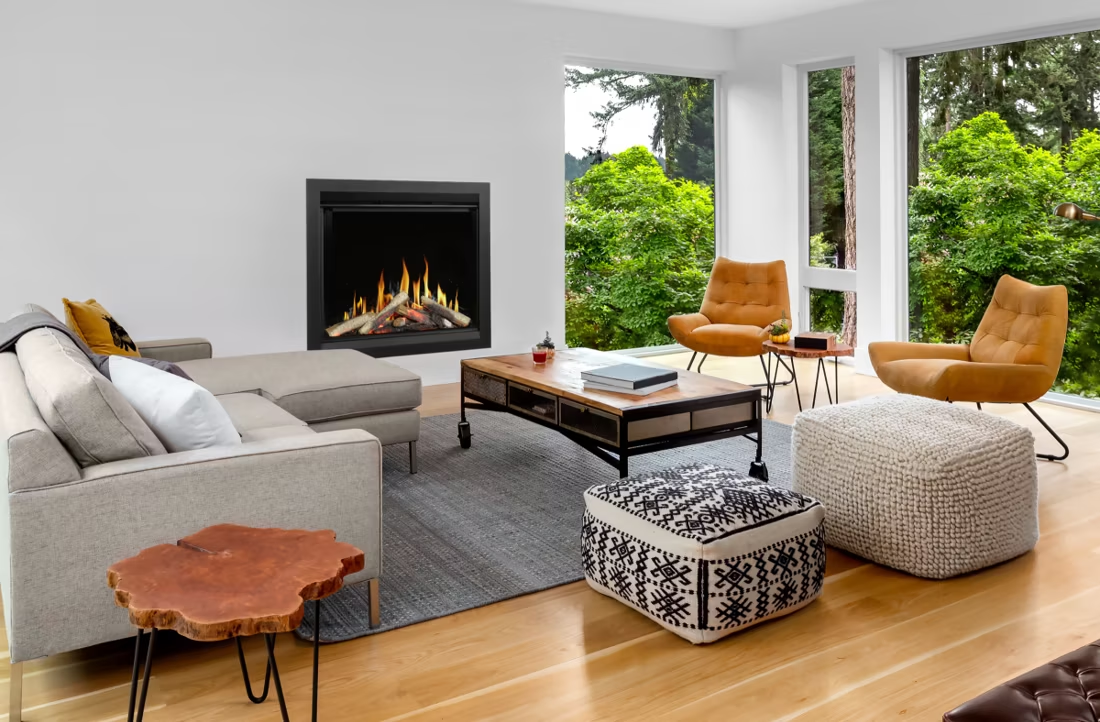
Electric fireplaces don't solve Dane County's whole-home heating problem on their own—at this heating-degree-day level, resistance heat isn't a practical substitute for a furnace or heat pump. What they do well is zone heat: a home office, a basement rec room, a sunroom addition, or a living room where you want visible flame and instant warmth without running ductwork or cutting a chimney chase. Madison Gas & Electric serves most of the city core, while Alliant Energy covers many of the surrounding townships and villages—either way, a 1,500-watt unit costs a fraction of what it takes to run a gas insert or space heater for the same room, and there's zero combustion byproduct to worry about, which matters in a county with no wood-smoke or gas air quality restrictions to navigate but plenty of tightly sealed, energy-efficient new construction where indoor air quality still counts.
Three steps. No salesperson until you're ready.
Tell us about your project
Your zip code, your situation, and the fuel you're leaning toward—or let the answers point you to one.
See what's actually available
The brands dealers within 100 miles genuinely carry—real options, never a catalog mirage.
Get your dealer & Project Guide
A trusted local dealer, plus the free Project Guide & Parts List that names every component of the job.
Frequently Asked Questions
How much does an electric fireplace installation cost in Dane County?
Plug-in freestanding or wall-mounted electric fireplaces that run on a standard 120V outlet typically cost $150 to $600 for the unit itself, with no professional installation required beyond mounting hardware. Built-in linear electric fireplaces or full insert conversions with a custom surround run $1,500 to $5,000 installed, and often call for a dedicated 240V circuit—that electrical work typically adds $300 to $800 when done by a licensed electrician, which is standard practice for any hardwired unit in Dane County. Condo and rental installs in Madison tend to favor the lower end since walls and outlets are already in place; new construction in Fitchburg, Verona, or Middleton subdivisions more often budgets for the built-in option from the start.
Can an electric fireplace heat my whole house?
No—and this matters more in Dane County than in milder climates. Most electric fireplaces top out around 1,500 watts, roughly 5,000 BTU, which comfortably heats a single room of 300 to 400 square feet but won't keep pace with a Wisconsin winter across an entire home. With 7,096 heating degree days and winter lows averaging 11°F, your furnace or heat pump needs to remain the primary heat source. Electric fireplaces here are best used as zone heat—warming the room you're actually in, whether that's a home office, a finished basement, or a sunroom—while your central system handles the rest of the house.
Do I need a permit to install an electric fireplace in Dane County?
A plug-in unit that uses an existing 120V outlet generally doesn't require a permit anywhere in Dane County. A built-in electric fireplace that requires a new dedicated 240V circuit is electrical work, and most municipalities in the county—including the City of Madison's Building Inspection Division and the individual building departments in Sun Prairie, Fitchburg, Middleton, and the smaller townships—require an electrical permit for that circuit installation. A licensed electrician pulling the permit as part of the install is standard practice and keeps everything code-compliant, particularly important if you're selling the home later.
What's the difference between an electric insert, a wall-mounted unit, and a freestanding electric stove?
An electric insert is built to slide into an existing masonry fireplace opening, which makes it a popular choice for older Dane County homes near the Madison isthmus that have a wood fireplace they no longer want to maintain but still want visual flame from. A wall-mounted or built-in linear unit is framed into a wall like a piece of art—common in newer construction and remodels in Fitchburg, Verona, and Middleton where there's no existing fireplace to work with. A freestanding electric stove mimics a wood or pellet stove's footprint and works well in a basement or rental unit where you want a self-contained appliance you can move if you relocate.
Will my electric fireplace work during a power outage?
No—electric fireplaces require power to run the heating element, flame effect, and any fan, so they go dark the moment the power does. This is worth weighing seriously in Dane County, where ice storms and heavy snow loads can knock out power for hours at a time in outlying areas like Cottage Grove or Oregon. If backup heat during outages is a priority, a wood stove or a battery-backup gas insert is the better complement to an electric fireplace, which should be understood here as a convenience and ambiance appliance rather than an emergency heat source.
Are electric fireplaces a good fit for condos and apartments in Madison?
Yes—this is one of the strongest use cases in Dane County. Many condo associations and rental leases near the UW-Madison campus and downtown Madison prohibit open-flame appliances, wood-burning units, or any exterior venting modification to a shared building envelope. A plug-in or wall-mounted electric fireplace sidesteps all of that: no chimney, no gas line, no venting through a shared wall, and in most cases no HOA approval needed at all since there's no structural change. It's a large part of why electric fireplace demand runs high in the isthmus rental market even though the county's broader heating culture still leans on wood and gas.
How much does it cost to run an electric fireplace compared to gas or wood?
At typical Madison Gas & Electric or Alliant Energy residential rates, a 1,500-watt electric fireplace run for several hours an evening costs somewhere in the range of a few dollars a week—cheap enough that most owners don't think twice about running it for ambiance alone. Gas units cost more per BTU of actual heat output but deliver far more of it, and wood remains the least expensive fuel by BTU if you're already set up to process oak, maple, birch, or aspen from your own property or a local supplier. For pure supplemental warmth in a single room, electric's low running cost and zero maintenance make it hard to beat, even though it's not the most efficient way to heat a whole house.
Electric vs. gas—which is right for my Dane County home?
Gas fireplaces produce real, meaningful heat output—enough to serve as legitimate supplemental heat during a Dane County cold snap—but require a gas line or propane tank, venting, and a proper installation with permits. Electric fireplaces produce a fraction of the heat but need nothing more than an outlet or a simple circuit, install in an afternoon, and work in spaces where gas venting isn't possible, like an interior condo wall or a rented apartment. If you want a fireplace that meaningfully lowers your furnace's workload, gas is the stronger choice. If you want visual flame and light supplemental warmth with minimal installation complexity, electric wins.
Electric vs. wood—which is right for my Dane County home?
Wood heat has deep roots across Dane County, with abundant local oak, maple, birch, and aspen supporting a real firewood culture in the outlying towns and rural parts of the county. A wood stove or insert delivers serious heat output and keeps working during a power outage—a real advantage given the county's occasional winter storms. Electric fireplaces can't compete on heat output or storm resilience, but they require no chimney, no wood handling, no ash cleanup, and no combustion byproducts, which makes them the practical choice for condos, rentals, and rooms where a masonry chimney was never built. Many Dane County homeowners end up with both: wood or gas for real heat in the main living space, electric for ambiance in a bedroom, office, or basement.
Can I put a TV above my fireplace?
Yes—with an asterisk. Fireplaces are hot and TVs don't like heat. Either put a mantel between them to deflect rising warmth, or choose a fireplace with heat-management technology that creates a cool zone on the wall above—the wall stays around 125 degrees, barely warm, while the room still gets full heat. If you like clean lines and don't want a mantel, heat management is the answer.
Do electric fireplaces actually produce heat?
Yes—most put out around 4,800–5,000 BTUs from a standard outlet, which comfortably warms a bedroom, office, or den as a comfort-zone heater. What they won't do is carry a whole house the way wood, gas, or pellet can. Think of electric as ambiance-first with honest supplemental heat: flames on with no heat in July, flames plus warmth in January.
What is an in-home preview and do I need one?
It's a visit where a hearth professional measures your space, confirms the model you picked actually works in your home, and walks the specs—framing, gas line, venting, finish work—before anything is ordered. Some details you just can't know until you see the house. Never make a down payment without one; it's the single most-skipped step that burns buyers.
Does a fireplace add value to my home?
On average, a fireplace adds back to the home about the same amount you spent installing it. Add the monthly savings from heating the rooms you actually use instead of the whole house—often hundreds of dollars a year—and the value case is strong before you even count what a fire does for how your family uses the room.
Stove and Fireplace Dealers in Dane County
Listings include WhyFire partner dealers, dealers we have verified as authorized for the brands we recommend, and established local businesses that carry hearth products. Every listing shows which one it is. The ones marked Preferred run on WhyFire's software, so they can show you real pricing and book your appointment right here. No manufacturer pays for placement. How we verify dealers →
Fireside Hearth & Home - Madison
Al Beyers Indoor Comfort System-Cambridge, Wi
Dischler Heating – Cooling & Fireplaces, Inc.
Risley Pellet Solutions, LLC
Find your electric fireplace in Dane County.
Tell us about your room, your outlet or circuit situation, and what you want the fireplace to do—and we'll put together a free Project Guide & Parts List with the right unit, the exact parts, and a trusted local Dane County dealer to install it.
Find Your Fireplace →