
Warm Up Madison Winters Without Any Venting.
With 7,096 heating degree days and winter lows averaging 11°F, Madison homes need real supplemental heat. An electric fireplace delivers it without a chimney, a gas line, or a permit headache—find the right unit and a trusted local dealer.
Every Project Starts From One of These Five Situations
Electric heat that fits any Madison home.
Madison sits in climate zone 6A with roughly 7,096 heating degree days a year—putting it in the same cold-winter range as Fargo, North Dakota. Winter lows average 11°F, and the isthmus geography means wind off Lake Mendota and Lake Monona can make a drafty room feel colder than the thermostat reads. Wood and pellet appliances see limited use inside Madison city limits, so when homeowners here want to add heat to a single room, finish a basement, or take the chill off a home office, electric is usually the practical answer.
Madison is served by three electric providers—Madison Gas & Electric, Wisconsin Power & Light, and Rock Energy Cooperative—with residential rates that currently range from about $0.1447 to $0.2034 per kWh depending on which utility serves your address. That spread matters more for electric heat than for other fuels, since every hour of use is metered directly. An electric fireplace or insert installs in an afternoon with no masonry work, no venting, and no combustion byproducts to manage—which is also why they're popular in the condos and rental units common around the isthmus and near UW-Madison.
Three steps. No salesperson until you're ready.
Tell us about your project
Your zip code, your situation, and the fuel you're leaning toward—or let the answers point you to one.
See what's actually available
The brands dealers within 100 miles genuinely carry—real options, never a catalog mirage.
Get your dealer & Project Guide
A trusted local dealer, plus the free Project Guide & Parts List that names every component of the job.
Frequently Asked Questions
How much does it cost to install an electric fireplace in Madison?
Plug-in electric fireplace inserts and stoves—the kind that slide into an existing mantel or sit freestanding on a standard outlet—typically run $150 to $600 installed, since no wiring changes are needed. Built-in wall units or linear electric fireplaces that require a dedicated 120V or 240V circuit run higher, generally $1,200 to $4,500 once a licensed electrician frames the opening, runs new wiring, and finishes the surround. Homes with older knob-and-tube or fuse-box wiring—not uncommon in Madison's older near-east and near-west side neighborhoods—sometimes need panel work first, which adds to the cost.
Do I need a permit for an electric fireplace in Madison?
A plug-in unit that draws from an existing outlet generally doesn't require a permit. A built-in electric fireplace that needs a new dedicated circuit does require an electrical permit, and that work needs to be pulled and inspected through the City of Madison's Building Inspection Division (or your local municipal building department if you're outside city limits in Dane County). Most licensed electricians handle this as part of the installation, so it typically isn't something you manage yourself.
Will an electric fireplace actually lower my heating bill?
It can, if you use it for zone heating rather than running your furnace to warm a room you're not sitting in. A typical 1,500-watt electric fireplace costs roughly $0.22 to $0.31 per hour to run at full heat, depending on whether you're served by Rock Energy Cooperative at the low end (about $0.1447/kWh) or Madison Gas & Electric at the higher end (about $0.2034/kWh). Turning down the thermostat a few degrees while heating just your living room or home office with an electric unit is where the savings show up—it won't replace whole-home heating during a Madison January cold snap.
What's the difference between an electric insert and a wall-mounted electric fireplace?
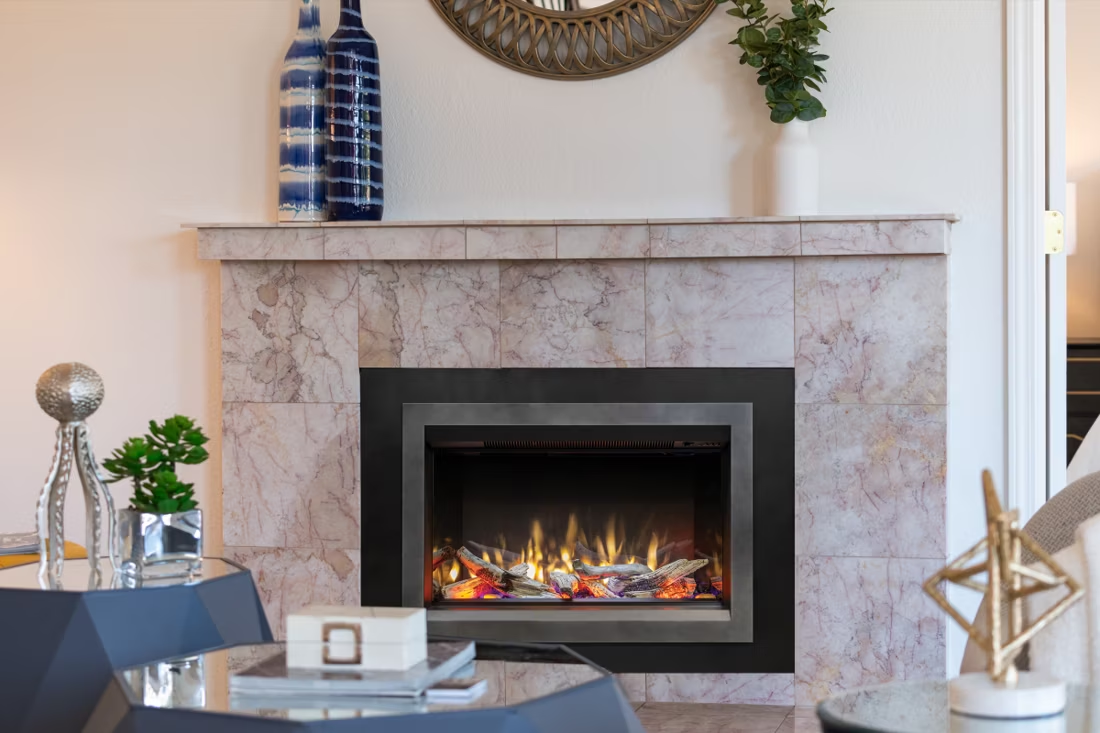
An electric insert is built to slide into an existing fireplace opening or mantel surround, often replacing a wood-burning firebox that's no longer used—a common upgrade in Madison's older bungalows and Craftsman-style homes on the near east side. A wall-mounted or built-in linear electric fireplace is designed for new construction or remodels, recessed into a framed wall with its own circuit, and tends to read more like a piece of architecture than a hearth. Both produce comparable heat output; the choice usually comes down to whether you're renovating around an existing chimney or building the wall from scratch.
Will my electric fireplace work if the power goes out?
No—electric fireplaces require power to run both the heating element and any flame-effect lighting, so they go dark along with everything else during an outage. This is worth factoring in if you're relying on a fireplace as backup heat during a Wisconsin ice storm. If emergency heat is a real concern for your household, a propane or natural gas unit with a standing pilot is a better fit for that specific use case—electric is best thought of as everyday supplemental heat and ambiance rather than storm backup.
What's the best electric fireplace for a Madison winter?
Look for units rated at the standard 1,500 watts (about 5,120 BTU), which is the ceiling for what a standard 120V outlet can supply and enough to meaningfully warm a 300-400 square foot room. Brands like Dimplex, Napoleon, and Touchstone are widely carried by Wisconsin hearth dealers and offer models with adjustable thermostats so the unit cycles on and off rather than running constantly. For larger rooms or open-concept living spaces common in newer Madison-area builds, a dealer may recommend a 240V built-in unit for higher heat output.
Electric vs. gas fireplace—which makes more sense in Madison?
Gas is the more common choice for primary supplemental heat in Madison, since natural gas service is widely available through Madison Gas & Electric and a gas fireplace can produce far more BTUs than an electric unit—useful on the coldest days when the temperature doesn't climb out of the single digits. Electric wins on installation simplicity and cost, since there's no gas line or venting to run, and it's often the only option for renters or condo owners who can't modify gas or masonry systems. Many Madison homeowners end up choosing gas for a main living area and electric for a bedroom, basement, or home office where a gas line isn't practical.
Can I install an electric fireplace in a Madison apartment or condo?
Yes, and this is one of the most common reasons homeowners and renters in Madison's isthmus, downtown, and near-campus zip codes look at electric units in the first place. A plug-in insert or freestanding electric stove needs nothing more than a standard outlet, so it's typically allowed without landlord approval or HOA sign-off—always worth confirming your lease or condo bylaws, but there's no venting, gas line, or structural change involved. Built-in wall units are a bigger commitment and usually require owner approval since they involve permanent electrical work.
How long does an electric fireplace installation take?
A plug-in insert or freestanding stove can be unboxed and running within the hour—there's no curing time, no venting to run, and no inspection required. A built-in wall unit with a new dedicated circuit typically takes a licensed electrician a half-day to a full day, plus scheduling time for the City of Madison electrical inspection if your project requires one. Compared to a wood or gas installation, which can involve chimney work or gas line permitting that stretches over days or weeks, electric is by far the fastest path to a working fireplace.
Do electric fireplaces actually produce heat?
Yes—most put out around 4,800–5,000 BTUs from a standard outlet, which comfortably warms a bedroom, office, or den as a comfort-zone heater. What they won't do is carry a whole house the way wood, gas, or pellet can. Think of electric as ambiance-first with honest supplemental heat: flames on with no heat in July, flames plus warmth in January.
Can I put a TV above my fireplace?
Yes—with an asterisk. Fireplaces are hot and TVs don't like heat. Either put a mantel between them to deflect rising warmth, or choose a fireplace with heat-management technology that creates a cool zone on the wall above—the wall stays around 125 degrees, barely warm, while the room still gets full heat. If you like clean lines and don't want a mantel, heat management is the answer.
What is an in-home preview and do I need one?
It's a visit where a hearth professional measures your space, confirms the model you picked actually works in your home, and walks the specs—framing, gas line, venting, finish work—before anything is ordered. Some details you just can't know until you see the house. Never make a down payment without one; it's the single most-skipped step that burns buyers.
Does a fireplace add value to my home?
On average, a fireplace adds back to the home about the same amount you spent installing it. Add the monthly savings from heating the rooms you actually use instead of the whole house—often hundreds of dollars a year—and the value case is strong before you even count what a fire does for how your family uses the room.
Preferred Dealers in Madison
Marked Preferred because they run on WhyFire's software—so they can show you real pricing and book your appointment right here. No manufacturer pays for placement. How we verify dealers →
Electric Service in Madison
An electric fireplace's heater draws about 1,500 watts—pennies per hour at local rates.
Madison Gas & Electric Co
Wisconsin Power & Light Co
Rock Energy Cooperative
Get matched for your electric fireplace in Madison.
Tell us about your space and we'll match you with a trusted local Madison-area dealer and send a free Project Guide & Parts List—the specific unit, surround components, and wiring requirements for your home, so there's no big-box guesswork on install day.
Find Your Fireplace →