
Automated warmth for Whitman County's wheat-country winters.
Clean-burning, thermostat-controlled heat for the rolling Palouse—from Pullman and Colfax to the small farm towns in between. Find the right pellet stove or insert, and connect with a trusted local dealer.
Every Project Starts From One of These Five Situations
Consistent heat without the wood pile.
Whitman County sits in the heart of the Palouse—rolling wheat and lentil hills stretching from Pullman, home to Washington State University, down to the county seat in Colfax and dozens of small farm towns in between. Winters here fall in climate zone 5B, with a heating season on par with places like Fargo, ND, and average lows around 26°F, plus wind-driven snow that can pile up fast on the exposed hilltops. Unlike the timbered mountain counties to the east, Whitman County itself is mostly open farmland—the nearest public timber is across the Idaho line in the Nez Perce-Clearwater and Idaho Panhandle National Forests, or BLM Spokane District land, all a real drive from most Palouse addresses.
That distance is a big part of why pellet stoves have caught on here. Bagged fuel from Pacific Northwest producers like Bear Mountain, Lignetics, and Pacific Pellet moves through this corridor by truck and rail, so a homeowner in Colfax or a renter near campus in Pullman can stock a winter's worth of heat without ever swinging a maul or hauling a cutting permit out to Idaho Panhandle land. Pellet appliances also tend to keep running during the wildfire-smoke advisories that show up most late summers and falls across eastern Washington, since their clean, EPA-certified combustion doesn't trigger the same burn restrictions that can sideline an open wood fire.
Three steps. No salesperson until you're ready.
Tell us about your project
Your zip code, your situation, and the fuel you're leaning toward—or let the answers point you to one.
See what's actually available
The brands dealers within 100 miles genuinely carry—real options, never a catalog mirage.
Get your dealer & Project Guide
A trusted local dealer, plus the free Project Guide & Parts List that names every component of the job.
Frequently Asked Questions
How much does a pellet stove installation cost in Whitman County?
A typical pellet stove or insert installation in Whitman County runs in the $3,500 to $7,000 range, depending on the unit, whether you're venting through an exterior wall or converting an existing fireplace opening, and any hearth pad work needed for clearance. Because pellet stoves vent through a small-diameter wall or roof kit rather than a full masonry chimney, installs are usually faster and less invasive than a wood stove project—but you'll still need a permit through Whitman County's building department, and most local dealers handle that paperwork as part of the install.
Why choose a pellet stove over a wood stove in Whitman County?
Whitman County is farm country first—the Palouse's rolling hills are wheat and lentil ground, not forest, so there's no woodlot out back for most homeowners. Cutting your own firewood means a permit and a drive into the Nez Perce-Clearwater or Idaho Panhandle National Forests, or BLM Spokane District land, typically running $5 to $20 per cord during the May-through-October season. A pellet stove skips that trip entirely: load bagged fuel from a regional producer, set the thermostat, and the auger does the rest. For commuting WSU households or working farm families who don't have time to season and stack cordwood, that convenience is the whole appeal.
Where can I buy pellet fuel in Whitman County?
Local hearth dealers and farm supply stores across the county carry regional brands including Bear Mountain, Lignetics, and Pacific Pellet—all Pacific Northwest producers that ship efficiently into the Palouse. Buying a season's supply early, before the fall rush, is the standard move here, since pellet demand across the Inland Northwest can tighten up once the first hard freeze hits Pullman and Colfax. Ask your local dealer which brand burns cleanest in the stove model you're considering—ash content varies noticeably between brands and affects how often you'll need to empty the burn pot.
Do I need a permit to install a pellet stove in Whitman County?
Yes—a building permit is required for new pellet stove and insert installations through Whitman County's building department, and it covers the appliance placement, clearances, and the wall or roof vent termination. Because pellet units don't need a full masonry chimney, the permit and inspection process is generally simpler and faster than a wood stove install. Most local dealers pull the permit and schedule the inspection as part of the installation package, so it's rarely something you have to manage yourself.
Do wildfire smoke advisories affect pellet stove use in Whitman County?
Eastern Washington's wildfire smoke season, typically late summer into fall, can trigger air quality advisories that discourage or restrict open wood burning. Pellet stoves are EPA-certified clean-burning appliances, and in most jurisdictions with tiered burn restrictions, they're exempt from the curtailments that apply to older or uncertified wood stoves. That's one more reason pellet heat has taken hold in Whitman County beyond the winter heating season—it's a source of supplemental warmth that keeps working even when smoke conditions put wood fires on hold.
Will my pellet stove work during a power outage?
Not without a backup power source—pellet stoves rely on electricity to run the auger that feeds fuel and the blower that distributes heat, so a standard unit shuts down the moment the power does. That matters in Whitman County, where winter wind and ice storms across the exposed Palouse hilltops can knock out rural power lines for hours or longer. Many local dealers recommend a small battery backup or inverter setup sized to your stove's electrical draw specifically for this reason—ask about compatible options when you're comparing models.
What size pellet stove do I need for my home?
Sizing depends on square footage, insulation, and whether you're heating a single zone or trying to cover a whole farmhouse. As a rough guide for Whitman County's climate zone 5B winters and average lows near 26°F: smaller units suit a single room or a Pullman rental near campus, medium units handle most in-town homes in Colfax or Pullman, and larger units are usually needed for the older, less-insulated farmhouses scattered across the open Palouse hills, where wind exposure adds real heat loss. A local dealer will size your space during an in-home visit rather than guessing off square footage alone.
What's the difference between a pellet stove and a pellet insert?
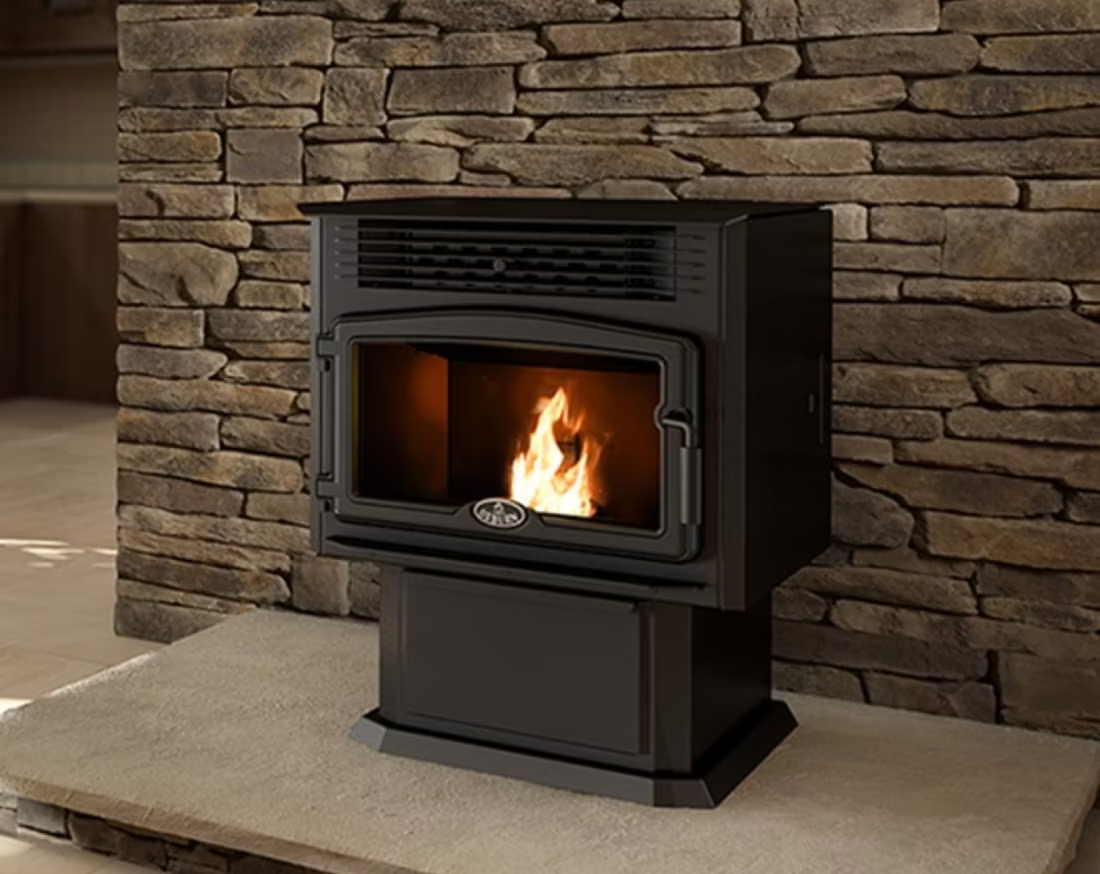
A pellet stove is a freestanding appliance that sits on a hearth pad and vents through a wall or the roof—it can go almost anywhere in a room with the right clearances. A pellet insert is built to slide into an existing masonry fireplace opening, converting an old wood-burning fireplace into an automated, thermostat-controlled heat source while keeping the original fireplace look. For Whitman County homes with an existing fireplace they rarely use, an insert is often the more straightforward upgrade; homes without one usually go with a freestanding stove instead.
How much maintenance does a pellet stove need?
Pellet stoves need more regular attention than gas but far less than wood: emptying the ash pan and burn pot every few days to weekly during heavy use, cleaning the glass and hopper periodically, and a full professional service once a year to check the auger motor, exhaust blower, and gaskets. Local dealers who sell pellet stoves in Whitman County typically offer that annual service, and it's worth keeping on schedule—a stove that isn't cleaned regularly will lose efficiency and can jam the auger mid-winter, which is the worst time for a breakdown.
Why is a fireplace insert so efficient?
An insert does two things: it seals the chimney completely, so you stop losing air you already paid to heat, and it radiates warmth into the room through the firebox and glass. Most add a heat-exchange fan that pulls cool room air underneath, wraps it around the hot firebox, and pushes it back out warm. Your home is more efficient before you've even lit the first fire.
What's the difference between an insert and a zero-clearance fireplace?
An insert is a fireplace that slides into a pre-existing wood-burning fireplace—if you don't have one, there's nothing to insert it into. A zero-clearance fireplace is built into a framed wall, which makes it the answer for remodels and new construction. Simple test: existing masonry fireplace means insert; blank or framed wall means zero-clearance.
Does a fireplace add value to my home?
On average, a fireplace adds back to the home about the same amount you spent installing it. Add the monthly savings from heating the rooms you actually use instead of the whole house—often hundreds of dollars a year—and the value case is strong before you even count what a fire does for how your family uses the room.
How much should I budget for a fireplace?
For an average home—covering the fireplace, the vent pipe, and basic installation—a budget between $3,900 and $5,500 gives you a lot of options across wood, gas, and pellet. By the time you add finish work, gas line, and electrical, the average complete installation lands between $5,000 and $12,000 all-in. In a remodel or new build, a good rule is to put about 2.5% of the total project cost toward the fireplace.
Stove and Fireplace Dealers in Whitman County
Listings include WhyFire partner dealers, dealers we have verified as authorized for the brands we recommend, and established local businesses that carry hearth products. Every listing shows which one it is. The ones marked Preferred run on WhyFire's software, so they can show you real pricing and book your appointment right here. No manufacturer pays for placement. How we verify dealers →
Pullman Heating
Hemphill Heating And Electric LLC
Panhandle Heating Solutions LLC
Moscow Building Supply
Pellet Brands Stocked Around Whitman County
Manufacturers will point you to the nearest stocking dealer.
Find your pellet stove in Whitman County.
Tell us a bit about your home and we'll match you with a trusted local dealer and send over a free Project Guide & Parts List—the exact parts, including the vent kit, for your pellet project in Whitman County.
Find Your Fireplace →