
Pellet Heat in Pullman: A Niche Choice, Done Right.
Pellet stoves aren't the local default in the Palouse's wheat country—but for the homeowners who want one, getting the venting and dealer right matters even more.
Every Project Starts From One of These Five Situations
A niche option in wheat country.
Pullman sits at 2,528 feet in the rolling wheat and lentil fields of the Palouse, home to Washington State University and about 32,000 residents. Winters are genuinely cold—putting Pullman in the same range as Buffalo, NY for total annual heating demand—with average winter lows around 26°F. But unlike forested mountain towns where pellet stoves are part of daily life, our data flags pellet fuel relevance here as not-applicable, and that's not a database quirk. Pellet heat genuinely isn't the local default.
The reason comes down to geography and infrastructure. Pullman is surrounded by open farmland, not timberland—the nearest public forest land (Nez Perce-Clearwater National Forests, Idaho Panhandle National Forests, BLM Spokane District) sits an hour or more away across the Idaho line, so there's no local wood-products economy feeding a pellet supply chain the way there is in the Cascades or the Idaho Panhandle. Combine that with Avista Corp's reasonably affordable electric rates (around 11.9 cents per kWh) and widely available natural gas, and most Pullman homes—including the large share of student rentals and campus-adjacent housing—heat with gas or electric systems instead. A smaller number of homeowners, often in older farmhouses outside city limits or historic homes near downtown, still choose pellet stoves for supplemental heat, ambiance, or backup capacity.
Three steps. No salesperson until you're ready.
Tell us about your project
Your zip code, your situation, and the fuel you're leaning toward—or let the answers point you to one.
See what's actually available
The brands dealers within 100 miles genuinely carry—real options, never a catalog mirage.
Get your dealer & Project Guide
A trusted local dealer, plus the free Project Guide & Parts List that names every component of the job.
Frequently Asked Questions
Are pellet stoves actually available in Pullman, or is this the wrong fuel for this area?
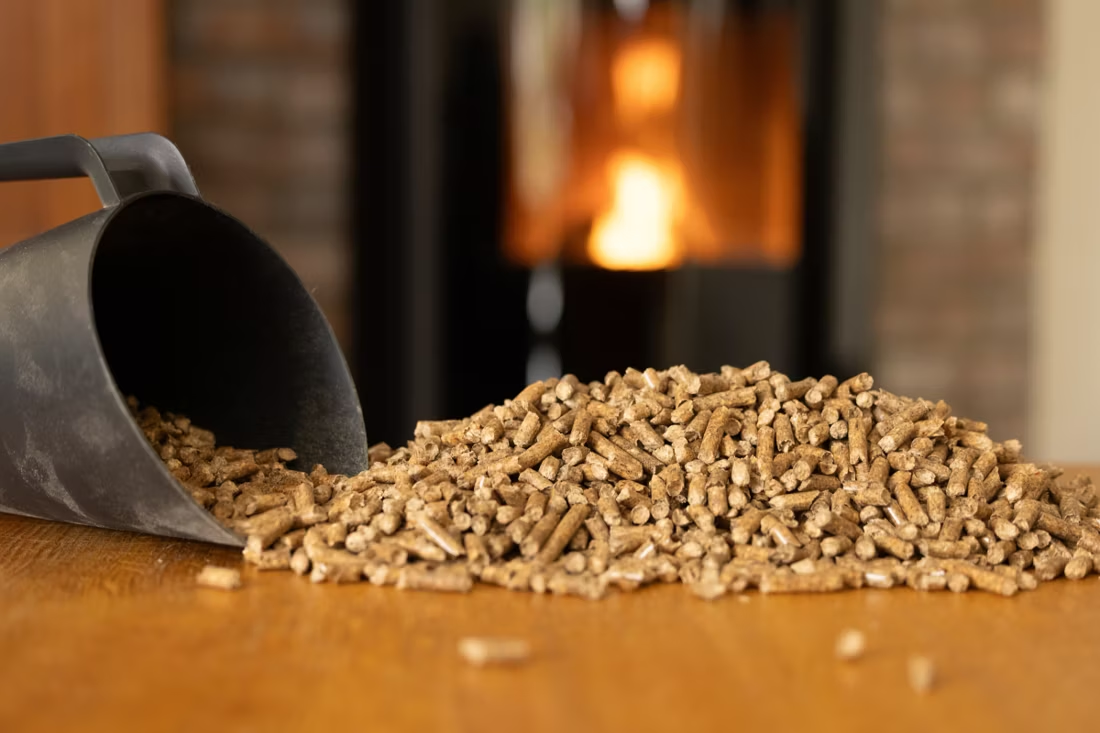
Pellet stoves are available in Pullman, but they're genuinely uncommon—our local data classifies pellet relevance here as not-applicable, meaning most homeowners choose gas or electric heat instead. That said, a small number of Pullman and Whitman County households still install pellet stoves, usually for supplemental heat in an older farmhouse, ambiance in a remodeled living room, or backup capacity beyond a central gas furnace. If you're one of them, it's worth working with a dealer who actually handles these installs regularly rather than a big-box contractor who rarely sees one.
Why don't more homes in Pullman use wood or pellet heat given how cold the winters get?
It comes down to geography. Pullman sits in open Palouse farmland, not forested mountains—the closest national forest land, the Nez Perce-Clearwater and Idaho Panhandle National Forests, is an hour-plus drive across the Idaho state line, and BLM Spokane District land is a similar distance north. That's very different from a mountain town where cutting permits and pellet mills are practically local. Without a nearby timber economy, neither firewood-cutting culture nor pellet manufacturing ever took hold here the way it has in forested parts of the Inland Northwest, so both wood and pellet fuel relevance are flagged not-applicable for Pullman even though the winters are cold enough to justify supplemental heat.
How much does a pellet stove installation cost in Pullman?
Because pellet installs are less routine here than in pellet-heavy mountain markets, there isn't a well-established local price benchmark the way there is for gas. Across the broader Inland Northwest, a pellet stove or insert installation typically runs somewhere in the $3,500–$6,500 range depending on the unit, venting path, and whether an existing fireplace opening can be used. Given how few installers in the Pullman-Whitman County area handle pellet work regularly, get a firm in-home quote from a trusted local dealer rather than assuming a number from a different market applies here.
Can I put a pellet insert into an older fireplace near downtown Pullman or WSU?
Often, yes. Pellet inserts don't rely on a traditional chimney draft the way wood stoves do—they use a small-diameter power vent that can run through the existing masonry chimney or straight out a nearby wall, which makes them workable in older Pullman homes with a fireplace opening but no interest in wood handling. The bigger consideration is the electrical outlet needed nearby for the hopper's auger and blower motor. A local dealer familiar with older Palouse-area housing stock can tell you quickly whether your specific fireplace opening and wall access will work.
What pellet brands can I actually buy near Pullman?
Regional pellet brands sold across the Inland Northwest—including Bear Mountain, Lignetics, and Pacific Pellet—are the ones most likely to show up at farm supply and hardware retailers serving Whitman County. Because pellet stoves are uncommon in Pullman itself, dedicated hearth shops carrying bagged pellets locally are limited; many owners end up sourcing pellets from Spokane, about 75 miles north, where the retail footprint for pellet fuel is larger.
Will a pellet stove keep my Pullman home warm during a power outage?
Not on its own. Pellet stoves rely on electricity to run the auger, igniter, and combustion blower, so a power outage shuts them down unless you have a battery backup or generator wired in. Avista Corp's grid in the city of Pullman is generally reliable, but outlying Whitman County lines can see outages during winter storms. Since wood fuel relevance is also flagged not-applicable here, homeowners specifically chasing outage-proof heat in this area are usually better served by a propane appliance with a standing pilot or a dedicated battery backup system rather than pellet.
Do I need a permit to install a pellet stove in Pullman?
Most solid-fuel and pellet-burning appliance installations require a building permit, and Pullman is no exception—check with the City of Pullman or Whitman County building department depending on whether the install is inside city limits or in the county. A licensed installer will typically handle the permit application, venting clearances, and inspection as part of the job, which matters even more here given how few local contractors install pellet units on a regular basis.
Pellet vs. gas—which makes more sense for a Pullman home?
For most Pullman homeowners, gas is the more practical choice: it's the standard fuel option locally, service and repair technicians are easy to find, and it delivers instant, thermostat-controlled heat without hopper loading or ash disposal. Pellet stoves require more hands-on maintenance—filling the hopper, emptying the ash pan, and running the auger and blower off house power—and because they're uncommon here, qualified installers and parts support are thinner on the ground. Pellet still makes sense for homeowners who specifically want the ambiance of a real flame with more convenience than cordwood, but it's a deliberate niche choice in Pullman rather than the default.
Where can I find someone who actually installs pellet stoves near Pullman?
Because pellet relevance is low in Pullman itself, some of the dealers who serve this market are based in Spokane, about 75 miles north, where pellet installs are more common. This is exactly the kind of situation where matching with the right installer matters—a dealer who rarely touches pellet appliances is more likely to undersize the vent run or miss clearance details than one who installs them regularly. We can match you with a trusted local dealer who actually handles pellet work in this region, not just whoever is closest.
Why is a fireplace insert so efficient?
An insert does two things: it seals the chimney completely, so you stop losing air you already paid to heat, and it radiates warmth into the room through the firebox and glass. Most add a heat-exchange fan that pulls cool room air underneath, wraps it around the hot firebox, and pushes it back out warm. Your home is more efficient before you've even lit the first fire.
What's the difference between an insert and a zero-clearance fireplace?
An insert is a fireplace that slides into a pre-existing wood-burning fireplace—if you don't have one, there's nothing to insert it into. A zero-clearance fireplace is built into a framed wall, which makes it the answer for remodels and new construction. Simple test: existing masonry fireplace means insert; blank or framed wall means zero-clearance.
Does a fireplace add value to my home?
On average, a fireplace adds back to the home about the same amount you spent installing it. Add the monthly savings from heating the rooms you actually use instead of the whole house—often hundreds of dollars a year—and the value case is strong before you even count what a fire does for how your family uses the room.
How much should I budget for a fireplace?
For an average home—covering the fireplace, the vent pipe, and basic installation—a budget between $3,900 and $5,500 gives you a lot of options across wood, gas, and pellet. By the time you add finish work, gas line, and electrical, the average complete installation lands between $5,000 and $12,000 all-in. In a remodel or new build, a good rule is to put about 2.5% of the total project cost toward the fireplace.
Nearby Dealers
Hearth shops serving Pullman and the surrounding area.
Pellet Brands Stocked Around Pullman
Manufacturers will point you to the nearest stocking dealer.
Find your pellet stove in Pullman.
Tell us about your home and your reasons for considering pellet heat, and we'll send a free Project Guide & Parts List—including the vent kit—plus a match with a trusted local dealer who actually installs pellet appliances in this region.
Find Your Fireplace →