
Keep Your Family Warm and Safe—No Matter What
With winter lows averaging 36°F and gas or electric heat covering most homes here, a wood stove is the exception rather than the rule. If you're one of the exceptions, we'll connect you with a local dealer who can do it right.
Every Project Starts From One of These Five Situations
A mild marine climate, not a wood-heat one.
University Place sits on the shores of Puget Sound at just 414 feet elevation, and its winters are mild by any national standard—an average low of 36°F and roughly 4,884 heating degree days. Compare that to a genuinely cold-climate city like Duluth, MN, which racks up more than double the HDD, and it's easy to see why wood stoves never became a primary heating strategy here. Most homes in University Place lean on heat pumps, electric resistance heat, or natural gas, and Peninsula Light Company's residential electric rate of around 10.5 cents/kWh keeps electric heat reasonably affordable for a lot of households.
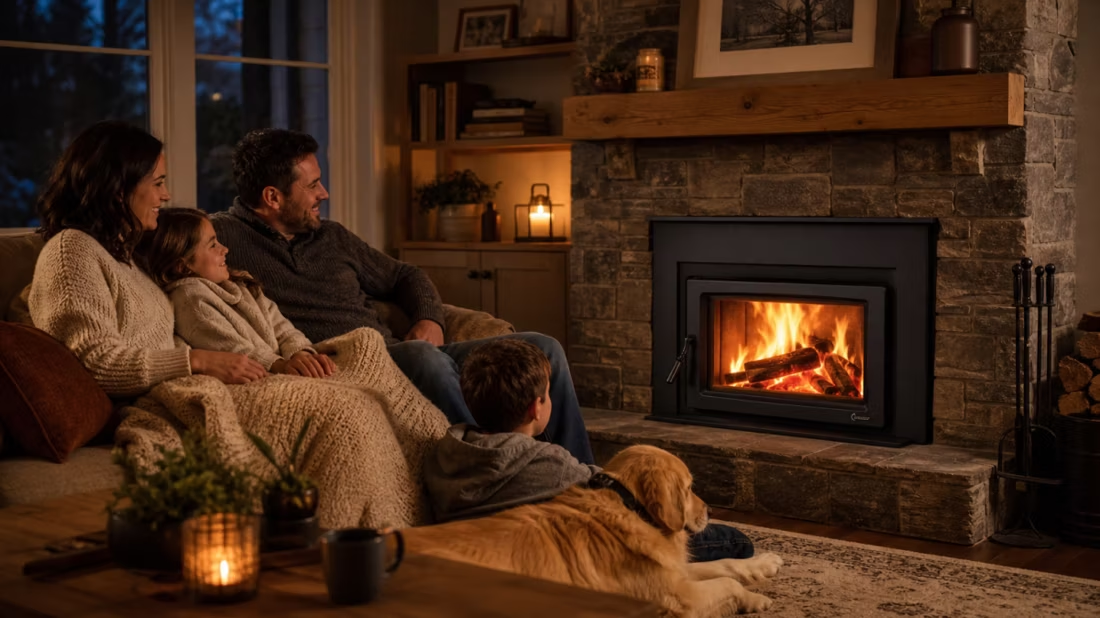
Air quality plays a role too. Pierce County falls under the Puget Sound Clean Air Agency's jurisdiction, and stagnant-air burn bans during winter inversions restrict uncertified wood stoves on short notice—a real deterrent for anyone considering wood as a daily heat source. That said, wood stoves haven't disappeared entirely. A small number of University Place homeowners install one for backup heat during windstorm-related power outages, for the ambiance of a real fire, or on larger rural-adjacent lots where fallen Douglas fir, red alder, or lodgepole pine is easy to come by. If that's you, it's worth doing the install properly rather than treating it as an afterthought.
Firewood Cutting Permits Near University Place
Three steps. No salesperson until you're ready.
Tell us about your project
Your zip code, your situation, and the fuel you're leaning toward—or let the answers point you to one.
See what's actually available
The brands dealers within 100 miles genuinely carry—real options, never a catalog mirage.
Get your dealer & Project Guide
A trusted local dealer, plus the free Project Guide & Parts List that names every component of the job.
Frequently Asked Questions
Are wood stoves actually installed in University Place, or is this mostly theoretical?
They're installed, just not often as a primary heat source. Given the mild climate—winter lows average 36°F—and the availability of natural gas and reasonably priced electric heat through Peninsula Light Company, most University Place homeowners who add a wood stove are doing it for backup heat during outages, cozy ambiance in a family room, or because they already have a masonry fireplace they want to upgrade. It's a legitimate project, just not the default one in this part of Pierce County.
What does a wood stove installation cost in University Place?
Because wood stoves aren't a high-volume category here, pricing isn't as tightly benchmarked locally as it is in colder markets, but a typical installation—stove, hearth pad, and Class A chimney venting through an existing wall or roof—generally runs in the $3,500 to $8,000 range depending on the unit and how much venting work is required. Homes without an existing chimney or masonry fireplace will land toward the higher end once full through-roof venting is added. A local dealer can give you a firm number after seeing your space.
Do I need a permit to install a wood stove in University Place?
Yes. New wood stove installations require a building permit, typically pulled through the City of University Place's Community Development Department or Pierce County's building division depending on your exact address. The stove itself needs to meet current EPA emissions standards. Most hearth dealers who handle the installation will also pull the permit for you, which is worth confirming up front since permitting a rare install type correctly matters more here than in markets where inspectors see wood stoves every week.
Will burn bans affect my ability to use a wood stove here?
Potentially, yes. The Puget Sound Clean Air Agency issues burn bans during winter stagnant-air events, and uncertified or older wood stoves are typically restricted first while EPA-certified units may be allowed to keep operating during lower-stage bans. If you're installing new, choosing an EPA 2020 NSPS-certified stove gives you the most flexibility during air quality advisories. Summer wildfire smoke is a separate seasonal concern here but doesn't affect wood stove operation—that's a burning-season, not a smoke-season, restriction.
Does a wood stove make sense as backup heat during power outages?
This is actually the strongest case for wood heat in University Place. Peninsula Light Company's service territory, like much of the South Sound, sees periodic outages during fall and winter windstorms, and an electric-dependent home—heat pump, electric baseboard, even most gas furnaces with electric ignition and blowers—loses heat entirely when the power drops. A wood stove keeps working regardless. If backup heat during outages is your main reason for considering one, size it for a single room or open living area rather than the whole house; that's usually enough to keep a family warm through a multi-day outage.
Where would I get firewood if I install a wood stove here?
Douglas fir, red alder, and lodgepole pine are the common species around the South Sound, and while University Place itself is fairly built-out, self-cut permits are available through the Olympic National Forest and Mt. Baker-Snoqualmie National Forest, both within a reasonable drive. Permits run roughly $5 to $20 per cord and are typically valid May through October. Most homeowners here who burn wood buy delivered cordwood locally rather than cutting their own, since the forest permit areas are an hour or more away.
Wouldn't a gas or electric fireplace make more sense for my home?
For most University Place homes, honestly, yes. Given the mild winters and the fact that natural gas and electric infrastructure already serve most homes efficiently, a gas insert or electric fireplace typically delivers better day-to-day convenience with lower installation complexity than a wood stove. Wood stoves make the most sense here specifically for outage backup, off-grid ambition, or homeowners who genuinely want the experience of tending a real fire. If instant, no-maintenance heat is the priority, it's worth looking at our gas and electric fireplace pages for University Place alongside this one.
If I do want a wood stove, what should I look for?
Given that most University Place installs are for supplemental or backup heat rather than round-the-clock burning, a mid-size EPA-certified non-catalytic stove is usually the right fit—enough output to heat a living area or hold the house through an outage without being oversized for occasional use. Catalytic stoves from brands like Blaze King offer longer burn times if you want fewer reloads, but that extra capacity is less critical in a climate where you're not fighting single-digit overnight temperatures for weeks at a time. A local dealer can match the stove to your square footage and how often you actually expect to burn.
Wood stove vs. gas insert—which fits my University Place home better?
Gas offers instant, thermostat-controlled heat with no wood handling, and it's the more common choice in this climate given how accessible natural gas service and pricing are locally. Wood offers something gas can't: heat that keeps working when the power and gas ignition systems go down during a windstorm outage, plus the option to burn regionally sourced Douglas fir or red alder. If your home already has electric or gas heat covering daily use and you're weighing a second unit purely for backup or ambiance, wood is worth considering. If you're choosing a single primary hearth appliance for a South Sound home, gas is usually the more practical everyday fit.
Why is my open fireplace making my house colder?
Open fireplaces suck—literally. As the fire burns, it consumes air your furnace already paid to heat and pulls it out through the chimney, so the house is actually colder after the fire goes out than before you lit it. An insert fixes this: it seals the chimney, puts fixed glass across the front, and turns that hole in your house into a real heat source.
Why is a fireplace insert so efficient?
An insert does two things: it seals the chimney completely, so you stop losing air you already paid to heat, and it radiates warmth into the room through the firebox and glass. Most add a heat-exchange fan that pulls cool room air underneath, wraps it around the hot firebox, and pushes it back out warm. Your home is more efficient before you've even lit the first fire.
How much should I budget for a fireplace?
For an average home—covering the fireplace, the vent pipe, and basic installation—a budget between $3,900 and $5,500 gives you a lot of options across wood, gas, and pellet. By the time you add finish work, gas line, and electrical, the average complete installation lands between $5,000 and $12,000 all-in. In a remodel or new build, a good rule is to put about 2.5% of the total project cost toward the fireplace.
Does a fireplace add value to my home?
On average, a fireplace adds back to the home about the same amount you spent installing it. Add the monthly savings from heating the rooms you actually use instead of the whole house—often hundreds of dollars a year—and the value case is strong before you even count what a fire does for how your family uses the room.
Nearby Dealers
Hearth shops serving University Place and the surrounding area.
See if a wood stove still makes sense for your University Place home.
Tell us a bit about your home and how you'd use a wood stove—backup heat, ambiance, or a fireplace upgrade—and we'll match you with a trusted local dealer and a free Project Guide & Parts List, including the vent kit your install actually needs.
Find Your Fireplace →