
Real warmth, zero venting, right here in University Place.
No chimney, no gas line, no smoke—just plug-in or hardwired warmth suited to University Place's mild Puget Sound winters. Get matched with a trusted local dealer.
Every Project Starts From One of These Five Situations
Electric heat makes sense for University Place's climate.
University Place sits on the Puget Sound bluffs at just over 400 feet elevation, where winters are mild by national standards—average lows hover around 36°F and the area's winter heating load is a fraction of what inland cold-climate cities like Spokane or Bozeman, MT see. That maritime climate means most homes here don't need a primary heat source running around the clock; they need supplemental warmth for a family room, a converted garage, or a condo near Chambers Bay where a wood chimney or gas line simply isn't an option.
Electric fireplaces fill that gap well. There's no venting, no gas line, no cutting permit, and no smoke—a real plus given that wildfire smoke is the area's main air quality concern most summers. Peninsula Light Company, the local electric co-op, keeps residential rates around 10.5 cents per kWh, which is low enough that running a 1,500-watt electric insert for supplemental heat is genuinely affordable. For homes in University Place where wood and pellet stoves are uncommon—burn restrictions and small urban lots make them impractical for most residents—electric is often the simplest, cleanest way to add real heat and ambiance to a room.
Three steps. No salesperson until you're ready.
Tell us about your project
Your zip code, your situation, and the fuel you're leaning toward—or let the answers point you to one.
See what's actually available
The brands dealers within 100 miles genuinely carry—real options, never a catalog mirage.
Get your dealer & Project Guide
A trusted local dealer, plus the free Project Guide & Parts List that names every component of the job.
Frequently Asked Questions
How much does an electric fireplace installation cost in University Place?
It depends heavily on the type. A plug-in electric insert or freestanding stove that drops into an existing opening or sits on the floor typically runs $300 to $900 for the unit itself, with no electrician needed if it uses a standard outlet. A built-in wall unit or a recessed linear fireplace—the kind many University Place homeowners choose for a family room remodel or a condo near Chambers Bay—usually runs $1,500 to $4,000 once you include framing, a dedicated 20-amp circuit, and finish work. A local dealer can give you a firm number after seeing your wall and electrical panel.
Do electric fireplaces actually put out heat, or are they just for looks?
Most electric fireplaces include a real heating element—typically a 1,500-watt unit rated around 5,100 BTU—that can comfortably heat a single room in University Place's mild climate. Given that winter lows here average only around 36°F, a good electric insert or wall unit is often enough to heat a family room or converted den on its own, without central heat running. Some homeowners buy a flame-only model purely for ambiance and rely on it as decor rather than heat—just check the spec sheet before you buy, since not every unit includes a heater.
Do I need a permit to install an electric fireplace in University Place?
A plug-in unit that uses an existing outlet generally doesn't require a permit. If your installation needs a new dedicated electrical circuit—common for built-in or recessed wall units—that work falls under Pierce County or City of University Place electrical permitting and needs to be pulled by a licensed electrician. This is one of the real advantages of electric over wood or gas: there's no chimney inspection, no gas line permit, and no combustion-appliance code review to navigate.
What's the difference between an electric insert, a wall-mount, and a freestanding electric stove?
An electric insert is built to slide into an existing fireplace opening, masonry or otherwise, and is the most common retrofit for older University Place homes with an unused wood-burning firebox. A wall-mount or linear electric fireplace is a slim unit recessed into or mounted flush against a wall—popular in newer builds and condos where a traditional hearth doesn't exist. A freestanding electric stove sits on the floor like a wood stove and plugs into a standard outlet, making it the easiest option for renters or anyone who wants heat without any construction. Which one fits depends on whether you're working with an existing fireplace, a bare wall, or no fixed installation point at all.
How much does it cost to run an electric fireplace with Peninsula Light Company rates?
Peninsula Light Company's residential rate runs about 10.5 cents per kWh, among the more affordable rates in the Puget Sound region. A typical 1,500-watt electric fireplace costs roughly 16 cents per hour to run on the heat setting. Used for supplemental heat a few hours a night through University Place's mild winter—say 4 to 5 hours a day—that works out to around $20 to $25 a month, considerably less than running a gas insert or heating an entire home with electric baseboard.
Electric vs. gas fireplace—which makes more sense in University Place?
Gas fireplaces put out more heat per hour and can be sized to genuinely offset a furnace, which matters for homeowners wanting a primary supplemental source. But gas installation requires a gas line, venting in most cases, and periodic professional servicing. Electric fireplaces install almost anywhere with no venting and no combustion byproducts—a real advantage for condos, rental units, or rooms where running a gas line isn't practical. Given University Place's mild winters, many homeowners find electric delivers enough heat for the rooms that need it, without the added infrastructure gas requires. If you already have gas service to the house, it's worth comparing both with a local dealer before deciding.
Why don't more homes in University Place use wood or pellet stoves?
Wood and pellet stoves are genuinely uncommon in University Place. The area's mild maritime winters—average lows around 36°F—mean most homes don't need the heat output a wood stove provides, and Pierce County lots tend to be smaller and closer together than the rural, forest-adjacent communities where wood heat is standard. Puget Sound Clean Air Agency burn restrictions during stagnant winter air also make wood-burning appliances a harder sell here. Residents who do want to cut their own firewood typically travel out to Olympic National Forest or Mt. Baker-Snoqualmie National Forest, where cutting permits run $5 to $20 per cord during the May-through-October season—but for in-town heating, electric and gas are the practical choices.
Will my electric fireplace still work if the power goes out?
No—and this is worth knowing if you're comparing electric against gas. Electric fireplaces need household power to run both the heater and any flame-effect lighting, so during a Puget Sound windstorm outage (Peninsula Light Company's service area does see occasional weather-related outages), an electric unit goes dark along with everything else. Gas fireplaces with battery-backup ignition can often still operate during an outage. If backup heat during storms is a priority for your household, that's a real point in gas's favor—but for everyday supplemental warmth and ambiance, electric remains the simpler, lower-maintenance choice.
What size electric fireplace do I need for my room?
For a single room in a University Place home—a family room, bedroom, or converted den—a standard 1,500-watt unit rated to heat 400 to 600 square feet is usually sufficient given the area's mild winters. Larger open-concept spaces or great rooms may need a wider linear unit or a model with a higher BTU rating, though electric units generally top out around 5,100 BTU regardless of size, since larger units simply throw the same heat across a wider glass face. A local dealer can walk your space and tell you whether a single unit will do the job or whether you'd be better served pairing electric heat with your existing furnace.
Can I put a TV above my fireplace?
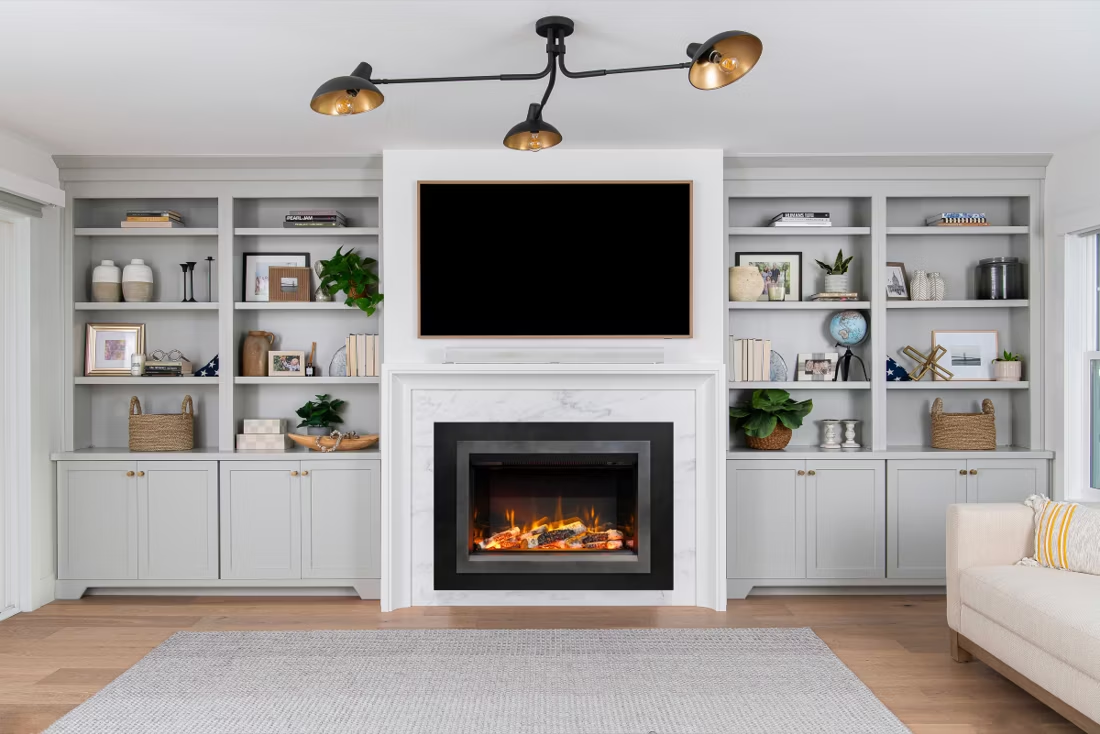
Yes—with an asterisk. Fireplaces are hot and TVs don't like heat. Either put a mantel between them to deflect rising warmth, or choose a fireplace with heat-management technology that creates a cool zone on the wall above—the wall stays around 125 degrees, barely warm, while the room still gets full heat. If you like clean lines and don't want a mantel, heat management is the answer.
Do electric fireplaces actually produce heat?
Yes—most put out around 4,800–5,000 BTUs from a standard outlet, which comfortably warms a bedroom, office, or den as a comfort-zone heater. What they won't do is carry a whole house the way wood, gas, or pellet can. Think of electric as ambiance-first with honest supplemental heat: flames on with no heat in July, flames plus warmth in January.
Can a fireplace actually lower my heating bill?
Yes—by creating a comfort zone. A furnace heats every square foot of the house just to warm the one room you're in; a gas fireplace on low burns roughly a sixth of the gas a typical furnace does. Set the furnace around 55–60 degrees as a baseline, then heat the rooms your family actually uses. Families who heat this way commonly save $20–$60 a month.
How much should I budget for a fireplace?
For an average home—covering the fireplace, the vent pipe, and basic installation—a budget between $3,900 and $5,500 gives you a lot of options across wood, gas, and pellet. By the time you add finish work, gas line, and electrical, the average complete installation lands between $5,000 and $12,000 all-in. In a remodel or new build, a good rule is to put about 2.5% of the total project cost toward the fireplace.
Nearby Dealers
Hearth shops serving University Place and the surrounding area.
Electric Service in University Place
An electric fireplace's heater draws about 1,500 watts—pennies per hour at local rates.
Peninsula Light Company
Find your electric fireplace in University Place.
Tell us about your room and budget, and we'll match you with a trusted local dealer plus a free Project Guide & Parts List—the exact electric fireplace, insert, or wall unit built for your University Place home.
Find Your Fireplace →