
A Niche Heat Source for Puget Sound Homes.
University Place winters rarely demand heavy biomass heat, so pellet stoves stay a specialty choice here—useful for backup warmth and ambiance, not the default. We'll help you figure out if one makes sense for your house.
Every Project Starts From One of These Five Situations
Mild winters keep pellet stoves a niche choice.
University Place sits at just 414 feet along Puget Sound, in climate zone 4C, where the average winter low is a mild 36°F and the area logs about 4,884 heating degree days a year. Compare that to a genuinely cold-climate town like Duluth, MN, which racks up nearly double the heating degree days, and it's clear why biomass heating never became the backbone of local home heating the way it has in colder, drier parts of the inland Northwest.
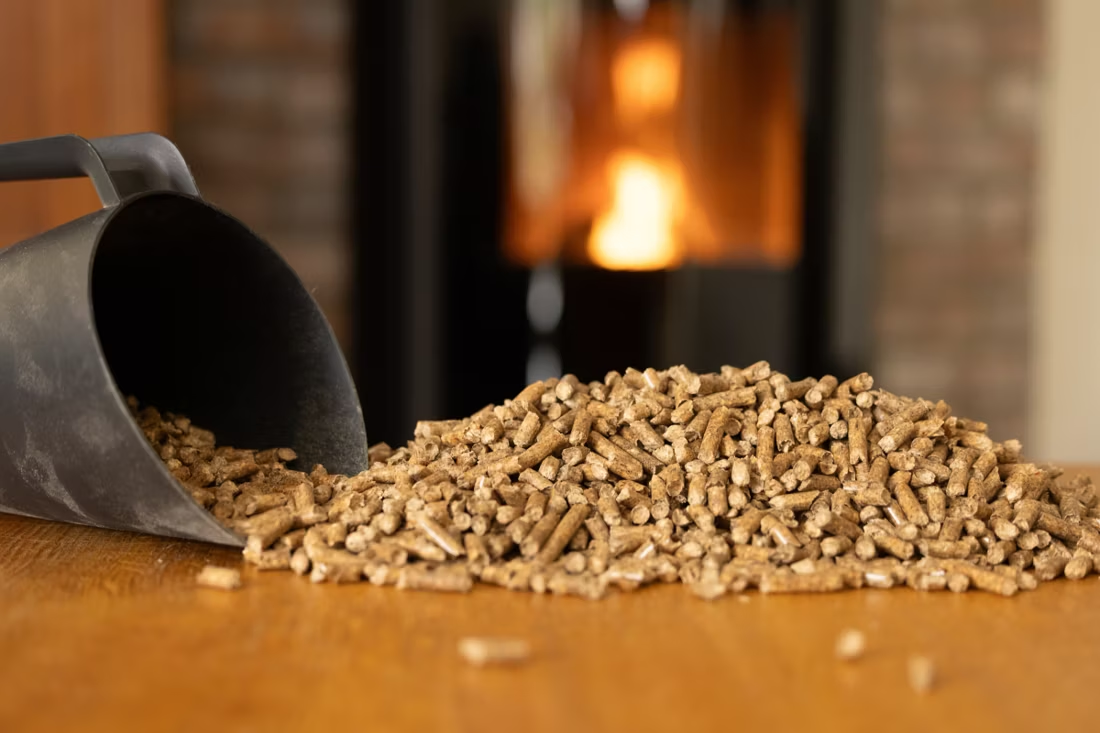
Most homes here lean on electric heat pumps served by Peninsula Light Company, whose residential rate of roughly 10.5 cents per kWh is competitive enough that efficient electric heat is often the simplest option, plus widely available natural gas for those who want a visible flame. Pellet stoves still show up in University Place—as a hedge against Puget Sound windstorm power outages, as supplemental heat in a detached shop or bonus room, or simply because a homeowner likes the low-maintenance flame a pellet appliance offers. Regional pellet brands like Bear Mountain, Lignetics, and Pacific Pellet are easy to source through Pacific Northwest hearth retailers even though local installation volume is modest.
Three steps. No salesperson until you're ready.
Tell us about your project
Your zip code, your situation, and the fuel you're leaning toward—or let the answers point you to one.
See what's actually available
The brands dealers within 100 miles genuinely carry—real options, never a catalog mirage.
Get your dealer & Project Guide
A trusted local dealer, plus the free Project Guide & Parts List that names every component of the job.
Frequently Asked Questions
Are pellet stoves actually common in University Place?
Not really, and it's worth being upfront about that. With a 36°F average winter low and under 5,000 heating degree days, University Place doesn't have the sustained cold that makes biomass heat a household staple the way it is in places like Bozeman, MT or International Falls, MN. Most homes here heat with electric heat pumps through Peninsula Light or natural gas. Pellet stoves show up in a smaller number of homes—usually for backup heat, a detached space, or homeowners who specifically want the look of a stove without stacking cordwood. If that's you, a local dealer can absolutely help; just know you're choosing a specialty appliance rather than the regional default.
What does a pellet stove installation cost in University Place?
Because pellet stoves are a lower-volume product here compared to gas fireplaces or heat pump equipment, installed pricing tends to vary more by dealer than by neighborhood. The main cost drivers are the same everywhere: the stove itself, venting (pellet stoves use smaller-diameter PL vent pipe rather than a full masonry chimney), and any hearth pad work required for clearance. Since we don't quote prices ourselves, the most useful step is getting matched with a local dealer who can walk your specific home and hand you a firm number as part of your free Project Guide & Parts List.
Do I need a permit to install a pellet stove in University Place?
Yes, most jurisdictions in Pierce County require a building permit for a new solid-fuel appliance installation, including pellet stoves, and University Place's Community Development Department is the place to start that conversation. The stove also needs to meet current EPA emissions certification. Most hearth retailers who install pellet stoves handle the permit paperwork as part of the job, which is one good reason to go through an established local dealer rather than a general handyman.
Will a pellet stove keep my house warm during a power outage?
Not on its own—and this trips people up. Unlike a wood stove, a pellet stove's auger, igniter, and combustion blower all run on electricity, so a standard unit shuts down the moment the power does. In a windstorm-prone area like University Place along Puget Sound, that matters. Homeowners who want outage-proof heat either pair a pellet stove with a small battery backup or generator, or choose a wood stove or vented gas fireplace with a battery-backed ignition instead. Worth discussing directly with your local dealer before you commit to pellet as your storm-season plan.
Where do the wood pellets actually come from—are they local?
Pellets are manufactured, not self-cut, so they're a different supply chain than the douglas fir, red alder, and lodgepole pine that grow in the surrounding forests. Regional brands like Bear Mountain, Lignetics, and Pacific Pellet manufacture fuel-grade pellets largely from sawmill residuals across the Pacific Northwest, and bags are typically available through hardware stores and hearth shops in the greater Tacoma area. You won't need a Forest Service cutting permit for pellet fuel the way you would for firewood—that's one of the appeals for homeowners who don't want to deal with permits, splitting, or seasoning wood.
Why would I choose a pellet stove over a gas fireplace, since gas is so available here?
Gas is genuinely the easier path for most University Place homes—it's widely available, offers instant on-demand heat, and needs almost no fuel handling. Pellet stoves appeal to a smaller group: people who want a real, visible flame with actual combustion (not a gas burner), who like the idea of a renewable biomass fuel, or who already have a spot—a shop, a rec room, a cabin at the coast—where gas line access isn't practical. If instant convenience is your top priority, gas is probably the better fit. If you want a stove-like fire experience with lower maintenance than cordwood, pellet is worth a look.
How much maintenance does a pellet stove need?
Less than a wood stove, more than a gas unit. Expect to empty the ash pan every few days during regular use, clean the burn pot and glass periodically, and have the venting and blower components professionally serviced roughly once a year. Because pellet stove installers are less numerous in University Place than gas service techs, it's worth asking your dealer up front who handles annual service—some hearth shops only sell and install, while others also maintain a service department.
Does wildfire smoke affect pellet stove use in University Place?
Regional wildfire smoke is a recognized air quality concern in the South Puget Sound area during summer and early fall, but it doesn't typically affect wintertime pellet stove operation the way inversion-driven wood smoke advisories do in inland valley towns. Pellet stoves burn cleaner and more completely than open wood fires, generating less particulate output, so they're rarely a target of local air quality restrictions. The bigger seasonal overlap is simply that wildfire smoke season and heating season don't line up much here given the mild winters.
How do I find someone who actually installs pellet stoves near University Place?
Because pellet stoves are a smaller share of the local hearth market, it's worth being selective—not every hearth retailer in the South Sound stocks and services pellet appliances the way they stock gas inserts. Look for a dealer who carries an established pellet brand, handles the PL-vent installation correctly, and offers ongoing service rather than just a sale. That's exactly the matching work we do: we connect you with a trusted local dealer who genuinely installs pellet stoves in this market, rather than sending you to a big-box return counter.
Why is a fireplace insert so efficient?
An insert does two things: it seals the chimney completely, so you stop losing air you already paid to heat, and it radiates warmth into the room through the firebox and glass. Most add a heat-exchange fan that pulls cool room air underneath, wraps it around the hot firebox, and pushes it back out warm. Your home is more efficient before you've even lit the first fire.
What do I measure to size a fireplace insert?
Four numbers tell you what fits: the front width, the front height, the back width, and the overall depth of your existing fireplace opening. Grab a tape measure, jot those down, and snap a photo of the wall—those two things do more to move your project forward than anything else you can do today.
Does a fireplace add value to my home?
On average, a fireplace adds back to the home about the same amount you spent installing it. Add the monthly savings from heating the rooms you actually use instead of the whole house—often hundreds of dollars a year—and the value case is strong before you even count what a fire does for how your family uses the room.
How much should I budget for a fireplace?
For an average home—covering the fireplace, the vent pipe, and basic installation—a budget between $3,900 and $5,500 gives you a lot of options across wood, gas, and pellet. By the time you add finish work, gas line, and electrical, the average complete installation lands between $5,000 and $12,000 all-in. In a remodel or new build, a good rule is to put about 2.5% of the total project cost toward the fireplace.
Nearby Dealers
Hearth shops serving University Place and the surrounding area.
Pellet Brands Stocked Around University Place
Manufacturers will point you to the nearest stocking dealer.
Find your pellet stove in University Place.
Tell us about your home and we'll match you with a trusted local dealer who actually installs pellet stoves in the South Sound—plus a free Project Guide & Parts List with the exact vent kit and components your project needs.
Find Your Fireplace →