
Keep Your Family Warm and Safe—No Matter What
Sequim sits in the rain shadow of the Olympic Mountains, which means less rain but plenty of damp, gray chill. Find the right wood stove or insert, and connect with a trusted local dealer.
Every Project Starts From One of These Five Situations
Wood heat that fits the Peninsula's rain shadow.
Sequim sits low, at just 169 feet elevation, tucked in the rain shadow cast by the Olympic Mountains—locals call it the Banana Belt or the Blue Hole because it gets a fraction of the rainfall that falls on Port Angeles or Forks a short drive away. Winter lows here average a mild 32°F, but the region still racks up a winter heating workload that approaches Madison, Wisconsin's, even though Sequim almost never sees a hard freeze snap. That's the paradox of this climate: fewer brutal cold nights, but many more gray, damp, 40-degree days that quietly demand steady heat for months on end.
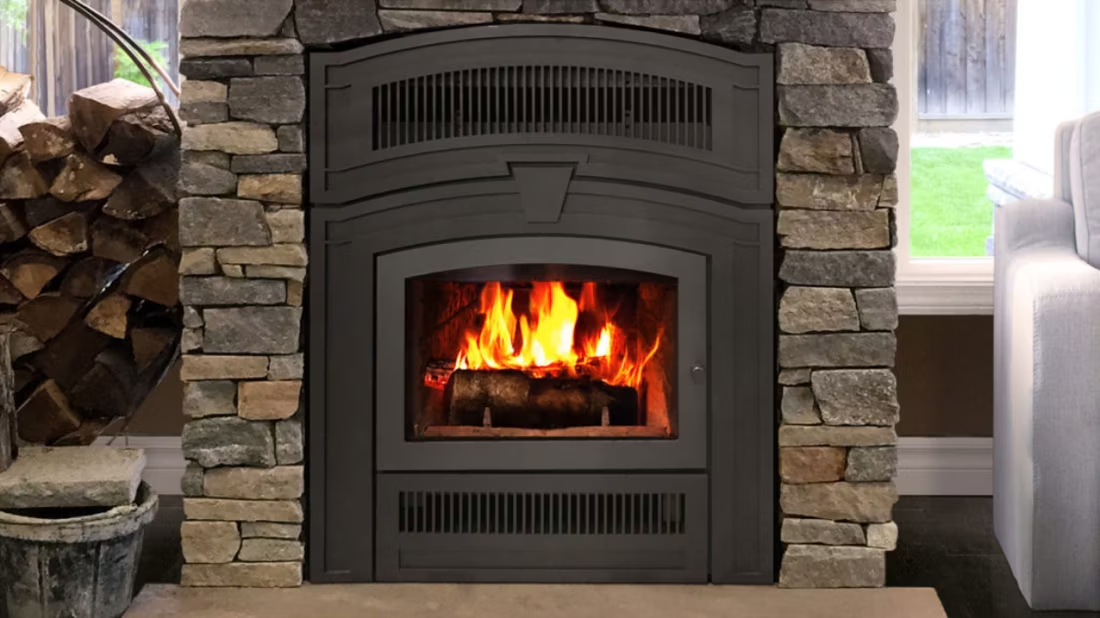
A lot of that heat comes from wood—douglas fir and red alder from the surrounding forests split the workload well, with dense fir for overnight coals and fast-catching alder for quick warm-ups, plus lodgepole pine when it's available. Cutting permits through Mt. Baker-Snoqualmie National Forest run $5 to $20 per cord during the May-to-October season. And in a rural PUD service area where winter windstorms off the Strait of Juan de Fuca regularly knock out power for hours or days, a wood stove is one of the few heating appliances in a Sequim home that keeps working when PUD No. 1 of Clallam County's lines go down.
Firewood Cutting Permits Near Sequim
Three steps. No salesperson until you're ready.
Tell us about your project
Your zip code, your situation, and the fuel you're leaning toward—or let the answers point you to one.
See what's actually available
The brands dealers within 100 miles genuinely carry—real options, never a catalog mirage.
Get your dealer & Project Guide
A trusted local dealer, plus the free Project Guide & Parts List that names every component of the job.
Frequently Asked Questions
How much does a wood stove installation cost in Sequim?
Most wood stove installations in Sequim run between roughly $4,000 and $8,500, depending on the stove itself, whether an existing chimney can be reused, and whether a new hearth pad is needed to meet clearance codes. Homes with an existing masonry fireplace and flue tend to land on the lower end, since a liner can often be run through the existing chimney. New installations in homes without any existing chimney—where Class A pipe has to be run through a wall or roof from scratch—push toward the higher end. A local dealer will give you a firm number after seeing your space.
What size wood stove do I need for a Sequim home?
Because winter lows here rarely drop far below freezing, most Sequim homes don't need the largest catalytic stoves built for sub-zero prairie winters—a mid-size stove rated for 1,200 to 2,000 square feet handles the bulk of local homes, including supplemental heat for a great room or an addition that central heat doesn't reach well. Smaller cabins or ADUs on the Peninsula do fine with a compact stove rated under 1,000 square feet. The bigger variable locally is insulation and ceiling height in older Sequim farmhouses, which is exactly the kind of thing a local dealer sizes correctly during an in-home visit rather than guessing from a chart.
Where can I find a certified wood stove installer near Sequim?
Look for NFI (National Fireplace Institute) or CSIA (Chimney Safety Institute of America) certification—both signal real training in venting, clearances, and code compliance for wood-burning appliances. On the Olympic Peninsula, where many homes are older and chimney configurations vary widely, that expertise matters more than it might in a subdivision of identical new-builds. The hearth dealers we match Sequim homeowners with employ certified installers and pull the required Clallam County or City of Sequim building permits as part of the job.
Wood stove or wood insert—which fits my Sequim home?
An insert slides into an existing masonry fireplace and uses your current chimney with a new stainless liner—a common upgrade in Sequim's older homes near the historic downtown core, many of which have open, inefficient fireplaces from the 1960s and '70s. A freestanding stove sits on its own hearth pad and can go almost anywhere with the right clearances, which makes it the better choice for newer construction or additions that never had a fireplace to begin with. If you already have a working chimney, an insert is usually the more cost-effective route.
Do I need a permit to install a wood stove in Sequim?
Yes. New wood stove installations require a building permit—through the City of Sequim if you're inside city limits, or Clallam County if you're out in the surrounding rain-shadow farmland, and the unit itself needs to meet current EPA emissions standards. Most local dealers handle this paperwork as part of the installation. Burning itself doesn't require a permit, but the Olympic Region Clean Air Agency (ORCAA), which covers Clallam County, does issue advisories during summer wildfire smoke events and occasional stagnant-air periods—worth checking if you're burning during a smoke advisory.
What's the best wood stove for Sequim's climate?
Because Sequim's winters are more damp-and-mild than deep-cold, you don't necessarily need the extreme long-burn catalytic stoves built for northern-tier winters—though a hybrid or catalytic model from Blaze King or Pacific Energy still earns its keep on the region's many gray, 35-degree days when you want steady, low-and-slow heat rather than a hot, fast burn. Non-catalytic stoves from Lopi or Regency also perform well here, especially paired with dense douglas fir for overnight coals. A local dealer can match burn characteristics to how you'll actually use the stove—daily supplemental heat versus occasional backup during a windstorm outage.
How often should my chimney be swept in Sequim?
CSIA guidance calls for an annual inspection on any wood-burning appliance, and that holds for Sequim regardless of how mild a given winter feels—creosote builds up based on burn habits and wood moisture, not just outdoor temperature. Late summer, before the first cool snap arrives off the Strait, is the typical window local sweeps recommend. Alder in particular needs to be well-seasoned before burning; green or wet alder burns cooler and leaves more creosote than properly dried douglas fir.
Where can I get firewood or a cutting permit near Sequim?
Self-cutting permits are available through Mt. Baker-Snoqualmie National Forest, running $5 to $20 per cord during the May-through-October cutting season—plan ahead, since permits are seasonal and the good stands get picked over late in the year. Locally, douglas fir, red alder, and some lodgepole pine make up most of what's split and sold around Clallam County, with alder prized for being lighter to split and quick to season. If you'd rather buy than cut, several small operators around the Peninsula deliver seasoned cordwood by the truckload each fall.
Wood stove or pellet stove—which makes more sense in Sequim?
Wood stoves keep working when the power goes out, which matters in a PUD No. 1 of Clallam County service area where windstorms off the Strait regularly cause outages, and they let you take advantage of low-cost Forest Service cutting permits and local fir and alder. Pellet stoves—stocked locally in brands like Bear Mountain, Lignetics, and Pacific Pellet—burn cleaner and are easier to run day to day, but they need electricity for the auger and blower, so they're not a fallback during an outage. Sequim's mild electric rates through PUD No. 1 (around $0.1185/kWh) make pellet stoves cheap to run when the grid is up, but for true backup heat, wood is the more dependable choice here.
Why won't my new wood stove get going like my old one?
New wood stoves are 70%+ efficient, so far less heat goes up the flue—which also means less draft to get a fire established. The rule: build a genuinely hot fire for about 45 minutes before you choke it down. Skip that and you get smoke in the room, creosote in the chimney, and a fire that never takes off. Most performance complaints trace straight back to this.
Why is a fireplace insert so efficient?
An insert does two things: it seals the chimney completely, so you stop losing air you already paid to heat, and it radiates warmth into the room through the firebox and glass. Most add a heat-exchange fan that pulls cool room air underneath, wraps it around the hot firebox, and pushes it back out warm. Your home is more efficient before you've even lit the first fire.
Does a fireplace add value to my home?
On average, a fireplace adds back to the home about the same amount you spent installing it. Add the monthly savings from heating the rooms you actually use instead of the whole house—often hundreds of dollars a year—and the value case is strong before you even count what a fire does for how your family uses the room.
Can I install a fireplace myself?
If you're putting a fire in your house on purpose, it's best to work with an expert. Unless you're genuinely experienced in framing, gas line, vent pipe, and the national code on clearances to combustibles, have a professional do it—and ideally the same company that sells you the fireplace, so warranty, service, and liability all live under one roof.
Preferred Dealer in Sequim
Marked Preferred because they run on WhyFire's software—so they can show you real pricing and book your appointment right here. No manufacturer pays for placement. How we verify dealers →
Find your wood fireplace in Sequim.
Tell us about your home and we'll put together a free Project Guide & Parts List—the right stove or insert, the vent kit it needs, and a trusted local Sequim dealer to install it.
Find Your Fireplace →