
Push-Button Warmth for Sequim's Rain-Shadow Winters.
Sequim's mild, marine climate doesn't demand a roaring fire every night—but a well-placed gas fireplace still delivers the instant, no-mess warmth a lot of Dungeness Valley homeowners want. Find the right unit and get matched with a trusted local dealer.
Every Project Starts From One of These Five Situations
Convenient heat for the driest corner of the Peninsula.
Sequim sits in the rain shadow of the Olympic Mountains, which means winters here are noticeably milder and drier than the rest of the Olympic Peninsula—average lows hover around 32°F, and at just 169 feet of elevation, the town rarely sees the deep cold that hits places like Bozeman, Montana. Still, with a winter heating season that stretches on for a good chunk of the year, Sequim homes need real heat for a good stretch of the year, and plenty of longtime residents split time between wood stoves burning local Douglas fir and red alder and the push-button convenience of gas.
One thing worth knowing before you shop: Sequim isn't on a natural gas distribution line, so almost every "gas fireplace" installed here actually runs on propane, delivered and stored in a tank on the property. That changes the install slightly—you'll need either an existing tank or a new tank setup through a local propane supplier—but the fireplace itself, and the comfort it delivers, works exactly the same. Electric service comes from PUD No. 1 of Clallam County at roughly 11.85 cents per kWh, which is relevant if you're comparing a gas unit against an electric fireplace for a sunroom or secondary space.
Three steps. No salesperson until you're ready.
Tell us about your project
Your zip code, your situation, and the fuel you're leaning toward—or let the answers point you to one.
See what's actually available
The brands dealers within 100 miles genuinely carry—real options, never a catalog mirage.
Get your dealer & Project Guide
A trusted local dealer, plus the free Project Guide & Parts List that names every component of the job.
Frequently Asked Questions
How much does a gas fireplace installation cost in Sequim?
Most propane fireplace installations in Sequim run $4,500 to $10,000, depending on the unit, the venting path, and whether you already have a propane tank on the property. A direct-vent insert going into an existing masonry fireplace, with a tank already in place, sits at the lower end. New construction or a fresh built-in unit that requires framing, venting, and a new propane line from the tank runs higher. If you don't already have propane service, expect to add $500 to $1,500 for a tank lease or purchase through a local supplier—most propane companies serving the Dungeness Valley will install a tank as part of setting up service.
Can I convert my existing wood fireplace to gas?
Yes, and it's a common upgrade for older Sequim homes that were built around a wood-burning masonry fireplace fed by local Douglas fir or red alder. A propane insert typically slides into the existing firebox and vents through a stainless liner run up your current chimney, so you keep the look of the original hearth while gaining instant on-off heat. Budget $4,500 to $9,000 for a straightforward conversion; add propane line work if the tank location is far from the fireplace. This is also a popular option for homeowners who want a backup wood stove elsewhere on the property and gas for daily use in the main living area.
Do I need natural gas to install a gas fireplace, or is it propane in Sequim?
It's propane. Sequim and the surrounding Dungeness Valley don't have a natural gas distribution network, so virtually every gas fireplace, insert, or stove installed here runs on propane from a tank rather than a municipal gas line. This is standard for most of Clallam County outside the larger population centers. Your local hearth dealer will coordinate with a propane supplier if you need a new tank, and can also convert an existing propane appliance setup to feed a new fireplace. The fireplace itself performs identically to a natural-gas model—the only difference is the fuel source and tank logistics.
Will my gas fireplace work during a power outage?
Most modern propane fireplaces are built to run without house power. Units with an IPI (intermittent pilot ignition) system include a battery backup that kicks in automatically if the power drops, so the fireplace lights and runs off batteries until service is restored—just remember to swap the batteries periodically. Valor fireplaces take a different approach: they generate their own electricity through the pilot's thermocouple, so they never need batteries at all. Given that Sequim's winter storms occasionally knock out PUD No. 1 of Clallam County service for stretches at a time, ask your local retailer about the ignition system before you buy.
What's the difference between a gas fireplace, gas insert, and gas stove?
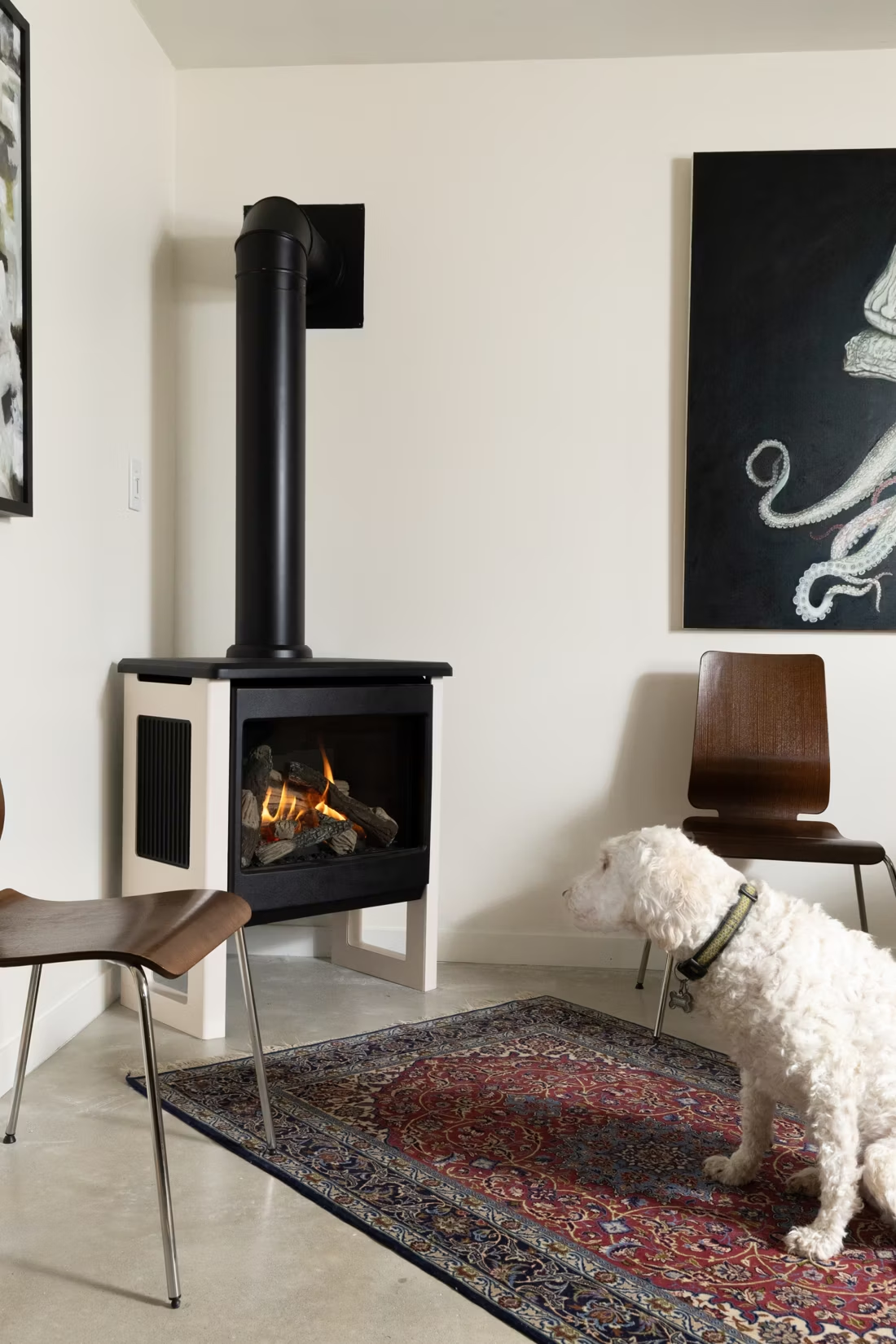
A gas fireplace is a fully built-in unit framed into a wall, typically used in new construction or a remodel. A gas insert is sized to slide into an existing masonry firebox, turning an old wood-burning fireplace into a sealed, efficient propane unit that vents through the existing chimney with a liner. A gas stove is a freestanding cabinet-style unit that sits on the floor, similar in footprint to a wood stove but running on propane. For the many older Sequim homes built around a traditional wood fireplace, an insert is usually the simplest upgrade. Newer builds or rooms without an existing chimney are better suited to a built-in fireplace or a freestanding stove.
Do I need a permit to install a gas fireplace in Sequim?
Yes. Installations within city limits go through the City of Sequim Building Division; homes in the surrounding unincorporated Dungeness Valley fall under Clallam County's Department of Community Development. Both require a building permit for the fireplace installation, and propane line work needs to be done by a licensed gas-fitter. If you're adding a new propane tank, your supplier typically handles the tank placement and connection permitting as part of setup. Most local hearth dealers coordinate the building permit, gas line, and inspection so you're not juggling separate trades.
What's the difference between vented and vent-free gas fireplaces?
Vented (direct-vent) gas fireplaces pull combustion air from outside and exhaust exhaust gases back outside through a sealed pipe—they're the cleanest, safest option and the standard choice everywhere. Vent-free units burn fuel directly into the room without any outside venting. Washington State restricts unvented gas appliances for residential use, so you won't find vent-free fireplaces as a real option through Sequim dealers—and that's actually a good thing for indoor air quality, especially given Sequim's occasional wildfire-smoke days when you want your fireplace adding heat, not additional particulates, to the air inside. Direct-vent propane units are what local retailers will recommend and install.
How often should my gas fireplace be serviced?
Plan on an annual inspection, ideally before the fall heating season starts. A technician will check the burner, pilot assembly, propane line connections, and venting, and clean the glass and interior—this matters even more in Sequim's coastal marine air, which can accelerate corrosion on metal fittings over time. Most local service providers charge in the $150 to $250 range for a standard annual visit, and it's worth confirming your propane supplier's delivery schedule at the same time so you're not caught low on fuel during a cold snap.
Gas vs. wood—which is right for my Sequim home?
Wood, burned from local Douglas fir, red alder, or lodgepole pine cut under a Mt. Baker-Snoqualmie National Forest permit ($5–$20 per cord, May through October season), still makes sense for homeowners who want a backup heat source that works with no power and no propane delivery truck. Gas offers instant on-off convenience, no ash or creosote, and steadier output—a real advantage for retirees and part-time residents who want reliable warmth without tending a fire. Given Sequim's mild marine winters and occasional wildfire smoke that makes people less eager to add more smoke of their own, a lot of homeowners here lean toward propane gas for daily use and keep wood as a secondary option.
What's the difference between an insert and a zero-clearance fireplace?
An insert is a fireplace that slides into a pre-existing wood-burning fireplace—if you don't have one, there's nothing to insert it into. A zero-clearance fireplace is built into a framed wall, which makes it the answer for remodels and new construction. Simple test: existing masonry fireplace means insert; blank or framed wall means zero-clearance.
Why is my open fireplace making my house colder?
Open fireplaces suck—literally. As the fire burns, it consumes air your furnace already paid to heat and pulls it out through the chimney, so the house is actually colder after the fire goes out than before you lit it. An insert fixes this: it seals the chimney, puts fixed glass across the front, and turns that hole in your house into a real heat source.
Can I install a fireplace myself?
If you're putting a fire in your house on purpose, it's best to work with an expert. Unless you're genuinely experienced in framing, gas line, vent pipe, and the national code on clearances to combustibles, have a professional do it—and ideally the same company that sells you the fireplace, so warranty, service, and liability all live under one roof.
How much should I budget for a fireplace?
For an average home—covering the fireplace, the vent pipe, and basic installation—a budget between $3,900 and $5,500 gives you a lot of options across wood, gas, and pellet. By the time you add finish work, gas line, and electrical, the average complete installation lands between $5,000 and $12,000 all-in. In a remodel or new build, a good rule is to put about 2.5% of the total project cost toward the fireplace.
Preferred Dealer in Sequim
Marked Preferred because they run on WhyFire's software—so they can show you real pricing and book your appointment right here. No manufacturer pays for placement. How we verify dealers →
Find your gas fireplace in Sequim.
Tell us about your home and your project, and we'll match you with a trusted local dealer plus a free Project Guide & Parts List—the exact parts, vent kit included, and the right propane setup for your Sequim gas fireplace.
Find Your Fireplace →