
Keep Your Family Warm and Safe—No Matter What
From Port Angeles to Sequim to Forks, wood heat keeps Olympic Peninsula homes warm and dry when Pacific storms knock out power. Find the right stove or insert and get matched with a trusted local dealer.
Every Project Starts From One of These Five Situations
Wood heat earns its place in a mild, damp climate.
Clallam County stretches along the northern edge of the Olympic Peninsula, from the drier rain-shadow around Sequim to the rainforest belt near Forks and the wind-exposed coastline out toward Neah Bay. Sitting in climate zone 4C with about 5,494 heating degree days, the county doesn't see the deep, prolonged cold of places like Duluth, MN or Fargo, ND—average winter lows hover around 36°F, and hard freezes are the exception, not the rule. What locals deal with instead is persistent damp and Pacific storm systems strong enough to knock out power for days at a time, especially in the more exposed stretches of Highway 101 and along the Strait of Juan de Fuca.
That's where wood heat still matters here, even in a climate this mild: a wood stove or insert keeps a house warm and functioning when the grid goes down, and it does a better job cutting through the region's persistent dampness than electric heat alone. Douglas fir, red alder, and lodgepole pine are the common local species, and cutting permits through Mt. Baker-Snoqualmie National Forest run $5 to $20 per cord during the May-to-October season—a real option for households willing to cut their own. Late-summer and fall wildfire smoke is the county's main air quality concern, more so than winter inversion, so most burning restrictions here are seasonal rather than a daily wintertime issue like in some inland basins.
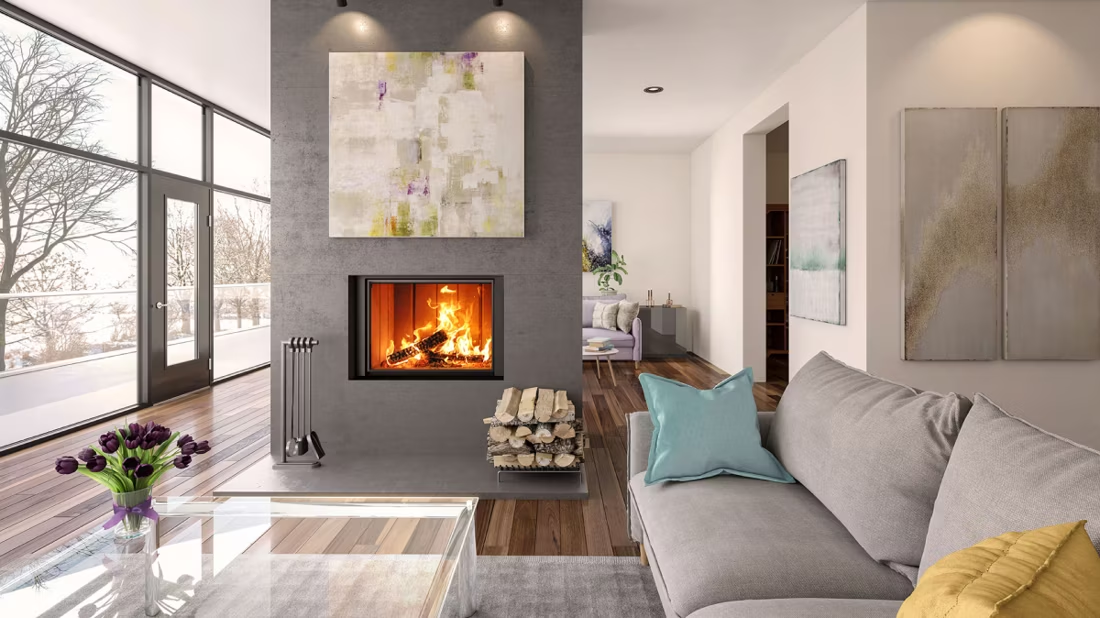
Firewood Cutting Permits Near Clallam County
Three steps. No salesperson until you're ready.
Tell us about your project
Your zip code, your situation, and the fuel you're leaning toward—or let the answers point you to one.
See what's actually available
The brands dealers within 100 miles genuinely carry—real options, never a catalog mirage.
Get your dealer & Project Guide
A trusted local dealer, plus the free Project Guide & Parts List that names every component of the job.
Frequently Asked Questions
How much does a wood stove installation cost in Clallam County?
Costs vary quite a bit depending on the project. A wood insert going into an existing masonry fireplace—common in older Port Angeles homes—is generally the least involved and least expensive option since it reuses the existing chimney with a stainless liner. A freestanding stove in a home with no existing chimney, which is more common in newer construction around Sequim, requires full Class A pipe and through-roof venting, which adds materially to the job. Homes closer to the coast, including Neah Bay and La Push, can also see slightly higher costs due to travel time for installers and the added corrosion-resistance considerations of salt air on venting hardware. A local dealer can give you a firm number after an in-home look at your chimney situation, ceiling height, and clearances.
What size wood stove or insert do I need for my home?
Because Clallam County's winters run mild—average lows near 36°F rather than the sub-zero nights you'd see inland—most homes here don't need the largest catalytic stoves built for extreme cold. A small to medium stove is often plenty for a Sequim or Port Angeles home used as supplemental heat alongside a heat pump or furnace. Homes further out toward Forks or up in the Olympic foothills, where damp cold and storm-driven outages last longer, may do better with a medium to large stove sized to run as reliable backup heat for days at a time. Local retailers size stoves based on square footage, insulation, and how you plan to use the stove—supplemental warmth versus true storm-outage backup—during a free in-home consultation.
Where can I find certified wood stove installers near me?
Look for installers with NFI (National Fireplace Institute) or CSIA (Chimney Safety Institute of America) certification, which covers proper clearances, venting, and code compliance for wood-burning appliances. Local hearth retailers serving Port Angeles, Sequim, and the surrounding area typically employ certified installers and are used to the specific challenges of the Peninsula's climate—namely, keeping venting sealed against near-constant moisture and choosing corrosion-resistant hardware for homes closer to the Strait or the coast. Avoid handyman-style installs on wood appliances; improper venting in a damp climate like this one accelerates creosote and moisture-related chimney problems.
What's the difference between a wood stove and a wood insert?
A wood stove is freestanding and vents through new chimney pipe, giving you flexibility on where it goes in the house. A wood insert slides into an existing masonry fireplace opening and vents through that chimney with a liner, turning an old, drafty fireplace into a genuinely efficient heat source. Many older homes around Port Angeles and Sequim already have a masonry fireplace, which makes an insert the more cost-effective route. Newer construction, or additions without an existing fireplace, are usually better matched to a freestanding stove or zero-clearance unit.
Do I need a permit to install a wood stove in Clallam County?
Yes—a building permit is required for new wood stove installations through the Clallam County Department of Community Development, and the unit itself needs to meet current EPA emissions standards. Most local hearth dealers handle the permitting process as part of the installation, so it's rarely something homeowners have to navigate solo. Separately, if you plan to cut your own firewood on public land, permits are issued through Mt. Baker-Snoqualmie National Forest, running $5 to $20 per cord during the May-through-October cutting window—that's a different permit from the building permit and is handled by a different office entirely.
What's the best wood stove for Clallam County's climate?
Because winters here are damp rather than bitterly cold, a stove that lights easily and burns cleanly on the region's common species—douglas fir, red alder, and lodgepole pine—matters more than sheer maximum output. Non-catalytic stoves from Northwest-connected brands like Lopi (built in Mukilteo, WA) or Pacific Energy tend to be popular locally for their easier operation and strong performance on regionally available softwoods. For households further out toward Forks who want longer, unattended burns during multi-day storm outages, a catalytic model from a brand like Blaze King is worth a look. A local dealer can match a specific model to your home's exposure, elevation, and how much backup-heat reliability you're after.
How often should my chimney be inspected and cleaned?
An annual inspection before burning season is the standard recommendation from CSIA, and it matters even more in Clallam County's persistently damp air, which can slow flue drying between burns and contribute to creosote buildup, especially when burning the softer, more resinous douglas fir common locally. Homes running a stove regularly through the winter as backup or supplemental heat should plan on a full sweep each fall. Coastal homes near Neah Bay or La Push should also have venting hardware checked for salt-air corrosion during that same visit.
Where can I get firewood in Clallam County?
Local firewood suppliers around Port Angeles and Sequim sell douglas fir, red alder, and occasionally lodgepole pine by the cord, with pricing that varies by species and season. For self-cutting, Mt. Baker-Snoqualmie National Forest issues personal-use cutting permits for $5 to $20 per cord during the May-through-October season—a common route for households on the Peninsula who want to stock up before the wet season sets in. Wood cut and split over the summer has more time to season properly before it's needed, which matters in a climate where ambient humidity slows drying.
Wood stove vs. pellet stove—which is right for me?
Wood stoves run without electricity, which is the deciding factor for a lot of Clallam County households given how often Pacific storms take down power lines, sometimes for several days at a stretch. They also pair naturally with the county's Forest Service cutting permits if you're willing to cut your own fuel. Pellet stoves, sold locally under brands like Bear Mountain, Lignetics, and Pacific Pellet, are more convenient day-to-day—load the hopper, set the thermostat—and burn cleaner, but they need electricity to run the auger and blower, so they go dark in an outage unless paired with a battery backup. For a primary residence relying on wood heat as storm insurance, wood tends to win; for a low-maintenance secondary heat source in town, pellet is worth a look.
Why is a fireplace insert so efficient?
An insert does two things: it seals the chimney completely, so you stop losing air you already paid to heat, and it radiates warmth into the room through the firebox and glass. Most add a heat-exchange fan that pulls cool room air underneath, wraps it around the hot firebox, and pushes it back out warm. Your home is more efficient before you've even lit the first fire.
What's the difference between an insert and a zero-clearance fireplace?
An insert is a fireplace that slides into a pre-existing wood-burning fireplace—if you don't have one, there's nothing to insert it into. A zero-clearance fireplace is built into a framed wall, which makes it the answer for remodels and new construction. Simple test: existing masonry fireplace means insert; blank or framed wall means zero-clearance.
What is an in-home preview and do I need one?
It's a visit where a hearth professional measures your space, confirms the model you picked actually works in your home, and walks the specs—framing, gas line, venting, finish work—before anything is ordered. Some details you just can't know until you see the house. Never make a down payment without one; it's the single most-skipped step that burns buyers.
Can I install a fireplace myself?
If you're putting a fire in your house on purpose, it's best to work with an expert. Unless you're genuinely experienced in framing, gas line, vent pipe, and the national code on clearances to combustibles, have a professional do it—and ideally the same company that sells you the fireplace, so warranty, service, and liability all live under one roof.
Stove and Fireplace Dealers in Clallam County
Listings include WhyFire partner dealers, dealers we have verified as authorized for the brands we recommend, and established local businesses that carry hearth products. Every listing shows which one it is. The ones marked Preferred run on WhyFire's software, so they can show you real pricing and book your appointment right here. No manufacturer pays for placement. How we verify dealers →
Strait Comfort Systems
Olympic Hearth And Spa
Find your wood stove in Clallam County.
Tell us about your home and we'll match you with a trusted local Clallam County dealer and send over a free Project Guide & Parts List—the exact parts, including the vent kit, for your specific install.
Find Your Fireplace →