
Keep Your Family Warm and Safe—No Matter What
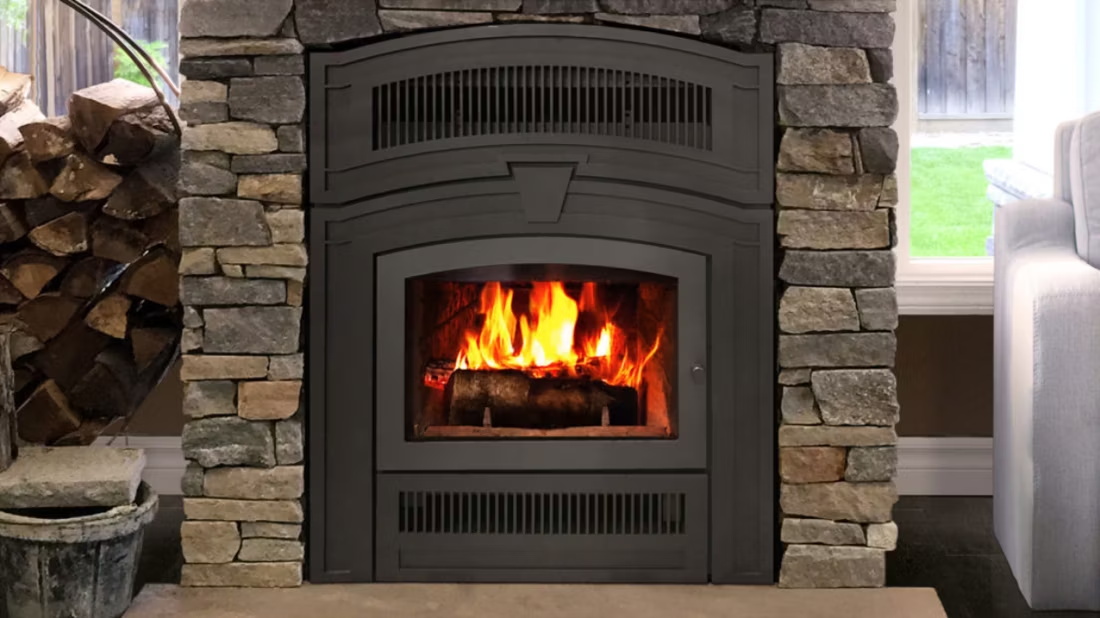
Pullman sits in the treeless Palouse, where gas and electric heat dominate—but a wood stove can still make sense for acreage homes, older farmhouses, or backup heat during winter storms. We'll connect you with a local dealer who can tell you honestly whether it fits your property.
Every Project Starts From One of These Five Situations
Wheat fields, not woodlots.
Pullman sits at 2,528 feet in the rolling, largely treeless wheat country of the Palouse. Winters here get genuinely cold—average lows around 26°F with a heating season on par with Madison, Wisconsin—but the region simply doesn't grow much firewood. The nearest public land where you can cut your own wood is the Nez Perce-Clearwater National Forests or the Idaho Panhandle National Forests, both well east into Idaho, or BLM Spokane District land to the north. For most Pullman households, hauling home cordwood means a drive of an hour or more, not a trip to the back forty.
Add to that a housing stock heavily shaped by Washington State University—a large share of Pullman's homes are rentals or multi-unit buildings where landlords lean toward low-maintenance gas or electric heat—and it's no surprise wood stoves are the exception rather than the rule inside city limits. Regional air quality is also a factor: wildfire smoke already stacks up over the Palouse most late summers, and local air agencies would rather not add another source of particulate to the mix. That said, wood heat hasn't disappeared. A small number of owners on larger Whitman County parcels, in older farmhouses with an existing masonry fireplace, or anyone who wants a non-electric backup source for winter power outages still install a stove or insert—and for those situations, it can be the right call.
Firewood Cutting Permits Near Pullman
Three steps. No salesperson until you're ready.
Tell us about your project
Your zip code, your situation, and the fuel you're leaning toward—or let the answers point you to one.
See what's actually available
The brands dealers within 100 miles genuinely carry—real options, never a catalog mirage.
Get your dealer & Project Guide
A trusted local dealer, plus the free Project Guide & Parts List that names every component of the job.
Frequently Asked Questions
Is wood heat actually available in Pullman, or is it too uncommon to bother?
It's uncommon, but not unavailable. Most Pullman homes—especially in-town and near Washington State University—run on natural gas or electric heat, and that's genuinely the better fit for typical in-city lots given the region's limited firewood supply and rental-heavy housing stock. Where wood still makes sense is on larger parcels outside city limits, in older farmhouses with an existing chimney, or as a non-electric backup heat source. If that's your situation, a local dealer can tell you honestly whether your property and home layout support it.
How much does a wood stove installation cost near Pullman?
Regional Inland Northwest installers typically price a wood stove or insert install somewhere in the $4,000 to $8,500 range, depending on whether you're working with an existing masonry chimney, need new Class A chimney pipe run through a roof, or require a hearth pad upgrade for clearance. Because wood installs are less common here than in forested parts of eastern Washington or the Idaho Panhandle, it's worth getting quotes from more than one installer—a dealer who does a handful of these a year vs. one who does dozens will size and price the job differently.
Where do I get a firewood cutting permit near Pullman?
You won't find much cuttable timber in Whitman County itself—the Palouse is wheat and lentil country, not forest. The closest permit offices are the Nez Perce-Clearwater National Forests and Idaho Panhandle National Forests across the border in Idaho, both charging roughly $5 to $20 per cord depending on the district, with cutting seasons generally running April or May through October. BLM's Spokane District, north toward Spokane, is another option at about $10 per cord. Expect a real drive—most of this land sits 60-plus miles from Pullman—so factor fuel and time into whether self-cut wood actually saves you money.
What wood species will I actually be burning?
If you're sourcing locally cut wood from the nearby Idaho forests or BLM land, expect ponderosa pine, lodgepole pine, and Douglas fir—the same species common across the Inland Northwest. All three season faster than dense hardwoods, so plan on splitting and stacking wood at least six months, ideally a full year, before burning. Douglas fir in particular needs a full season to drop below the 20% moisture content that keeps a stove burning clean instead of smoldering.
Are there wood-burning restrictions in Pullman related to air quality?
There's no formal wood-burning ban tied to Pullman specifically, but the Palouse region deals with real air quality stress from wildfire smoke most late summers and fall, and that context matters if you're weighing a wood stove. A modern EPA-certified stove burns dramatically cleaner than an old pre-1990s unit, and that's the version any reputable local dealer installs today. If you already own an older uncertified stove, it's worth asking a local dealer about certified replacement options—cleaner burning and sometimes eligible for state efficiency incentives.
What are Pullman homeowners using instead of wood?
Gas and electric heat are the standard choices in Pullman, and both are genuinely well-suited here. Avista Corp serves the area for electric service at roughly 11.9 cents per kWh, and natural gas is broadly available for direct-vent fireplaces and furnaces. For a college town with a lot of rental turnover and homes without existing chimneys, a direct-vent gas fireplace or an electric insert is usually simpler to install, permit, and maintain than a wood-burning system—no chimney, no cordwood storage, no ash cleanup.
Do I need a permit to install a wood stove in Pullman?
Yes—any new wood-burning appliance needs a building permit, typically through the City of Pullman's building division inside city limits or Whitman County for properties outside them. The stove itself needs to meet current EPA emissions standards. Because wood installs are less frequent here than gas or electric work, it's worth confirming with your installer that they've pulled a wood-stove permit recently and know the current inspection requirements—the process is straightforward, but less routine for offices that see far more gas furnace permits than chimney installs.
Wood stove vs. gas fireplace—which makes more sense for a Pullman home?
For most in-town Pullman homes, gas wins on convenience: instant heat, no wood storage, no chimney to maintain, and it fits the rental-heavy housing stock well. Wood wins in one specific case—you want heat that works without electricity during a winter storm, and you have a property, usually outside city limits on acreage, where firewood storage and hauling aren't a burden. If backup heat during outages is your main driver, ask a local dealer about a wood stove sized for occasional use rather than a full daily-heat setup—it's a different, usually less expensive, installation than a primary-heat system.
If I already have an old wood fireplace in my Pullman home, is it worth keeping?
Depends on the fireplace and how you use it. Older open masonry fireplaces are inefficient—most of the heat goes up the chimney—but they can be converted with a wood-burning insert, which turns that same chimney into a real heat source rather than just an ambiance feature. Given how rare local firewood sourcing is around Pullman, most owners who go this route either buy cordwood delivered from Idaho or eastern Washington suppliers, or make the trip themselves during the April-through-October cutting season. If you're mainly after occasional ambiance and don't want to deal with fuel logistics, a gas insert into that same fireplace is often the more practical swap.
What's the difference between an insert and a zero-clearance fireplace?
An insert is a fireplace that slides into a pre-existing wood-burning fireplace—if you don't have one, there's nothing to insert it into. A zero-clearance fireplace is built into a framed wall, which makes it the answer for remodels and new construction. Simple test: existing masonry fireplace means insert; blank or framed wall means zero-clearance.
Why is a fireplace insert so efficient?
An insert does two things: it seals the chimney completely, so you stop losing air you already paid to heat, and it radiates warmth into the room through the firebox and glass. Most add a heat-exchange fan that pulls cool room air underneath, wraps it around the hot firebox, and pushes it back out warm. Your home is more efficient before you've even lit the first fire.
Does a fireplace add value to my home?
On average, a fireplace adds back to the home about the same amount you spent installing it. Add the monthly savings from heating the rooms you actually use instead of the whole house—often hundreds of dollars a year—and the value case is strong before you even count what a fire does for how your family uses the room.
Can I install a fireplace myself?
If you're putting a fire in your house on purpose, it's best to work with an expert. Unless you're genuinely experienced in framing, gas line, vent pipe, and the national code on clearances to combustibles, have a professional do it—and ideally the same company that sells you the fireplace, so warranty, service, and liability all live under one roof.
Nearby Dealers
Hearth shops serving Pullman and the surrounding area.
Find out if wood heat fits your Pullman home.
Tell us about your property and we'll match you with a trusted local dealer—someone who installs both wood and gas systems in the Pullman area—and send you a free Project Guide & Parts List: an honest read on whether wood makes sense for your home, plus the exact parts, vent kit, and dealer recommendation if it does.
Find Your Fireplace →