
Keep Your Family Warm and Safe—No Matter What
Wood heat for the damp, timber-country winters of Longview Heights. Find the right stove or insert, and connect with a trusted local dealer.
Every Project Starts From One of These Five Situations
Wood heat runs on local timber, not natural gas lines.
Longview Heights sits at 866 feet in the lower Columbia River valley, in a climate zone (4C) that's milder and wetter than inland Washington—winter lows average around 35°F rather than the single digits you'd see in Bozeman, MT or Fargo, ND. The winter heating season here runs at a moderate load, but the marine air brings weeks of steady damp cold and late-summer wildfire smoke that shapes when and how people burn.
Cowlitz County has been timber country for generations, and Douglas fir, red alder, and lodgepole pine are all common species cut and burned locally. National forest cutting permits are available through Gifford Pinchot, Olympic, and Mt. Hood National Forests for $5 to $20 per cord during the May-to-October season. With Cowlitz County PUD's relatively low residential electric rate of 8.8 cents per kWh, some homeowners lean on cheap hydro power for baseboard or heat pump heat—but a wood stove still earns its keep as backup heat when wind storms off the river knock out power, which happens most winters in this stretch of the valley.
Firewood Cutting Permits Near Longview Heights
Three steps. No salesperson until you're ready.
Tell us about your project
Your zip code, your situation, and the fuel you're leaning toward—or let the answers point you to one.
See what's actually available
The brands dealers within 100 miles genuinely carry—real options, never a catalog mirage.
Get your dealer & Project Guide
A trusted local dealer, plus the free Project Guide & Parts List that names every component of the job.
Frequently Asked Questions
How much does a wood stove installation cost in Longview Heights?
A typical wood stove or insert installation in this part of Cowlitz County runs roughly $3,500 to $8,500, depending on the unit, whether an existing masonry chimney can be reused, and whether new Class A chimney pipe and roof penetration are needed. Homes without an existing chimney—common in newer construction around Longview Heights—tend to land at the higher end once full venting is factored in. A local hearth retailer will typically pull the Cowlitz County building permit as part of the install.
What size wood stove or insert do I need for my home?
With winter lows averaging around 35°F, most homes in Longview Heights don't need the largest catalytic units built for sub-zero climates—a small to medium stove (up to about 1,500 sq ft) handles a main living area comfortably, while larger or open-concept homes may want a medium-to-large unit rated for 1,500-2,500 sq ft. The bigger variable locally is insulation and how leaky the home is against the marine damp. A local retailer will size your space for free during an in-home visit rather than guessing off square footage alone.
Where can I find certified wood stove installers near me?
Look for NFI (National Fireplace Institute) or CSIA (Chimney Safety Institute of America) certification—both indicate specific training in wood-burning appliance clearances and venting. Around Longview and Kelso, most hearth shops that sell stoves also install them, which keeps warranty and code compliance under one roof. Avoid a general contractor or handyman install for a wood-burning unit; improper clearance-to-combustible spacing is a leading cause of house fires in older Cowlitz County homes with cedar-shake roofs and wood-frame construction.
What's the difference between a wood stove and a wood insert?
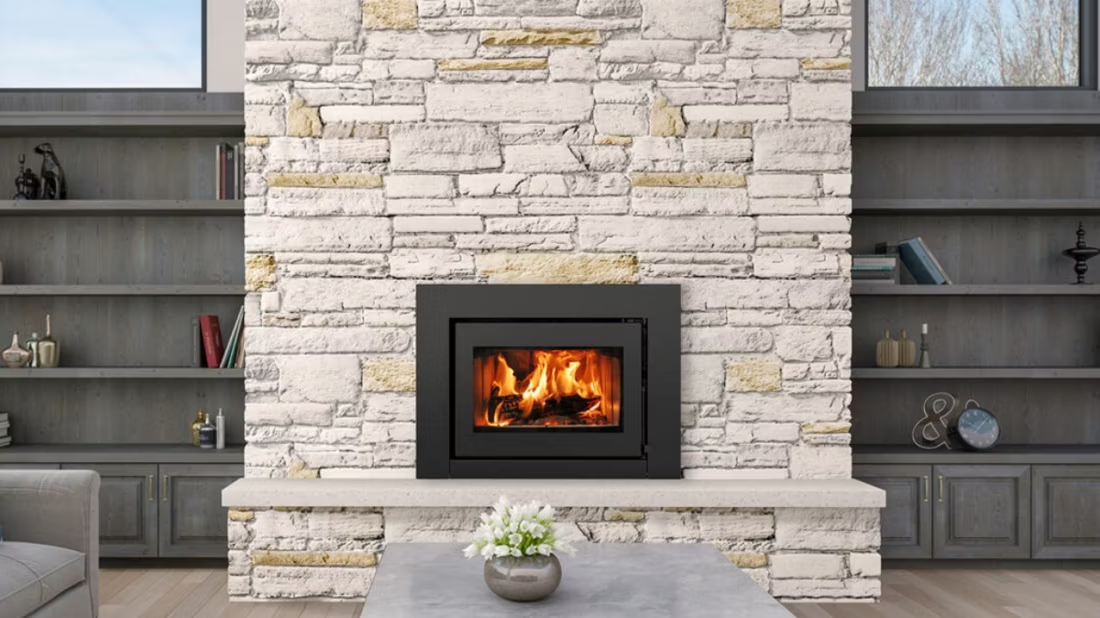
A wood stove is a freestanding unit on a hearth pad that vents through a chimney and can go almost anywhere with the right clearances. A wood insert slides into an existing masonry fireplace opening, turning a drafty open hearth into a sealed, high-efficiency heater using the chimney you already have. Many of the older homes near downtown Longview and the Highlands have original masonry fireplaces that are excellent insert candidates—newer homes in Longview Heights without an existing fireplace usually go with a freestanding stove or a zero-clearance wood fireplace instead.
Do I need a permit to install a wood stove in Longview Heights?
Yes—a new wood stove installation requires a building permit through Cowlitz County, and the unit must meet current EPA 2020 NSPS emissions standards. Most local installers handle that paperwork as part of the job. There's no winter burn-curtailment program here like the Willamette Valley or the Klamath Basin, but Washington's Department of Ecology does issue air quality advisories during wildfire smoke events in late summer, which is a separate consideration from cold-weather burning.
What's the best wood stove for Longview Heights's climate?
Because winters here are damp and moderate rather than brutally cold, a mid-size non-catalytic stove from a brand like Pacific Energy or Lopi is usually plenty for day-to-day heating, and it burns local Douglas fir and red alder cleanly. If backup heat during storm-related outages is the priority—which matters in a river valley prone to winter windstorms—a catalytic stove that can hold coals overnight, such as a Blaze King, gives you longer burn times between reloads when you're not around to tend the fire.
How often should my chimney be inspected and cleaned?
Plan on an annual inspection and sweep, ideally in late summer before burning season starts, which is also before wildfire smoke season typically peaks in this region. Red alder and Douglas fir both burn reasonably clean when properly seasoned, but green or wet wood—a real risk in a climate this damp if firewood isn't covered and dried for a full season—builds creosote fast. Anyone burning as a primary heat source through a full Longview Heights winter should treat the annual sweep as non-negotiable.
Where can I get firewood locally in Longview Heights?
Douglas fir, red alder, and lodgepole pine are the common species cut and sold throughout Cowlitz County, with local sellers typically charging by the cord. For self-cutting, the nearest national forest permits come through Gifford Pinchot National Forest, running $5 to $20 per cord during the May-to-October cutting season—Olympic and Mt. Hood National Forests are farther but offer similar permit pricing if you're willing to drive. Whatever you cut or buy, give it a full spring-to-fall season to dry before burning in this marine climate.
Wood stove vs. pellet stove—which is right for me?
Wood stoves work without electricity, which matters here given how often windstorms off the Columbia River knock out power in Longview Heights—a real advantage over a pellet stove's auger and blower, which stop the moment the power does. Pellet stoves are more convenient day to day and burn cleaner, and with Cowlitz County PUD's low residential rate of 8.8 cents per kWh, running one isn't expensive. Regional brands like Bear Mountain, Lignetics, and Pacific Pellet are widely stocked in this part of the Pacific Northwest. If backup heat during outages matters most, wood wins; if convenience and low ash matter more and you have reliable power, pellet is worth a look.
Why won't my new wood stove get going like my old one?
New wood stoves are 70%+ efficient, so far less heat goes up the flue—which also means less draft to get a fire established. The rule: build a genuinely hot fire for about 45 minutes before you choke it down. Skip that and you get smoke in the room, creosote in the chimney, and a fire that never takes off. Most performance complaints trace straight back to this.
Why is my open fireplace making my house colder?
Open fireplaces suck—literally. As the fire burns, it consumes air your furnace already paid to heat and pulls it out through the chimney, so the house is actually colder after the fire goes out than before you lit it. An insert fixes this: it seals the chimney, puts fixed glass across the front, and turns that hole in your house into a real heat source.
What is an in-home preview and do I need one?
It's a visit where a hearth professional measures your space, confirms the model you picked actually works in your home, and walks the specs—framing, gas line, venting, finish work—before anything is ordered. Some details you just can't know until you see the house. Never make a down payment without one; it's the single most-skipped step that burns buyers.
Can a fireplace actually lower my heating bill?
Yes—by creating a comfort zone. A furnace heats every square foot of the house just to warm the one room you're in; a gas fireplace on low burns roughly a sixth of the gas a typical furnace does. Set the furnace around 55–60 degrees as a baseline, then heat the rooms your family actually uses. Families who heat this way commonly save $20–$60 a month.
Nearby Dealers
Hearth shops serving Longview Heights and the surrounding area. Every listing shows whether it is a WhyFire partner, a dealer we have verified as authorized for the brands we recommend, or a local business carrying hearth products. No manufacturer pays for placement. How we verify dealers →
Infinite Heating & Cooling LLC
Earth-N-Sun
Find your wood fireplace in Longview Heights.
Tell us a bit about your home and we'll put together a free Project Guide & Parts List—the right wood stove or insert, the exact venting parts, and a trusted local dealer to install it.
Find Your Fireplace →