
Clean-Burning Heat Built for Longview Heights' Rainy Winters.
A low-maintenance way to heat through Cowlitz County's long, damp season—find the right pellet stove or insert and connect with a trusted local dealer.
Every Project Starts From One of These Five Situations
A mild climate, but pellet heat still earns its keep.
Longview Heights sits in Cowlitz County along the lower Columbia River, at just 866 feet of elevation in Washington's climate zone 4C—a marine west coast climate defined by mild, wet winters rather than deep cold. With winter lows averaging 35°F and a winter heating load only about half that of colder inland climates, the heating demand here is far gentler than colder inland climates like Fargo, North Dakota, where the heating season runs much longer and harder. Even so, five or six months of gray, damp weather mean most homes here run some kind of supplemental heat daily from November through March, and pellet stoves have become a popular answer.
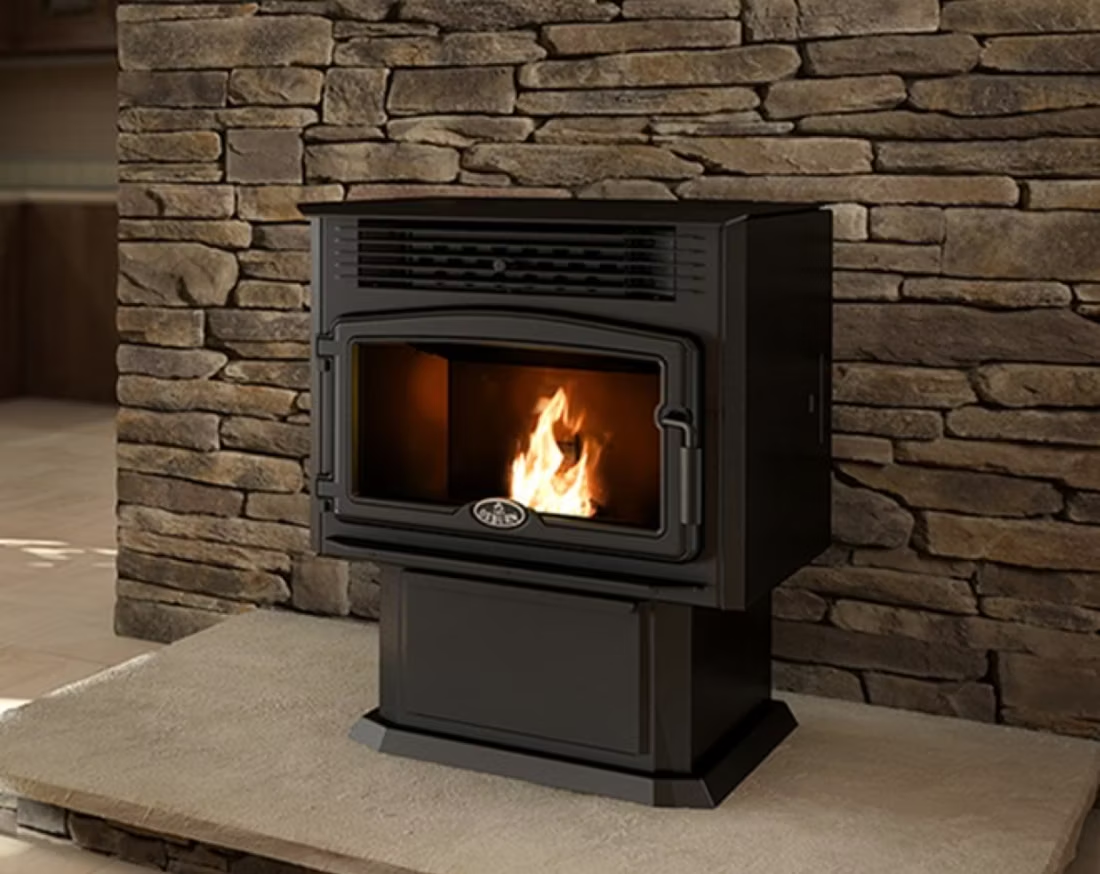
Part of the appeal is what pellet stoves don't require: no cutting permits from the Gifford Pinchot, Olympic, or Mt. Hood National Forests (all within a couple hours' drive and popular for firewood cutting at $5 to $20 a cord), no seasoning wood in the garage, and no chimney sweep visits. Bagged pellets from regional producers like Bear Mountain, Lignetics, and Pacific Pellet are stocked at hardware and farm stores throughout Cowlitz County. And because Cowlitz County PUD's residential electric rate sits at just $0.088 per kWh—among the lowest in the country thanks to regional hydropower—running a pellet stove's auger and blower costs only a few cents a day. With wildfire smoke now a recurring late-summer concern in the lower Columbia River valley, the low-emission, EPA-certified burn of a pellet stove is also a genuine air quality upgrade over an old, uncertified wood stove.
Three steps. No salesperson until you're ready.
Tell us about your project
Your zip code, your situation, and the fuel you're leaning toward—or let the answers point you to one.
See what's actually available
The brands dealers within 100 miles genuinely carry—real options, never a catalog mirage.
Get your dealer & Project Guide
A trusted local dealer, plus the free Project Guide & Parts List that names every component of the job.
Frequently Asked Questions
How much does a pellet stove installation cost in Longview Heights?
Most pellet stove installations in Longview Heights run $3,000 to $6,500, well below a comparable wood stove installation, mainly because pellet stoves vent through a simple 3- or 4-inch pipe out a side wall rather than requiring a full masonry chimney. A freestanding pellet stove replacing an old wood stove on an existing hearth pad sits at the lower end of that range. Converting an open masonry fireplace to a pellet insert, which requires a liner run up the existing chimney, typically lands in the middle to upper end. Cowlitz County building permits are required for any new installation, and local dealers typically handle that paperwork as part of the job.
Pellet stove vs. wood stove—which makes more sense here?
Longview Heights sits close to Douglas fir, red alder, and lodgepole pine stands, and cutting permits through the Gifford Pinchot, Olympic, or Mt. Hood National Forests run just $5 to $20 per cord during the May-to-October season—so self-cut firewood is genuinely cheap here. Wood stoves also keep working with no power. Pellet stoves trade that off for convenience: no splitting, stacking, or seasoning, a cleaner burn, and a thermostat that holds a steady temperature overnight. Given how mild winters are here compared to colder inland climates, most homeowners aren't relying on wood heat to survive a hard freeze—it's more about comfort and backup, which tilts many toward the lower-maintenance pellet option.
Where can I buy pellets locally, and what do they cost?
Bear Mountain, Lignetics, and Pacific Pellet are the three brands most commonly stocked at hardware stores and farm supply outlets in Cowlitz County, and all three source fir and alder sawmill waste from Pacific Northwest mills, so freight costs stay low compared to trucking pellets in from out of state. Expect to pay roughly $250 to $325 a ton locally, with prices ticking up slightly in late fall when demand peaks. A home burning a stove as supplemental heat through the wet season typically goes through 1 to 2 tons a year; homes using it as a primary heat source can burn 3 tons or more.
Does a pellet stove work during a power outage?
Not without a backup power source. Pellet stoves rely on an electric auger to feed fuel and a blower to circulate heat, so a standard unit shuts down the moment the power goes out—a real consideration in Cowlitz County, where winter windstorms off the Columbia River Gorge occasionally knock out power for a day or more. Some owners pair their pellet stove with a small battery backup or inverter generator sized for the stove's low draw. On the plus side, Cowlitz County PUD's residential rate of $0.088 per kWh is one of the lowest in the country, so running a pellet stove full-time when the power is on costs only pennies a day.
Do I need a permit to install a pellet stove in Longview Heights?
Yes—Cowlitz County requires a building permit for any new solid-fuel or pellet-burning appliance installation, and the unit needs to carry EPA certification. Unlike wood stoves burning self-cut firewood, pellet stoves don't require any cutting permit from the Forest Service, since you're buying bagged fuel rather than harvesting it. Most local dealers pull the county permit as part of the installation and schedule the required inspection.
Are pellet stoves affected by wildfire smoke air quality alerts?
Wildfire smoke from late-summer fires east of the Cascades occasionally drifts into the lower Columbia River valley and triggers air quality advisories in Cowlitz County. Unlike older uncertified wood stoves, EPA-certified pellet stoves burn clean enough that they're typically exempt from Washington's burn-ban restrictions during air stagnation events—one more reason homeowners here have shifted toward pellet appliances over open wood fires in recent years.
What size pellet stove do I need for my home?
Given Longview Heights' mild marine climate and modest heating demand—a winter heating load well under half of what colder inland climates like Bismarck, North Dakota see—most homes here do fine with a small to mid-size pellet stove rated for 1,000 to 1,800 square feet, even when used as a primary heat source. Larger, open-concept homes or those with vaulted ceilings may need a unit rated closer to 2,000 square feet. A local dealer can size the stove correctly during an in-home visit, accounting for insulation and layout.
Can I put a pellet insert into my existing fireplace?
Yes, and it's a common upgrade in the older homes around Longview Heights. A pellet insert slides into an existing masonry fireplace opening, with a liner run up through the chimney to vent the exhaust, and a hearth pad update if your existing pad doesn't meet clearance requirements. It's a good option if you want to keep the look of a traditional fireplace but stop dealing with the mess and heat loss of an open masonry hearth. For homes without an existing fireplace, a freestanding pellet stove vented through an exterior wall is usually simpler and less expensive.
Pellet stove vs. electric heat—which is the better fit?
With Cowlitz County PUD's residential rate at just $0.088 per kWh, electric heat here is unusually cheap by national standards, and a good electric fireplace or heat pump supplement can be a low-cost, zero-maintenance option. Pellet stoves cost more upfront to install but offer real ambiance, a visible flame, and—for homes prone to winter power outages along the Columbia River Gorge—a heat source that isn't entirely dependent on the grid, provided you have a small battery backup for the auger and blower. For a primary living space where you want both a strong visual centerpiece and legitimate heat output, pellet tends to win; for a bonus room or secondary space, electric is often the simpler call.
What's the difference between an insert and a zero-clearance fireplace?
An insert is a fireplace that slides into a pre-existing wood-burning fireplace—if you don't have one, there's nothing to insert it into. A zero-clearance fireplace is built into a framed wall, which makes it the answer for remodels and new construction. Simple test: existing masonry fireplace means insert; blank or framed wall means zero-clearance.
Why is my open fireplace making my house colder?
Open fireplaces suck—literally. As the fire burns, it consumes air your furnace already paid to heat and pulls it out through the chimney, so the house is actually colder after the fire goes out than before you lit it. An insert fixes this: it seals the chimney, puts fixed glass across the front, and turns that hole in your house into a real heat source.
What is an in-home preview and do I need one?
It's a visit where a hearth professional measures your space, confirms the model you picked actually works in your home, and walks the specs—framing, gas line, venting, finish work—before anything is ordered. Some details you just can't know until you see the house. Never make a down payment without one; it's the single most-skipped step that burns buyers.
Does a fireplace add value to my home?
On average, a fireplace adds back to the home about the same amount you spent installing it. Add the monthly savings from heating the rooms you actually use instead of the whole house—often hundreds of dollars a year—and the value case is strong before you even count what a fire does for how your family uses the room.
Nearby Dealers
Hearth shops serving Longview Heights and the surrounding area. Every listing shows whether it is a WhyFire partner, a dealer we have verified as authorized for the brands we recommend, or a local business carrying hearth products. No manufacturer pays for placement. How we verify dealers →
Infinite Heating & Cooling LLC
Earth-N-Sun
Pellet Brands Stocked Around Longview Heights
Manufacturers will point you to the nearest stocking dealer.
Find your pellet stove in Longview Heights.
Tell us about your home and heating goals, and we'll match you with a trusted local Cowlitz County dealer and send over a free Project Guide & Parts List—the exact stove or insert, vent kit, and installation plan for your Longview Heights home.
Find Your Fireplace →