
Every fuel type, every corner of Cowlitz County.
Wood, gas, pellet, and electric fireplace resources for the whole county—from the Columbia River lowlands around Longview and Kelso up into the timbered foothills toward Mount St. Helens. Pick a fuel and get matched with a local dealer who actually installs it here.
Every Project Starts From One of These Five Situations
Mild marine winters, 4,545 heating degree days, and a county surrounded by working timberland.
Cowlitz County sits along the lower Columbia and Cowlitz Rivers, bordered by the Gifford Pinchot, Mt. Hood, and Olympic National Forests. Winter lows average a mild 35°F and the county logs about 4,545 heating degree days a year—a fraction of the load carried by a place like Duluth, Minnesota, but still enough to make a supplemental or primary hearth a fixture in most homes. Douglas fir, red alder, and lodgepole pine are the wood species people around here actually burn, much of it sourced from private timberland or cut under Forest Service permit, which keeps wood heat both affordable and familiar in a county built on the logging industry.
The one air-quality wrinkle in an otherwise mild marine climate is wildfire smoke—late-summer and early-fall smoke events have become more common as fire seasons in the Cascades and further inland push into the Columbia River corridor, which is worth factoring in if you're weighing an outdoor wood-burning setup versus a sealed indoor unit. Otherwise, this is a county where all four fuels see genuine use: wood and pellet stoves in the more rural stretches toward Castle Rock and Toutle, gas in the denser Longview-Kelso core, and electric units filling in as supplemental heat almost everywhere. This hub rolls up hearth retailers, service techs, and fuel suppliers across the whole county, from Woodland in the south to Kalama along the river and out toward Ryderwood and Toutle. Pick your fuel below for local dealers, install costs, and unit recommendations specific to your town.
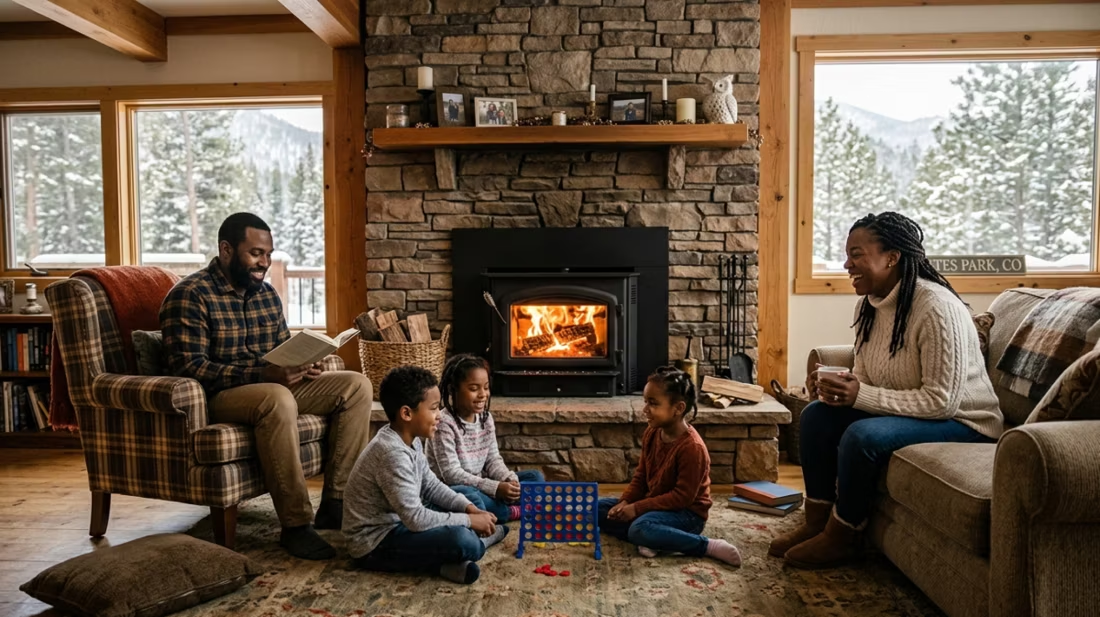
Four fuels. One honest answer for Cowlitz County.
Three steps. No salesperson until you're ready.
Tell us about your project
Your zip code, your situation, and the fuel you're leaning toward—or let the answers point you to one.
See what's actually available
The brands dealers within 100 miles genuinely carry—real options, never a catalog mirage.
Get your dealer & Project Guide
A trusted local dealer, plus the free Project Guide & Parts List that names every component of the job.
Frequently Asked Questions
Which fireplace fuel makes the most sense in Cowlitz County?
With winter lows averaging 35°F and 4,545 heating degree days, Cowlitz County has a mild-to-moderate heating load compared to inland Washington, so the right fuel comes down more to lifestyle and location than raw necessity. Wood remains popular in the more rural stretches toward Castle Rock, Toutle, and Ryderwood, where douglas fir and red alder are cheap and plentiful and a mid-size stove easily covers the heating season. Gas is the convenience pick in and around Longview and Kelso, where natural gas or propane service is widely available and a direct-vent unit can run with a flip of a switch. Pellet stoves have solid regional support from Bear Mountain, Lignetics, and Pacific Pellet, and they're a good fit for anyone who wants wood-like ambiance without splitting and stacking cordwood. Electric fireplaces work well nearly everywhere in the county as supplemental heat or an easy retrofit into an existing fireplace opening, though they're rarely a household's sole heat source given how affordable wood and gas already are here.
Do I need a permit to install a wood stove or fireplace in Cowlitz County?
Yes, in most cases. New wood stoves and inserts need to meet current EPA emissions standards, and building permits are typically pulled through the local jurisdiction—Cowlitz County or the applicable city building department if you're inside Longview, Kelso, Woodland, or another incorporated city. Gas installs require a separate gas-line permit and a licensed gas fitter for the hookup, whether you're on Cascade Natural Gas service or running propane. Pellet stove installs follow a similar permitting path to wood stoves. Electric fireplaces usually skip the permit process entirely unless you're hardwiring a built-in unit that needs a dedicated circuit. Most hearth retailers we match homeowners with handle the permitting as part of the installation, so it's rarely something you have to manage on your own.
How does wildfire smoke affect hearth choices in Cowlitz County?
Cowlitz County's marine climate keeps most winters mild, but late-summer and early-fall wildfire smoke drifting in from the Cascades and further inland has become a real seasonal factor. It doesn't restrict indoor wood stove or fireplace use the way winter inversion curtailment does in other parts of the Pacific Northwest, but it's worth considering if you're deciding between an open-hearth outdoor fire pit and a sealed, EPA-certified indoor unit—the latter keeps combustion contained and doesn't add to outdoor air quality problems during a smoke event. If you already burn wood indoors, a catalytic or EPA 2020 NSPS-certified stove burning seasoned douglas fir or alder produces far less particulate than an older, uncertified unit, which matters more during a smoky August than a typical January here.
Can I find a retailer that carries more than one fuel type?
Most Cowlitz County hearth retailers stock at least two or three fuel types rather than specializing narrowly, which fits how many households here mix fuels—a wood stove for primary heat and an electric insert in a bedroom, or a gas fireplace in the main living area with a pellet stove in a shop or detached space. Multi-fuel dealers around Longview and Kelso let you see working displays side by side and talk through trade-offs specific to your home, whether that's gas-line access, chimney condition, or how much wood you're realistically willing to handle each winter. We match you with the retailer whose lineup and service area actually fits your project rather than sending you to whoever's biggest.
How does installation and service work for homes outside Longview-Kelso?
Service techs and installation crews are based mostly around the Longview-Kelso core but regularly travel out to Castle Rock, Woodland, Kalama, and smaller communities like Toutle and Ryderwood. Expect a modest trip fee for the farthest service calls, and expect scheduling to fill up in October and November as households get their systems ready before the first sustained cold snap. For properties closer to the Gifford Pinchot or Mt. Hood National Forest boundaries, it's worth asking your installer about spare parts on hand, since a fall storm or downed access road can occasionally delay a return visit by a day or two.
What does a fireplace installation typically cost in Cowlitz County?
Costs vary by fuel and by how much venting or gas-line work is involved. Wood stove or insert installs typically run $4,000–$8,500, with full chimney work for new construction running higher—current EPA emissions standards are already built into any new unit's price. Gas fireplaces, inserts, and stoves run roughly $4,000–$10,000 depending on whether you're extending a gas line or converting an existing hearth opening. Pellet stove or insert installs generally land at $4,000–$7,000. Electric fireplaces are the outlier—$200–$3,000 for the unit itself, plus $400–$1,200 in labor for anything beyond a simple plug-and-play placement. The county + fuel pages above break these numbers down further with local retailer pricing.
Can I install a fireplace myself?
If you're putting a fire in your house on purpose, it's best to work with an expert. Unless you're genuinely experienced in framing, gas line, vent pipe, and the national code on clearances to combustibles, have a professional do it—and ideally the same company that sells you the fireplace, so warranty, service, and liability all live under one roof.
How much should I budget for a fireplace?
For an average home—covering the fireplace, the vent pipe, and basic installation—a budget between $3,900 and $5,500 gives you a lot of options across wood, gas, and pellet. By the time you add finish work, gas line, and electrical, the average complete installation lands between $5,000 and $12,000 all-in. In a remodel or new build, a good rule is to put about 2.5% of the total project cost toward the fireplace.
Can a fireplace actually lower my heating bill?
Yes—by creating a comfort zone. A furnace heats every square foot of the house just to warm the one room you're in; a gas fireplace on low burns roughly a sixth of the gas a typical furnace does. Set the furnace around 55–60 degrees as a baseline, then heat the rooms your family actually uses. Families who heat this way commonly save $20–$60 a month.
Does a fireplace add value to my home?
On average, a fireplace adds back to the home about the same amount you spent installing it. Add the monthly savings from heating the rooms you actually use instead of the whole house—often hundreds of dollars a year—and the value case is strong before you even count what a fire does for how your family uses the room.
Stove and Fireplace Dealers in Cowlitz County
Listings include WhyFire partner dealers, dealers we have verified as authorized for the brands we recommend, and established local businesses that carry hearth products. Every listing shows which one it is. The ones marked Preferred run on WhyFire's software, so they can show you real pricing and book your appointment right here. No manufacturer pays for placement. How we verify dealers →
Infinite Heating & Cooling LLC
Earth-N-Sun
Get matched with a local Cowlitz County dealer.
Pick your fuel below and we'll put together a free Project Guide & Parts List—the right unit, the vent kit it needs, and the local dealer we recommend for your project.
Find Your Fireplace →