
Steady, Clean Heat for Shenandoah Valley Winters.
Set-it-and-forget-it warmth for Staunton homes, without the wood splitting or the chimney sweep. Find the right pellet stove or insert and connect with a trusted local dealer.
Every Project Starts From One of These Five Situations
Consistent warmth without the woodpile.
Staunton sits in the Shenandoah Valley at about 1,400 feet, where winters are noticeably milder than the mountains just west of town—average lows hover around 25°F and the city has a moderate winter heating season overall, far shorter and milder than what a place like Burlington, VT sees each winter. That moderate profile makes pellet stoves a strong fit here: homeowners get steady, thermostatically controlled heat through the coldest stretches of January and February without needing a stove sized for extreme cold.
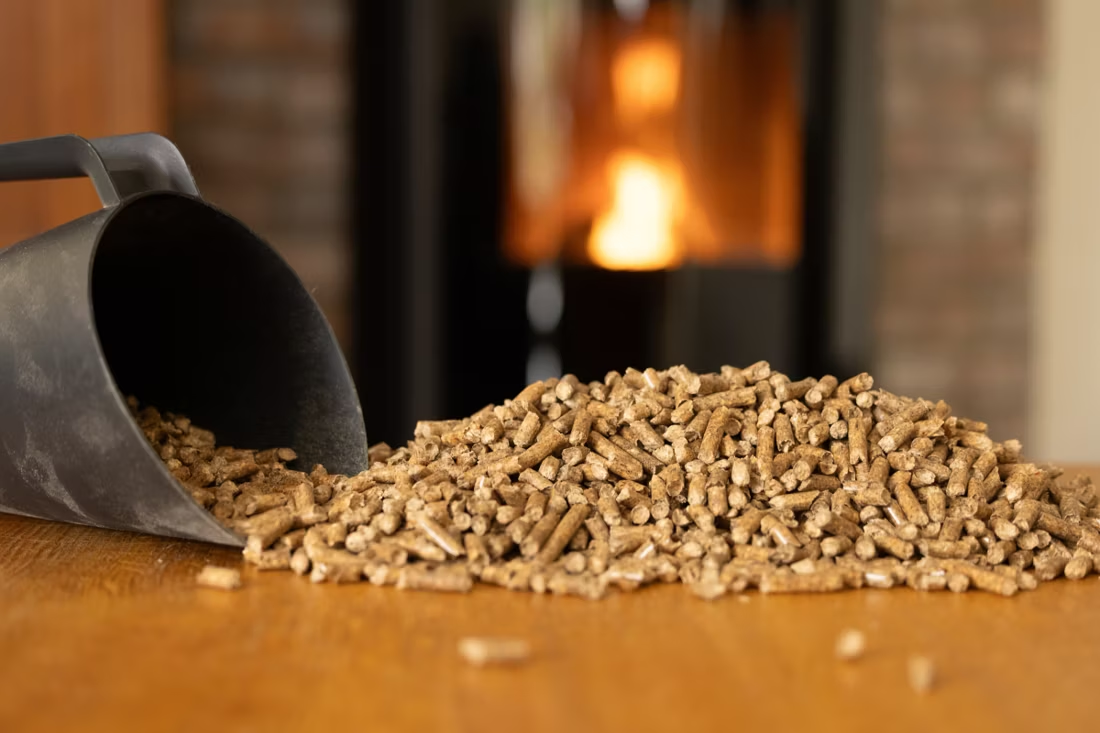
Pellet fuel is easy to come by in this part of Virginia. Regional brands including Energex, Hamer Pellet Fuel, and Greene Team Pellet Fuel supply hearth retailers throughout the Shenandoah Valley, so restocking for the season doesn't mean driving far or gambling on big-box availability. Because pellet stoves rely on an electric auger and blower, it's also worth knowing which utility serves your address—Virginia Electric & Power Co (Dominion Energy) covers most of the city, while Shenandoah Valley Electric Cooperative serves surrounding rural pockets. Either way, a battery backup or small generator is worth budgeting for if winter ice storms knock out power.
Three steps. No salesperson until you're ready.
Tell us about your project
Your zip code, your situation, and the fuel you're leaning toward—or let the answers point you to one.
See what's actually available
The brands dealers within 100 miles genuinely carry—real options, never a catalog mirage.
Get your dealer & Project Guide
A trusted local dealer, plus the free Project Guide & Parts List that names every component of the job.
Frequently Asked Questions
How much does a pellet stove or insert cost to install in Staunton?
Installed costs vary with the unit and venting path, but most Staunton homeowners budget $3,000 to $6,000 for a freestanding pellet stove with a through-wall vent kit, and $3,500 to $7,000 for a pellet insert going into an existing masonry fireplace. Because pellet stoves vent through a small-diameter wall thimble rather than a full masonry chimney, installs are often quicker and less invasive than a wood stove project. A local dealer will give you a firm number after seeing your fireplace opening or the wall you're venting through.
What size pellet stove do I need for a Staunton home?
With average winter lows around 25°F and a moderate winter heating season overall, Staunton's climate is moderate compared to the ridge and valley country just to the west—most homes don't need the largest units on the market. A stove in the 40,000 to 50,000 BTU range comfortably heats 1,500 to 2,000 square feet of open living space here, while a smaller 25,000 to 35,000 BTU unit is often enough for supplemental heat in a single living area or converted sunroom. A local retailer will factor in your home's insulation and layout before recommending a specific model.
Where do I buy pellets in and around Staunton?
Regional producers including Energex, Hamer Pellet Fuel, and Greene Team Pellet Fuel supply hearth shops and farm stores throughout the Shenandoah Valley, so you're rarely more than a short drive from a pallet of premium hardwood pellets. Expect to pay in the neighborhood of $250 to $300 per ton, with prices ticking up slightly in late fall when demand peaks. Buying a season's supply—typically 2 to 3 tons for a home using a pellet stove as primary heat—in September or October, before the first cold snap, is the easiest way to avoid picked-over stock.
Will my pellet stove still work if the power goes out?
Not without backup power. Pellet stoves depend on an electric auger to feed fuel and a blower to push heat into the room, so a standard unit shuts down the moment the power does—whether you're on Virginia Electric & Power Co (Dominion Energy) in town or Shenandoah Valley Electric Cooperative out in the county. Ice storms occasionally take down lines in this part of the valley, so many homeowners pair a pellet stove with a small battery backup unit (sized for the stove's low wattage draw) or a portable generator. If uninterrupted heat during outages is a priority, a wood stove or a battery-free gas fireplace is worth comparing.
Do I need a permit to install a pellet stove in Staunton?
Most pellet stove and insert installations require a building permit through the City of Staunton, since the work involves a new wall penetration for venting and, in some cases, new electrical for the appliance. Staunton has no local air quality restrictions or wood-burning curtailment periods, which sets it apart from valley and basin cities out west that see winter inversions—so there's no seasonal burning restriction to plan around here. A local installer will typically pull the permit as part of the job.
How does pellet stove venting work compared to a wood stove?
Pellet stoves use a small-diameter (typically 3 or 4-inch) PL vent pipe that runs horizontally through an exterior wall, rather than the full Class A chimney a wood stove needs. That makes pellet installs simpler in Staunton homes that don't have an existing masonry chimney—a new install can often be done in a day without roof work. Homes with an existing fireplace can still use a pellet insert, which vents through the existing flue with a smaller stainless liner sized for the pellet appliance.
Pellet stove vs. wood stove—which makes more sense in Staunton?
Wood is the traditional choice in this part of the Shenandoah Valley, where oak, hickory, and maple are the common species and Forest Service permits through Monongahela National Forest run about $20 per cord during the May-through-October cutting season. Wood also keeps working during a power outage, which pellet stoves can't do without a backup power source. Pellet stoves win on convenience—no splitting, stacking, or hauling, a thermostat that holds a steady temperature overnight, and a cleaner burn with far less ash and creosote. For a Staunton household without access to a woodlot or the time to process firewood, pellet is usually the easier long-term fit.
How much maintenance does a pellet stove need?
Pellet stoves need more frequent, lighter maintenance than wood stoves rather than an annual chimney sweep. Plan on emptying the ash pan every few days during regular use, cleaning the burn pot weekly to keep the fire lighting reliably, and a full teardown cleaning of the exhaust passages and venting once a season—typically before the first cold snap in October or November. Most Staunton hearth retailers offer an annual service visit for $150 to $250 that covers the deep clean and a check of the auger motor, blower, and igniter.
Are there rebates or tax credits for a pellet stove in Staunton?
Pellet stoves rated at 75% efficiency or higher qualify for the federal biomass stove tax credit (26 U.S. Code Section 25(C)), which currently covers 30% of the cost of the unit and installation, up to $2,000 a year. Virginia doesn't run a separate state rebate program for pellet appliances, so the federal credit is the main incentive available to Staunton homeowners. Save your itemized invoice from the local dealer—it's what you'll need to claim the credit at tax time.
Why is my open fireplace making my house colder?
Open fireplaces suck—literally. As the fire burns, it consumes air your furnace already paid to heat and pulls it out through the chimney, so the house is actually colder after the fire goes out than before you lit it. An insert fixes this: it seals the chimney, puts fixed glass across the front, and turns that hole in your house into a real heat source.
How often does a pellet stove need cleaning?
A clean pellet stove is a happy pellet stove. Plan on cleaning the burn pot about once a week when you're burning regularly—ash and clinkers gum up the air holes just like a pellet barbecue. Most pellet stove problems trace back to skipped cleaning that nobody explained up front. Some designs make it easy with a trapdoor burn pot: pull a lever and the gunk drops into the ash pan.
What is an in-home preview and do I need one?
It's a visit where a hearth professional measures your space, confirms the model you picked actually works in your home, and walks the specs—framing, gas line, venting, finish work—before anything is ordered. Some details you just can't know until you see the house. Never make a down payment without one; it's the single most-skipped step that burns buyers.
Can a fireplace actually lower my heating bill?
Yes—by creating a comfort zone. A furnace heats every square foot of the house just to warm the one room you're in; a gas fireplace on low burns roughly a sixth of the gas a typical furnace does. Set the furnace around 55–60 degrees as a baseline, then heat the rooms your family actually uses. Families who heat this way commonly save $20–$60 a month.
Nearby Dealers
Hearth shops serving Staunton and the surrounding area.
Pellet Brands Stocked Around Staunton
Manufacturers will point you to the nearest stocking dealer.
Find your pellet fireplace in Staunton.
Tell us a bit about your home and we'll match you with the right pellet stove or insert, plus a free Project Guide & Parts List and a trusted local dealer to install it.
Find Your Fireplace →