
Fireplace and stove options built for Staunton's Blue Ridge winters.
Wood, gas, pellet, and electric fireplace resources for Staunton and the surrounding Shenandoah Valley—from downtown's historic districts to Fishersville, Verona, Weyers Cave, and Stuarts Draft. Find the right unit and connect with a trusted local hearth retailer.
Every Project Starts From One of These Five Situations
Hearth heating across Staunton and Virginia's Shenandoah Valley.
Staunton sits at roughly 1,300 feet in the Shenandoah Valley, tucked between the Blue Ridge and Allegheny mountains. With a moderate winter heating season and average winter lows near 25°F, the climate here is moderate compared to true cold-climate markets—Staunton sees roughly two-thirds the heating demand of a place like Burlington, Vermont, with occasional Arctic outbreaks pushing temperatures into the single digits rather than sustained deep-freeze stretches. Oak, hickory, and maple dominate the surrounding hardwood forests, and firewood cutting permits are available through the Monongahela National Forest to the west. Staunton has no formal non-attainment designation and no mandatory wood-burning curtailment periods, which means less regulatory friction for wood heat here than in western basin cities that deal with winter inversions.
What you'll find on this hub: hearth retailers, service technicians, and fuel suppliers serving Staunton and the surrounding valley—from the historic homes near downtown and Gypsy Hill to newer construction in Fishersville, Verona, Weyers Cave, and Stuarts Draft. Pick your fuel below to drill into specifics—local dealers, installation costs, recommended units, and the resources that match your project. Whether you're retrofitting a Victorian-era fireplace or heating a newer valley farmhouse, this is the starting point.
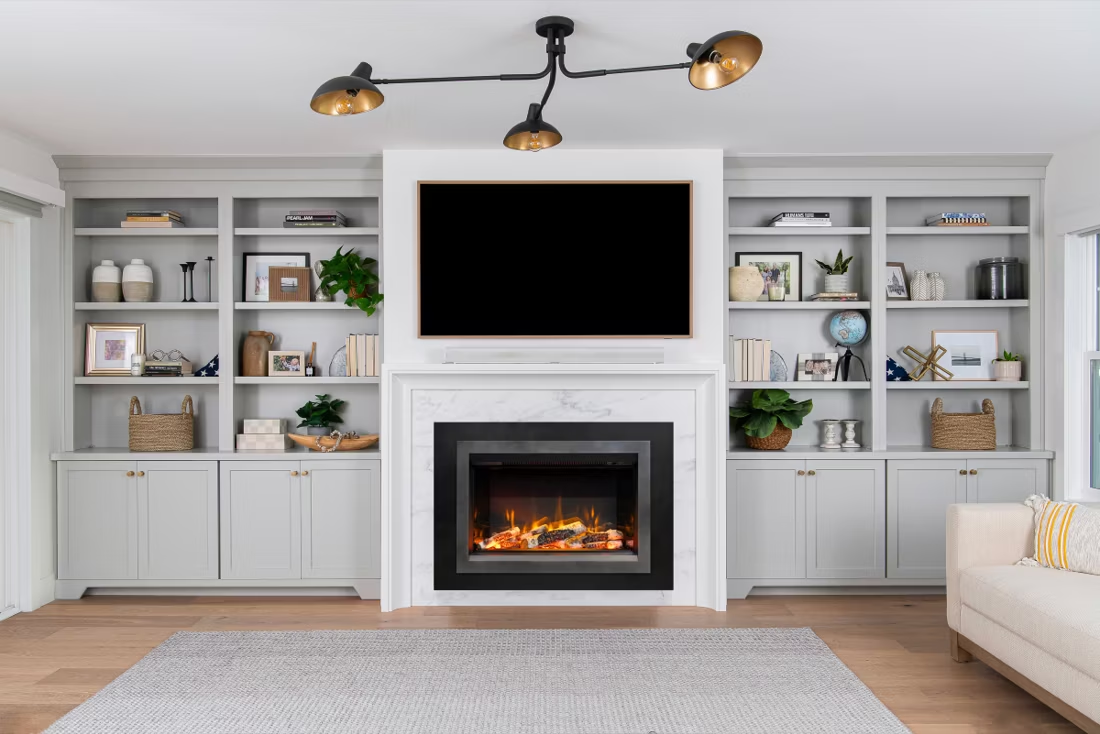
Four fuels. One honest answer for Staunton County.
Three steps. No salesperson until you're ready.
Tell us about your project
Your zip code, your situation, and the fuel you're leaning toward—or let the answers point you to one.
See what's actually available
The brands dealers within 100 miles genuinely carry—real options, never a catalog mirage.
Get your dealer & Project Guide
A trusted local dealer, plus the free Project Guide & Parts List that names every component of the job.
Frequently Asked Questions
Which fuel works best for a home in Staunton?
It depends on the house and how you use it, but here's the general pattern in the Shenandoah Valley. Wood remains popular given the abundance of local oak, hickory, and maple and the relatively moderate winter heating season—you don't need the 20-hour catalytic burns that colder markets like Burlington, Vermont require, so a solid mid-efficiency stove or insert handles most Staunton winters comfortably. Gas is the convenience pick for in-town homes served by Columbia Gas of Virginia, and propane covers rural properties around Fishersville and Stuarts Draft without natural gas access. Pellet is a strong middle-ground option here, with Energex, Hamer Pellet Fuel, and Greene Team Pellet Fuel all distributed regionally and reasonably easy to source. Electric fireplaces work well as supplemental heat in bedrooms, sunrooms, or historic homes where running a flue isn't practical. Many Staunton households pair wood or pellet as a primary heat source with gas or electric for convenience in secondary rooms.
Do I need a permit to install a fireplace in Staunton?
In most cases, yes. New wood stoves, wood inserts, gas fireplaces, gas inserts, gas stoves, and pellet stoves typically require a building permit through the City of Staunton's building inspections office (or Augusta County's building department if you're just outside city limits in Fishersville, Verona, or Stuarts Draft). Gas installations also need a separate gas line permit and a licensed gas fitter for the connection work. New wood-burning appliances must meet current EPA 2020 NSPS emissions standards. Electric fireplaces generally don't need a permit unless it's a built-in unit requiring new wiring or a dedicated circuit. Most local hearth retailers handle the permitting process as part of the installation, so you typically don't have to navigate it yourself.
Are there wood-burning restrictions in Staunton?
No—Staunton doesn't carry a non-attainment designation and has no mandatory or voluntary burn-curtailment program, unlike basin cities out west that deal with winter temperature inversions trapping smoke. That said, new wood stove and insert installations still need to meet EPA 2020 NSPS emissions standards, and it's worth checking whether your homeowners' association (common in newer Fishersville and Weyers Cave developments) has its own restrictions on outdoor wood burning or open burn piles. For day-to-day burning in an EPA-certified appliance, Staunton residents don't face the regulatory hurdles you'd see in a place like the Klamath Basin.
Can one local hearth retailer handle all four fuel types?
Many valley hearth retailers carry three or four fuel types—wood, gas, and pellet at minimum, with electric increasingly common as a lower-margin add-on line. Fewer dealers stock deep electric inventory since it's a supplemental category here rather than a primary heat source. If you're cross-shopping fuels, ask a retailer directly which lines they carry as working showroom displays versus special-order only—in a market of Staunton's size, not every dealer keeps every fuel type on the floor, but most can special-order what a competitor stocks.
How does service work for homes outside Staunton proper?
Most technicians serving Staunton are based in or near the city and travel out to surrounding Augusta County—Fishersville, Verona, Weyers Cave, Stuarts Draft, and Churchville. Expect a modest travel fee for calls further out, and book pre-season service (September–October) if you can; mid-winter emergency calls get harder to schedule once the first real cold snap hits. If you're on a rural property without natural gas service, keep a backup plan in mind—a wood stove or a well-stocked pellet supply can cover you if a propane delivery is delayed during a hard freeze.
What's the typical cost range for fireplace installation in Staunton across all fuel types?
Costs vary by fuel and scope of work. Wood stove or insert installation: roughly $4,000–$8,500 for a typical retrofit, more if new masonry chimney work is needed. Gas fireplace, insert, or stove: roughly $4,000–$10,000 depending on whether a new gas line has to be run—conversions of an existing wood-burning fireplace to gas tend to land on the lower end. Pellet stove or insert: roughly $4,000–$7,000 installed. Electric fireplace: $200–$3,000 for the unit itself, plus $400–$1,200 in labor for anything beyond a simple plug-in install, which covers most wall-mount and insert projects. Exact numbers depend on your home's existing venting and electrical setup—a local retailer can quote precisely once they've seen the site.
What is an in-home preview and do I need one?
It's a visit where a hearth professional measures your space, confirms the model you picked actually works in your home, and walks the specs—framing, gas line, venting, finish work—before anything is ordered. Some details you just can't know until you see the house. Never make a down payment without one; it's the single most-skipped step that burns buyers.
Can a fireplace actually lower my heating bill?
Yes—by creating a comfort zone. A furnace heats every square foot of the house just to warm the one room you're in; a gas fireplace on low burns roughly a sixth of the gas a typical furnace does. Set the furnace around 55–60 degrees as a baseline, then heat the rooms your family actually uses. Families who heat this way commonly save $20–$60 a month.
How much should I budget for a fireplace?
For an average home—covering the fireplace, the vent pipe, and basic installation—a budget between $3,900 and $5,500 gives you a lot of options across wood, gas, and pellet. By the time you add finish work, gas line, and electrical, the average complete installation lands between $5,000 and $12,000 all-in. In a remodel or new build, a good rule is to put about 2.5% of the total project cost toward the fireplace.
Does a fireplace add value to my home?
On average, a fireplace adds back to the home about the same amount you spent installing it. Add the monthly savings from heating the rooms you actually use instead of the whole house—often hundreds of dollars a year—and the value case is strong before you even count what a fire does for how your family uses the room.
Stove and Fireplace Dealers in Staunton County
Listings include WhyFire partner dealers, dealers we have verified as authorized for the brands we recommend, and established local businesses that carry hearth products. Every listing shows which one it is. The ones marked Preferred run on WhyFire's software, so they can show you real pricing and book your appointment right here. No manufacturer pays for placement. How we verify dealers →
Clines Heating And Cooling
Holtzman Propane
Valley Filter & Maintenance
Blossman Gas And Appliance
Blue Ridge Chimney
Acme Stove Co.
Get matched with a hearth retailer in Staunton.
Tell us about your project and we'll match you with a trusted local Staunton-area dealer and send over a free Project Guide & Parts List—the exact parts, vent kit, and recommended dealer for your specific fireplace project.
Find Your Fireplace →