
Keep Your Family Warm and Safe—No Matter What
From the farmhouses ringing the town of Floyd to the ridgeline properties near Buffalo Mountain, wood heat has always made sense here. Find the right stove or insert and connect with a trusted local dealer.
Every Project Starts From One of These Five Situations
Wood heat is woven into life on the ridge.
Floyd County sits high in Virginia's Blue Ridge, with the town of Floyd itself perched around 2,400 feet and the surrounding farmland and forest climbing toward Buffalo Mountain. The climate here is classified 4A—mixed-humid, with real winter cold from November through March, though nothing like the deep-freeze extremes of a place like Burlington, VT or Duluth, MN. Still, ridge homes and older farmhouses feel every one of those cold nights, and a lot of Floyd County households have leaned on wood heat for generations rather than fighting drafty walls with electric baseboard alone.
The hardwood forests surrounding Floyd—heavy on oak, hickory, and maple—produce some of the best firewood in the region: dense, high-BTU wood that holds coals overnight and burns hotter per cord than the softwoods common out West. Floyd County has no air quality non-attainment issues and no winter burn curtailment periods, so there's no regulatory reason to hold back on a wood-burning appliance here. For a rural county where mountain power lines can go down during ice storms, a properly installed wood stove or insert also means real heat that doesn't depend on the grid—not just ambiance.
Three steps. No salesperson until you're ready.
Tell us about your project
Your zip code, your situation, and the fuel you're leaning toward—or let the answers point you to one.
See what's actually available
The brands dealers within 100 miles genuinely carry—real options, never a catalog mirage.
Get your dealer & Project Guide
A trusted local dealer, plus the free Project Guide & Parts List that names every component of the job.
Frequently Asked Questions
How much does a wood stove installation cost in Floyd County?
Most wood stove installations in Floyd County run somewhere between $3,500 and $8,500, depending on the stove itself, whether you're venting through an existing masonry chimney, and how much new Class A pipe is needed. Many of the older farmhouses scattered around the county—especially outside the town of Floyd—don't have an existing flue sized for a modern stove, which pushes costs toward the higher end once new chimney chase work and roof penetration are factored in. Because Floyd is rural, expect installers based out of the New River Valley to build a modest travel charge into quotes for properties well outside town.
What size wood stove do I need for my Floyd County home?
Sizing comes down to square footage, ceiling height, and how drafty the home is—and Floyd County has a wide mix of housing stock, from tight newer construction near town to older uninsulated farmhouses out toward Check and Willis. A small stove (under 1,000 sq ft) suits a cabin or single main room; a medium stove (1,000–2,000 sq ft) covers most Floyd County homes; larger, leakier farmhouses or homes at higher elevation near Buffalo Mountain often need to size up even at the same square footage, since wind exposure on the ridge pulls more heat out of a structure than the same house would lose down in a hollow. A local dealer will size your space properly during an in-home visit rather than guessing off a chart.
Where can I find certified wood stove installers near Floyd County?
Look for NFI (National Fireplace Institute) or CSIA (Chimney Safety Institute of America) certification—both indicate real training in wood-burning appliance clearances and venting, not just general contracting experience. Because Floyd County is sparsely populated, most certified installers are based in the broader New River Valley and cover Floyd as part of a wider service area, so expect installers to serve the town of Floyd plus outlying communities like Check, Willis, and Copper Hill. Skip the handyman route for a wood stove specifically—improper clearance-to-combustible work is the leading cause of house fires in wood-burning installs, and it's not worth the risk on an older farmhouse with balloon framing.
What's the difference between a wood stove and a wood insert?
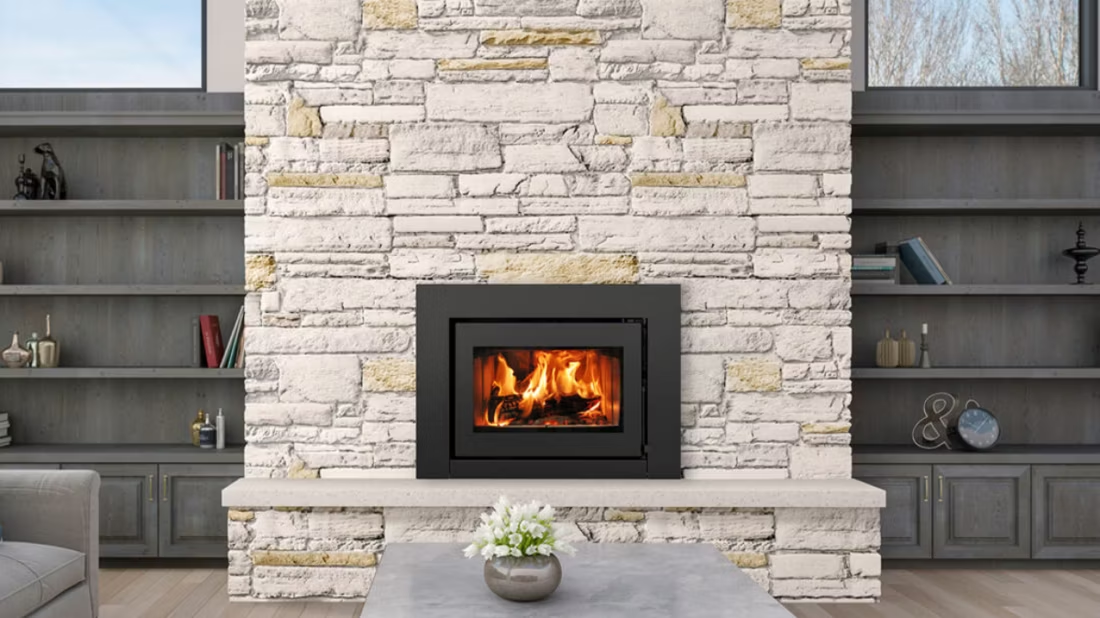
A wood stove is a freestanding unit on a hearth pad that vents up through a chimney—it can go almost anywhere with the right clearances, which makes it a good fit for the many Floyd County homes without an existing fireplace. A wood insert, by contrast, slides into an existing masonry fireplace opening and uses a stainless liner run up the existing flue—a strong option for the older stone or brick fireplaces found in a number of Floyd County farmhouses, since it keeps the character of the original hearth while dramatically improving heat output over an open fireplace.
Do I need a permit to install a wood stove in Floyd County?
Yes—new wood stove installations require a building permit through the Floyd County building department, and the unit itself needs to meet current EPA emissions standards. Most local installers handle the permit application and inspection scheduling as part of the install price, so it's rarely something homeowners have to navigate themselves. Because Floyd County has no non-attainment air quality designation, there's no seasonal burn curtailment to worry about once the stove is installed and inspected—you're free to burn on cold nights without checking an air quality advisory first.
What's the best wood stove for Floyd County's climate?
Floyd County's 4A climate doesn't demand the extreme 20-plus-hour catalytic burn times you'd need in a high-desert or northern-plains winter, but the hardwood available here—oak and hickory especially—burns hot and dense, so a mid-size non-catalytic stove from a brand like Pacific Energy or Lopi handles most Floyd County homes well, delivering strong overnight coal retention without oversizing the unit. For homes at higher elevation near Buffalo Mountain or the exposed ridgelines along the Blue Ridge Parkway corridor, sizing up slightly is worth discussing with a local dealer, since wind exposure increases heat loss beyond what square footage alone suggests.
How often should my chimney be inspected and cleaned?
The CSIA recommends an annual inspection for any wood-burning appliance, and that holds true in Floyd County regardless of whether you're burning as primary heat or as backup for winter power outages. Late summer or early fall—before the first cold snap rolls in off the ridge—is the practical window to schedule a sweep, since local chimney sweeps serving the New River Valley tend to book up once temperatures drop. Homes burning oak and hickory as a main heat source, especially farmhouses running the stove daily, should watch for faster creosote buildup and may want a mid-season check.
Where can I get firewood in Floyd County?
Floyd County's forests are heavy with oak, hickory, and maple, and it's common to source seasoned hardwood directly from local farms and woodlots rather than a formal firewood delivery service—ask around at the Floyd Country Store or a local feed store and you'll usually get a lead on a neighbor selling cords. Oak and hickory take longer to season properly than softer woods—plan on at least a year split and stacked before burning for the cleanest, hottest fire. For homeowners without woodlot access, a handful of small operators in the surrounding New River Valley deliver seasoned cords by the truckload.
Wood stove vs. pellet stove—which is right for my Floyd County home?
Wood stoves burn cordwood, work with zero electricity—a real advantage in a mountain county where ice storms regularly knock out power for days—and pair naturally with the abundant oak and hickory in the area. Pellet stoves burn compressed pellets from regional suppliers like Energex, Hamer Pellet Fuel, or Greene Team Pellet Fuel, and offer more hands-off operation with a thermostat and auger feed, plus less ash and easier daily upkeep. The catch is that pellet stoves need electricity to run the auger and blower, so they go dark exactly when a Floyd County household might need heat most—during a winter outage. For most rural and ridge properties here, that tradeoff tips the scale toward wood; for in-town homes with reliable power and less interest in splitting and stacking wood, pellet is a reasonable alternative.
Why is my open fireplace making my house colder?
Open fireplaces suck—literally. As the fire burns, it consumes air your furnace already paid to heat and pulls it out through the chimney, so the house is actually colder after the fire goes out than before you lit it. An insert fixes this: it seals the chimney, puts fixed glass across the front, and turns that hole in your house into a real heat source.
Why won't my new wood stove get going like my old one?
New wood stoves are 70%+ efficient, so far less heat goes up the flue—which also means less draft to get a fire established. The rule: build a genuinely hot fire for about 45 minutes before you choke it down. Skip that and you get smoke in the room, creosote in the chimney, and a fire that never takes off. Most performance complaints trace straight back to this.
What is an in-home preview and do I need one?
It's a visit where a hearth professional measures your space, confirms the model you picked actually works in your home, and walks the specs—framing, gas line, venting, finish work—before anything is ordered. Some details you just can't know until you see the house. Never make a down payment without one; it's the single most-skipped step that burns buyers.
Does a fireplace add value to my home?
On average, a fireplace adds back to the home about the same amount you spent installing it. Add the monthly savings from heating the rooms you actually use instead of the whole house—often hundreds of dollars a year—and the value case is strong before you even count what a fire does for how your family uses the room.
Stove and Fireplace Dealers in Floyd County
Listings include WhyFire partner dealers, dealers we have verified as authorized for the brands we recommend, and established local businesses that carry hearth products. Every listing shows which one it is. The ones marked Preferred run on WhyFire's software, so they can show you real pricing and book your appointment right here. No manufacturer pays for placement. How we verify dealers →
Clark Gas & Oil Company
Air Tech Home & Business
McGrady Perdue Heating & Cooling
New River Building Supply
Blue Ridge Heating And Air
Radford Chimney Works
Hillsville Building & Landscape Supply
Clark Gas & Oil Company
Find your wood stove in Floyd County.
Tell us a bit about your home and we'll match you with the right wood stove or insert for Floyd County's climate, plus a free Project Guide & Parts List—including the vent kit—from a trusted local dealer.
Find Your Fireplace →