
Real warmth, no chimney required, anywhere in Floyd County.
From the town of Floyd out to Check and Indian Valley, Floyd County homes run on propane, wood, and heat pumps, not natural gas. An electric fireplace or insert adds real zone heat and ambiance to any room with a standard outlet. Find the right unit and connect with a trusted local dealer.
Every Project Starts From One of These Five Situations
The simplest heat source on the Blue Ridge Plateau.
Floyd County sits up on the Blue Ridge Plateau, with the town of Floyd itself near 2,227 feet, one of the higher county seats in Virginia. There is no natural gas service anywhere in the county, so homes lean on propane, split oak and hickory from the woodlot, heat pumps, and, increasingly, electric fireplaces and inserts for supplemental warmth. Winters here run through the mixed-humid 4A zone with regular stretches of nights in the teens and 20s at elevation, cold enough that a single space heater in the living room or a converted farmhouse fireplace makes a real difference in comfort and propane bills.
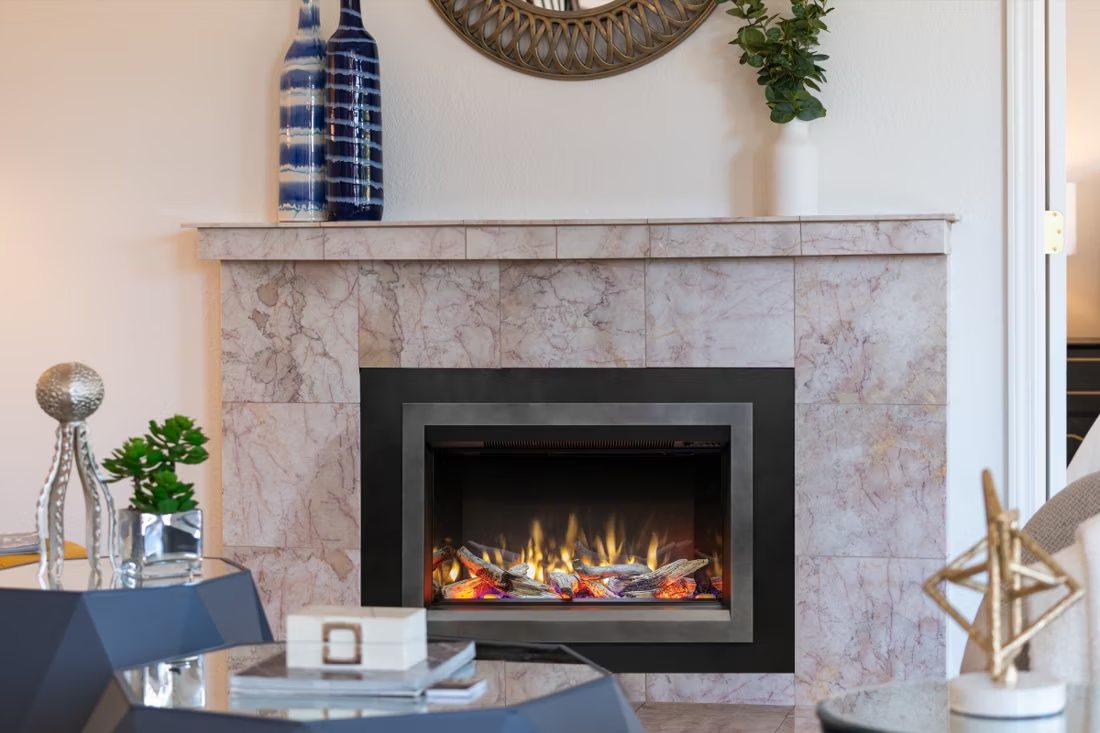
Floyd's housing stock is a mix worth noting: century-old farmhouses with unused masonry fireboxes around Willis and Copper Hill, newer cabins and off-grid homesteads scattered through Indian Valley, and a small but steady stream of second homes near Buffalo Mountain. None of that requires a gas line or a masonry chimney to add real fire and heat. An electric insert can bring an old, drafty firebox back to life, a wall-mounted built-in can go into new construction near Floyd's tiny-house and homesteader community, and a plug-in freestanding unit can heat a single room in a rental or guest space without any construction at all.
Three steps. No salesperson until you're ready.
Tell us about your project
Your zip code, your situation, and the fuel you're leaning toward—or let the answers point you to one.
See what's actually available
The brands dealers within 100 miles genuinely carry—real options, never a catalog mirage.
Get your dealer & Project Guide
A trusted local dealer, plus the free Project Guide & Parts List that names every component of the job.
Frequently Asked Questions
How much does an electric fireplace installation cost in Floyd County?
Most electric fireplace projects in Floyd County run in the $400 to $1,200 range. A plug-in insert dropped into an existing masonry firebox or a freestanding mantel unit sits at the low end since it just needs a standard 120V outlet. A wall-mounted built-in for new construction, or a larger unit that needs a dedicated 240V circuit run by an electrician, lands toward the higher end. Because there's no gas line, venting, or chimney work involved, electric is consistently the least expensive fireplace option for Floyd County homeowners, which is part of why it's popular in rental cabins and guest cottages around the county.
Do I need a permit to install an electric fireplace in Floyd County?
A simple plug-in electric insert or freestanding unit generally doesn't require a permit since there's no gas, chimney, or structural work involved. A built-in wall unit that requires new framing or a dedicated electrical circuit typically does need an electrical permit, and any structural changes go through Floyd County's building inspections process. If you're not sure which category your project falls into, your local dealer can tell you during the in-home consultation, and most handle the permitting paperwork if it's needed.
Will an electric fireplace actually heat my Floyd County home?
An electric fireplace is a zone heater, not a whole-home furnace replacement. A typical 1,500-watt unit will comfortably heat a single room, which makes it a good fit for a farmhouse den, a guest bedroom in an Indian Valley cabin, or a sitting room in an older Willis or Check house that's otherwise heated by a central heat pump. For county residents who split firewood or run a wood stove as primary heat, an electric unit in a secondary room is often the more practical add than trying to extend ductwork or run a second flue.
Electric vs. wood—which makes more sense for my Floyd County property?
If you're cutting your own oak, hickory, or maple off a Floyd County woodlot, a wood stove or insert will almost always beat electric on raw heat output and fuel cost, and it keeps working if the power goes out. Electric wins on convenience: no wood to split and stack, no ash, no flue to maintain, and instant on-off heat with the flip of a switch. Many county homes end up with both—a wood stove for the main living space and cold-weather backup, and an electric unit in a bedroom or den where hauling firewood daily isn't practical.
Can an electric fireplace run on solar or off-grid power?
It depends on the system size. Floyd County has a real cluster of off-grid and solar-powered homesteads, and a 1,500-watt electric fireplace is a meaningful draw for a smaller battery bank or inverter setup, especially if it's running for hours at a time on a cold evening. Before buying, check your inverter's continuous wattage rating and your battery bank's capacity, and consider a unit with an adjustable heat setting so you can run the flame effect alone without the heater element when you want to conserve power. A local dealer can help size the right unit against your system.
Insert, built-in, or freestanding—which type fits my Floyd County home?
An electric insert is built to slide into an existing masonry firebox, which is common in older Floyd County farmhouses around Willis and Copper Hill that have a fireplace opening but no working flue. A built-in wall unit is designed for new construction or a remodel where there's no existing opening—popular in newer cabins going up around Indian Valley. A freestanding or mantel-style unit needs no installation at all beyond plugging it in, which makes it the fastest option for a rental property or a guest cottage.
Will an electric fireplace work in a home with no gas or propane hookup?
Yes, and that's exactly the situation it's built for. There's no natural gas infrastructure anywhere in Floyd County, and plenty of homes, especially smaller cabins and outbuildings converted to living space, don't have a propane tank installed either. An electric fireplace needs nothing but a standard outlet (or a dedicated circuit for larger built-ins), which makes it the simplest fireplace option for anyone who doesn't want to deal with a propane delivery contract or run new gas lines.
What happens to my electric fireplace during a power outage?
It stops working, which is worth planning around. Floyd County's elevation means winter ice storms occasionally knock out power for a day or more, particularly out toward Check and the higher ridges. Homeowners who rely on electric fireplaces for daily heat and ambiance often keep a wood stove or a propane heater as backup for exactly this reason. If backup heat during outages is a priority for your household, that's worth mentioning to your local dealer when discussing which room gets the electric unit.
Electric vs. pellet stove—which is the better fit?
A pellet stove burns bagged fuel from brands sold regionally like Energex, Hamer Pellet Fuel, or Greene Team Pellet Fuel, and puts out real, substantial heat, but it still needs electricity to run the auger and blower, plus a vent through an exterior wall or roof. An electric fireplace needs no fuel storage and no venting at all, but produces less total heat and, like the pellet stove, goes dark in a power outage. For a Floyd County home that already has propane or wood as primary heat, electric is usually the simpler choice for a supplemental room; pellet makes more sense if you want a stove-level heat source without splitting cordwood.
Can I put a TV above my fireplace?
Yes—with an asterisk. Fireplaces are hot and TVs don't like heat. Either put a mantel between them to deflect rising warmth, or choose a fireplace with heat-management technology that creates a cool zone on the wall above—the wall stays around 125 degrees, barely warm, while the room still gets full heat. If you like clean lines and don't want a mantel, heat management is the answer.
Does an electric fireplace need a vent or chimney?
No—that's its superpower. An electric fireplace needs a wall and an outlet, period. No vent pipe, no gas line, no clearances to design around, which is why it works in bedrooms, offices, apartments, and walls where venting a gas or wood unit would be impractical or impossible. Installation is typically the simplest and least expensive of any fireplace type.
What is an in-home preview and do I need one?
It's a visit where a hearth professional measures your space, confirms the model you picked actually works in your home, and walks the specs—framing, gas line, venting, finish work—before anything is ordered. Some details you just can't know until you see the house. Never make a down payment without one; it's the single most-skipped step that burns buyers.
Can I install a fireplace myself?
If you're putting a fire in your house on purpose, it's best to work with an expert. Unless you're genuinely experienced in framing, gas line, vent pipe, and the national code on clearances to combustibles, have a professional do it—and ideally the same company that sells you the fireplace, so warranty, service, and liability all live under one roof.
Stove and Fireplace Dealers in Floyd County
Listings include WhyFire partner dealers, dealers we have verified as authorized for the brands we recommend, and established local businesses that carry hearth products. Every listing shows which one it is. The ones marked Preferred run on WhyFire's software, so they can show you real pricing and book your appointment right here. No manufacturer pays for placement. How we verify dealers →
Clark Gas & Oil Company
Air Tech Home & Business
McGrady Perdue Heating & Cooling
New River Building Supply
Blue Ridge Heating And Air
Radford Chimney Works
Hillsville Building & Landscape Supply
Clark Gas & Oil Company
Find your electric fireplace in Floyd County.
Tell us a bit about your home and we'll put together a free Project Guide & Parts List for your electric fireplace project, matched to a trusted local dealer who knows what actually works in Floyd County homes.
Find Your Fireplace →