
Instant heat for Floyd County's cold Blue Ridge nights.
Propane-powered gas fireplaces bring clean, flip-of-a-switch heat to Floyd County's farms and mountain homes—no municipal gas line required. Find the right unit and connect with a trusted local dealer.
Every Project Starts From One of These Five Situations
Clean heat, no gas line required.
Floyd County sits on the Blue Ridge Plateau in southwestern Virginia's climate zone 4A—elevations near 2,500 to 3,000 feet, cold nights common from November through March, but without the extremes of a place like Burlington, VT or Minneapolis, MN. With roughly 570 residents in the town itself and a countywide population spread across dairy farms, wooded ridgelines, and the Blue Ridge Parkway corridor, most households here have relied for generations on wood heat cut from the oak, hickory, and maple forests that cover the county. Increasingly, though, homeowners are adding a gas fireplace alongside that wood stove—for the room that needs instant heat without a fire to tend, or for backup warmth when the woodpile runs low.
There's no municipal natural gas utility serving Floyd County—no pipeline network reaches the rural properties, hollows, and small subdivisions scattered across the plateau. That means nearly every gas fireplace installed here runs on propane, stored in a tank on the property rather than piped in from a utility line. It's a different planning conversation than in a city with natural gas service: you're sizing a propane tank alongside the fireplace, not just tapping an existing line. The upside is real—a propane gas fireplace delivers the same instant, no-mess heat, can run during the winter power outages that occasionally hit rural county feeders (with the right ignition system), and skips the ash cleanup and wood-stacking that most Floyd County households already know well from their primary wood heat.
Three steps. No salesperson until you're ready.
Tell us about your project
Your zip code, your situation, and the fuel you're leaning toward—or let the answers point you to one.
See what's actually available
The brands dealers within 100 miles genuinely carry—real options, never a catalog mirage.
Get your dealer & Project Guide
A trusted local dealer, plus the free Project Guide & Parts List that names every component of the job.
Frequently Asked Questions
How much does a gas fireplace installation cost in Floyd County?
A typical propane gas fireplace installation in Floyd County runs roughly $3,500 to $9,000, depending on the unit, whether you're converting an existing wood fireplace or building new, and whether a propane tank is already on the property. Homes that already have a propane tank for a furnace or water heater are on the lower end—the installer just runs a new gas line from the existing tank. Homes without propane service need a new tank (above-ground or buried) installed by a local propane supplier, which adds to the project cost. Rural properties farther from the county's main routes can also see a modest travel charge added to labor.
Can I convert my existing wood fireplace to gas?
Yes, and it's a common project for Floyd County homes with an older masonry fireplace built for wood. A propane gas insert slides into the existing firebox, using the existing chimney (with a stainless liner) as the vent path. The propane line then runs from either an existing tank or a new tank installed alongside the house. Because the county has no natural gas pipeline, this is a propane-specific conversion—a bit more planning than a straightforward natural-gas hookup in town, but it preserves the look of the existing masonry fireplace while adding instant, thermostat-controlled heat that doesn't require restocking oak or hickory rounds every evening.
Should I use natural gas or propane for a gas fireplace in Floyd County?
Propane is the standard fuel here—Floyd County has no municipal natural gas utility, so there's no pipeline to tap into. Propane is delivered and stored in a tank on your property, either a portable above-ground tank (commonly 120 or 250 gallons) or a buried tank (typically 500 gallons) for homes that also run propane furnaces, water heaters, or ranges. If you already have a propane tank and regular delivery service, adding a gas fireplace is a straightforward tie-in. If not, your local dealer can coordinate a new tank installation as part of the fireplace project.
Will my gas fireplace work during a power outage?
Most modern propane fireplaces can, with the right ignition system. Units with IPI (intermittent pilot ignition) include a battery backup—typically AA batteries inside the unit—that keeps the fireplace working when the power drops, since the igniter and blower need a small electrical draw. Some models, including certain Valor fireplaces, generate their own power through the pilot's thermocouple and need no batteries at all. For Floyd County's rural feeders, where storms can knock out power for a day or more, that battery backup or self-powered ignition is worth asking about directly when you're comparing units with a local dealer.
What's the difference between a gas fireplace, gas insert, and gas stove?
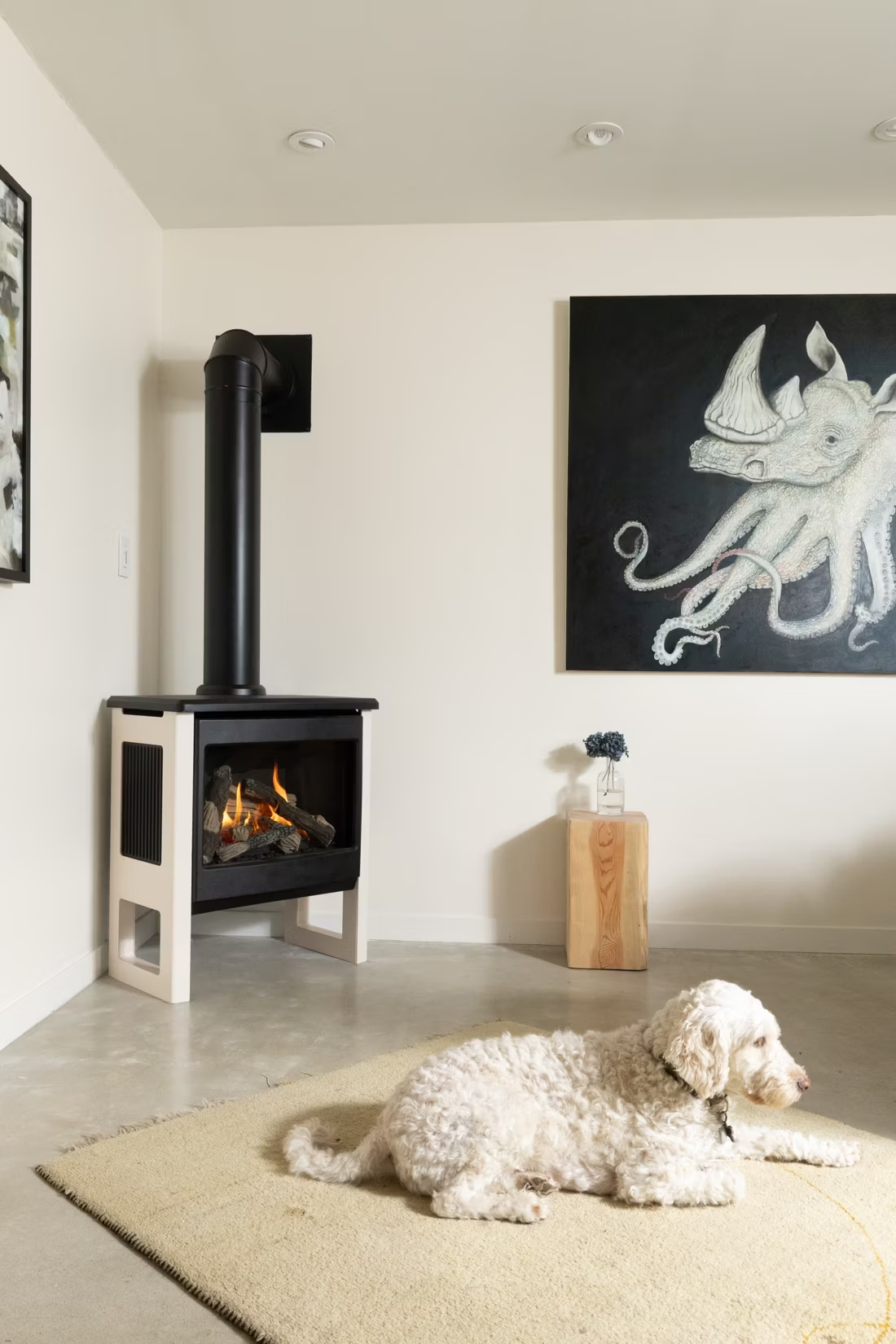
A gas fireplace is a fully built-in unit, framed into a wall—the right choice for new construction or a remodel without an existing hearth. A gas insert slides into an existing masonry fireplace opening, using the chimney as a sealed vent path, and is the most common upgrade for Floyd County's older farmhouses with a wood fireplace already in place. A gas stove is freestanding, sitting on a hearth pad like a wood stove but running on propane—a good option if you want the stove look without an existing fireplace opening to fill.
Do I need a permit to install a gas fireplace in Floyd County?
Yes—new gas fireplace installations require a building permit through the Floyd County Building Inspections Department, and propane line work must be done by a licensed LP-gas installer. If a new propane tank is part of the project, the tank placement also has to meet fire code clearance requirements from the house, property lines, and any ignition sources. Most local dealers who sell and install gas fireplaces coordinate the permitting, the tank installation with a propane supplier, and the final inspection together, so you're not managing multiple trades yourself.
What's the difference between vented and vent-free gas fireplaces?
Vented (direct-vent) gas fireplaces draw combustion air from outside and exhaust combustion byproducts back outside through a sealed vent pipe. Vent-free units burn propane directly into the room without any outside venting, which makes them easier to place but means some combustion byproducts stay indoors, so they carry strict room-sizing and ventilation rules. Virginia allows vent-free units, but for Floyd County's older, often less airtight farmhouses, a direct-vent propane fireplace is usually the safer, more universally recommended choice—it delivers real heat without any tradeoff on indoor air quality.
How often should my gas fireplace be serviced?
An annual inspection is recommended for any propane appliance, including a gas fireplace or insert. A technician checks the burner, pilot assembly, venting, and gas connections, and cleans the glass and firebox interior. For Floyd County homes running on a stored propane tank, it's also a good time to have your propane supplier check the tank, regulator, and line for wear—especially before the coldest stretch of winter sets in. Most local service providers charge in the neighborhood of $150 to $250 for a standard annual visit.
Gas vs. wood—which is right for my Floyd County home?
Wood remains deeply practical here—Floyd County's oak, hickory, and maple forests provide abundant firewood, a wood stove needs no electricity to run, and it works as reliable backup heat when winter storms take down power lines on rural feeders. Gas offers instant, thermostat-controlled heat with no wood stacking, splitting, or ash cleanup, and a cleaner look in a main living space. Because there's no natural gas utility in the county, the gas option here is propane specifically, which means factoring in tank costs and delivery service rather than a flat monthly utility bill. Many Floyd County households run both: wood as the primary or backup heat source, propane gas in a room where convenience matters most.
Can I put a TV above my fireplace?
Yes—with an asterisk. Fireplaces are hot and TVs don't like heat. Either put a mantel between them to deflect rising warmth, or choose a fireplace with heat-management technology that creates a cool zone on the wall above—the wall stays around 125 degrees, barely warm, while the room still gets full heat. If you like clean lines and don't want a mantel, heat management is the answer.
What's the difference between an insert and a zero-clearance fireplace?
An insert is a fireplace that slides into a pre-existing wood-burning fireplace—if you don't have one, there's nothing to insert it into. A zero-clearance fireplace is built into a framed wall, which makes it the answer for remodels and new construction. Simple test: existing masonry fireplace means insert; blank or framed wall means zero-clearance.
Can I install a fireplace myself?
If you're putting a fire in your house on purpose, it's best to work with an expert. Unless you're genuinely experienced in framing, gas line, vent pipe, and the national code on clearances to combustibles, have a professional do it—and ideally the same company that sells you the fireplace, so warranty, service, and liability all live under one roof.
What is an in-home preview and do I need one?
It's a visit where a hearth professional measures your space, confirms the model you picked actually works in your home, and walks the specs—framing, gas line, venting, finish work—before anything is ordered. Some details you just can't know until you see the house. Never make a down payment without one; it's the single most-skipped step that burns buyers.
Stove and Fireplace Dealers in Floyd County
Listings include WhyFire partner dealers, dealers we have verified as authorized for the brands we recommend, and established local businesses that carry hearth products. Every listing shows which one it is. The ones marked Preferred run on WhyFire's software, so they can show you real pricing and book your appointment right here. No manufacturer pays for placement. How we verify dealers →
Clark Gas & Oil Company
Air Tech Home & Business
McGrady Perdue Heating & Cooling
New River Building Supply
Blue Ridge Heating And Air
Radford Chimney Works
Hillsville Building & Landscape Supply
Clark Gas & Oil Company
Find your gas fireplace in Floyd County.
Tell us about your home and current propane setup, and we'll match you with the right gas fireplace, insert, or stove—plus a free Project Guide & Parts List and a trusted local dealer to install it.
Find Your Fireplace →