
Pellet Heat Is Rare in Chesapeake, But Not Unheard Of.
With only 2,810 heating degree days and winter lows averaging 34°F, Chesapeake rarely needs full-time wood heat—but a small number of homeowners still choose pellet stoves for supplemental warmth, hurricane-season ambiance, or a real flame without a chimney.
Every Project Starts From One of These Five Situations
Chesapeake's mild coastal winters leave little room for a niche fuel.
Chesapeake sits at just 15 feet of elevation in the flat, humid tidewater of Hampton Roads, where winter lows average a mild 34°F and the region logs only about 2,810 heating degree days a year. Compare that to Duluth, MN, which racks up more than three times that number—and you can see why most Chesapeake homes are built around heat pumps and gas furnaces rather than a wood-pellet appliance that needs to be fed daily. Pellet stoves simply don't carry the weight here that they do in colder climates, which is why demand across the region stays limited.
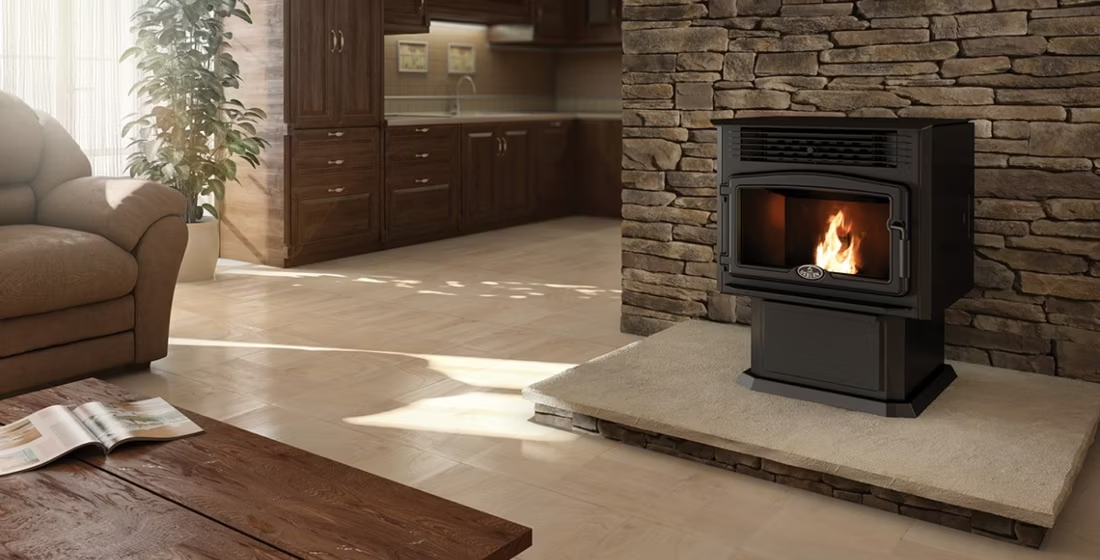
That said, a handful of local homeowners still install pellet stoves—usually in a sunroom, bonus room, or detached space where a self-contained heat source is convenient, or simply because they like the look and low-maintenance burn of a pellet unit over an open wood fire. Regional brands like Energex, Hamer Pellet Fuel, and Greene Team Pellet Fuel are sold through farm-supply and hardware retailers within driving distance, so fuel isn't hard to find if you go this route. One honest caveat worth knowing up front: pellet stoves need electricity to run the auger and blower, which matters in a hurricane-prone area like Hampton Roads where storm outages are a real seasonal risk. A pellet stove alone won't keep a room warm during a blackout unless it's paired with a battery backup or generator.
Three steps. No salesperson until you're ready.
Tell us about your project
Your zip code, your situation, and the fuel you're leaning toward—or let the answers point you to one.
See what's actually available
The brands dealers within 100 miles genuinely carry—real options, never a catalog mirage.
Get your dealer & Project Guide
A trusted local dealer, plus the free Project Guide & Parts List that names every component of the job.
Frequently Asked Questions
How much does a pellet stove installation cost in Chesapeake?
Because pellet stoves are a low-volume install here, pricing tends to track national averages rather than a deep local market: expect roughly $3,500 to $6,500 for a freestanding unit with a through-wall direct-vent kit, hearth pad, and standard installation. Costs run higher if you're converting an existing masonry fireplace into a pellet insert, since liner work and venting adjustments add labor. Because so few Chesapeake homes have wood-burning chimneys to begin with—most newer construction here relies on gas or heat pumps—a simple through-wall vent installation is the more common (and cheaper) path than a full chimney retrofit.
Does a pellet stove even make sense in Chesapeake's climate?
For most homes, not as a primary heat source. With winter lows averaging 34°F and only about 2,810 heating degree days per year, Chesapeake just doesn't need the kind of sustained, high-output heat pellet stoves are built for. Where they do make sense: a bonus room or converted garage without ductwork, a sunroom that gets cold on the occasional 20-degree night, or a homeowner who simply prefers the ambiance and lower ash output of pellets over cordwood. If you're heating a whole house, a heat pump or gas system paired with central air is almost always the more practical and cost-effective choice for this climate.
Will a pellet stove keep working if the power goes out?
Not on its own. Pellet stoves rely on an electric auger to feed fuel and a blower to circulate heat, so a standard unit shuts down the moment power drops. That matters more in Chesapeake than in most places, since Hampton Roads sees regular tropical storm and nor'easter outages during hurricane season. If backup heat during a power outage is a priority, a battery backup system or a small generator sized for the stove's draw (usually under 120 watts) solves the problem—but it's an added cost worth planning for up front, not an afterthought.
Where can I buy pellet fuel near Chesapeake?
Regional brands including Energex, Hamer Pellet Fuel, and Greene Team Pellet Fuel are the ones most commonly stocked at farm-supply stores and hardware retailers serving the Hampton Roads area. Because pellet heat is a smaller market here than in the Northeast or upper Midwest, supply can be seasonal—stores typically bring in stock ahead of the winter months rather than carrying it year-round, so buying a season's worth early (roughly a ton for light seasonal use) avoids scrambling to find bags in January.
What size pellet stove do I actually need in Chesapeake?
Smaller than you'd need almost anywhere colder. Given the area's mild winter lows and modest heating degree days, most Chesapeake installs are sized for supplemental heat in a single room—typically the smallest or mid-size unit in a manufacturer's lineup rather than a whole-home model. Oversizing is a common mistake: a stove built to heat 2,000 square feet in Duluth will run far too hot and cycle inefficiently in a Chesapeake sunroom or bonus room. A local dealer can size the unit to the actual space rather than the appliance's rated maximum.
Do I need a permit to install a pellet stove in Chesapeake?
Yes—new pellet stove installations typically require a building permit through the City of Chesapeake's permitting process, covering the appliance installation and the through-wall or roof venting. Because pellet installs are less common here than gas or electric projects, it's worth confirming with your installer that they're familiar with the specific inspection requirements for solid-fuel appliances, since some local inspectors see far fewer of these than gas fireplace permits in a given year.
Pellet vs. gas vs. electric—what's actually right for a Chesapeake home?
For most Chesapeake homeowners, gas or electric is the more practical answer. Gas fireplaces and inserts are widely installed here and pair naturally with the area's utility infrastructure, delivering instant, consistent heat without fuel storage. Electric units are simple, low-cost to install, and require no venting at all. Pellet stoves are worth considering only if you specifically want the self-contained, low-ash burn of compressed wood fuel—for a hobby room, workshop, or as a secondary heat source—rather than as your main heating strategy.
How do you vent a pellet stove in a Chesapeake home without a chimney?
Most Chesapeake homes, especially newer construction throughout zip codes like 23320 and 23322, were built without a wood-burning chimney, which actually works in pellet's favor—pellet stoves vent through a small-diameter pipe that can run horizontally through an exterior wall rather than requiring a full vertical chimney chase. That keeps installation simpler and less invasive than adding a masonry chimney, and it's one of the main reasons a pellet stove can be a realistic retrofit even in a home that was never built for solid-fuel heat.
Does Chesapeake's humidity affect pellet stove maintenance or fuel storage?
It does, and it's one of the more overlooked considerations for coastal Virginia. Wood pellets absorb moisture readily, and they swell and break down if stored in a damp garage or shed without a vapor barrier—a real risk in a humid tidewater climate like Chesapeake's. Pellets need to stay in their sealed bags or a dedicated dry storage bin off the ground until use. On the appliance side, routine maintenance is otherwise light: a weekly ash cleanout and an annual professional inspection of the burn pot, auger, and venting is typically all that's needed.
Why is a fireplace insert so efficient?
An insert does two things: it seals the chimney completely, so you stop losing air you already paid to heat, and it radiates warmth into the room through the firebox and glass. Most add a heat-exchange fan that pulls cool room air underneath, wraps it around the hot firebox, and pushes it back out warm. Your home is more efficient before you've even lit the first fire.
Why is my open fireplace making my house colder?
Open fireplaces suck—literally. As the fire burns, it consumes air your furnace already paid to heat and pulls it out through the chimney, so the house is actually colder after the fire goes out than before you lit it. An insert fixes this: it seals the chimney, puts fixed glass across the front, and turns that hole in your house into a real heat source.
What is an in-home preview and do I need one?
It's a visit where a hearth professional measures your space, confirms the model you picked actually works in your home, and walks the specs—framing, gas line, venting, finish work—before anything is ordered. Some details you just can't know until you see the house. Never make a down payment without one; it's the single most-skipped step that burns buyers.
Can a fireplace actually lower my heating bill?
Yes—by creating a comfort zone. A furnace heats every square foot of the house just to warm the one room you're in; a gas fireplace on low burns roughly a sixth of the gas a typical furnace does. Set the furnace around 55–60 degrees as a baseline, then heat the rooms your family actually uses. Families who heat this way commonly save $20–$60 a month.
Nearby Dealers
Hearth shops serving Chesapeake and the surrounding area. Every listing shows whether it is a WhyFire partner, a dealer we have verified as authorized for the brands we recommend, or a local business carrying hearth products. No manufacturer pays for placement. How we verify dealers →
Taylor's Do It Center
Ray Johnson's Fireplace Shop
Coastal Chimney & Contracting, Corp.
Taylor's Fire Works
Solid Structures
Albemarle Chimney Sweep & Duct Cleaning
Pellet Brands Stocked Around Chesapeake
Manufacturers will point you to the nearest stocking dealer.
Find your pellet stove in Chesapeake.
Tell us a bit about your home and how you'd use a pellet stove, and we'll match you with a trusted local dealer along with a free Project Guide & Parts List—including the right vent kit for your space.
Find Your Fireplace →