
Find the Right Hearth for Your Chesapeake Home.
Wood, gas, pellet, and electric fireplace resources for every borough of Chesapeake—from Great Bridge to Deep Creek to Western Branch. Find the right unit and connect with a trusted local hearth retailer.
Every Project Starts From One of These Five Situations
Mild tidewater winters, year-round hearth living in Chesapeake, Virginia.
Chesapeake sits low in the Hampton Roads tidewater, bordering the Great Dismal Swamp, with a heating load that's modest by national standards—a mild winter heating load and an average winter low near 34°F. Compare that to Buffalo, NY, which has a winter heating load more than double this one, and it's clear why fireplaces here lean toward comfort and backup power more than survival heat. The heating season typically runs November through March, and it's short enough that many homes use a fireplace for maybe 40-60 nights a year rather than daily. Oak, hickory, and maple grow throughout the wooded lots and swamp-adjacent parcels around the city, and a fair number of Chesapeake homeowners still burn self-cut or locally sourced firewood—partly for ambiance, partly as a hedge against the power outages that come with nor'easters and the occasional hurricane remnant.
What you'll find on this hub: hearth retailers, service technicians, and fuel suppliers covering every part of Chesapeake—Great Bridge, South Norfolk, Deep Creek, Western Branch, Hickory, Portlock, and the rural pockets near the Dismal Swamp. With a population over 249,000 spread across a large, borough-based city rather than a tight downtown core, most retailers and techs cover the whole city rather than one neighborhood. Pick your fuel below to drill into specifics—local dealers, installation costs, recommended units, and the resources that match your project.
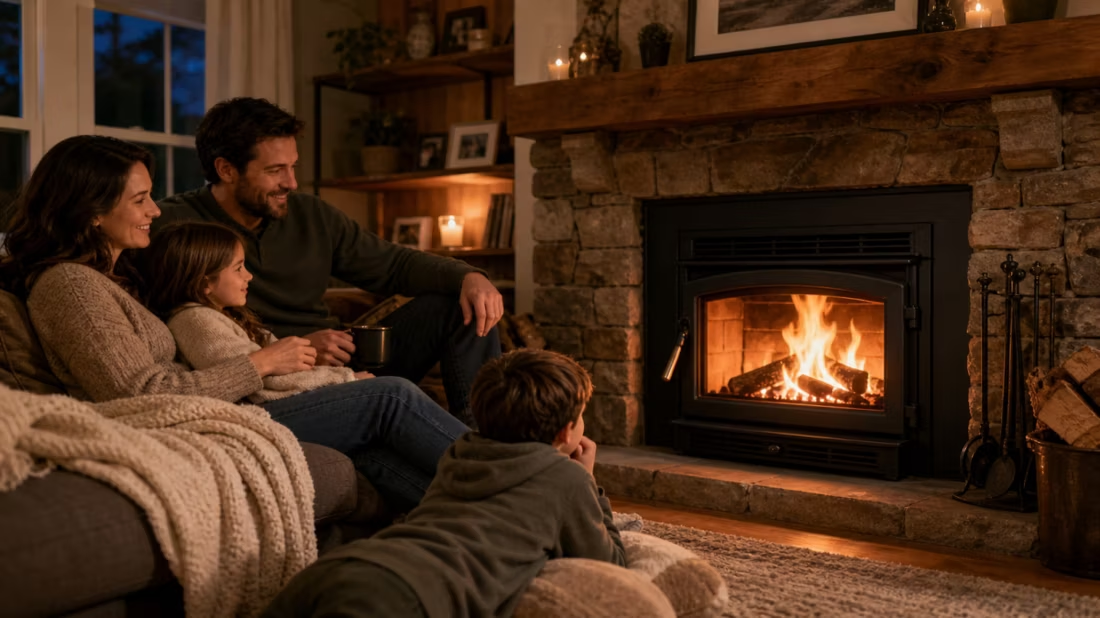
Four fuels. One honest answer for Chesapeake County.
Three steps. No salesperson until you're ready.
Tell us about your project
Your zip code, your situation, and the fuel you're leaning toward—or let the answers point you to one.
See what's actually available
The brands dealers within 100 miles genuinely carry—real options, never a catalog mirage.
Get your dealer & Project Guide
A trusted local dealer, plus the free Project Guide & Parts List that names every component of the job.
Frequently Asked Questions
Which fuel works best in Chesapeake?
With a mild winter heating load and winter lows averaging around 34°F, Chesapeake's heating load is light compared to most of the country—so the choice often comes down to convenience and backup power rather than raw output. Gas is the most common primary fireplace fuel in the city, with Virginia Natural Gas serving most established neighborhoods; it's low-maintenance and lights instantly on the handful of genuinely cold nights each winter. Wood remains popular for ambiance and as a hedge against the power outages that follow nor'easters and hurricane remnants—oak, hickory, and maple are all abundant locally and burn cleanly and hot. Pellet stoves are a solid middle ground, with regional supply from Energex, Hamer Pellet Fuel, and Greene Team Pellet Fuel making fuel easy to find without needing a woodlot. Electric fireplaces are increasingly common in Chesapeake's newer subdivisions—no venting, no permit hassle, and enough ambiance for a climate that rarely demands more.
Do I need a permit to install a fireplace in Chesapeake?
In most cases, yes. New wood stoves, wood-burning inserts, gas fireplaces, gas inserts, and pellet stoves generally require a building permit through the City of Chesapeake Development and Permits Department, and any new gas line work requires a licensed gas-fitter and a separate gas permit. Electric fireplaces are typically permit-free for plug-in units, though built-in electric fireplaces that require new wiring or a dedicated circuit may need an electrical permit. Chesapeake is a consolidated city, so there's no separate town-versus-county distinction—one permit office covers Great Bridge, Deep Creek, South Norfolk, and every other borough. Most local hearth retailers handle the permitting paperwork as part of the installation, so homeowners usually don't have to file it themselves.
Are there air quality or burn restrictions in Chesapeake?
No—Chesapeake and the broader Hampton Roads region don't currently have mandatory burn bans or winter inversion advisories the way some western and mountain communities do. That said, seasoned hardwood still matters: green or wet oak and hickory produce heavier smoke and creosote buildup than properly dried wood, so most local retailers recommend firewood that's been split and dried at least six to twelve months. Because the region gets occasional tropical-system remnants and nor'easters that knock out power, a wood or pellet stove doubles as backup heat for a lot of Chesapeake households—one more reason local techs recommend annual chimney inspection and cleaning even without an air-quality mandate driving it.
Can one local hearth retailer handle all four fuel types?
Several Chesapeake-area retailers carry wood, gas, pellet, and electric under one roof, which makes cross-shopping easier if you're not yet sure which fuel fits your home—a multi-fuel dealer can show working displays of each and talk through venting, running costs, and maintenance side by side. Other shops specialize more narrowly, focusing on gas and electric for the newer subdivisions in Western Branch and Hickory, or on wood and pellet stoves for the more rural, wooded parcels near the Great Dismal Swamp. Fuel suppliers like local pellet distributors carrying Energex, Hamer Pellet Fuel, or Greene Team Pellet Fuel are separate from installation retailers—worth knowing so you don't expect a fuel supplier to also handle your install.
How does service work across Chesapeake's boroughs?
Because Chesapeake is spread across boroughs rather than a single dense downtown—Great Bridge, South Norfolk, Deep Creek, Western Branch, Hickory, and the more rural stretches near the swamp—most chimney sweeps and gas techs cover the whole city rather than one neighborhood, with little to no travel surcharge given how compact the city is compared to a rural county. Fall (September–October) is the easiest window to book annual service, since it's the calm before hurricane season winds down and before the occasional cold snap arrives. Given how often coastal storms knock out power locally, it's worth scheduling wood or pellet stove service early enough that the unit is ready to serve as backup heat if the grid goes down.
What's the typical cost range for fireplace installation across all fuel types in Chesapeake?
Wood stove or insert installation: roughly $4,000–$8,500 for a typical install, more if new chimney or liner work is needed. Gas fireplace, insert, or stove: roughly $3,800–$10,000, with cost driven mainly by whether Virginia Natural Gas service already reaches the fireplace location or a new line has to be run. Pellet stove or insert: roughly $4,000–$7,000 for most installs, with fuel costs kept reasonable by regional supply from Energex, Hamer Pellet Fuel, and Greene Team Pellet Fuel. Electric fireplace: $200–$3,000 for the unit itself, plus $300–$1,000 in labor for anything beyond a simple plug-in, such as a built-in with new wiring. Given Chesapeake's mild heating load, many homeowners find the lower end of these ranges covers their needs—see the city + fuel pages above for retailer-specific pricing.
Wood, gas, pellet, or electric—how do I choose?
Match the fuel to your life, not the other way around. Wood: lowest fuel cost and total power-outage independence, but you're hauling and stacking. Gas: press a button, set a thermostat, no maintenance to speak of. Pellet: wood economics with automatic feeding, in exchange for weekly cleaning and a need for electricity. Electric: plugs in anywhere with honest supplemental heat. Nobody regrets the fuel that fits how they actually live.
How much should I budget for a fireplace?
For an average home—covering the fireplace, the vent pipe, and basic installation—a budget between $3,900 and $5,500 gives you a lot of options across wood, gas, and pellet. By the time you add finish work, gas line, and electrical, the average complete installation lands between $5,000 and $12,000 all-in. In a remodel or new build, a good rule is to put about 2.5% of the total project cost toward the fireplace.
What are the biggest mistakes people make buying a fireplace?
Five come up constantly: budgeting for the unit but not the full job (vent, gas line, electrical, finish work); drowning in options instead of starting from style and fuel; buying without an in-home preview; handing installation to a handyman instead of a pro; and giving up out of sheer indecision. Every one is avoidable with a clear plan—step one, step two, step three.
Should the dealer who sells my fireplace also install it?
Ideally, yes. A fireplace project involves vent pipe, gas line, electrical, and often tile or stone. Hire three or four separate trades and you own the liability and the game of telephone between them. One company selling and installing means one accountable party, start to finish—ask about factory training, on-time completion records, and what happens if an inspection fails.
Stove and Fireplace Dealers in Chesapeake County
Listings include WhyFire partner dealers, dealers we have verified as authorized for the brands we recommend, and established local businesses that carry hearth products. Every listing shows which one it is. The ones marked Preferred run on WhyFire's software, so they can show you real pricing and book your appointment right here. No manufacturer pays for placement. How we verify dealers →
Taylor's Do It Center
Ray Johnson's Fireplace Shop
Coastal Chimney & Contracting, Corp.
Taylor's Fire Works
Solid Structures
Albemarle Chimney Sweep & Duct Cleaning
Find your fireplace in Chesapeake.
Tell us about your Chesapeake home and we'll match you with a trusted local dealer and send a free Project Guide & Parts List—the exact parts, including the vent kit, and the dealer we recommend for your project.
Find Your Fireplace →