
The Simplest Way to Add Fireplace Warmth in Chesapeake.
No chimney, no gas line, no venting—just plug in or hardwire and go. Find the right electric fireplace for your Tidewater home and connect with a trusted local dealer.
Every Project Starts From One of These Five Situations
Mild Tidewater winters make electric heat make sense.
Chesapeake sits at just 15 feet of elevation along the Elizabeth River in the Hampton Roads region, where the average winter low hovers around 34°F and the city has a mild, short winter heating season overall. Compare that to a place like Duluth, Minnesota, which has a winter heating season roughly three to four times as long—Chesapeake homes simply don't need a heavy-duty primary heat source most winters. That's exactly the climate where an electric fireplace earns its keep: real ambiance and useful supplemental warmth on the occasional 30-degree night, without asking anyone to stack cordwood or run a gas line.
Wood and pellet heat are essentially non-factors here—Chesapeake doesn't have the inland forestry infrastructure, cutting permit system, or sustained cold that drives wood-heat culture in places like the Blue Ridge or the Midwest, even though oak, hickory, and maple are common regional species used mostly for outdoor fire pits. Gas fireplaces are common in newer construction, but electric has become the default choice across Chesapeake's mix of established neighborhoods—Great Bridge, Western Branch, Hickory, South Norfolk, Deep Creek—because it installs into virtually any wall, condo, or townhome without structural changes. Virginia Electric & Power Company, operating locally as Dominion Energy, serves the city at a residential rate around 14 cents per kWh, which keeps day-to-day operating costs modest for supplemental use.
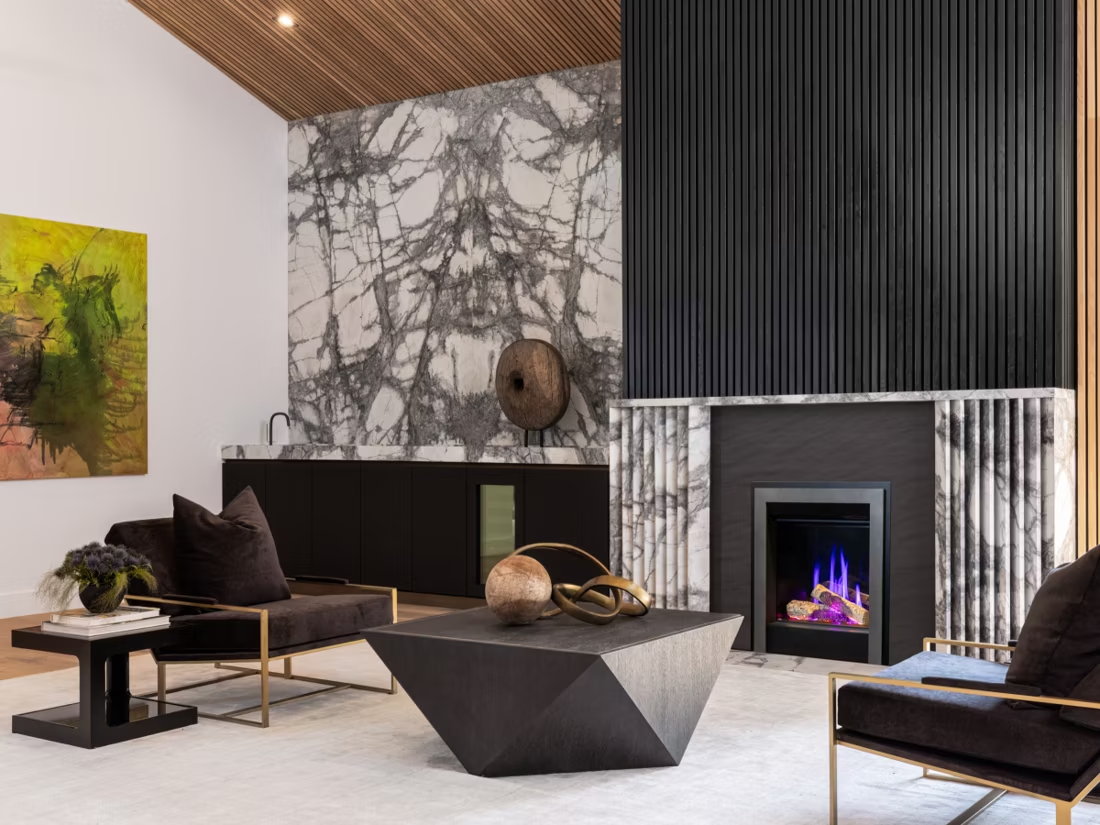
Three steps. No salesperson until you're ready.
Tell us about your project
Your zip code, your situation, and the fuel you're leaning toward—or let the answers point you to one.
See what's actually available
The brands dealers within 100 miles genuinely carry—real options, never a catalog mirage.
Get your dealer & Project Guide
A trusted local dealer, plus the free Project Guide & Parts List that names every component of the job.
Frequently Asked Questions
How much does an electric fireplace installation cost in Chesapeake?
A freestanding or tabletop electric fireplace that plugs into a standard outlet typically runs $300 to $1,500 installed, since there's no venting or gas line to run—most of that cost is the unit and mantel or surround work. A built-in wall unit or electric insert into an existing masonry fireplace usually runs $1,500 to $4,000, largely because it often requires a licensed electrician to add a dedicated 20-amp circuit, especially in Chesapeake's older Deep Creek and South Norfolk homes with older panels. Local dealers will give you a firm number after seeing your wall, panel capacity, and the unit you're considering.
Do I need a permit to install an electric fireplace in Chesapeake?
Usually not for a plug-in freestanding unit—it's treated like any other appliance. If you're installing a built-in insert or wall unit that requires a new dedicated circuit, the electrician pulling that wire will typically file an electrical permit through the City of Chesapeake's permit process as a matter of code compliance, not because the fireplace itself is regulated. There's no combustion, no chimney, and no air quality review involved, which is a big part of why electric installs move faster than wood or gas projects in this city.
How much does it cost to run an electric fireplace with Dominion Energy rates?
Most electric fireplaces draw around 1,500 watts on the heat setting. At Chesapeake's residential rate of about $0.1409 per kWh through Virginia Electric & Power Company, running one for a full evening—say 6 hours—costs roughly $1.27. Used a few hours a night through the mild Tidewater winter, that's a modest add to a monthly bill, and far cheaper than running central heat to cover the whole house just to warm up a family room.
Why isn't wood heat common in Chesapeake?
Chesapeake sits at just 15 feet of elevation on the flat coastal plain of Hampton Roads, with no nearby national forest land, cutting permit offices, or the sustained cold that makes wood a practical primary heat source. With only a mild, short winter heating season and winter lows averaging 34°F, most homes never need the BTU output a wood stove provides. Oak, hickory, and maple do grow regionally and show up in backyard fire pits, but very few Chesapeake homeowners install a wood-burning stove or insert as an actual heat strategy—it's simply not the local building or fuel culture the way it is farther inland or up north.
What's the difference between an electric fireplace insert and a freestanding unit?
A freestanding electric fireplace is a self-contained cabinet or mantel unit you place against a wall and plug in—no modification to your home required, and it can move with you. An electric insert is built to slide into an existing masonry fireplace opening or a custom-framed wall cavity, giving a more built-in, flush look. Inserts often need a dedicated circuit and sometimes a small amount of trim carpentry to finish the surround. For Chesapeake homes with an existing wood-burning fireplace that's rarely used, an insert is a popular way to get instant flame ambiance without the venting hassle a gas or wood conversion would require.
Can I install an electric fireplace in a condo or townhome in Chesapeake?
Yes, and it's one of the most common reasons homeowners choose electric in the first place. Chesapeake has a large share of newer townhome and condo developments—around Great Bridge, Hickory, and the Western Branch corridor—where HOA rules or building structure make chimneys and gas lines impractical. Because an electric fireplace needs nothing more than a standard outlet or a single dedicated circuit, it sidesteps venting restrictions and structural work entirely, making it one of the few fireplace options that works in nearly any unit type.
Electric vs. gas—which is right for my Chesapeake home?
Gas fireplaces are readily available in Chesapeake through Virginia Natural Gas and deliver real flame and higher heat output, which some homeowners prefer for a more traditional look and feel. Electric fireplaces cost far less to install, require no venting or gas line, run safely in bedrooms and condos, and produce realistic flame effects with modern LED technology—though they generate less raw heat than gas. Given Chesapeake's mild winters and a modest, short winter heating season overall, most homeowners here choose electric for supplemental ambiance and reserve gas for homes wanting a stronger secondary heat source or a more traditional hearth centerpiece.
What size electric fireplace do I need for my Chesapeake home?
Because Chesapeake's mild climate means most electric fireplaces serve as supplemental or ambiance heat rather than a home's primary source, sizing is more about the room and the visual scale of the wall than raw BTU output. A 30 to 40-inch unit typically suits a bedroom or den, a 50 to 60-inch model works well for a great room or open living area common in newer Great Bridge and Hickory-area builds, and most standard units comfortably heat a single room of 400 to 1,000 square feet on the heat setting. A local dealer can walk your space and confirm the right width for your wall and heating expectations.
Is an electric fireplace enough heat for the occasional cold snap in Chesapeake?
For most of the winter, yes—an electric fireplace comfortably takes the chill off a room during Chesapeake's typical 30s and 40s nights. During the occasional cold snap that pushes lows into the teens or 20s, an electric fireplace works best as a supplement to your home's central heat pump rather than a stand-alone solution, since most units top out around 5,000 BTU of supplemental heat. It won't carry the whole house through a hard freeze, but it will let you turn down the thermostat and zone-heat the room you're actually using, which is how most Chesapeake homeowners use theirs.
Do electric fireplaces actually produce heat?
Yes—most put out around 4,800–5,000 BTUs from a standard outlet, which comfortably warms a bedroom, office, or den as a comfort-zone heater. What they won't do is carry a whole house the way wood, gas, or pellet can. Think of electric as ambiance-first with honest supplemental heat: flames on with no heat in July, flames plus warmth in January.
Can I put a TV above my fireplace?
Yes—with an asterisk. Fireplaces are hot and TVs don't like heat. Either put a mantel between them to deflect rising warmth, or choose a fireplace with heat-management technology that creates a cool zone on the wall above—the wall stays around 125 degrees, barely warm, while the room still gets full heat. If you like clean lines and don't want a mantel, heat management is the answer.
Can I install a fireplace myself?
If you're putting a fire in your house on purpose, it's best to work with an expert. Unless you're genuinely experienced in framing, gas line, vent pipe, and the national code on clearances to combustibles, have a professional do it—and ideally the same company that sells you the fireplace, so warranty, service, and liability all live under one roof.
Does a fireplace add value to my home?
On average, a fireplace adds back to the home about the same amount you spent installing it. Add the monthly savings from heating the rooms you actually use instead of the whole house—often hundreds of dollars a year—and the value case is strong before you even count what a fire does for how your family uses the room.
Nearby Dealers
Hearth shops serving Chesapeake and the surrounding area. Every listing shows whether it is a WhyFire partner, a dealer we have verified as authorized for the brands we recommend, or a local business carrying hearth products. No manufacturer pays for placement. How we verify dealers →
Taylor's Do It Center
Ray Johnson's Fireplace Shop
Coastal Chimney & Contracting, Corp.
Taylor's Fire Works
Solid Structures
Albemarle Chimney Sweep & Duct Cleaning
Electric Service in Chesapeake
An electric fireplace's heater draws about 1,500 watts—pennies per hour at local rates.
Virginia Electric & Power Co
Find your electric fireplace in Chesapeake.
Tell us a bit about your home and we'll put together a free Project Guide & Parts List—the right electric fireplace or insert for your space, matched with a trusted local Chesapeake dealer who can install it correctly.
Find Your Fireplace →