
Find the right pellet stove for your Eastern Shore home.
Steady, low-maintenance heat for Accomack County's mild but damp winters—from Chincoteague to Onley to the farms along Route 13. We match you with a trusted local dealer and a free parts list.
Every Project Starts From One of These Five Situations
A practical fit for a county with mild winters and no woodlot culture.
Accomack County sits at the northern tip of Virginia's Eastern Shore, a flat, low-lying peninsula bounded by the Chesapeake Bay and the Atlantic. With roughly 3,957 heating degree days and average winter lows around 30°F, this is a much gentler heating climate than the interior mountains or the Midwest—closer to a long, cool shoulder season than a true hard freeze. That said, the county's exposed, windswept geography and older farmhouse stock mean plenty of homes still run cold and drafty on a January northeaster, and residents from Chincoteague to Parksley to Bloxom look for heat that's efficient, low-mess, and doesn't demand a woodlot.
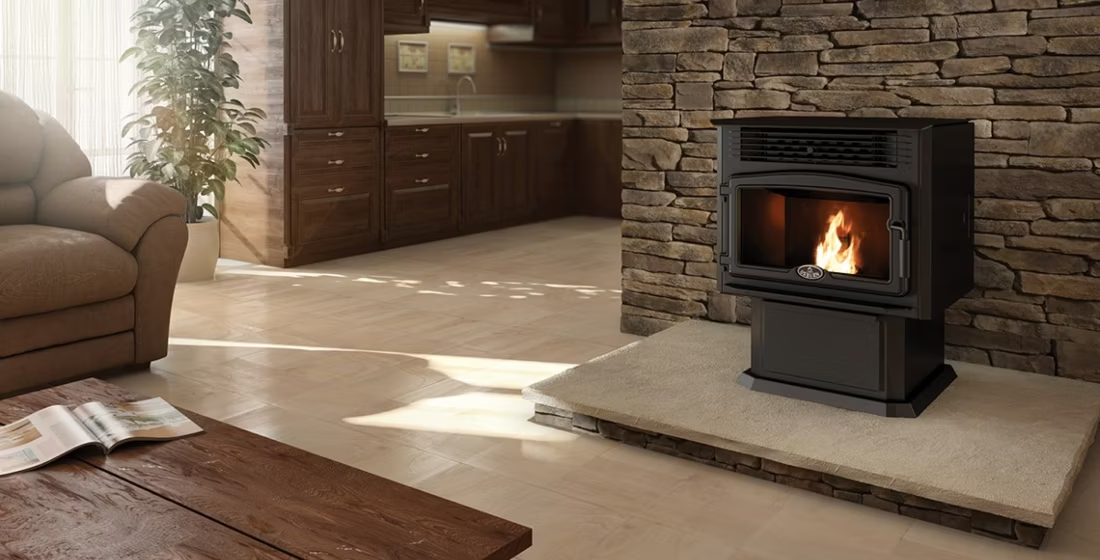
Pellet stoves fit that need well. They burn compressed hardwood pellets—sourced regionally from brands like Energex, Hamer Pellet Fuel, and Greene Team Pellet Fuel—rather than requiring you to cut, split, and season cordwood from local oak, hickory, or maple stands. For a county with limited public forest land and a population spread thin across small towns and farmland, that convenience matters: no chainsaw, no wood stacked against the shed, just a bag of pellets and a hopper. A pellet stove also produces far less particulate than an open wood fire, which is a non-issue here since Accomack has no air quality non-attainment concerns, but it's still a cleaner-burning option for anyone sensitive to smoke.
Three steps. No salesperson until you're ready.
Tell us about your project
Your zip code, your situation, and the fuel you're leaning toward—or let the answers point you to one.
See what's actually available
The brands dealers within 100 miles genuinely carry—real options, never a catalog mirage.
Get your dealer & Project Guide
A trusted local dealer, plus the free Project Guide & Parts List that names every component of the job.
Frequently Asked Questions
How much does a pellet stove installation cost in Accomack County?
Most pellet stove installations in Accomack County run in the range typical for freestanding units and inserts with a straightforward through-wall vent—expect $4,500 to $7,500 depending on the model, whether you're venting through an exterior wall or an existing masonry chimney, and any electrical work needed for the auger and blower. Homes on the barrier islands or more remote parts of the county, like Chincoteague or the Saxis area, may see a modest travel charge added by installers based out of Onley or the mainland. Ask a local dealer for an in-home quote before assuming a number.
What size pellet stove do I need for my Eastern Shore home?
Because Accomack's winters are relatively mild—average lows around 30°F and roughly 3,957 heating degree days—most homes here don't need the largest pellet stoves on the market. A small to mid-size unit (rated for 1,000 to 1,800 square feet) is enough for supplemental heat in a typical Eastern Shore farmhouse or ranch, while a larger unit makes sense if you're aiming for a pellet stove as your primary heat source in an older, less-insulated home near the water where wind exposure adds to heat loss. A local dealer can size the stove based on your square footage, insulation, and how exposed your home is to Bay or ocean winds.
Where can I buy pellets locally in Accomack County?
Regional brands like Energex, Hamer Pellet Fuel, and Greene Team Pellet Fuel are commonly stocked at hearth retailers and farm supply stores serving the Eastern Shore. Because Accomack is a rural, spread-out county, it's worth asking your dealer about buying a full season's supply—typically 2 to 4 tons for supplemental heat, more for primary heat—at once rather than making repeated short trips, especially if you're out toward Chincoteague, Wachapreague, or the southern end of the county near Temperanceville.
Do I need a permit to install a pellet stove in Accomack County?
Most pellet stove installations require a building permit, since the unit involves a wall or chimney vent penetration and, often, new electrical circuit work for the auger motor and combustion blower. Requirements are handled through local building offices serving the county's towns and unincorporated areas. A reputable local installer will pull the permit and schedule the inspection as part of the job, so you're not left navigating that process solo—this is one of the reasons working with a trusted local dealer beats a big-box purchase with no install support.
What's the difference between a pellet stove and a pellet insert?
A pellet stove is a freestanding unit that can go almost anywhere with the right clearances and a vent run through an exterior wall—a common choice for Accomack's ranch homes and additions without an existing fireplace. A pellet insert is built to slide into an existing masonry fireplace opening, which is a good option if you have an older farmhouse on the Eastern Shore with a fireplace that's rarely used for wood but where you want efficient, low-maintenance heat without giving up the mantel and hearth look. Both use the same auger-fed pellet hopper system—the difference is mainly about what opening you're working with.
Does a pellet stove work if the power goes out?
This is worth understanding clearly before you buy: pellet stoves require electricity to run the auger that feeds pellets into the burn pot and the blower that distributes heat. Without power, a pellet stove won't operate at all, unlike a wood stove. For Accomack County, where nor'easters and hurricane-season storms can knock out power along the Eastern Shore for extended stretches, that's a real consideration. Some homeowners pair a pellet stove with a small battery backup or generator for outage coverage, while others who prioritize storm resilience choose a wood stove instead, or keep one as backup. Ask your local dealer about battery backup options if outages are a concern for your property.
How often does a pellet stove need cleaning and maintenance?
Pellet stoves need more frequent, lighter maintenance than wood stoves—emptying the ash pot every few days to weekly during regular use, and a full cleaning of the burn pot, exhaust vent, and hopper roughly every one to two tons of pellets burned. An annual professional inspection and cleaning at the end of the season is recommended to check the auger motor, blower, and venting for wear. Given Accomack's coastal humidity, it's also worth keeping pellets stored in a dry, sealed area—damp pellets swell, jam the auger, and burn poorly.
Pellet stove vs. wood stove—which is right for my home?
Wood stoves burn local hardwood—oak, hickory, and maple are common on the Eastern Shore—and keep working during power outages, which matters given how often Accomack sees storm-related outages. They require more hands-on tending, ash cleanup, and a source of split, seasoned wood. Pellet stoves are far more convenient day to day: load the hopper, set it, and let it run, with less mess and steadier heat output, but they go dark without electricity. For a mild-winter county like Accomack, where heating demand is moderate and convenience often matters more than raw BTU output, pellet stoves are a strong fit for most primary living spaces. Homeowners who want a hedge against extended storm outages sometimes keep a wood stove or fireplace as backup alongside a pellet unit.
Is a pellet stove worth it in a mild climate like Accomack County's?
Yes, for the right use case. With around 3,957 heating degree days and average winter lows near 30°F, Accomack doesn't see the brutal, sustained cold of places like Duluth or Burlington, so a pellet stove here is less often the sole heat source and more often a supplemental or zone-heating solution—taking the load off a heat pump or oil furnace during cold snaps and shoulder-season chill. That said, older farmhouses and homes exposed to Bay or ocean wind can run surprisingly cold, and a well-sized pellet stove in the main living area can meaningfully cut heating costs and add comfort even in a climate this mild.
What's the difference between an insert and a zero-clearance fireplace?
An insert is a fireplace that slides into a pre-existing wood-burning fireplace—if you don't have one, there's nothing to insert it into. A zero-clearance fireplace is built into a framed wall, which makes it the answer for remodels and new construction. Simple test: existing masonry fireplace means insert; blank or framed wall means zero-clearance.
How often does a pellet stove need cleaning?
A clean pellet stove is a happy pellet stove. Plan on cleaning the burn pot about once a week when you're burning regularly—ash and clinkers gum up the air holes just like a pellet barbecue. Most pellet stove problems trace back to skipped cleaning that nobody explained up front. Some designs make it easy with a trapdoor burn pot: pull a lever and the gunk drops into the ash pan.
Does a fireplace add value to my home?
On average, a fireplace adds back to the home about the same amount you spent installing it. Add the monthly savings from heating the rooms you actually use instead of the whole house—often hundreds of dollars a year—and the value case is strong before you even count what a fire does for how your family uses the room.
Can I install a fireplace myself?
If you're putting a fire in your house on purpose, it's best to work with an expert. Unless you're genuinely experienced in framing, gas line, vent pipe, and the national code on clearances to combustibles, have a professional do it—and ideally the same company that sells you the fireplace, so warranty, service, and liability all live under one roof.
Stove and Fireplace Dealers in Accomack County
Listings include WhyFire partner dealers, dealers we have verified as authorized for the brands we recommend, and established local businesses that carry hearth products. Every listing shows which one it is. The ones marked Preferred run on WhyFire's software, so they can show you real pricing and book your appointment right here. No manufacturer pays for placement. How we verify dealers →
Watson's Gas
Shore Pellet Stoves
Harris Gas Service
Pellet Brands Stocked Around Accomack County
Manufacturers will point you to the nearest stocking dealer.
Get your free pellet stove Project Guide & Parts List.
Tell us about your Accomack County home and we'll match you with a trusted local dealer and send a free plan with the exact parts—vent kit included—for your pellet stove project.
Find Your Fireplace →