
Add warmth to your Eastern Shore home—no chimney required.
Mild coastal winters, a lot of older farmhouses and waterfront cottages, and no gas main in most of the county—electric fireplaces fit Accomack County better than people expect. Find the right unit and connect with a trusted local dealer.
Every Project Starts From One of These Five Situations
A mild coastal climate made for electric heat.
Accomack County sits on Virginia's Eastern Shore peninsula, wedged between the Chesapeake Bay and the Atlantic, from Chincoteague and Wachapreague down to Onancock, Parksley, Accomac, and out to Tangier Island. Winters here are mild by mid-Atlantic standards—average lows around 30°F, with a winter heating load comparable to other climate zone 4A areas. That's a very different heating problem than the mountains of southwest Virginia. Most homes don't need a furnace running around the clock; they need targeted warmth in the rooms people actually use, especially in the older farmhouses and waterfront cottages that make up much of the county's housing stock.
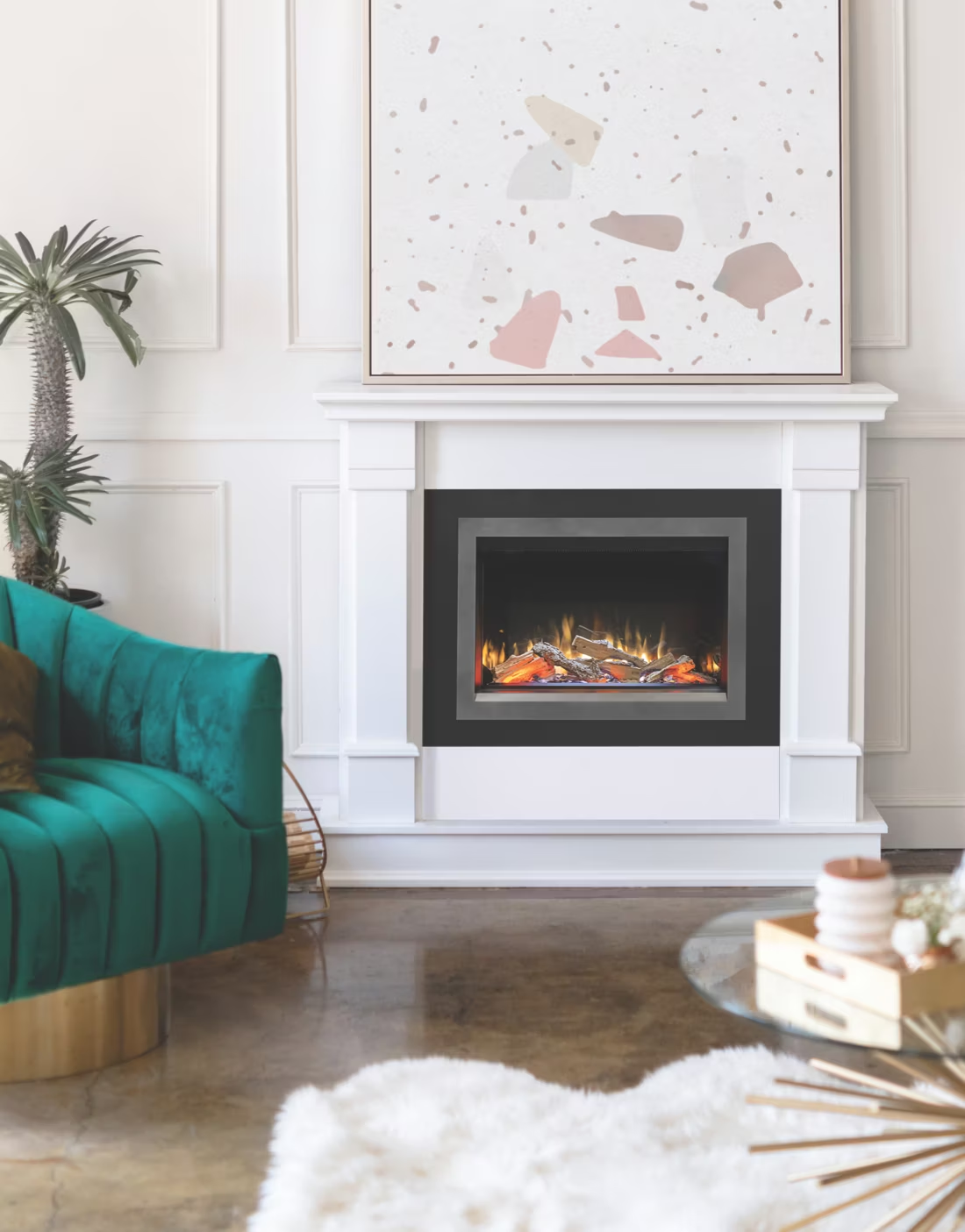
Natural gas service is limited across most of rural Accomack County, and running new gas lines to a historic home in Onancock or a rental cottage near Chincoteague is often impractical. That's where electric fireplaces earn their place: no venting, no chimney, no gas line, and installation that a licensed electrician can often complete in a day. Power in the county runs through A&N Electric Cooperative, and a properly sized electric insert or built-in unit draws on a standard 120V outlet or a dedicated 240V circuit depending on the model. For seasonal and vacation properties around Chincoteague especially, that simplicity—real-looking flame, real supplemental heat, zero smoke or ash—is a big part of the appeal.
Three steps. No salesperson until you're ready.
Tell us about your project
Your zip code, your situation, and the fuel you're leaning toward—or let the answers point you to one.
See what's actually available
The brands dealers within 100 miles genuinely carry—real options, never a catalog mirage.
Get your dealer & Project Guide
A trusted local dealer, plus the free Project Guide & Parts List that names every component of the job.
Frequently Asked Questions
How much does an electric fireplace installation cost in Accomack County?
Plug-in electric inserts and mantel units run on the low end—often $500 to $1,200 installed, since many need nothing more than an existing outlet and a local dealer to size and mount the unit. Built-in electric fireplaces or larger inserts that require a dedicated 240V circuit run higher, typically $1,200 to $2,800, depending on whether an electrician needs to run new wiring from the panel. Older Accomack County homes—many built well before modern electrical codes—sometimes need a panel or circuit upgrade first, which adds to the total. A local dealer can tell you which category your project falls into after a quick look at your electrical setup.
Electric insert vs. freestanding electric stove—which fits my home?
An electric insert is built to slide into an existing masonry or wood fireplace opening, which makes it a natural fit for the many older Onancock, Parksley, and Accomac homes that already have a fireplace but no interest in wood handling or ash cleanup. A freestanding electric stove or mantel unit works anywhere there's a wall outlet—no existing fireplace needed—which makes it the more flexible option for waterfront cottages, additions, or rental units near Chincoteague that never had a hearth to begin with. Both heat a single room effectively; the choice usually comes down to whether you're upgrading an existing opening or adding heat somewhere new.
Can an electric fireplace be my primary heat source?
For most Accomack County homes, no—electric fireplaces are built for zone heating, not whole-house heating. A typical unit puts out around 4,600 to 5,000 BTUs, enough to comfortably warm a single room of 400 to 1,000 square feet, which fits the county's mild climate well since most homes don't need aggressive whole-home heat even in January. Think of it as a way to warm the room you're actually sitting in—a living room in Onancock, a bedroom in a Chincoteague cottage—while your heat pump or central system handles the rest of the house at a lower setting. That combination often lowers overall heating costs compared to running central heat at full temperature throughout an empty house.
Do I need a permit to install an electric fireplace in Accomack County?
A plug-in electric fireplace that uses an existing outlet typically doesn't require a permit through the Accomack County Building Department, since no new wiring or structural work is involved. If your installation calls for a new dedicated circuit, a panel upgrade, or any wall modification to fit a built-in unit, an electrical permit is generally required and the work needs to be done by a licensed electrician. Most local dealers coordinate this as part of the installation, so you're not left tracking down the paperwork yourself. Unlike wood or gas appliances, there's no emissions inspection or venting code to satisfy—electric units simply need to meet standard electrical code.
What's the best electric fireplace for an older Eastern Shore farmhouse?
Many of Accomack County's older homes—the farmhouses scattered between Parksley and Bloxom, the historic properties in Onancock and Accomac—have plaster walls, older wiring, and existing fireplace openings that were built for wood, not electric inserts. For these homes, a slim electric insert sized to the existing masonry opening usually looks the most natural and avoids major electrical work if the home is already wired for a nearby circuit. For homes without an existing fireplace, a mantel-style electric unit with a realistic flame effect tends to blend better with older trim and molding than a modern wall-mounted model. A local dealer familiar with the county's older housing stock can measure your opening and recommend a model that won't require reframing.
What does an electric fireplace cost to run through A&N Electric Cooperative?
Electric fireplaces are inexpensive to operate compared to running central heat harder. A typical 1,500-watt unit running on high for a few hours an evening adds roughly $10 to $20 a month to an A&N Electric Cooperative bill during winter, depending on how many hours it's used and current rates. Most owners run the flame effect alone—with the heater off—for ambiance at almost no electrical cost, and switch on the heat function only when they want warmth in that room. That flexibility is part of why electric fireplaces work well as a supplement rather than a full heating system in Accomack County's already-mild climate.
Are electric fireplaces a good fit for vacation rentals near Chincoteague?
Yes—electric fireplaces are one of the most common upgrades local dealers install in Chincoteague-area vacation rentals and second homes. There's no wood to stock, no chimney to inspect between guest turnovers, no gas line liability, and most models come with a remote and a simple on/off switch that renters can operate safely without instruction. For a coastal rental that sits empty part of the year, that low-maintenance profile matters—no pilot light to check, no ash to clean before the next guest arrives, and no risk of an untended fire. Insurance and liability considerations also tend to favor electric units in short-term rental properties over open-flame appliances.
Electric vs. wood—which makes more sense for my Accomack County home?
Wood is still common across the county—oak, hickory, and maple are the local go-to species, and a wood stove or fireplace works well as backup heat during storm-related power outages, which do happen on the Eastern Shore during nor'easters and hurricane season. The tradeoff is that wood needs a chimney, regular cleaning, and physical handling of fuel. Electric skips all of that—no venting, no ash, no cutting or stacking—but it depends entirely on grid power, so it won't help if the outage that knocks out your heat also knocks out the outlet it's plugged into. Many Accomack County homeowners land on electric for daily-use ambiance and convenience in a main living space, while keeping a wood or propane appliance elsewhere as a genuine backup source.
What size electric fireplace do I need for my room?
Sizing an electric fireplace is more about room dimensions than the whole-home calculations you'd use for a furnace. As a rough guide for Accomack County's mild winters: a 26 to 30-inch insert or mantel unit suits a room up to roughly 400 square feet, a 36 to 42-inch unit covers larger living rooms up to around 700 to 1,000 square feet, and anything beyond that is better served by two smaller zone units than one oversized fireplace. Ceiling height, window count, and whether the room is on an exterior wall (common in older Onancock and Accomac homes with less insulation) all affect real-world performance. A local dealer can walk your specific room and recommend a size rather than relying on square footage alone.
Can I put a TV above my fireplace?
Yes—with an asterisk. Fireplaces are hot and TVs don't like heat. Either put a mantel between them to deflect rising warmth, or choose a fireplace with heat-management technology that creates a cool zone on the wall above—the wall stays around 125 degrees, barely warm, while the room still gets full heat. If you like clean lines and don't want a mantel, heat management is the answer.
How much does an electric fireplace cost to run?
With the heater on, a typical unit draws about 1,500 watts—at average electric rates that's roughly 20 cents an hour. Run the flame effect alone and it costs pennies; the flames are LED-driven and use about as much power as a light bulb. There's no pilot light, no fuel delivery, and essentially no maintenance.
Can a fireplace actually lower my heating bill?
Yes—by creating a comfort zone. A furnace heats every square foot of the house just to warm the one room you're in; a gas fireplace on low burns roughly a sixth of the gas a typical furnace does. Set the furnace around 55–60 degrees as a baseline, then heat the rooms your family actually uses. Families who heat this way commonly save $20–$60 a month.
Can I install a fireplace myself?
If you're putting a fire in your house on purpose, it's best to work with an expert. Unless you're genuinely experienced in framing, gas line, vent pipe, and the national code on clearances to combustibles, have a professional do it—and ideally the same company that sells you the fireplace, so warranty, service, and liability all live under one roof.
Stove and Fireplace Dealers in Accomack County
Listings include WhyFire partner dealers, dealers we have verified as authorized for the brands we recommend, and established local businesses that carry hearth products. Every listing shows which one it is. The ones marked Preferred run on WhyFire's software, so they can show you real pricing and book your appointment right here. No manufacturer pays for placement. How we verify dealers →
Watson's Gas
Shore Pellet Stoves
Harris Gas Service
Find your electric fireplace in Accomack County.
Tell us a bit about your home and we'll put together a free Project Guide & Parts List—the right electric fireplace or insert for your space, matched with a trusted local dealer who can install it.
Find Your Fireplace →