
Heating options for every home on Virginia's Eastern Shore.
Wood, gas, pellet, and electric fireplace resources for every town and rural community in Accomack County—from Chincoteague to Tangier Island. Find the right unit for your home and connect with a trusted local hearth retailer.
Every Project Starts From One of These Five Situations
Mild coastal winters, hardwood heritage, on the Eastern Shore.
Accomack County occupies the northern two-thirds of Virginia's Eastern Shore, a narrow strip of land bounded by the Chesapeake Bay to the west and the Atlantic barrier islands to the east—including Chincoteague and the remote, boat-and-plane-only community of Tangier Island. Winters here are mild by Mid-Atlantic standards: climate zone 4A, an average winter low near 30°F, and a heating season that adds up to only a fraction of the winter heating load a place like Burlington, Vermont sees. Oak, hickory, and maple grow throughout the county's farmland and hedgerows, and remain the go-to species for local wood burners, prized for their dense, long-burning heat.
What you'll find on this hub: hearth retailers, service technicians, and fuel suppliers serving communities across the county—from the county seat of Accomac, down Route 13 through Onley, Melfa, and Tasley, out to Onancock and Parksley, and east to Chincoteague and the Tangier ferry landing. Pick your fuel below to drill into specifics—local dealers, installation costs, recommended units, and resources matched to your project. Whether you're heating a farmhouse near Parksley or a getaway cottage on Chincoteague, this is the starting point.
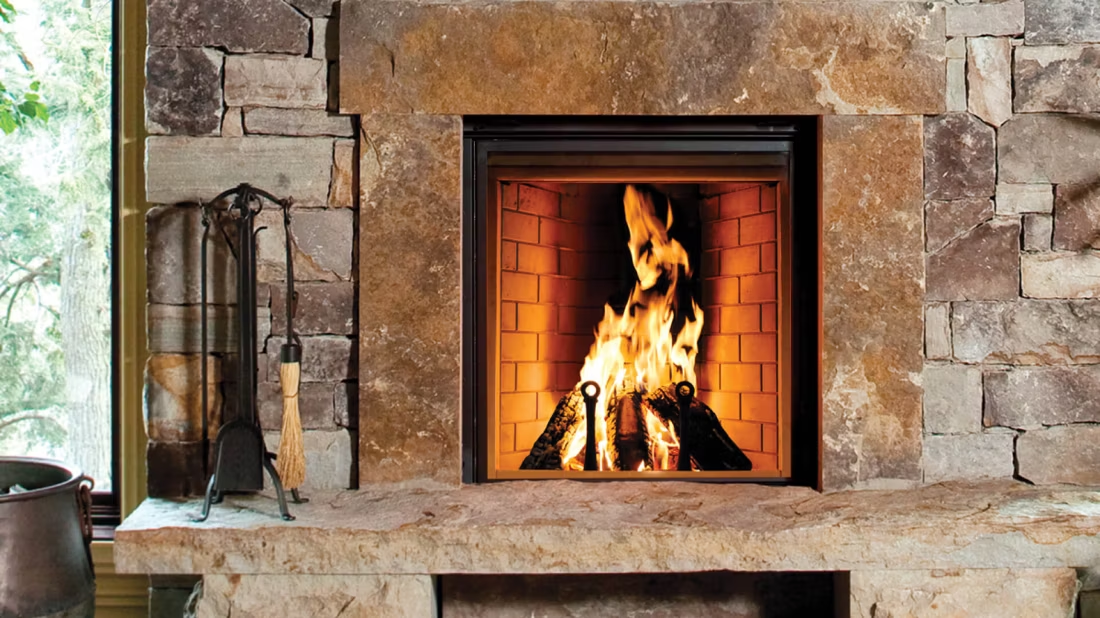
Four fuels. One honest answer for Accomack County.
Three steps. No salesperson until you're ready.
Tell us about your project
Your zip code, your situation, and the fuel you're leaning toward—or let the answers point you to one.
See what's actually available
The brands dealers within 100 miles genuinely carry—real options, never a catalog mirage.
Get your dealer & Project Guide
A trusted local dealer, plus the free Project Guide & Parts List that names every component of the job.
Frequently Asked Questions
Which fuel works best in Accomack County?
It depends on your home and situation, but the mild coastal climate here gives you more flexibility than colder inland regions. Wood is well-suited if you have access to local oak, hickory, or maple—dense hardwoods that burn long and hot, and with such a short, mild heating season, a mid-size stove is usually enough to carry a home through the season. Gas is mostly propane on the Eastern Shore, since natural gas mains are limited outside the larger towns—propane fireplaces and inserts give instant heat with no wood-splitting labor. Pellet is a solid middle ground, and regional brands like Energex, Hamer Pellet Fuel, and Greene Team Pellet Fuel are readily available at local farm and hardware suppliers. Electric works better here than it would in a harsher climate—with winter lows averaging around 30°F, an electric insert can genuinely carry a bedroom or sunroom through most cold snaps rather than serving as pure ambiance.
Do I need a permit to install a fireplace in Accomack County?
In most cases, yes. New wood stoves and inserts, propane or gas fireplaces and inserts, and pellet stoves typically require a building permit through the county building department, along with an inspection once installed. Propane installations also require the gas line and tank work to be handled by a licensed propane technician, separate from the appliance permit itself. Electric fireplaces generally don't need a permit unless you're doing a built-in installation with new wiring or a dedicated circuit. Most local hearth retailers on the Route 13 corridor handle the permitting process as part of installation, so you typically aren't filing the paperwork yourself.
Are there air quality restrictions on wood burning in Accomack County?
No—Accomack County has no non-attainment status, no winter burn advisories, and no local wood-burning ordinances beyond standard building code. This is different from areas with valley inversions or dense urban wood-smoke buildup; the Eastern Shore's flat, coastal, wind-exposed geography doesn't trap smoke the way a mountain basin does. That said, any new wood stove installation still needs to meet current EPA emissions standards, and it's worth choosing a certified unit for efficiency and cleaner burning even without a local mandate requiring it.
Can one local hearth retailer handle all four fuel types?
Several dealers along the Onley–Melfa–Onancock stretch of Route 13 carry a mix of wood, propane-fueled gas units, and pellet stoves, since those three fuels see the most demand countywide. Electric fireplace selection tends to be more limited and is often handled as an add-on line rather than a dedicated showroom category. If you're cross-shopping fuels, ask a retailer directly which lines they stock as floor displays versus special-order—on the Eastern Shore, in-stock inventory can be thinner than in larger metro markets, so lead times matter for planning your project.
How does service work in remote communities like Chincoteague and Tangier Island?
Chincoteague is reachable by causeway, so most mainland technicians service it on a standard route with a modest travel fee. Tangier Island is a different story—it's accessible only by ferry, private boat, or small aircraft, so scheduled service calls there are less frequent and typically bundled to justify the trip. If you're on Tangier or another water-access-only community, plan annual chimney sweeping or propane inspections well ahead of the heating season rather than waiting for a mid-winter problem, and keep basic backup supplies—extra propane, dry firewood, spare batteries for IPI gas units—on hand in case weather delays a technician's crossing.
What's the typical cost range for fireplace installation across all fuel types in Accomack County?
Because Accomack's mild climate (a short, light heating season overall) often calls for smaller units than a harsher inland climate would need, costs tend to sit toward the lower-to-middle end of regional ranges. Wood stove or insert installation: roughly $3,800–$8,000 for a typical install, more for new chimney construction. Propane fireplace, insert, or stove: roughly $4,000–$10,000 depending on tank setup and venting, less for straightforward conversions where a propane line already exists. Pellet stove or insert: roughly $4,200–$7,000 for a typical install. Electric fireplace: $200–$3,000 for the unit itself, plus $400–$1,200 in labor for anything beyond a plug-and-play placement. See the county + fuel pages above for cost detail tied to specific local retailers.
Can a fireplace actually lower my heating bill?
Yes—by creating a comfort zone. A furnace heats every square foot of the house just to warm the one room you're in; a gas fireplace on low burns roughly a sixth of the gas a typical furnace does. Set the furnace around 55–60 degrees as a baseline, then heat the rooms your family actually uses. Families who heat this way commonly save $20–$60 a month.
How much should I budget for a fireplace?
For an average home—covering the fireplace, the vent pipe, and basic installation—a budget between $3,900 and $5,500 gives you a lot of options across wood, gas, and pellet. By the time you add finish work, gas line, and electrical, the average complete installation lands between $5,000 and $12,000 all-in. In a remodel or new build, a good rule is to put about 2.5% of the total project cost toward the fireplace.
Can I install a fireplace myself?
If you're putting a fire in your house on purpose, it's best to work with an expert. Unless you're genuinely experienced in framing, gas line, vent pipe, and the national code on clearances to combustibles, have a professional do it—and ideally the same company that sells you the fireplace, so warranty, service, and liability all live under one roof.
Wood, gas, pellet, or electric—how do I choose?
Match the fuel to your life, not the other way around. Wood: lowest fuel cost and total power-outage independence, but you're hauling and stacking. Gas: press a button, set a thermostat, no maintenance to speak of. Pellet: wood economics with automatic feeding, in exchange for weekly cleaning and a need for electricity. Electric: plugs in anywhere with honest supplemental heat. Nobody regrets the fuel that fits how they actually live.
Stove and Fireplace Dealers in Accomack County
Listings include WhyFire partner dealers, dealers we have verified as authorized for the brands we recommend, and established local businesses that carry hearth products. Every listing shows which one it is. The ones marked Preferred run on WhyFire's software, so they can show you real pricing and book your appointment right here. No manufacturer pays for placement. How we verify dealers →
Watson's Gas
Shore Pellet Stoves
Harris Gas Service
Find your fireplace project in Accomack County.
Pick your fuel below and we'll match you with a trusted local dealer, plus a free Project Guide & Parts List—the exact parts, including the vent kit, for a project sized to your Eastern Shore home.
Find Your Fireplace →