
Keep Your Family Warm and Safe—No Matter What
With a long, demanding heating season and winter lows averaging 7°F, Montpelier homes lean on wood the way they always have. Find the right stove or insert and connect with a trusted local dealer.
Every Project Starts From One of These Five Situations
Wood heat runs deeper here than almost anywhere in New England.
Montpelier is the least populous state capital in the country, tucked into the Winooski River valley at just 527 feet of elevation but surrounded by the Green Mountains and hardwood forest on every side. That geography, combined with a climate zone 6A rating and a long, demanding heating season, puts Montpelier on par with Caribou, Maine for sustained cold—winters here run long, and a lot of houses in and around Washington County are old capes and farmhouses that were built to be heated with a woodstove in the first place.
The forests around Montpelier are stocked with sugar maple, yellow birch, American beech, white ash, and red oak—dense, high-BTU hardwoods that split and season well and burn hot and clean. Cutting permits through the Green Mountain & Finger Lakes National Forest and White Mountain National Forest run about $20 per cord from May through October, which keeps self-cut firewood cheap for residents willing to do the work. With no air quality non-attainment designation in the area and Green Mountain Power's residential electric rate sitting at roughly 22 cents per kWh—among the higher rates in New England—a well-run wood stove is still one of the most cost-effective ways to heat a Vermont home through January and February.
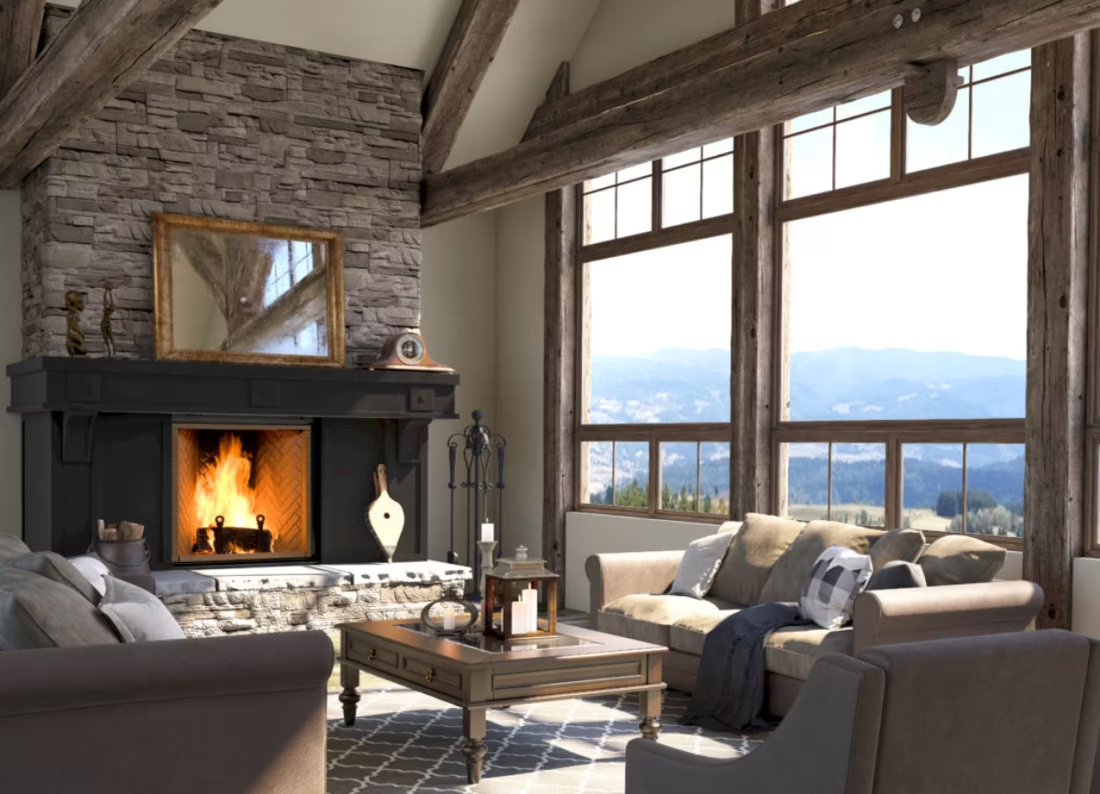
Firewood Cutting Permits Near Montpelier
Three steps. No salesperson until you're ready.
Tell us about your project
Your zip code, your situation, and the fuel you're leaning toward—or let the answers point you to one.
See what's actually available
The brands dealers within 100 miles genuinely carry—real options, never a catalog mirage.
Get your dealer & Project Guide
A trusted local dealer, plus the free Project Guide & Parts List that names every component of the job.
Frequently Asked Questions
How much does a wood stove installation cost in Montpelier?
Most wood stove installations in Montpelier run somewhere between $4,500 and $10,000, with the spread coming down to the stove itself, whether new Class A chimney pipe is needed, and whether the hearth pad requires upgrading for code clearances. Older Montpelier capes and farmhouses with an existing masonry chimney in usable condition tend to land on the lower end; homes needing a full new chimney chase through the roof run higher. Local dealers typically fold the permitting and code compliance work into the installation quote.
What size wood stove do I need for a Montpelier home?
With winter lows averaging 7°F and a long, demanding heating season, Montpelier sits solidly in serious-cold-climate territory, so undersizing a stove is the more common mistake than oversizing. A small stove (rated for roughly 1,000 sq ft) suits a single room, camp, or well-insulated addition; a medium stove (1,000–2,000 sq ft) covers most in-town homes; larger, older farmhouses with less insulation often need a stove rated for 2,000+ sq ft to hold heat through a January cold snap. A local dealer will walk your home and size it based on ceiling height, window count, and insulation—not just square footage.
Where can I find a certified wood stove installer near Montpelier?
Look for NFI (National Fireplace Institute) certified installers or CSIA (Chimney Safety Institute of America) credentialed sweeps. Vermont's Division of Fire Safety reviews solid-fuel burning appliance installations in many municipalities that don't run their own building code enforcement, so a dealer familiar with that review process will save you a step. The hearth retailers serving the Montpelier area typically handle the install and the paperwork together, which keeps warranty coverage intact and avoids the clearance mistakes that come with a generalist contractor install.
Wood stove or wood insert—which fits my Montpelier home?
A wood insert slides into an existing masonry fireplace and uses the chimney you already have, which makes it a strong fit for the many older Montpelier homes built around a central brick hearth. A freestanding stove needs its own hearth pad and clearances but can go almost anywhere in the house, which makes it the better option for newer construction, additions, or homes without an existing fireplace. Given how much of Montpelier's housing stock predates 1950, inserts are a common upgrade path—they turn a drafty, inefficient open fireplace into a real heat source without touching the masonry.
Do I need a permit to install a wood stove in Montpelier?
Yes. New wood stove installations require a building permit, and the unit needs to meet current EPA emissions standards. Montpelier's own code office handles permitting within city limits, while installations elsewhere in Washington County may route through the Vermont Division of Fire Safety's plan review process. Unlike some Western cities, Montpelier isn't a designated non-attainment area, so there aren't seasonal burn curtailment periods to plan around—you just need the install itself to pass inspection.
What's the best wood stove for a Vermont winter?
Vermont Castings, originally founded just down the road in Randolph, remains a go-to choice for homeowners who want a cast-iron stove built for exactly this climate, and Woodstock Soapstone Company in West Lebanon builds soapstone stoves that store and release heat slowly overnight—useful when it's 7°F outside at 3 a.m. Catalytic models from Blaze King also hold a fire well past 20 hours on a full load of seasoned sugar maple or oak, which matters during a long Green Mountains cold snap. A local dealer can match the stove to your home's insulation and layout.
How often should my chimney be inspected in Montpelier?
The CSIA recommends an annual inspection for any wood-burning appliance, and that holds for Montpelier's long burn season—many homes here run a stove from October through April. Burning dense hardwoods like sugar maple, ash, and red oak at a good hot fire helps limit creosote buildup compared to burning green or resinous wood, but an annual Level 1 sweep before the season starts is still the standard. Homes using wood as a primary heat source and burning 4+ cords a winter sometimes need a mid-season check as well.
Where can I get firewood in the Montpelier area?
Local firewood dealers around Washington County sell seasoned cords of the hardwoods native to central Vermont—sugar maple, yellow birch, beech, white ash, and red oak—typically delivered by the full or half cord. For homeowners willing to cut their own, the Green Mountain & Finger Lakes National Forest and White Mountain National Forest both issue personal-use cutting permits for about $20 per cord, valid May through October, well ahead of burning season.
Wood stove vs. pellet stove—which makes more sense in Montpelier?
Wood stoves keep working when the power goes out, which matters in a place that sees its share of ice storms and downed lines, and they pair naturally with the cheap, plentiful hardwood cut from surrounding national forest land. Pellet stoves—stocked locally with brands like New England Wood Pellet, Lignetics, and Maine Woods Pellet Co.—are easier to load and burn cleaner, but they run on electricity for the auger and blower, and Green Mountain Power's residential rate of roughly 22 cents per kWh is on the higher side for New England, which adds to the running cost. For homes that want backup heat during outages and have easy firewood access, wood is usually the better fit; for convenience-focused households with reliable power, pellet is worth a look.
What's the difference between an insert and a zero-clearance fireplace?
An insert is a fireplace that slides into a pre-existing wood-burning fireplace—if you don't have one, there's nothing to insert it into. A zero-clearance fireplace is built into a framed wall, which makes it the answer for remodels and new construction. Simple test: existing masonry fireplace means insert; blank or framed wall means zero-clearance.
Why is a fireplace insert so efficient?
An insert does two things: it seals the chimney completely, so you stop losing air you already paid to heat, and it radiates warmth into the room through the firebox and glass. Most add a heat-exchange fan that pulls cool room air underneath, wraps it around the hot firebox, and pushes it back out warm. Your home is more efficient before you've even lit the first fire.
Does a fireplace add value to my home?
On average, a fireplace adds back to the home about the same amount you spent installing it. Add the monthly savings from heating the rooms you actually use instead of the whole house—often hundreds of dollars a year—and the value case is strong before you even count what a fire does for how your family uses the room.
How much should I budget for a fireplace?
For an average home—covering the fireplace, the vent pipe, and basic installation—a budget between $3,900 and $5,500 gives you a lot of options across wood, gas, and pellet. By the time you add finish work, gas line, and electrical, the average complete installation lands between $5,000 and $12,000 all-in. In a remodel or new build, a good rule is to put about 2.5% of the total project cost toward the fireplace.
Nearby Dealers
Hearth shops serving Montpelier and the surrounding area. Every listing shows whether it is a WhyFire partner, a dealer we have verified as authorized for the brands we recommend, or a local business carrying hearth products. No manufacturer pays for placement. How we verify dealers →
Pellergy, LLC
Chimney Sweep Fireplace Shop
Chimney Care Inc.
Chimney Works
Chimney Savers
Get your Montpelier wood heat plan.
Tell us about your home and heating goals, and we'll match you with a trusted local dealer and send over a free Project Guide & Parts List—the exact stove, venting, and hearth parts your Montpelier install needs, plus who to call to get it done.
Find Your Fireplace →