
Heat built for an 8,349-HDD winter.
Wood, gas, pellet, and electric fireplace resources for every town in Washington County—from Montpelier and Barre out to Cabot and Roxbury. Find the right unit and get matched with a trusted local hearth retailer.
Every Project Starts From One of These Five Situations
Central Vermont winters call for serious heat.
Washington County sits in the Green Mountains' central spine, with a 6A climate zone, average winter lows around 7°F, and roughly 8,349 heating degree days a year—a season length closer to Burlington or Duluth than most of New England. Sugar maple, yellow birch, american beech, white ash, and red oak are the backbone of local firewood, much of it cut from woodlots within the county or hauled from White Mountain National Forest and Green Mountain & Finger Lakes NF permit areas across the state line. Unlike parts of the West, there's no winter inversion or non-attainment status here—burning restrictions aren't a factor, so the decision comes down to your home, your budget, and how much wood-splitting you want in your life.
What you'll find on this hub: hearth retailers, service technicians, and fuel suppliers serving every community in the county—Montpelier, Barre, Barre Town, Waterbury, Northfield, Moretown, Cabot, Plainfield, Marshfield, Roxbury, Warren, and the smaller villages between them. Pick your fuel below to drill into local dealers, installation costs, and recommended units for your specific project. Whether you're heating a farmhouse outside Cabot or a condo in downtown Montpelier, this is the starting point.
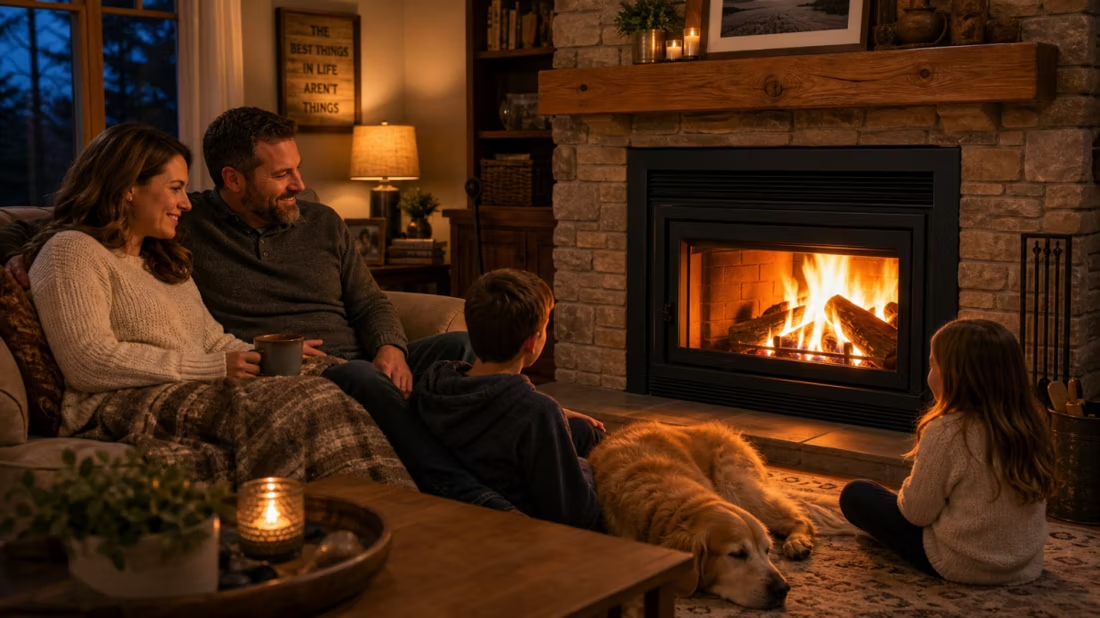
Four fuels. One honest answer for Washington County.
Three steps. No salesperson until you're ready.
Tell us about your project
Your zip code, your situation, and the fuel you're leaning toward—or let the answers point you to one.
See what's actually available
The brands dealers within 100 miles genuinely carry—real options, never a catalog mirage.
Get your dealer & Project Guide
A trusted local dealer, plus the free Project Guide & Parts List that names every component of the job.
Frequently Asked Questions
Which fuel works best in Washington County?
It depends on the home and how hands-on you want to be with fuel. Wood is the traditional backbone here—sugar maple and yellow birch split and season well, and a good catalytic or non-cat stove can carry a farmhouse through a 7°F overnight without a generator. Gas, mostly propane since piped natural gas is limited outside the Barre-Montpelier corridor, is the low-effort choice—set a thermostat, walk away, and it still runs during a power outage if the unit has a battery backup or millivolt system. Pellet splits the difference: wood-style ambiance without splitting and stacking, and New England Wood Pellet's plant in Deerfield keeps regional supply steady. Electric works well as supplemental heat in a bedroom or sunroom, but with an 8,349 HDD season, it's rarely anyone's sole heat source. Most Washington County homes end up with wood or pellet doing the heavy lifting and gas or electric filling in the gaps.
Do I need a permit to install a fireplace in Washington County?
Generally yes, for anything beyond a plug-in electric unit. New wood stoves, wood inserts, gas fireplaces, gas inserts, and pellet stoves typically require a local building permit, and gas installs also need a licensed propane or gas technician for the fuel line connection. Vermont doesn't require statewide open-burning permits for indoor appliances, but your town's fire department or zoning office handles the local permit—Montpelier, Barre City, and Barre Town each issue their own, while smaller towns like Cabot or Roxbury route through their town clerk or a regional building official. Most established hearth retailers in the county handle the permit paperwork as part of a full installation, so you're not chasing it down yourself.
Are there air quality or burning restrictions in Washington County?
No—Washington County has no non-attainment status, no winter inversion pattern, and no seasonal curtailment days like you'd find in a basin airshed out West. That's largely a function of Vermont's terrain and prevailing wind patterns, which don't trap smoke the way a valley or bowl geography does. That said, a modern EPA-certified stove is still the smarter buy for efficiency and firewood economy—you'll burn less wood per BTU and get a longer, more even heat curve than with an old pre-1988 stove, even without a regulatory push to upgrade.
Can one local hearth retailer handle all four fuel types?
Many hearth retailers in the Barre-Montpelier area carry three or four fuel types, since that lets them serve both wood-heat traditionalists and homeowners who want a gas or pellet appliance with less labor. A dealer that stocks wood, gas, and pellet units side by side can walk you through a working display of each and talk through real trade-offs—BTU output, fuel cost per season, and what a chimney or vent kit actually costs to run in your specific house. Electric coverage varies more by dealer since it's a smaller-margin category; if built-in electric is a priority, confirm that with the dealer directly. If you're cross-shopping fuels, a multi-fuel retailer is usually the faster path to an apples-to-apples comparison.
How does service work in the smaller towns and villages of Washington County?
Technicians based in Barre or Montpelier cover the outlying towns—Cabot, Marshfield, Plainfield, Roxbury, Warren, Moretown—as part of their regular route, but rural calls often carry a modest travel fee, commonly $40-$80 depending on distance and road conditions. Given how long the heating season runs here, booking your annual chimney sweep or gas inspection in late summer or early fall (before the first hard frost) gets you ahead of the rush; by November, techs are often booked out for weeks on emergency calls. If you're on a dirt road that gets rough in mud season or heavy snow, flag that when scheduling so the tech can plan the visit accordingly.
What's the typical cost range for fireplace installation across all fuel types in Washington County?
Costs vary by fuel and by how much venting or chimney work is involved. Wood stove or insert installation: roughly $4,000-$8,500 for a typical retrofit, more if a full masonry chimney or new class-A chimney pipe is needed. Gas fireplace, insert, or stove: about $4,000-$10,000, with propane tank setup or gas line extension adding to the low end. Pellet stove or insert: typically $4,000-$7,000 installed. Electric fireplace: $200-$3,000 for the unit itself, plus $400-$1,200 in labor if it's a built-in requiring a dedicated circuit rather than a simple plug-in. See the county + fuel pages above for more detail tied to specific local retailer pricing.
Does a fireplace add value to my home?
On average, a fireplace adds back to the home about the same amount you spent installing it. Add the monthly savings from heating the rooms you actually use instead of the whole house—often hundreds of dollars a year—and the value case is strong before you even count what a fire does for how your family uses the room.
What is an in-home preview and do I need one?
It's a visit where a hearth professional measures your space, confirms the model you picked actually works in your home, and walks the specs—framing, gas line, venting, finish work—before anything is ordered. Some details you just can't know until you see the house. Never make a down payment without one; it's the single most-skipped step that burns buyers.
Should the dealer who sells my fireplace also install it?
Ideally, yes. A fireplace project involves vent pipe, gas line, electrical, and often tile or stone. Hire three or four separate trades and you own the liability and the game of telephone between them. One company selling and installing means one accountable party, start to finish—ask about factory training, on-time completion records, and what happens if an inspection fails.
How much should I budget for a fireplace?
For an average home—covering the fireplace, the vent pipe, and basic installation—a budget between $3,900 and $5,500 gives you a lot of options across wood, gas, and pellet. By the time you add finish work, gas line, and electrical, the average complete installation lands between $5,000 and $12,000 all-in. In a remodel or new build, a good rule is to put about 2.5% of the total project cost toward the fireplace.
Stove and Fireplace Dealers in Washington County
Listings include WhyFire partner dealers, dealers we have verified as authorized for the brands we recommend, and established local businesses that carry hearth products. Every listing shows which one it is. The ones marked Preferred run on WhyFire's software, so they can show you real pricing and book your appointment right here. No manufacturer pays for placement. How we verify dealers →
Chimney Sweep Fireplace Shop
Chimney Care Inc.
Pellergy, LLC
Chimney Works
Chimney Savers
Find your fireplace in Washington County.
Pick your fuel below to see local installation costs, get matched with a trusted Washington County dealer, and receive a free Project Guide & Parts List for your home.
Find Your Fireplace →