
Vermont Runs on Real Heat—Let's Find Yours.
Vermont has one of the highest rates of wood heat in the country, and pellet, gas, and electric options fill in around it. Whether you're in Burlington, up in the Northeast Kingdom, or along the Champlain Valley, I'll connect you with a trusted local dealer who knows what actually works in a Zone 6A winter.
Every Project Starts From One of These Five Situations
One of the highest wood-heat rates in the country—and there's a reason why.
Vermont sits entirely in IECC climate zone 6A, with winter heating needs ranging from a level comparable to a typically cold northern winter in Burlington to a much heavier winter heating load in the Northeast Kingdom highlands—cold enough to rank alongside Caribou, Maine for sustained winter heating load. Much of the state also lacks piped natural gas infrastructure outside a handful of population centers, so what shows up as 'gas' heat in Vermont is often propane delivered by truck, not municipal gas. That gap, combined with abundant northern hardwood forest—maple, ash, yellow birch, oak—is a big reason cordwood and pellet stoves function as primary heat in so many Vermont homes, not just supplemental warmth for a few cold nights.
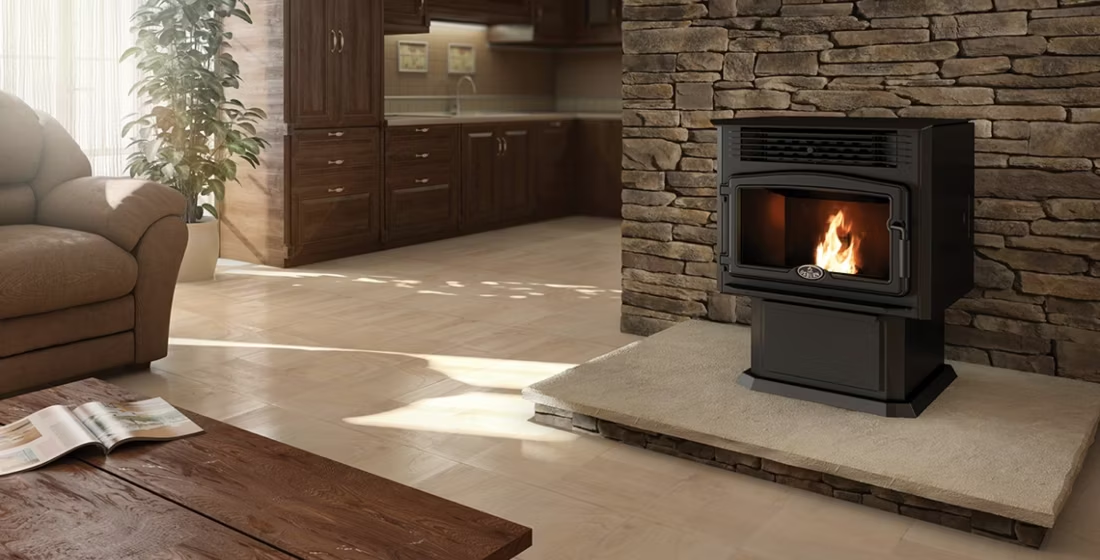
This page is the starting point, not the answer. A home in the Champlain Valley near Lake Champlain has a different heating reality than one up near Mount Mansfield or out in the Northeast Kingdom. Browse by county or city below, or use the fuel selector to get routed to dealers who install what actually holds up through a full Vermont winter—and who can walk you through EPA-certified wood stoves, pellet appliances, propane inserts, or electric options depending on what your house and your wood supply can support.
Three steps. No salesperson until you're ready.
Tell us about your project
Your zip code, your situation, and the fuel you're leaning toward—or let the answers point you to one.
See what's actually available
The brands dealers within 100 miles genuinely carry—real options, never a catalog mirage.
Get your dealer & Project Guide
A trusted local dealer, plus the free Project Guide & Parts List that names every component of the job.
Frequently Asked Questions
Can a fireplace actually lower my heating bill?
Yes—by creating a comfort zone. A furnace heats every square foot of the house just to warm the one room you're in; a gas fireplace on low burns roughly a sixth of the gas a typical furnace does. Set the furnace around 55–60 degrees as a baseline, then heat the rooms your family actually uses. Families who heat this way commonly save $20–$60 a month.
Wood, gas, pellet, or electric—how do I choose?
Match the fuel to your life, not the other way around. Wood: lowest fuel cost and total power-outage independence, but you're hauling and stacking. Gas: press a button, set a thermostat, no maintenance to speak of. Pellet: wood economics with automatic feeding, in exchange for weekly cleaning and a need for electricity. Electric: plugs in anywhere with honest supplemental heat. Nobody regrets the fuel that fits how they actually live.
Can I install a fireplace myself?
If you're putting a fire in your house on purpose, it's best to work with an expert. Unless you're genuinely experienced in framing, gas line, vent pipe, and the national code on clearances to combustibles, have a professional do it—and ideally the same company that sells you the fireplace, so warranty, service, and liability all live under one roof.
What is an in-home preview and do I need one?
It's a visit where a hearth professional measures your space, confirms the model you picked actually works in your home, and walks the specs—framing, gas line, venting, finish work—before anything is ordered. Some details you just can't know until you see the house. Never make a down payment without one; it's the single most-skipped step that burns buyers.
Every Stove and Fireplace Dealer in Vermont
Listings include WhyFire partner dealers, dealers we have verified as authorized for the brands we recommend, and established local businesses that carry hearth products. Every listing shows which one it is. Dealers marked Preferred run on WhyFire's software, so they can show you real pricing and let you book an appointment right here. No manufacturer pays for placement. Preferred dealers appear first within each county. How we verify dealers →
Jackmans Inc
The Stove Depot Inc.
Bennington Pool & Spa
Black Magic Chimney Sweep
The Stove Depot
Blazing Designs
McCuin Fuels, Inc.
Proctor Gas
Chimney Care Inc.
Chimney Savers
Chimney Works
Pellergy, LLC
Hb Energy
Mills Hardware Inc.
Top Areas in Vermont
Every county & region in Vermont
Every guide below is built for its own community—same honest process, local numbers.
Find your fireplace in Vermont.
Enter your zip code and fuel at the top of the page and I'll match you with a trusted local Vermont dealer, plus a free Project Guide & Parts List—the exact parts, including the vent kit, sized for your home and your winter.
Find Your Fireplace →