
Find your fireplace across the islands of Grand Isle County, Vermont.
Wood, gas, pellet, and electric fireplace resources for the five island towns that make up Grand Isle County—Alburgh, Grand Isle, Isle La Motte, North Hero, and South Hero. Find the right unit for a Lake Champlain winter and connect with a trusted local dealer.
Every Project Starts From One of These Five Situations
Island heating on Lake Champlain, Vermont's smallest county by population.
Grand Isle County sits entirely on islands and a peninsula in Lake Champlain, connected to the mainland by the Route 2 causeway and a string of bridges. The county falls in climate zone 6A—winters here run long and cold, comparable to what homeowners deal with across the lake in Burlington or up in northern Maine, with a heating season that typically stretches from October into April. There's no natural gas main service out on the islands, so propane is the standard alternative to wood, not piped gas. The hardwood mix—sugar maple, yellow birch, american beech, white ash, and red oak—is classic New England cordwood, and the county has no wood-smoke non-attainment designations, unlike many Western mountain valleys where winter inversions restrict burning.
What you'll find on this hub: hearth retailers, service technicians, and fuel suppliers covering all five island towns. With a year-round population in the low hundreds on some of these islands, most retailers and technicians are based just across the causeway in Chittenden County and make regular trips out to the islands for consultations, installs, and annual service. Pick your fuel below to see local dealers, installation costs, and recommended units for a lake-island home—whether it's a year-round residence in Alburgh or a seasonal camp on South Hero.
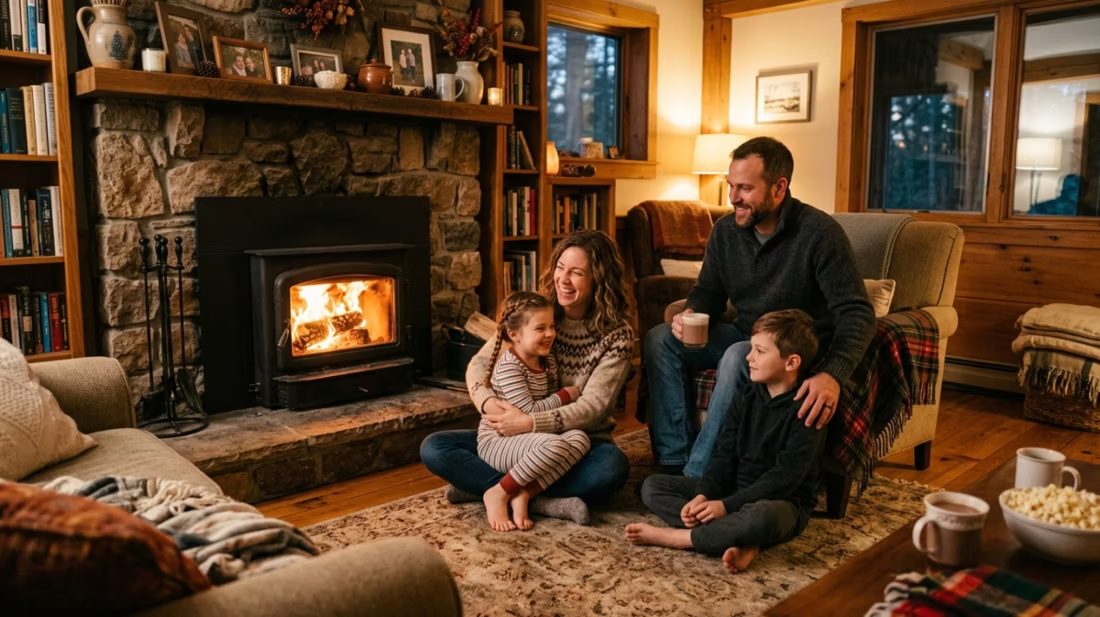
Four fuels. One honest answer for Grand Isle County.
Wood
See what's available near Grand Isle County.
Find your wood stove →Gas
See what's available near Grand Isle County.
Find your gas fireplace →Pellet
See what's available near Grand Isle County.
Find your pellet stove →Electric
See what's available near Grand Isle County.
Find your electric fireplace →Three steps. No salesperson until you're ready.
Tell us about your project
Your zip code, your situation, and the fuel you're leaning toward—or let the answers point you to one.
See what's actually available
The brands dealers within 100 miles genuinely carry—real options, never a catalog mirage.
Get your dealer & Project Guide
A trusted local dealer, plus the free Project Guide & Parts List that names every component of the job.
Frequently Asked Questions
Which fuel works best for a home in Grand Isle County?
It depends on the house and how you use it. Wood remains a strong choice on the islands—sugar maple, yellow birch, american beech, white ash, and red oak are all common local cordwood, and a catalytic stove can hold an overnight burn through the coldest stretches of a 6A winter. Because there's no natural gas main service out here, gas fireplaces and inserts run on propane rather than piped gas—propane tanks and delivery are already common on the islands for water heaters and ranges, so adding a gas hearth appliance is usually a straightforward tie-in. Pellet stoves are a solid middle ground, especially with New England Wood Pellet and Lignetics both distributed regionally, though pellet bags need dry, accessible storage in an island home that may only be reachable by causeway in bad weather. Electric fireplaces work well as supplemental heat in bedrooms or seasonal camps but shouldn't be relied on as the sole heat source through a Lake Champlain winter.
Do I need a permit to install a fireplace in Grand Isle County?
Yes, in most cases—but Vermont doesn't route this through a single county building department. Each of the five island towns (Alburgh, Grand Isle, Isle La Motte, North Hero, and South Hero) issues its own building permits, so the process and turnaround time can vary depending on which town your home is in. New wood stoves and inserts need to meet current EPA emissions standards regardless of town. Propane fireplace and insert installations typically require both a building permit and a licensed propane technician for the gas line and tank connection. Electric fireplaces usually skip the permit unless the install involves new wiring or a built-in unit. Most local dealers who regularly work the islands know each town's specific permitting contact and handle that paperwork as part of the installation.
Are there air quality restrictions on wood burning in Grand Isle County?
No—Grand Isle County has no wood-smoke non-attainment designation and no winter burn curtailment program, which sets it apart from basin or valley communities out West that see winter inversions trap smoke near the surface. Lake Champlain's open exposure and steady wind generally prevent the kind of smoke buildup that triggers those advisories. That said, an EPA-certified stove still makes sense here—not for a regulatory reason, but because a modern catalytic or non-catalytic unit burns local hardwood like sugar maple and red oak more efficiently and with less chimney creosote buildup than an older uncertified stove, which matters when you're heating through a long 6A winter.
Can one local dealer handle wood, gas, pellet, and electric for an island home?
Given how small the year-round population is across the five island towns, there isn't a large multi-fuel hearth showroom physically located in Grand Isle County—most dealers who carry all four fuel types are based in Chittenden County, on the Burlington side of the causeway, and travel out to the islands for consultations and installs. That's actually an advantage for cross-shopping: a mainland dealer with a full showroom can show you working displays of a wood stove, a propane insert, and a pellet unit side by side, then send a crew out to your island home once you've decided. Smaller island-based suppliers tend to focus on firewood or propane delivery rather than full hearth retail.
How does fireplace service work for homes reachable only by causeway or bridge?
Most technicians serving Grand Isle County build their island route around fall, before the causeway and bridges see the season's first serious weather. Booking your annual chimney sweep, propane system check, or pellet stove cleaning in September or early October—rather than waiting for the first cold snap—gets you on that route more reliably than a mid-winter emergency call, when a storm can delay a technician's crossing by a day or more. For year-round island residents, it's worth keeping basic backup supplies on hand: extra firewood staged for a wood stove, a spare battery for a propane unit's ignition system, or a pellet reserve bag, in case a service visit or fuel delivery gets pushed by weather.
What's the typical cost range for fireplace installation across fuel types in Grand Isle County?
Costs run in line with the rest of rural Vermont, with a small premium for island travel time. Wood stove or insert installation: roughly $4,500–$9,500 for a typical install, more if new chimney work is needed for an older lake camp. Propane fireplace, insert, or stove: roughly $4,500–$10,500, with cost depending on whether an existing propane tank and line can be tied into or a new setup is required. Pellet stove or insert: roughly $4,500–$7,500 for a standard install. Electric fireplace: $200–$3,000 for the unit itself, plus $400–$1,200 in labor for anything beyond a simple plug-in, such as a built-in wall unit. Ferry and causeway travel time for the installing crew is sometimes factored into island quotes, so it's worth asking a dealer directly when they quote your job.
Wood, gas, pellet, or electric—how do I choose?
Match the fuel to your life, not the other way around. Wood: lowest fuel cost and total power-outage independence, but you're hauling and stacking. Gas: press a button, set a thermostat, no maintenance to speak of. Pellet: wood economics with automatic feeding, in exchange for weekly cleaning and a need for electricity. Electric: plugs in anywhere with honest supplemental heat. Nobody regrets the fuel that fits how they actually live.
Should the dealer who sells my fireplace also install it?
Ideally, yes. A fireplace project involves vent pipe, gas line, electrical, and often tile or stone. Hire three or four separate trades and you own the liability and the game of telephone between them. One company selling and installing means one accountable party, start to finish—ask about factory training, on-time completion records, and what happens if an inspection fails.
How much should I budget for a fireplace?
For an average home—covering the fireplace, the vent pipe, and basic installation—a budget between $3,900 and $5,500 gives you a lot of options across wood, gas, and pellet. By the time you add finish work, gas line, and electrical, the average complete installation lands between $5,000 and $12,000 all-in. In a remodel or new build, a good rule is to put about 2.5% of the total project cost toward the fireplace.
Can I install a fireplace myself?
If you're putting a fire in your house on purpose, it's best to work with an expert. Unless you're genuinely experienced in framing, gas line, vent pipe, and the national code on clearances to combustibles, have a professional do it—and ideally the same company that sells you the fireplace, so warranty, service, and liability all live under one roof.
Stove and Fireplace Dealers in Grand Isle County
Listings include WhyFire partner dealers, dealers we have verified as authorized for the brands we recommend, and established local businesses that carry hearth products. Every listing shows which one it is. The ones marked Preferred run on WhyFire's software, so they can show you real pricing and book your appointment right here. No manufacturer pays for placement. How we verify dealers →
Taylor Rental
McCuin Fuels, Inc.
Stoves & Chimneys
Blazing Designs
Find your fireplace project in Grand Isle County.
Get matched with a trusted local dealer who actually services the islands, and receive a free Project Guide & Parts List—a plan for your fireplace project with the exact parts, including the vent kit, and a recommended dealer near you.
Find Your Fireplace →