
Stay warm through Franklin County's long Vermont winters.
Wood, gas, pellet, and electric fireplace resources for every town along the Quebec border and Lake Champlain shore—from St. Albans to Richford. Find the right unit for a hardwood-heavy, cold-climate county and connect with a trusted local hearth dealer.
Every Project Starts From One of These Five Situations
Cold-climate heating in Vermont's northern borderlands.
Franklin County sits in Vermont's far-northwest corner, bordered by Lake Champlain to the west and Quebec to the north—dairy country, sugarbushes, and the foothills of the Green Mountains. Winters here are genuinely long and cold: an average winter low of 8°F and roughly 7,810 heating degree days put the county in the same heating-load range as Minneapolis, Minnesota. The heating season typically runs from late September through April. Sugar maple, yellow birch, American beech, white ash, and red oak all grow in the county's hardwood stands, and cutting your own firewood—often from the same sugarbush that produces syrup each spring—is still a normal part of how a lot of Franklin County households heat.
This hub rolls up the county's whole hearth ecosystem in one place—retailers, chimney sweeps and gas techs, firewood and pellet suppliers, and every town from St. Albans down to Swanton, Richford, Enosburg Falls, Highgate, and Montgomery. Pick a fuel below to get into the specifics: which local dealers actually stock and install it, what a project runs in this climate, and the resources that match your situation. Whether you're heating a farmhouse near the Missisquoi River or a camp up toward Jay Peak, this is where to start.
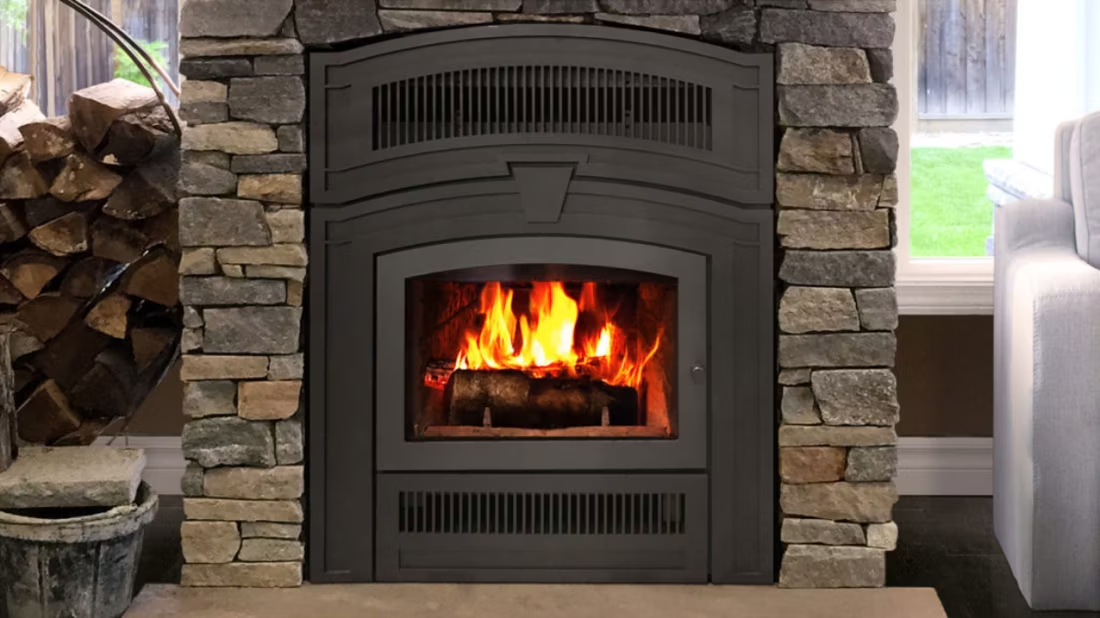
Four fuels. One honest answer for Franklin County.
Three steps. No salesperson until you're ready.
Tell us about your project
Your zip code, your situation, and the fuel you're leaning toward—or let the answers point you to one.
See what's actually available
The brands dealers within 100 miles genuinely carry—real options, never a catalog mirage.
Get your dealer & Project Guide
A trusted local dealer, plus the free Project Guide & Parts List that names every component of the job.
Frequently Asked Questions
Which fuel works best in Franklin County?
It depends on the home and the household, but there's a clear local pattern. Wood is the heritage fuel here—sugar maple, yellow birch, American beech, white ash, and red oak all grow in county woodlots, and many households cut their own firewood through Vermont Department of Forests, Parks and Recreation permits on state land or from their own back forty. A catalytic or hybrid wood stove will hold a fire through an 8°F overnight low without much trouble. Gas is the convenience choice: Vermont Gas Systems' pipeline reaches St. Albans and a few surrounding towns, while propane covers the rest of the county, including Richford, Montgomery, and Highgate. Pellet is a strong middle ground here—New England Wood Pellet, Maine Woods Pellet Co, and Lignetics are all regionally sourced, so supply doesn't dry up mid-winter the way it can in less pellet-friendly regions. Electric is supplemental only; with winter lows this consistently in single digits, it's not a realistic primary heat source. Most Franklin County homes end up with wood or pellet doing the bulk of the work and gas or electric covering secondary rooms.
Do I need a permit to install a fireplace in Franklin County?
Usually, yes, but Vermont handles this differently than most states—there's no single county building department. Permitting for wood stoves, inserts, gas appliances, and pellet stoves is typically handled at the town level, through each town's zoning or building office, so the process in St. Albans may look a little different than in Richford or Montgomery. New wood-burning appliances need to meet EPA 2020 NSPS emissions standards. Gas installations require a separate fuel-gas permit and a licensed Vermont gas fitter for the line work and connection. Electric fireplaces generally don't need a permit unless it's a built-in unit that requires hardwiring and a new circuit. Most local hearth retailers in the county handle the town permitting as part of the installation, so you're usually not filing paperwork yourself.
Are there air quality restrictions on wood burning in Franklin County?
No—unlike some Western basin counties, Franklin County has no formal non-attainment designation and no mandatory burn-ban program. There aren't the winter inversion events that trap smoke against the terrain the way they do in enclosed valleys further west. That said, on still, cold nights in low-lying spots like Enosburg Falls or along the Missisquoi River, smoke from an older, uncertified stove can still linger locally. An EPA-certified stove or insert burns cleaner and pulls more heat out of the same cord of maple or ash, which matters both for your neighbors and for your own wood budget over a 7,800-HDD winter.
Can one local hearth retailer handle all four fuel types?
In a county this size, a lot of the retail activity concentrates in St. Albans, and the larger shops there tend to carry wood, gas, pellet, and electric side by side so you can compare units in one visit. Smaller dealers based out toward Swanton or Richford more often specialize in wood and pellet, since that's what most of their rural customer base is installing, with gas and electric as a smaller part of the business. If you're still deciding between fuels, a multi-fuel St. Albans-area dealer is usually the easiest place to see working displays of more than one type before you commit.
How does service work in the more remote parts of Franklin County?
Most technicians serving Franklin County are based around St. Albans and drive out to the border towns—Richford, Montgomery, Highgate, and the smaller villages along Route 105 and Route 118. Expect a modest travel fee for the farthest calls, and expect it to be harder to get a same-week appointment once real winter sets in. Scheduling your annual chimney sweep or gas inspection in September or early October, before the first hard cold snap, is the easiest way to avoid a January wait. If you're on wood or pellet as your primary heat in a remote spot, keeping a backup heat source on hand for outages is common practice up here.
What's the typical cost range for fireplace installation across all fuel types in Franklin County?
Ranges vary by fuel and by how much chimney or venting work is involved. Wood stove or insert: roughly $4,500–$9,500 for a typical install, more if new masonry or a full class-A chimney is needed. Gas fireplace, insert, or stove: roughly $4,500–$11,000, with the low end for straightforward conversions where gas or propane service already reaches the house, and the high end for new line runs in rural spots without existing service. Pellet stove or insert: roughly $4,500–$8,000 for a typical install. Electric fireplace: $200–$3,000 for the unit itself, plus $400–$1,200 in labor for anything beyond a plug-and-play placement. For county-specific pricing tied to actual local retailers, the county + fuel pages above go into more detail.
Can a fireplace actually lower my heating bill?
Yes—by creating a comfort zone. A furnace heats every square foot of the house just to warm the one room you're in; a gas fireplace on low burns roughly a sixth of the gas a typical furnace does. Set the furnace around 55–60 degrees as a baseline, then heat the rooms your family actually uses. Families who heat this way commonly save $20–$60 a month.
Wood, gas, pellet, or electric—how do I choose?
Match the fuel to your life, not the other way around. Wood: lowest fuel cost and total power-outage independence, but you're hauling and stacking. Gas: press a button, set a thermostat, no maintenance to speak of. Pellet: wood economics with automatic feeding, in exchange for weekly cleaning and a need for electricity. Electric: plugs in anywhere with honest supplemental heat. Nobody regrets the fuel that fits how they actually live.
Can I install a fireplace myself?
If you're putting a fire in your house on purpose, it's best to work with an expert. Unless you're genuinely experienced in framing, gas line, vent pipe, and the national code on clearances to combustibles, have a professional do it—and ideally the same company that sells you the fireplace, so warranty, service, and liability all live under one roof.
How much should I budget for a fireplace?
For an average home—covering the fireplace, the vent pipe, and basic installation—a budget between $3,900 and $5,500 gives you a lot of options across wood, gas, and pellet. By the time you add finish work, gas line, and electrical, the average complete installation lands between $5,000 and $12,000 all-in. In a remodel or new build, a good rule is to put about 2.5% of the total project cost toward the fireplace.
Stove and Fireplace Dealers in Franklin County
Listings include WhyFire partner dealers, dealers we have verified as authorized for the brands we recommend, and established local businesses that carry hearth products. Every listing shows which one it is. The ones marked Preferred run on WhyFire's software, so they can show you real pricing and book your appointment right here. No manufacturer pays for placement. How we verify dealers →
McCuin Fuels, Inc.
Suroît Boutique (Cowansville)
Blazing Designs
Taylor Rental
Stoves & Chimneys
Chauffage Gadbois
Piscines Jacques-Cartier
Gaz Propane Rainville Inc.
Actions Multi-Flammes Granby
Get matched with a Franklin County hearth dealer.
Tell us about your home and your fuel of choice, and we'll match you with a trusted local dealer and send over a free Project Guide & Parts List—the exact parts, including the vent kit, sized for your Franklin County project.
Find Your Fireplace →