
Find the right hearth for Addison County's long, cold winters.
Wood, gas, pellet, and electric fireplace resources for Middlebury, Vergennes, Bristol, Orwell, Ripton, and the small towns across Addison County. Get matched with a local hearth retailer who knows what actually works here.
Every Project Starts From One of These Five Situations
Maple country heating in Addison County, Vermont.
Addison County runs from the Champlain Valley's dairy and orchard land up into the Green Mountains, with towns like Ripton and Lincoln sitting well above the valley floor. At 7,345 heating degree days and an average winter low of 10°F, the season here runs closer to Caribou, Maine than to most of New England—long, steady cold rather than sharp swings. Sugar maple and yellow birch dominate the woodlots (the same trees that fuel the county's maple sugaring tradition), alongside american beech, white ash, and red oak, giving local wood-burners dense, well-seasoned fuel close to home.
On this hub you'll find hearth retailers, service technicians, and fuel suppliers serving every corner of the county—from Middlebury and Vergennes down to Orwell and Shoreham near the New York border, up into Bristol, Starksboro, and Ripton toward the Green Mountain National Forest boundary. Pick a fuel below for local dealers, install costs, and recommended units for your specific town and home.
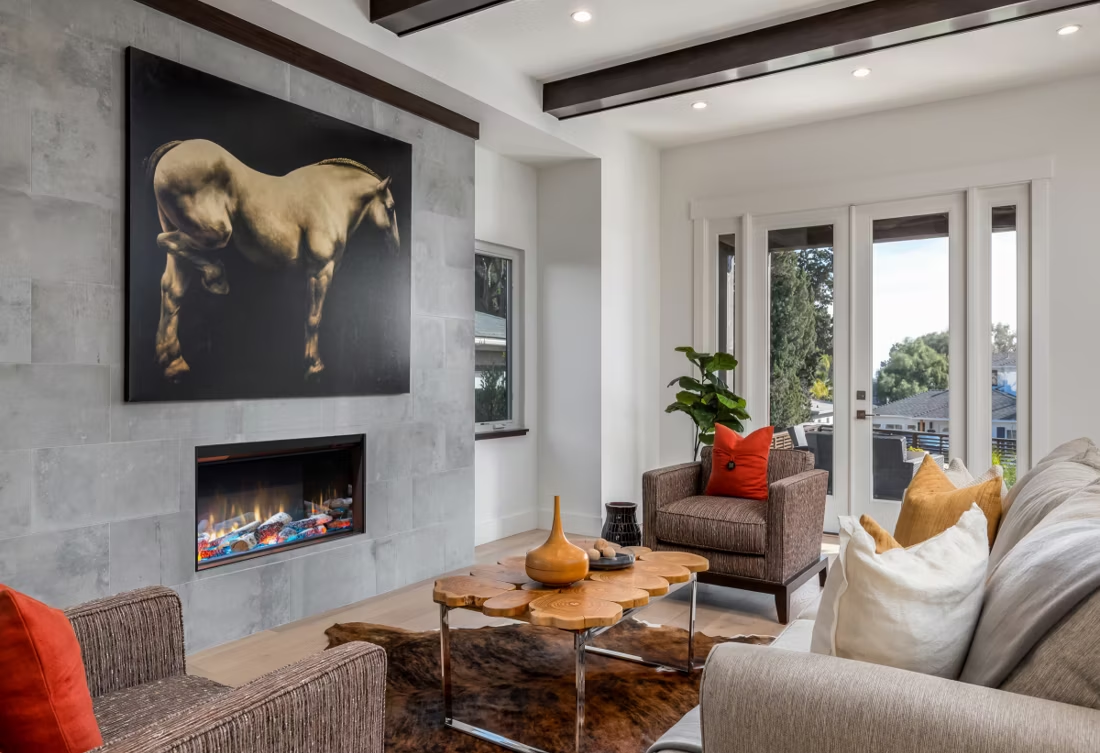
Four fuels. One honest answer for Addison County.
Three steps. No salesperson until you're ready.
Tell us about your project
Your zip code, your situation, and the fuel you're leaning toward—or let the answers point you to one.
See what's actually available
The brands dealers within 100 miles genuinely carry—real options, never a catalog mirage.
Get your dealer & Project Guide
A trusted local dealer, plus the free Project Guide & Parts List that names every component of the job.
Frequently Asked Questions
Which fuel works best in Addison County?
Wood remains the backbone fuel in Addison County, and it makes sense—sugar maple and yellow birch lots surround most towns, the Green Mountain & Finger Lakes National Forest issues personal-use firewood permits, and a well-loaded catalytic stove can carry a farmhouse through a 10°F night without the furnace kicking on. Gas is the convenience option, but coverage is uneven: Vermont Gas Systems' pipeline reaches Middlebury and parts of the Route 7 corridor, while most other towns rely on propane for gas fireplaces and inserts. Pellet stoves do well here too—New England Wood Pellet is milled just across the border in Jaffrey, NH, and Maine Woods Pellet Co. keeps regional supply steady even in tight winters. Electric is mostly a supplemental choice—good for a bedroom or a Middlebury apartment, but not enough on its own against a Champlain Valley winter.
Do I need a permit to install a fireplace in Addison County?
It depends on the town. Many small Addison County towns—Ripton, Weybridge, Waltham, Whiting—don't run a local building inspection office, so wood stove and insert installs are governed by Vermont's Division of Fire Safety clearance rules and NFPA 211 manufacturer specs rather than a town permit. Larger towns like Middlebury, Vergennes, and Bristol do issue local building permits for new hearth installs, and any gas hookup—natural gas or propane—needs a licensed Vermont gas fitter regardless of town. Firewood cutting on Green Mountain & Finger Lakes National Forest land requires its own personal-use permit through the Forest Service. Most local retailers handle the paperwork for you as part of installation.
Are there air quality restrictions on wood burning in Addison County?
No—Addison County has no non-attainment status and no winter burn bans; the Champlain Valley's low population density keeps wood smoke from becoming the kind of community issue you see in tighter basins or valleys elsewhere. That said, any new wood stove or insert sold and installed here still needs to meet current EPA emissions standards, and Vermont's ANR occasionally runs woodstove changeout incentives for homeowners replacing older, uncertified stoves. If you're burning green or unseasoned wood—an easy trap with fresh-cut sugar maple—you'll see more smoke regardless of the stove's certification, so seasoning your wood a full year matters as much as the equipment.
Can one local hearth retailer handle all four fuel types?
Given Addison County's small population base, most hearth retailers here carry three of the four fuels rather than running dedicated showrooms for each. Expect wood, gas, and pellet to be well represented at most dealers—electric fireplaces are usually a smaller add-on line rather than a specialty. If you're cross-shopping fuels for a Middlebury or Vergennes home, ask which units the dealer has as working floor displays; in a county this size, not every model is in stock, but a good retailer can order and install what fits your chimney and budget.
How does service work in a rural county like this?
With roughly two dozen towns spread across the county and no dense population center, most chimney sweeps and gas techs work out of Middlebury or Vergennes and travel to outlying towns—Ripton, Lincoln, Orwell, Shoreham—on set routes rather than daily. Fall (September–October) is the easiest window to book annual service before the first hard freeze; mid-winter emergency calls, especially after a big snow, can mean a multi-day wait. If you're on a dirt road up toward Ripton or Starksboro, keep your driveway plowed and accessible—techs will often reschedule rather than risk getting stuck.
What's the typical cost range for fireplace installation across all fuel types in Addison County?
Wood stove or insert installation: roughly $4,000–$8,500 for a typical retrofit, more if a new masonry chimney or full liner is needed for an older farmhouse. Gas fireplace, insert, or stove: $4,000–$10,000, with propane tank setup or a Vermont Gas Systems hookup (where available) adding to the lower end. Pellet stove or insert: $4,000–$7,000 for most installs. Electric fireplace: $200–$2,500 for the unit itself, with $300–$1,000 in labor for anything beyond a simple plug-in placement. Exact pricing depends on your town, your chimney or venting situation, and which dealer you work with—see the county + fuel pages above for more detail.
Does a fireplace add value to my home?
On average, a fireplace adds back to the home about the same amount you spent installing it. Add the monthly savings from heating the rooms you actually use instead of the whole house—often hundreds of dollars a year—and the value case is strong before you even count what a fire does for how your family uses the room.
What is an in-home preview and do I need one?
It's a visit where a hearth professional measures your space, confirms the model you picked actually works in your home, and walks the specs—framing, gas line, venting, finish work—before anything is ordered. Some details you just can't know until you see the house. Never make a down payment without one; it's the single most-skipped step that burns buyers.
Wood, gas, pellet, or electric—how do I choose?
Match the fuel to your life, not the other way around. Wood: lowest fuel cost and total power-outage independence, but you're hauling and stacking. Gas: press a button, set a thermostat, no maintenance to speak of. Pellet: wood economics with automatic feeding, in exchange for weekly cleaning and a need for electricity. Electric: plugs in anywhere with honest supplemental heat. Nobody regrets the fuel that fits how they actually live.
How much should I budget for a fireplace?
For an average home—covering the fireplace, the vent pipe, and basic installation—a budget between $3,900 and $5,500 gives you a lot of options across wood, gas, and pellet. By the time you add finish work, gas line, and electrical, the average complete installation lands between $5,000 and $12,000 all-in. In a remodel or new build, a good rule is to put about 2.5% of the total project cost toward the fireplace.
Stove and Fireplace Dealers in Addison County
Listings include WhyFire partner dealers, dealers we have verified as authorized for the brands we recommend, and established local businesses that carry hearth products. Every listing shows which one it is. The ones marked Preferred run on WhyFire's software, so they can show you real pricing and book your appointment right here. No manufacturer pays for placement. How we verify dealers →
The Stove Depot Inc.
Jackmans Inc
Adirondack Hardware
Blazing Designs
Find the right fireplace for your Addison County home.
Tell us your fuel and your town, and we'll match you with a trusted local dealer and send you a free Project Guide & Parts List—the exact parts, vent kit included, and the dealer we recommend for your home.
Find Your Fireplace →