
Keep Your Family Warm and Safe—No Matter What
Between new-construction floor plans, HOA covenants, and Utah County's winter inversion rules, most Vineyard homes skip wood entirely. If you're one of the exceptions, we'll connect you with a local dealer who can do it correctly.
Every Project Starts From One of These Five Situations
A niche fit for a young, master-planned city.
Vineyard is one of the youngest cities on the Wasatch Front—built largely since the 2000s on the former Geneva Steel site, with townhomes, condos, and tightly platted single-family lots governed by HOA covenants. Most of that housing stock was never built with a masonry chimney, and many HOA rules in the newer subdivisions restrict solid-fuel appliances outright. Add in Utah County's winter inversion problem—cold air gets trapped in Utah Valley between the Wasatch Range and Lake Mountains, concentrating PM2.5 pollution for weeks at a time—and you have a city where the Utah Division of Air Quality issues mandatory no-burn action days each winter that apply to every uncertified wood-burning device in the county.
That's why wood is flagged as not applicable for most Vineyard homes on this site. It isn't that wood heat doesn't work at this elevation (4,520 feet, average winter lows around 20°F)—it's that the housing stock, HOA rules, and air quality code make it a poor fit for the typical Vineyard lot. The exceptions are real, though: homeowners on the city's larger legacy parcels, those with detached shops or cabins, and families who split time between Vineyard and mountain property near the Uinta-Wasatch-Cache or Manti-La Sal National Forests, where pinyon, juniper, and aspen cutting permits run $5 to $20 per cord from May through October. If that's you, an EPA-certified stove and a dealer who knows Utah County's mandatory action day rules make all the difference.
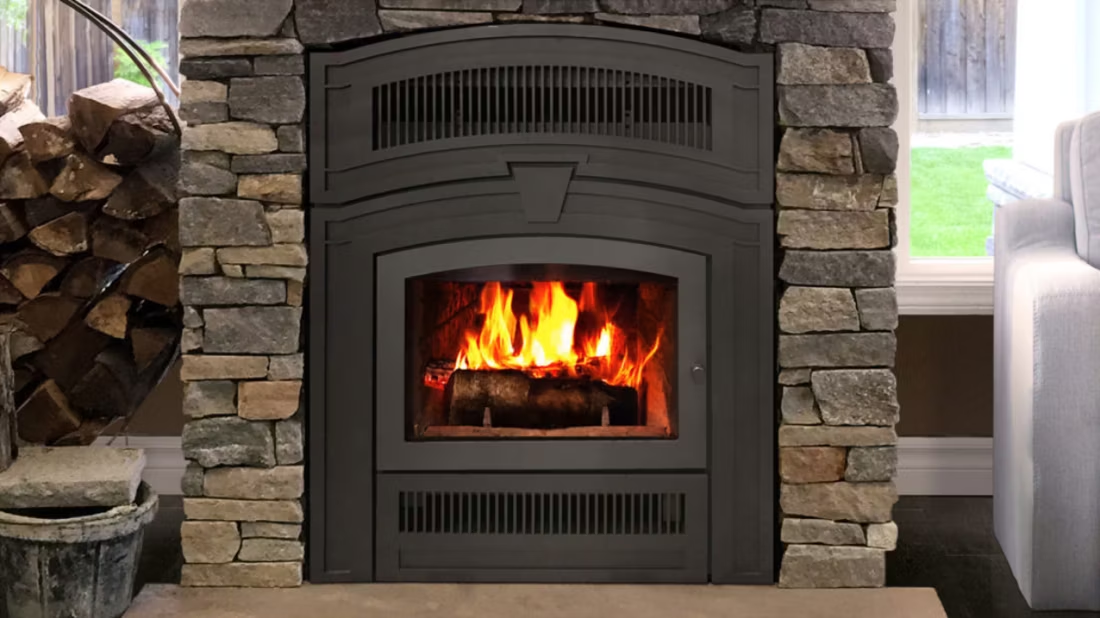
Firewood Cutting Permits Near Vineyard
Three steps. No salesperson until you're ready.
Tell us about your project
Your zip code, your situation, and the fuel you're leaning toward—or let the answers point you to one.
See what's actually available
The brands dealers within 100 miles genuinely carry—real options, never a catalog mirage.
Get your dealer & Project Guide
A trusted local dealer, plus the free Project Guide & Parts List that names every component of the job.
Frequently Asked Questions
How much does a wood stove installation cost in Vineyard?
Vineyard doesn't have a deep pool of local wood-stove installers, since so few homes here are set up for one—most hearth companies serving the city focus on gas. For the homeowners who do pursue a wood install (usually on a larger lot or an older parcel predating the master-planned subdivisions), expect costs in line with the broader Wasatch Front: roughly $5,000 to $9,000 for an EPA-certified stove with Class A chimney work, more if the home has no existing flue and needs a full through-roof run. Get a firm number from a dealer who's actually installed in Utah County recently, since pricing here isn't standardized the way it is in wood-heavy markets.
Why is wood heat so uncommon in Vineyard?
Three things stack up against it. First, Vineyard's housing stock is almost entirely new construction on the former Geneva Steel site, built without masonry chimneys. Second, many of the city's HOA-governed townhome and condo communities prohibit solid-fuel appliances in their covenants. Third, Utah County sits in a valley that traps winter inversions, and the Utah Division of Air Quality responds with mandatory no-burn action days that apply to uncertified wood stoves and fireplaces countywide. Put together, gas and electric units end up being the practical default for most Vineyard addresses.
Are wood stoves even legal in Vineyard?
Yes, but with real restrictions. Utah County is subject to Division of Air Quality mandatory action days during PM2.5 season, typically November through February, when uncertified wood-burning devices cannot be used at all. EPA-certified stoves get more flexibility depending on the action tier, but no device is exempt on the highest-alert days. If you're set on wood heat in Vineyard, plan on an EPA 2020 NSPS-certified unit from the start—an older or uncertified stove will sit unused on exactly the cold days you'd want it most.
Can I cut my own firewood near Vineyard?
Yes—Vineyard sits within reach of both the Uinta-Wasatch-Cache National Forest to the east and the Manti-La Sal National Forest to the south. Both offer personal-use cutting permits from May through October, running roughly $5 to $20 per cord. Pinyon, juniper, and aspen are the common regional species: pinyon and juniper burn hot and dense with good coals, while aspen burns fast and clean and is often used to start or supplement a load. Permits are typically issued through the district office and require you to stay within designated cutting units.
What's the difference between a wood stove and a pellet stove for a Vineyard home?
Both face the same headwinds here—pellet is also flagged as not applicable for most Vineyard properties, largely for the same HOA and new-construction reasons that limit wood. Where they differ: a wood stove needs a real chimney and cordwood storage, while a pellet stove vents through a smaller horizontal pipe and burns bagged pellets from regional suppliers like Bear Mountain or Lignetics, which makes it a slightly easier retrofit in a home without an existing flue. Neither is common in Vineyard's newer subdivisions, but if you have the space and HOA approval, pellet is generally the lower-friction install of the two.
What wood species should I burn if I do install a stove?
If you're sourcing locally from the Uinta-Wasatch-Cache or Manti-La Sal permit areas, pinyon and juniper are your best bet for sustained heat—both are dense, resinous softwoods that burn hot with long-lasting coals, similar in character to how oak or hickory perform in eastern markets. Aspen is lighter and burns faster, useful for building a quick fire or filling gaps in a load, but it won't carry an overnight burn on its own. Whatever you burn, season it at least six months to a year before use—Utah's low humidity actually helps wood dry faster than in wetter climates, but pinyon's pitch content means it still needs time to cure properly.
Does Vineyard get affected by winter inversion smoke?
Yes. Vineyard sits in Utah Valley, boxed in by the Wasatch Range to the east and Lake Mountains to the west, which is exactly the geography that traps cold, stagnant air against the valley floor in winter. When an inversion sets in, PM2.5 from vehicles, industry, and wood smoke gets trapped near ground level for days or weeks at a stretch, and the Utah Division of Air Quality issues mandatory action days restricting uncertified wood burning countywide. This is one of the core reasons wood heat is a harder sell in Vineyard than in a similar-elevation mountain town without an inversion-prone valley floor.
Are there HOA restrictions on wood stoves in newer Vineyard neighborhoods?
Often, yes. Because Vineyard was built out almost entirely after 2000 on the redeveloped Geneva Steel site, most of its neighborhoods are governed by HOAs with covenants written for modern, gas-and-electric homes. Many of those documents either prohibit solid-fuel appliances outright or require board approval before installing one, particularly in townhome and condo communities where chimney penetrations and clearance-to-combustibles affect shared walls or roofs. If you're considering a wood stove, check your CC&Rs before you talk to a dealer—it can save you from designing a project your HOA won't approve.
Wood vs. gas—which makes more sense for a Vineyard home?
For the vast majority of Vineyard homes, gas is the more practical answer. Natural gas is broadly available across the city, installation doesn't require cordwood storage or a masonry chimney, and gas units aren't subject to the mandatory no-burn action days that apply to wood during winter inversions. Wood still makes sense in specific cases—a larger legacy lot, a detached shop, or a mountain cabin outside city limits where self-cut pinyon and juniper are cheap and plentiful. But for a typical Vineyard address inside an HOA, gas avoids nearly every obstacle wood runs into here.
Why won't my new wood stove get going like my old one?
New wood stoves are 70%+ efficient, so far less heat goes up the flue—which also means less draft to get a fire established. The rule: build a genuinely hot fire for about 45 minutes before you choke it down. Skip that and you get smoke in the room, creosote in the chimney, and a fire that never takes off. Most performance complaints trace straight back to this.
What's the difference between an insert and a zero-clearance fireplace?
An insert is a fireplace that slides into a pre-existing wood-burning fireplace—if you don't have one, there's nothing to insert it into. A zero-clearance fireplace is built into a framed wall, which makes it the answer for remodels and new construction. Simple test: existing masonry fireplace means insert; blank or framed wall means zero-clearance.
Does a fireplace add value to my home?
On average, a fireplace adds back to the home about the same amount you spent installing it. Add the monthly savings from heating the rooms you actually use instead of the whole house—often hundreds of dollars a year—and the value case is strong before you even count what a fire does for how your family uses the room.
What is an in-home preview and do I need one?
It's a visit where a hearth professional measures your space, confirms the model you picked actually works in your home, and walks the specs—framing, gas line, venting, finish work—before anything is ordered. Some details you just can't know until you see the house. Never make a down payment without one; it's the single most-skipped step that burns buyers.
Nearby Dealers
Hearth shops serving Vineyard and the surrounding area. Every listing shows whether it is a WhyFire partner, a dealer we have verified as authorized for the brands we recommend, or a local business carrying hearth products. No manufacturer pays for placement. How we verify dealers →
Modscapes Outdoor Living
First Class Fireplace
Modscapes Modern Living
Southwest Plumbing Supply - Springville
Standard Plumbing
Delta Stone Products, Inc.
All Hours Plumbing, Drain Cleaning, Heating & Cooling
Uintah Fireplace And Design
Ignite Fireplace
Degrees Above Fireplaces
Wasatch Fireplace & Stove
Bills Comfort Systems
Find your wood stove path in Vineyard.
Tell us about your property and HOA situation and we'll match you with a local dealer who understands Utah County's air quality rules—plus a free Project Guide & Parts List with the exact stove, vent kit, and install plan for your Vineyard home.
Find Your Fireplace →