
Gas heat that fits Vineyard's newest homes.
Instant, clean heat for one of Utah's fastest-growing new communities. Find the right gas fireplace or insert and connect with a trusted local dealer.
Every Project Starts From One of These Five Situations
The fuel of choice in a brand-new city.
Vineyard sits on the shore of Utah Lake at 4,520 feet, in a stretch of Utah Valley that barely existed as a residential city two decades ago. Built largely on the former Geneva Steel site, Vineyard has gone from a few hundred residents to over 12,000 in a matter of years, and nearly every home here is new construction. At climate zone 5B with a winter heating load on par with places like Cheyenne, WY, and winter lows averaging around 20°F, it's a genuinely cold-winter valley—not Bismarck, ND cold, but cold enough that a fireplace earns its keep from November through March.
Dominion Energy Utah runs natural gas mains through virtually every subdivision in Vineyard, and many builders stub a gas line to the fireplace location during framing so homes list as 'fireplace-ready' at closing. That infrastructure, combined with Utah County's status as a PM2.5 nonattainment area, is a big part of why gas dominates the hearth market here: Utah's winter inversions trap pollution against the Wasatch Front, and the Division of Air Quality's mandatory and voluntary no-burn days restrict solid-fuel burning most winters. Gas fireplaces aren't subject to those restrictions, which makes them the practical, code-friendly choice for a city where wood-burning infrastructure was never built out in the first place.
Three steps. No salesperson until you're ready.
Tell us about your project
Your zip code, your situation, and the fuel you're leaning toward—or let the answers point you to one.
See what's actually available
The brands dealers within 100 miles genuinely carry—real options, never a catalog mirage.
Get your dealer & Project Guide
A trusted local dealer, plus the free Project Guide & Parts List that names every component of the job.
Frequently Asked Questions
How much does a gas fireplace installation cost in Vineyard?
In new-construction Vineyard homes where the builder already ran a gas line to the fireplace location, installing a direct-vent unit typically runs $3,500 to $6,500 since the hardest part of the job—the gas rough-in—is already done. Homes without a stubbed line, or projects converting a great room or basement into a fireplace feature from scratch, run higher, generally $6,500 to $10,000 once venting, framing, and a new gas line from the meter are factored in. Local Dominion Energy-authorized installers can tell you within a few minutes whether your home was built with a fireplace gas stub.
Is natural gas available throughout Vineyard, or would I need propane?
Nearly all of Vineyard is served by Dominion Energy Utah's natural gas network, which is a byproduct of the city being built almost entirely after 2000—mains went in alongside new subdivisions rather than being retrofitted into older neighborhoods. Propane is rarely necessary here; it mostly comes up for a handful of parcels near the Utah Lake shoreline still in earlier stages of platting. If you're unsure whether your specific lot has gas service, Dominion Energy can confirm it by address before you commit to a unit.
My house is new construction—does it already have a gas line for a fireplace?
Often, yes. Several builders active in Vineyard's master-planned neighborhoods run a capped gas line to the family room or great room during framing specifically so buyers can add a fireplace later without opening walls. Check your builder's construction disclosures or ask during a final walkthrough inspection. If there's no stub, the City of Vineyard Building Department permits new gas line runs as part of a standard fireplace installation, and a licensed gas-fitter handles that portion of the work.
Will my gas fireplace work during a power outage?
Most gas fireplaces with IPI (intermittent pilot ignition) include a battery backup that keeps the unit operable when the power drops—useful given the windstorms that periodically knock out power along the Wasatch Front. Valor fireplaces take a different approach: they use an on-demand pilot that generates its own electricity through the thermocouple, so there are no batteries to maintain at all. If backup heat during an outage matters to you, ask your local dealer which ignition system a given model uses before you buy.
Gas fireplace, insert, or stove—which fits a Vineyard home?
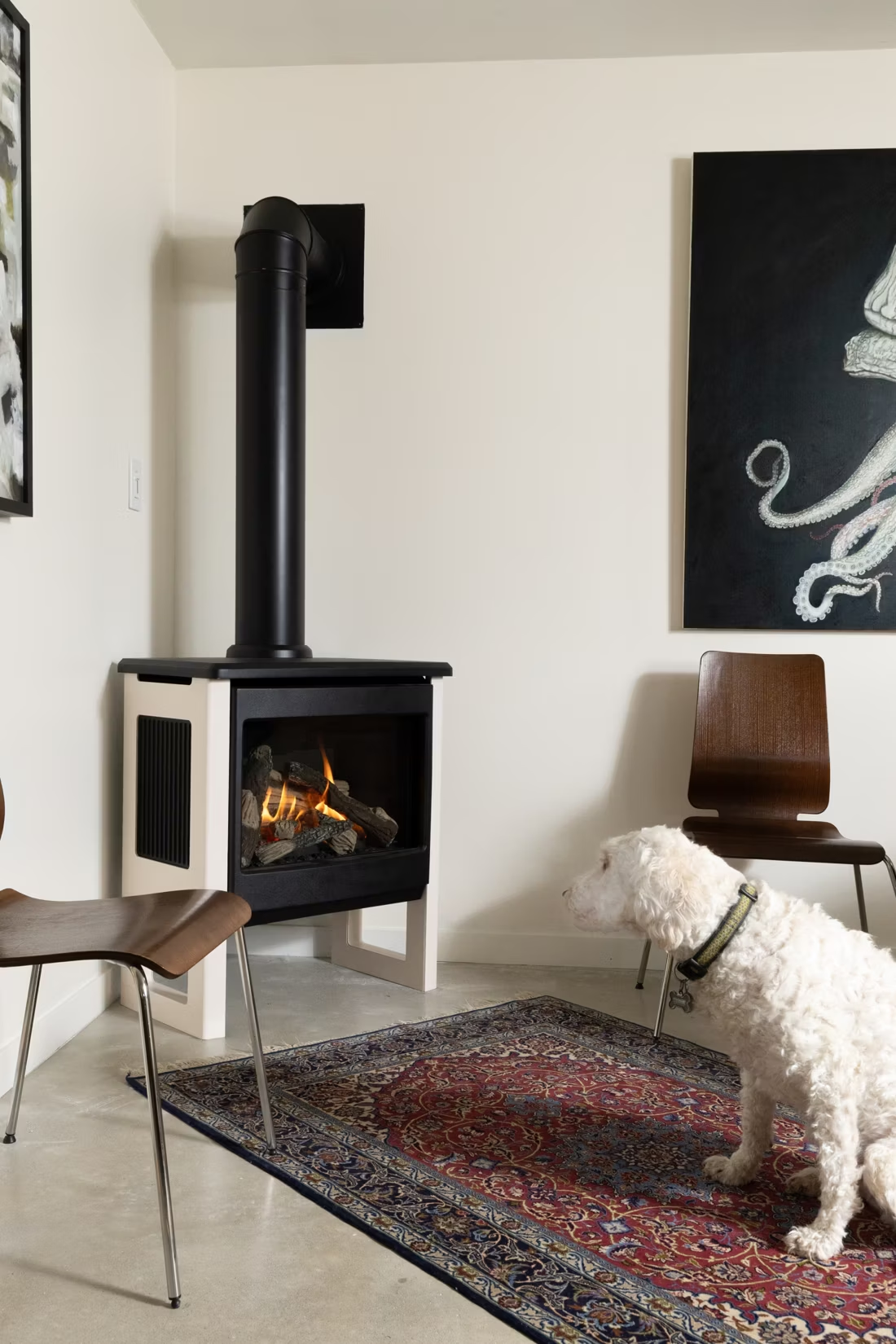
Because almost every home in Vineyard was built within the last two decades, insert conversions—a common project in older Utah County cities like Provo or Springville with existing masonry fireplaces—are much less common here. Most Vineyard installations are built-in direct-vent gas fireplaces framed into a great room or basement wall, since there's rarely an old open-hearth fireplace to retrofit. A freestanding gas stove is a good option for a finished basement or garage conversion where a full built-in unit isn't practical.
Do I need a permit for a gas fireplace installation in Vineyard?
Yes. The City of Vineyard Building Department requires a building permit for the fireplace installation and a separate gas line permit if new gas piping is being run, which must be performed by a licensed gas-fitter. Most local hearth dealers coordinate both permits and the required inspection as part of the installation, so it typically isn't something you have to manage yourself.
What's the difference between vented and vent-free gas fireplaces, and which is allowed in Vineyard?
Vented (direct-vent) gas fireplaces draw combustion air from outside and exhaust it back outside through sealed venting—they're the standard, code-compliant choice everywhere including Vineyard. Vent-free units burn directly into the room without external venting and are technically legal in Utah, but Utah County's winter inversion problem makes most local installers hesitant to recommend them: the valley already struggles with trapped PM2.5 in the winter months, and adding combustion byproducts indoors runs counter to that. Direct-vent units are what nearly every local dealer installs by default.
How often should a gas fireplace be serviced in Vineyard?
Plan on an annual inspection, ideally before the heating season starts each fall. A technician checks the burner, pilot assembly, venting, and gas connections, and cleans the glass and interior—a much quicker visit than a wood chimney sweep, typically $150 to $250. Regular service also keeps the manufacturer's warranty intact on most units, which local dealers can confirm at the time of installation.
Why don't more homes in Vineyard have wood stoves?
Two things work against wood heat here. First, Vineyard's housing stock is almost entirely new—there's no inherited stock of older homes with existing masonry chimneys the way there is in Provo or Orem, so there's little existing infrastructure to convert. Second, Utah County is a PM2.5 nonattainment area, and the Utah Division of Air Quality issues mandatory and voluntary no-burn days most winters when inversions trap smoke in the valley, which makes uncertified wood stoves impractical for everyday in-town use. A few residents keep an EPA-certified wood stove for a cabin up in the Uinta-Wasatch-Cache or Manti-La Sal National Forest, where cutting permits run $5 to $20 per cord for pinyon, juniper, and aspen—but within Vineyard city limits, gas is effectively the default hearth fuel.
Why is my open fireplace making my house colder?
Open fireplaces suck—literally. As the fire burns, it consumes air your furnace already paid to heat and pulls it out through the chimney, so the house is actually colder after the fire goes out than before you lit it. An insert fixes this: it seals the chimney, puts fixed glass across the front, and turns that hole in your house into a real heat source.
Is my gas fireplace wasting gas?
If it was installed more than 15 years ago, probably. Older gas fireplaces keep a standing pilot light burning all the time, and that little flame can cost a couple hundred dollars a year. Newer models use pilot-on-demand ignition—the pilot lights only when you use the fireplace and goes out when you turn it off.
Does a fireplace add value to my home?
On average, a fireplace adds back to the home about the same amount you spent installing it. Add the monthly savings from heating the rooms you actually use instead of the whole house—often hundreds of dollars a year—and the value case is strong before you even count what a fire does for how your family uses the room.
How much should I budget for a fireplace?
For an average home—covering the fireplace, the vent pipe, and basic installation—a budget between $3,900 and $5,500 gives you a lot of options across wood, gas, and pellet. By the time you add finish work, gas line, and electrical, the average complete installation lands between $5,000 and $12,000 all-in. In a remodel or new build, a good rule is to put about 2.5% of the total project cost toward the fireplace.
Nearby Dealers
Hearth shops serving Vineyard and the surrounding area. Every listing shows whether it is a WhyFire partner, a dealer we have verified as authorized for the brands we recommend, or a local business carrying hearth products. No manufacturer pays for placement. How we verify dealers →
Modscapes Outdoor Living
First Class Fireplace
Modscapes Modern Living
Southwest Plumbing Supply - Springville
Standard Plumbing
Delta Stone Products, Inc.
All Hours Plumbing, Drain Cleaning, Heating & Cooling
Uintah Fireplace And Design
Ignite Fireplace
Degrees Above Fireplaces
Wasatch Fireplace & Stove
Bills Comfort Systems
Find your gas fireplace in Vineyard.
Tell us about your home and whether it already has a gas line stubbed for a fireplace, and we'll send you a free Project Guide & Parts List—the exact parts, vent kit, and a trusted local Vineyard dealer to install it.
Find Your Fireplace →