
Instant Heat, Clear Air for South Jordan Homes.
Reliable, on-demand warmth for Salt Lake Valley winters—without adding smoke to the inversion. Find the right gas unit and connect with a trusted local dealer.
Every Project Starts From One of These Five Situations
The practical choice for Wasatch Front winters.
South Jordan sits at nearly 4,700 feet in the Salt Lake Valley, where winter lows average around 25°F and the valley racks up roughly 5,115 heating degree days a year—a real winter, if a gentler one than the sub-zero stretches that hit Bismarck, ND, or International Falls, MN. What makes South Jordan different isn't the cold, though—it's the air. The valley's winter temperature inversions trap PM2.5 pollution against the Wasatch Front, and Utah's Division of Air Quality regularly issues mandatory no-burn action days for solid-fuel appliances during those events. Wood stoves and fireplaces are effectively off the table here for that reason, which is a big part of why gas has become the default hearth fuel for South Jordan homeowners.
Natural gas service is widely available throughout South Jordan through Dominion Energy, and most homes already have gas plumbed in for water heaters, ranges, and furnaces—making a gas fireplace or insert a straightforward add. A gas unit delivers instant, consistent heat at the flip of a switch or a wall switch, doesn't burn during red-air-quality days like wood does, and—with the right ignition system—can keep running through the kind of PacifiCorp outages that sometimes accompany Wasatch Front windstorms and winter weather.
Three steps. No salesperson until you're ready.
Tell us about your project
Your zip code, your situation, and the fuel you're leaning toward—or let the answers point you to one.
See what's actually available
The brands dealers within 100 miles genuinely carry—real options, never a catalog mirage.
Get your dealer & Project Guide
A trusted local dealer, plus the free Project Guide & Parts List that names every component of the job.
Frequently Asked Questions
How much does a gas fireplace installation cost in South Jordan?
A typical gas fireplace or insert installation in South Jordan runs roughly $4,500 to $10,000, depending on the unit, the venting path, and whether new gas line work is required. A direct-vent insert dropped into an existing masonry fireplace with gas already run to the room tends to land on the lower end. New construction, remodels, or installs requiring a longer gas line run from the meter push toward the higher end. Local hearth retailers will size the job and give you a firm number after walking the space.
Can I convert my existing wood-burning fireplace to gas?
Yes, and it's one of the more common projects in South Jordan given how often winter inversions restrict wood burning here. Most conversions install a direct-vent gas insert into the existing masonry firebox, running a stainless liner through the chimney you already have and connecting to a new gas line. Expect roughly $4,500 to $9,000 depending on the insert and how far the gas line has to travel from an existing appliance. The upside beyond convenience: a converted fireplace can still run during a mandatory no-burn action day, since those restrictions target solid-fuel appliances, not gas.
Do I need natural gas, or can I run a gas fireplace on propane?
Most South Jordan homes are already served by Dominion Energy's natural gas network, so adding a fireplace usually means tapping an existing gas line rather than starting from scratch. Propane is a fallback for rural properties at the edge of the valley or for homes without a gas meter, but it requires a dedicated tank and periodic delivery. The fireplace hardware itself is largely the same either way—your installer sets the orifice and regulator for whichever fuel you're running.
Will my gas fireplace still work if the power goes out?
Most modern gas fireplaces with IPI (intermittent pilot ignition) run on a small battery backup that kicks in automatically when PacifiCorp service drops, so the unit lights on demand just like normal. Some brands, like Valor, go a step further with pilot systems that generate their own electricity from the thermocouple—no batteries at all. For South Jordan winters, where wind events occasionally knock out power along the Wasatch Front, that kind of self-sufficient ignition is worth asking your local retailer about, especially if the fireplace is your only heat source in a given room.
What's the difference between a gas fireplace, gas insert, and gas stove?
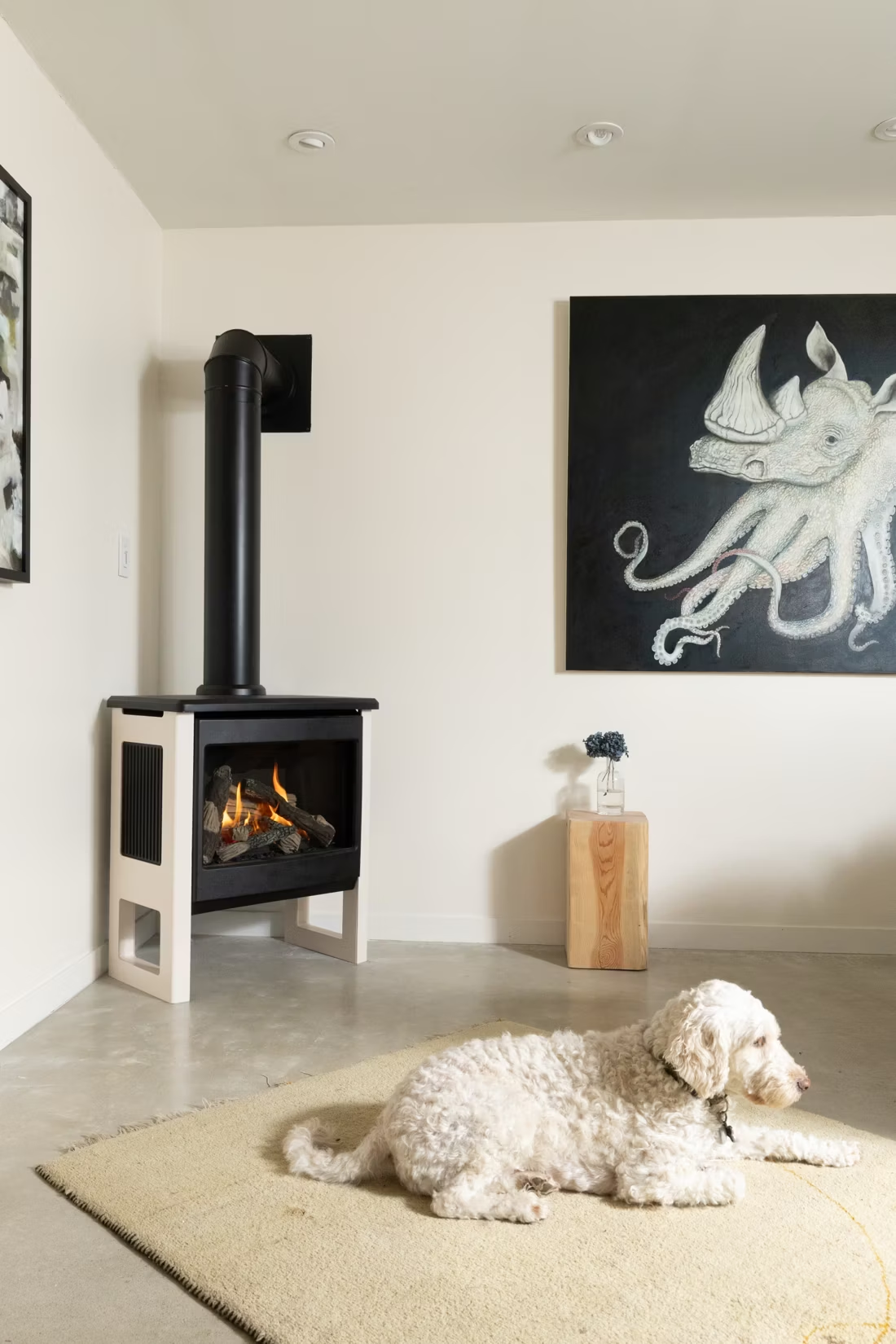
A gas fireplace is a fully built-in unit framed into a wall—the standard choice for new construction or a remodel. A gas insert is sized to slide into an existing masonry firebox, converting an old wood fireplace into a sealed, efficient gas unit using the existing chimney as the vent chase. A gas stove is freestanding, sitting on its own hearth pad rather than inside a wall cavity. For South Jordan homes built with a traditional masonry fireplace, an insert is usually the fastest path to real heat output; newer or fireplace-less homes typically go with a built-in unit instead.
Do I need a permit to install a gas fireplace in South Jordan?
Yes—South Jordan City requires a building permit for new gas fireplace installations, and the gas line connection itself needs to be run or inspected by a licensed gas-fitter. Most established hearth retailers handle the permit application and coordinate the gas line and final inspection as part of the install, so you're not left managing separate trades yourself. Given how often the valley's inversions put wood appliances out of commission, cities across Salt Lake County have gotten used to processing a steady stream of gas conversion permits.
Should I choose a vented or vent-free gas fireplace?
Vented, direct-vent units pull combustion air from outside and exhaust it back outside through a sealed pipe—they're the standard recommendation almost everywhere, South Jordan included. Vent-free units burn directly into the room and are legal in Utah with proper room-sizing and oxygen-depletion sensors, but given how seriously the Wasatch Front already treats indoor and outdoor air quality during winter inversions, most local installers steer homeowners toward vented models for the cleaner burn and the peace of mind. Ask your dealer to walk through both if you're weighing the tradeoff.
How often should a gas fireplace be serviced?
Plan on an annual inspection, ideally before the first cold snap of the season. A technician checks the burner, pilot assembly, venting, and gas connections, and cleans the glass and interior—a much lighter job than chimney sweeping but just as important for safe operation. Local gas appliance service providers in the South Jordan and greater Salt Lake area typically charge in the $150 to $250 range for a standard annual visit.
Why is gas so much more common than wood in South Jordan?
It comes down to the valley's air. South Jordan sits inside the Salt Lake Valley's winter inversion zone, where the Utah Division of Air Quality issues mandatory no-burn action days for wood stoves and fireplaces whenever PM2.5 levels spike—which happens repeatedly most winters. That makes wood an unreliable primary heat source here, even though species like pinyon, juniper, and aspen are available through Uinta-Wasatch-Cache National Forest cutting permits for the small number of households that still burn recreationally outside city limits. Gas fireplaces aren't subject to those burn restrictions, run on demand, and tie into the natural gas service most South Jordan homes already have—which is why gas, not wood, is the standard hearth choice in this part of the valley.
Why is my open fireplace making my house colder?
Open fireplaces suck—literally. As the fire burns, it consumes air your furnace already paid to heat and pulls it out through the chimney, so the house is actually colder after the fire goes out than before you lit it. An insert fixes this: it seals the chimney, puts fixed glass across the front, and turns that hole in your house into a real heat source.
What's the difference between an insert and a zero-clearance fireplace?
An insert is a fireplace that slides into a pre-existing wood-burning fireplace—if you don't have one, there's nothing to insert it into. A zero-clearance fireplace is built into a framed wall, which makes it the answer for remodels and new construction. Simple test: existing masonry fireplace means insert; blank or framed wall means zero-clearance.
Can I install a fireplace myself?
If you're putting a fire in your house on purpose, it's best to work with an expert. Unless you're genuinely experienced in framing, gas line, vent pipe, and the national code on clearances to combustibles, have a professional do it—and ideally the same company that sells you the fireplace, so warranty, service, and liability all live under one roof.
How much should I budget for a fireplace?
For an average home—covering the fireplace, the vent pipe, and basic installation—a budget between $3,900 and $5,500 gives you a lot of options across wood, gas, and pellet. By the time you add finish work, gas line, and electrical, the average complete installation lands between $5,000 and $12,000 all-in. In a remodel or new build, a good rule is to put about 2.5% of the total project cost toward the fireplace.
Nearby Dealers
Hearth shops serving South Jordan and the surrounding area.
(Sugar House) Alpine Fireplaces (In Breezeway Next To Theatres)
Hearth & Home Distributors Of Utah - Salt Lake City
Find your gas fireplace in South Jordan.
Tell us a bit about your home and we'll match you with a trusted local dealer and send over a free Project Guide & Parts List—the exact parts, vent kit, and installer recommendation for your South Jordan gas fireplace project.
Find Your Fireplace →