
Keep Your Family Warm and Safe—No Matter What
At 6,936 feet with winter lows averaging 16°F, Park City homes and cabins need real heat, not just ambiance. Find the right wood stove or insert, and connect with a trusted local dealer.
Every Project Starts From One of These Five Situations
High-Elevation Cold Calls for Real Heat.
Park City sits at 6,936 feet in the Wasatch Back, a climate zone 6B community that racks up roughly 7,934 heating degree days a year—colder, on paper, than much of the Wasatch Front below it, and closer to what you'd see in a town like Bozeman, Montana than to Salt Lake City twenty-five minutes down the canyon. Winter storms here can knock out power on ridgelines and in the Snyderville Basin, and a wood stove is one of the few heat sources that keeps working when the grid doesn't.
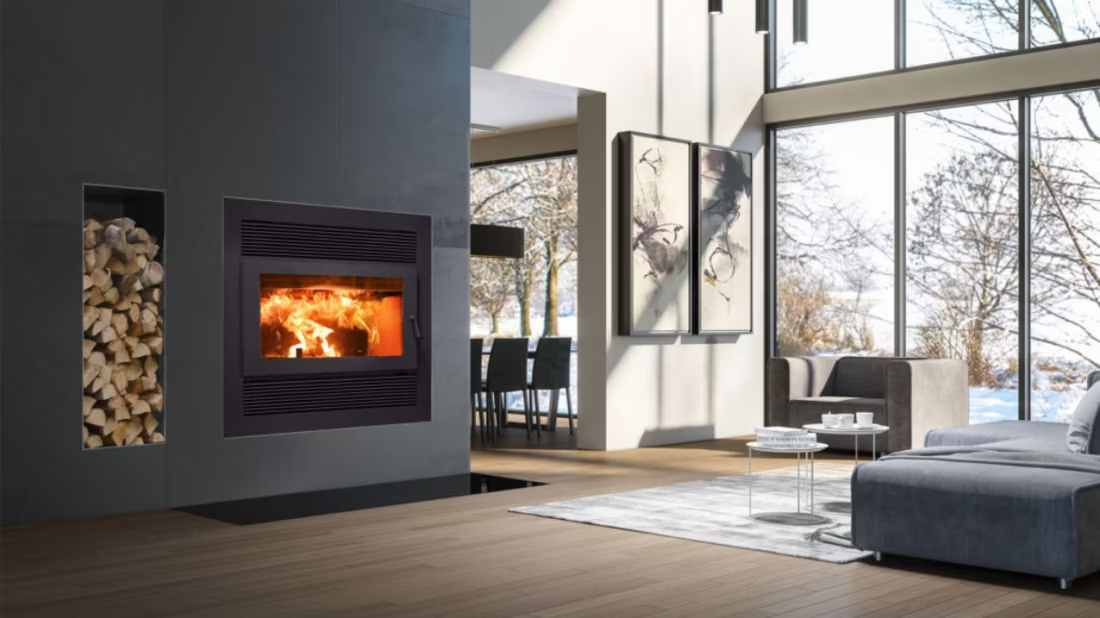
Summit County's public land access makes wood heat practical here: pinyon, juniper, and aspen are the common local species, and cutting permits through the Uinta-Wasatch-Cache National Forest run $5 to $20 per cord during the May-to-October season. At the same time, Park City's market skews toward high-end second homes and ski chalets, so a lot of local installs pair serious heat output with a stove that's meant to be seen—a design consideration that shows up in which brands local dealers tend to carry. Summer wildfire smoke is the main air quality concern in the area, which mostly affects outdoor burning and wood storage timing rather than winter stove use.
Firewood Cutting Permits Near Park City
Three steps. No salesperson until you're ready.
Tell us about your project
Your zip code, your situation, and the fuel you're leaning toward—or let the answers point you to one.
See what's actually available
The brands dealers within 100 miles genuinely carry—real options, never a catalog mirage.
Get your dealer & Project Guide
A trusted local dealer, plus the free Project Guide & Parts List that names every component of the job.
Frequently Asked Questions
How much does a wood stove installation cost in Park City?
Most wood stove installations in Park City run $6,000 to $12,000, which is higher than the national average for a straightforward reason: a lot of the housing stock here is high-end mountain construction with steep rooflines, vaulted great rooms, and longer Class A chimney runs than a typical ranch home needs. A simpler install into an existing Old Town masonry fireplace can land toward the lower end; a new freestanding stove in a ski chalet with a tall cathedral ceiling and custom stone surround will run higher. Local installers factor venting length and roof pitch into the quote up front, which is one reason an in-home consultation matters more here than in flatter, lower-elevation towns.
What size wood stove do I need for a Park City home?
Vaulted ceilings and open great rooms are common in Park City's mountain-style homes, and they change the sizing math. A stove rated for 1,500 square feet on paper may struggle to heat a 1,500-square-foot great room with 20-foot ceilings, because heat stratifies upward before it reaches the living space. Local dealers typically size up or add a ceiling fan or blower kit to compensate. For cabins and smaller Old Town homes with standard 8- or 9-foot ceilings, a mid-size stove is usually enough given the area's 16°F average winter lows. This is a case where an in-home sizing visit is worth more than a square-footage chart.
Where can I find certified wood stove installers in Park City?
Look for NFI (National Fireplace Institute) or CSIA (Chimney Safety Institute of America) certified installers, and if you're in Old Town or another HOA-governed neighborhood, make sure whoever you hire has experience working with the architectural review process—Deer Valley and several Park City subdivisions require design approval before exterior venting or chimney chases go in. A certified installer who's done this before can save you weeks of back-and-forth with an HOA committee. Avoid general handyman installs for wood-burning appliances; improper clearances and venting are the leading cause of chimney fires, and insurance carriers increasingly ask for proof of a certified install.
Should I get a wood stove or a wood-burning insert?
Park City's older Old Town homes often have existing masonry fireplaces from their mining-era or 1970s-80s ski-town construction, and for those, a wood insert is usually the better call—it uses the chimney you already have and turns a drafty open hearth into a real heat source. Newer mountain homes and cabins without an existing fireplace typically go with a freestanding stove instead, which also gives more flexibility on where it sits relative to the room's layout. If your home is in a historic-overlay part of Old Town, check with the Park City Building Department before altering any visible chimney or exterior venting.
Do I need a permit to install a wood stove in Park City?
Yes. If your property is within Park City limits, the Park City Building Department handles the permit; if you're in the Snyderville Basin or elsewhere in unincorporated Summit County, it's the Summit County Building Department. Either way, the stove itself needs to meet current EPA emissions standards, and most local installers fold the permit into the install so you're not filing paperwork yourself. Utah doesn't run mandatory winter burn curtailment in Summit County the way the Wasatch Front does during inversions, but keep an eye on state air quality advisories in summer—wildfire smoke is the bigger local concern and can affect outdoor burning restrictions.
What's the best wood stove for Park City's climate and elevation?
At 6,936 feet with winter lows regularly near or below 16°F, a catalytic stove—Blaze King is a common choice—holds a fire 20-plus hours on a load, which matters if you're heating a second home you're not in every night. For homes that burn mostly aspen, which is a fast, lighter-BTU wood compared to oak or hickory, an efficient catalytic or hybrid design gets more usable heat per load than an older non-catalytic unit. On the design side, a fair number of Park City homeowners also want a stove that looks the part in a great room with exposed timber and stone—European brands like Rais and Stūv show up often in local dealer showrooms for exactly that reason.
How often should my chimney be inspected in Park City?
An annual inspection before burning season is the standard recommendation from the CSIA, and it matters even more for Park City's older Old Town chimneys, some of which date back decades and have been relined or repaired multiple times. If you're burning primarily pinyon or juniper, which can leave more resin-heavy creosote than aspen, plan on that annual sweep without exception. Homeowners who only use a second home a handful of weekends a winter still need the inspection—a chimney that sat unused since spring can develop blockages from nesting animals or debris before the first fire of the season.
Where can I get firewood or a cutting permit near Park City?
The Uinta-Wasatch-Cache National Forest, which surrounds much of Summit County, issues personal-use cutting permits from May through October for $5 to $20 per cord—pinyon, juniper, and aspen are the species you'll typically find and cut locally. For homeowners who'd rather not cut their own, several regional suppliers deliver split, seasoned cordwood to Park City and the Snyderville Basin, usually priced by the cord. If you're storing wood outdoors through the summer, keep it clear of dry brush given the area's wildfire smoke and fire-danger concerns in the warmer months.
Wood stove or pellet stove—which makes more sense in Park City?
Wood is the better backup-heat option here: it needs no electricity, which matters when mountain storms take out power on ridgelines and in outlying neighborhoods, and it pairs naturally with the low-cost Forest Service cutting permits available through the Uinta-Wasatch-Cache National Forest. Pellet stoves, with regional brands like Bear Mountain, Lignetics, and Forest Energy widely available, are easier to run day-to-day and produce less mess, but they need electricity for the auger and blower, so they go dark in the same outages a wood stove shrugs off. For a primary residence with reliable power, pellet is a reasonable convenience trade-off. For a second home or cabin you're not always at, wood's independence from the grid tends to win.
What's the difference between an insert and a zero-clearance fireplace?
An insert is a fireplace that slides into a pre-existing wood-burning fireplace—if you don't have one, there's nothing to insert it into. A zero-clearance fireplace is built into a framed wall, which makes it the answer for remodels and new construction. Simple test: existing masonry fireplace means insert; blank or framed wall means zero-clearance.
What does it take to replace an existing fireplace?
Fireplaces are like icebergs—bigger behind the wall than in front of it. Replacement means removing the surrounding tile or stone (the finish material laps onto the fireplace face), pulling the old unit, setting the new one in the same enclosure, and re-finishing the wall. A hearth professional can determine what's behind your wall without demolition during an in-home preview.
Can I install a fireplace myself?
If you're putting a fire in your house on purpose, it's best to work with an expert. Unless you're genuinely experienced in framing, gas line, vent pipe, and the national code on clearances to combustibles, have a professional do it—and ideally the same company that sells you the fireplace, so warranty, service, and liability all live under one roof.
How much should I budget for a fireplace?
For an average home—covering the fireplace, the vent pipe, and basic installation—a budget between $3,900 and $5,500 gives you a lot of options across wood, gas, and pellet. By the time you add finish work, gas line, and electrical, the average complete installation lands between $5,000 and $12,000 all-in. In a remodel or new build, a good rule is to put about 2.5% of the total project cost toward the fireplace.
Nearby Dealers
Hearth shops serving Park City and the surrounding area. Every listing shows whether it is a WhyFire partner, a dealer we have verified as authorized for the brands we recommend, or a local business carrying hearth products. No manufacturer pays for placement. How we verify dealers →
Uintah Fireplace And Design
All Hours Plumbing, Drain Cleaning, Heating & Cooling
Delta Stone Products, Inc.
Ignite Fireplace
(Sugar House) Alpine Fireplaces (In Breezeway Next To Theatres)
Bills Comfort Systems
Standard Plumbing
Comfort Solutions
Degrees Above Fireplaces
First Class Fireplace
Modscapes Modern Living
Find your wood fireplace in Park City.
Tell us about your home, cabin, or second home in Park City and we'll put together a free Project Guide & Parts List—the right stove or insert, the vent kit it needs, and a trusted local dealer who can install it correctly.
Find Your Fireplace →