
Warm up fast at 6,936 feet.
Instant heat for Park City's long ski-season winters, whether it's your primary residence or the mountain house you visit six weekends a year. Find the right unit and get matched with a trusted local dealer.
Every Project Starts From One of These Five Situations
Convenience for a town that's rarely home.
Park City sits at 6,936 feet in the Wasatch Back, where the average winter low hovers around 16°F and the town endures winters comparable to Bozeman, Montana—closer to that than to most of the Mountain West's front-range cities. Old Town's converted miner's cottages and the newer construction climbing Deer Valley and the Canyons side both deal with the same reality: long, cold winters and homes that spend a lot of the year empty. With a population under 8,500 but a housing stock dominated by second homes and short-term rentals, gas fireplaces have become the default here for a simple reason—nobody wants to manage firewood, ash, or a stove that needs relighting after three weeks away.
Dominion Energy (Questar Gas) serves natural gas throughout most of Park City proper, while homes further out toward Wanship, Kamas, or the higher reaches of Summit County more often run on propane. Either fuel gets you the same advantage: a fireplace that lights instantly at the push of a button or a phone app, runs unattended while you're back in Salt Lake or out of state, and isn't affected by the mandatory no-burn restrictions Utah's Division of Air Quality issues on red air-quality days for solid-fuel appliances. For a town where wildfire smoke already complicates late-summer and fall air quality, that exemption matters.
Three steps. No salesperson until you're ready.
Tell us about your project
Your zip code, your situation, and the fuel you're leaning toward—or let the answers point you to one.
See what's actually available
The brands dealers within 100 miles genuinely carry—real options, never a catalog mirage.
Get your dealer & Project Guide
A trusted local dealer, plus the free Project Guide & Parts List that names every component of the job.
Frequently Asked Questions
How much does a gas fireplace installation cost in Park City?
Most gas fireplace and insert installations in Park City run $5,000 to $12,500. The wide range comes down to Park City's architecture: many homes here have vaulted great rooms or second-story installs common to ski-town floor plans, which means longer venting runs and more framing work than a single-story ranch. A direct-vent insert going into an existing Old Town masonry fireplace with gas already run to the house sits at the lower end. New construction or a remodel requiring a fresh gas line from the meter, plus venting through two stories, lands at the higher end. Local installers will give you a firm number after seeing the space in person.
Can I convert my existing wood fireplace to gas?
Yes, and it's a common project in Old Town's older miner's cottages, many of which still have their original open masonry fireplaces. A gas insert typically drops into that existing firebox and vents through a stainless liner run up the same chimney, which keeps the exterior character of the home intact while eliminating the smoke and ash. Expect $5,000 to $9,500 depending on the insert and whether the home already has a gas line nearby. Homes without existing gas service will need a line run from the street or meter, which adds cost but is routine work for local hearth installers who deal with these conversions regularly.
Do I need natural gas, or should I plan on propane?
It depends on where in Summit County you're building. Inside Park City city limits, Dominion Energy's Questar Gas service reaches most neighborhoods, so if your home already has gas heat, a range, or a water heater, adding a fireplace is straightforward. Properties further out—toward Wanship, Kamas, or up some of the higher canyon roads—often aren't on the natural gas grid and run on propane instead, either from a buried tank or an above-ground tank tucked behind the garage. Nearly every gas fireplace on the market today can be configured for either fuel; your installer sets the correct orifice and regulator for whichever you have.
Will my gas fireplace still work if the power goes out?
Most will, which matters here given how often a heavy Wasatch snowstorm knocks out power to Old Town or the canyon roads for a few hours. Units with intermittent pilot ignition (IPI) run on a small battery backup—usually AA batteries in the control compartment—that keeps the igniter working even with the grid down. Valor's gas fireplaces go a step further: the pilot's thermocouple generates its own electricity, so there's no battery to remember to replace, ever. If your Park City property sits empty for stretches at a time, that's worth asking your installer about specifically, since a dead battery you never notice defeats the purpose of backup power.
Fireplace, insert, or stove—which fits my home?
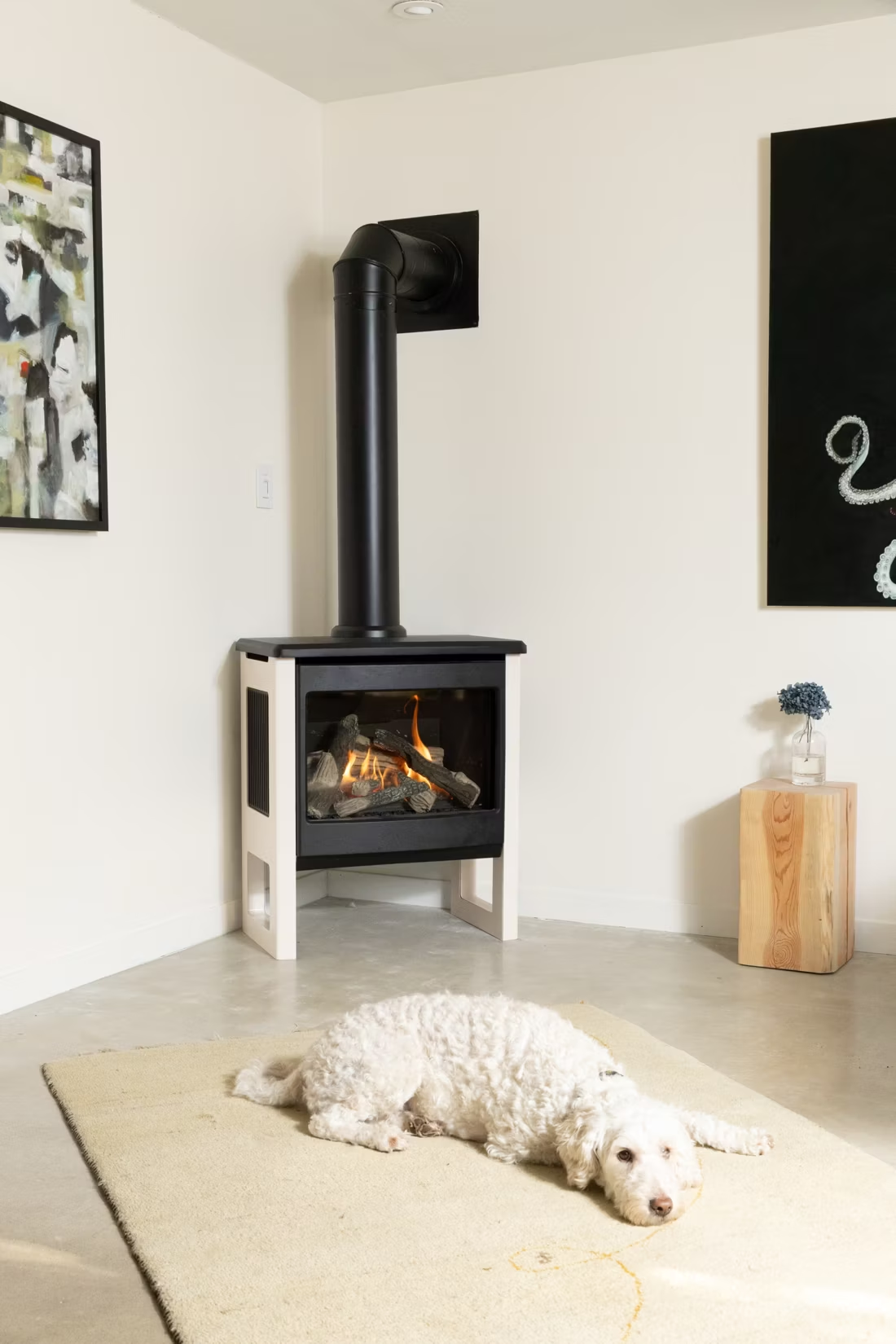
A built-in gas fireplace is framed into a wall and makes the most sense for new construction or a full remodel—common in the newer builds around Deer Valley and the Canyons. A gas insert fits into an existing masonry opening, which is the right call for Old Town's older homes that already have a working chimney. A freestanding gas stove sits on the floor and vents through a wall or roof, and works well in cabins, mudrooms, or smaller square footage where a full fireplace surround isn't practical. Most Park City retailers can walk you through all three once they know your floor plan.
What permits does Park City require for a gas fireplace?
You'll need a building permit through Park City Building Department (or Summit County Community Development if you're outside city limits) plus a mechanical/gas permit for the line work itself, which has to be done by a licensed gas-fitter. Historic District homes in Old Town may also trigger a design review if the installation changes anything visible from the street, like a new flue termination. Most established hearth dealers in the area handle the permitting and design review coordination as part of the installation, which is one less thing to manage if you're not local full-time.
Should I get a vented or vent-free gas fireplace?
For Park City, go vented. Vent-free (ventless) units burn fuel directly into the room and rely on an oxygen depletion sensor calibrated for lower elevations—most manufacturers cap or restrict vent-free use above roughly 4,500 to 7,000 feet because the sensor and combustion tuning don't perform reliably at Park City's 6,936-foot elevation. Direct-vent units draw combustion air from outside and exhaust it back outside through sealed venting, so altitude isn't a factor and indoor air quality isn't a concern. Nearly every installation in town uses direct-vent for exactly this reason—ask your dealer to confirm elevation compatibility on any specific model regardless.
How often does a gas fireplace need to be serviced?
Plan on an annual inspection, ideally before ski season starts if the house sits empty over the summer and fall. A technician checks the burner, pilot assembly, venting, and gas connections, and cleans the glass and interior—usually $150 to $250. For second homes here, it's worth scheduling that service call for October or early November so everything is confirmed working before the first cold snap and before you're relying on it for a house full of holiday guests.
Gas vs. wood—which makes more sense for a Park City property?
Wood has real appeal here—pinyon, juniper, and aspen are all available through Uinta-Wasatch-Cache National Forest cutting permits for $5 to $20 per cord during the May-to-October season, and a wood stove keeps working through a power outage. But wood also means somebody has to manage a wood supply and tend a fire, which is a hard ask for a property that sits empty half the year. Gas wins for most Park City homeowners because it starts instantly, doesn't require anyone on-site to maintain it, and isn't subject to mandatory no-burn restrictions during red air-quality days tied to wildfire smoke or winter inversions along the Wasatch Front. Full-time residents who enjoy the ritual of a wood fire sometimes keep both—gas in the main living space, wood in a den or cabin setting.
Why is my open fireplace making my house colder?
Open fireplaces suck—literally. As the fire burns, it consumes air your furnace already paid to heat and pulls it out through the chimney, so the house is actually colder after the fire goes out than before you lit it. An insert fixes this: it seals the chimney, puts fixed glass across the front, and turns that hole in your house into a real heat source.
Why is a fireplace insert so efficient?
An insert does two things: it seals the chimney completely, so you stop losing air you already paid to heat, and it radiates warmth into the room through the firebox and glass. Most add a heat-exchange fan that pulls cool room air underneath, wraps it around the hot firebox, and pushes it back out warm. Your home is more efficient before you've even lit the first fire.
Does a fireplace add value to my home?
On average, a fireplace adds back to the home about the same amount you spent installing it. Add the monthly savings from heating the rooms you actually use instead of the whole house—often hundreds of dollars a year—and the value case is strong before you even count what a fire does for how your family uses the room.
What is an in-home preview and do I need one?
It's a visit where a hearth professional measures your space, confirms the model you picked actually works in your home, and walks the specs—framing, gas line, venting, finish work—before anything is ordered. Some details you just can't know until you see the house. Never make a down payment without one; it's the single most-skipped step that burns buyers.
Nearby Dealers
Hearth shops serving Park City and the surrounding area. Every listing shows whether it is a WhyFire partner, a dealer we have verified as authorized for the brands we recommend, or a local business carrying hearth products. No manufacturer pays for placement. How we verify dealers →
Uintah Fireplace And Design
All Hours Plumbing, Drain Cleaning, Heating & Cooling
Delta Stone Products, Inc.
Ignite Fireplace
(Sugar House) Alpine Fireplaces (In Breezeway Next To Theatres)
Bills Comfort Systems
Standard Plumbing
Comfort Solutions
Degrees Above Fireplaces
First Class Fireplace
Modscapes Modern Living
Find your gas fireplace in Park City.
Tell us about your Park City home and we'll put together a free Project Guide & Parts List—the right unit, the vent kit sized for your elevation and ceiling height, and a match to a trusted local dealer who can install it.
Find Your Fireplace →