
Every fuel type, every corner of Summit County.
Wood, gas, pellet, and electric fireplace resources from the Snyderville Basin around Park City out to Kamas, Coalville, and the Kamas Valley ranches. Pick a fuel and get matched with a local dealer who actually installs it at your elevation.
Every Project Starts From One of These Five Situations
Mountain winters, a heating season close to Madison, Wisconsin's, and a county split between resort towns and working ranch land.
Summit County spans elevations from roughly 6,000 feet in the Kamas Valley up past 7,000 feet around Park City, bordered on the east by the Uinta-Wasatch-Cache National Forest. Average winter lows near 20°F put the county in heating-load territory close to Madison, Wisconsin—a heating season that typically starts in October and doesn't fully let go until May. Pinyon, juniper, and aspen are the wood species most local households burn, and permits to cut on National Forest land are common practice for the ranch families and long-time residents in Kamas, Oakley, and Coalville.
The county's two halves heat differently. Park City and the Snyderville Basin lean heavily on gas—high-end second homes and full-time residences alike tend to run gas fireplaces or inserts as either primary or supplemental heat, with electric units common in condos and rentals where a chimney was never part of the build. Out in the Kamas Valley and Coalville, wood stoves still do real work heating ranch houses and outbuildings, and pellet stoves have picked up ground as a lower-maintenance alternative, with Bear Mountain, Lignetics, and Forest Energy pellets all stocked regionally. Wildfire smoke is the county's main air-quality concern rather than winter inversion, which shapes when burn advisories get issued more than which stoves are legal to run. This hub rolls up hearth retailers, service techs, and fuel suppliers across the whole county. Pick your fuel below for local dealers, install costs, and unit recommendations specific to your town.
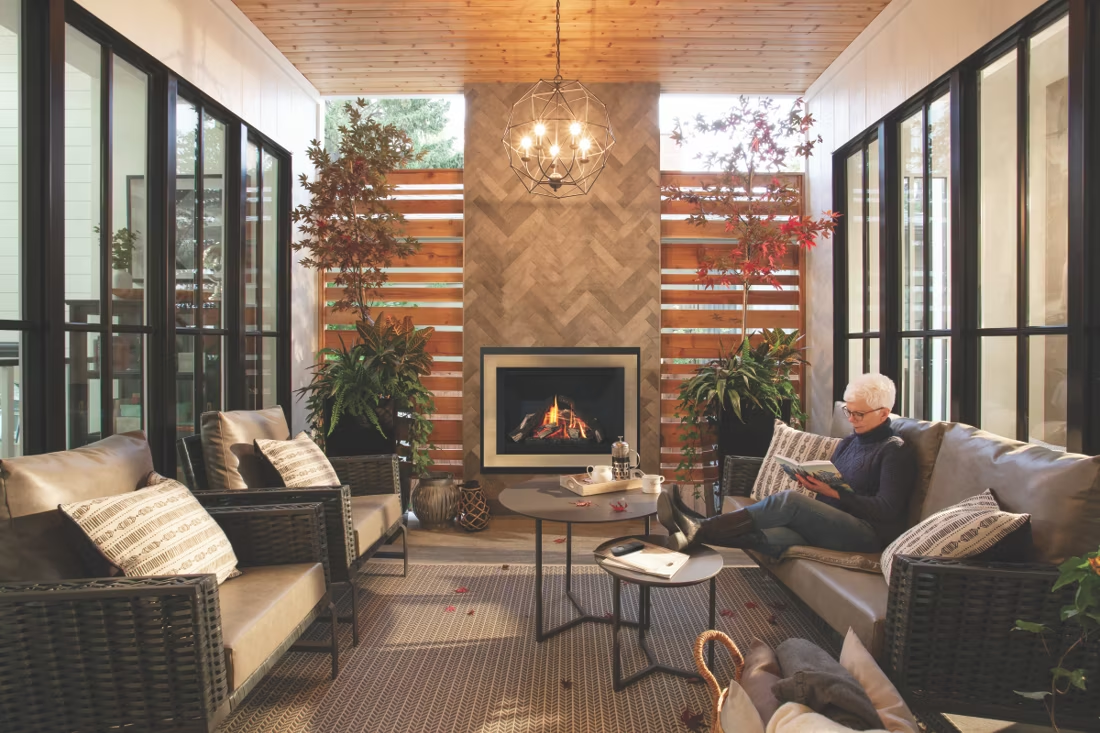
Four fuels. One honest answer for Summit County.
Three steps. No salesperson until you're ready.
Tell us about your project
Your zip code, your situation, and the fuel you're leaning toward—or let the answers point you to one.
See what's actually available
The brands dealers within 100 miles genuinely carry—real options, never a catalog mirage.
Get your dealer & Project Guide
A trusted local dealer, plus the free Project Guide & Parts List that names every component of the job.
Frequently Asked Questions
Which fireplace fuel makes the most sense in Summit County?
It depends heavily on which side of the county you're on. In Park City and the Snyderville Basin, gas is the default—most homes are already plumbed for it, and a gas insert or fireplace gives second-homeowners and full-time residents alike heat that turns on with a switch after a week away. Out in Kamas, Oakley, and Coalville, wood is still a working fuel; a catalytic stove burning pinyon or juniper will hold through a 20°F overnight without much trouble, and cutting permits through the Uinta-Wasatch-Cache National Forest keep the cost down for ranch properties with outbuildings to heat. Pellet stoves have made real inroads in the valley too, particularly for households that want wood-like heat without splitting and stacking cordwood—Bear Mountain and Forest Energy pellets are both available regionally. Electric fireplaces are common in Park City condos and rentals where there's no chimney and no interest in adding one; they're a supplemental or ambiance unit rather than a primary heat source through a winter with a heating load close to Madison, Wisconsin's.
Do I need a permit to install a wood stove or gas fireplace in Summit County?
Yes. New wood stoves and inserts need to meet current EPA emissions standards, and building permits are handled either through Summit County or through Park City's building department if you're inside city limits—the two offices have somewhat different inspection timelines, so it's worth confirming which one applies to your address before scheduling an install. Gas fireplaces require a gas-line permit and a licensed gas fitter for the hookup, which matters more in Park City given how many installs involve extending a line into a remodeled great room. Pellet stoves follow a similar permit path to wood but without the same clearance-to-combustible complications in most cases. Electric fireplaces typically skip the permit process unless you're adding a dedicated circuit for a built-in unit. Most retailers we match homeowners with handle this paperwork as part of the install.
How does wildfire smoke affect wood-burning here?
Summit County's air-quality concern is wildfire smoke rather than the winter inversion pattern you'd see in a basin like Klamath Falls—burn advisories here tend to follow dry summer and early-fall conditions rather than cold, still winter nights. That means wood stove use isn't restricted the way it is in some Utah counties with curtailment programs, but it's still worth checking local advisories during particularly dry stretches, especially if you're near the Uinta-Wasatch-Cache National Forest boundary where fire risk runs higher. A newer EPA-certified stove burns cleaner and produces less visible smoke regardless, which matters for neighbor relations in denser parts of Kamas or the Snyderville Basin.
Can I find a retailer that carries more than one fuel type?
Most Summit County hearth retailers stock at least two fuel types rather than specializing narrowly, which fits how differently the county's two halves heat. A dealer serving both Park City and the Kamas Valley typically has gas units on the showroom floor for basin customers alongside wood and pellet stoves for valley ranch properties. Seeing working displays side by side is genuinely useful if you're deciding between, say, a gas insert for a Park City remodel and a wood stove for a Kamas outbuilding—the trade-offs in venting, fuel cost, and maintenance are real and worth walking through in person. We match you with the retailer whose lineup and service area fit your specific project.
How does installation and service scheduling work across the county?
Crews based in Park City and Kamas cover most of the county, but scheduling gets noticeably tighter once ski season starts and second-homeowners begin arriving in bulk for the holidays. Booking your gas inspection or chimney sweep in late summer or early fall—before the resort corridor fills up with visitor traffic and installers get booked solid—is the easiest way to avoid a multi-week wait. For properties out toward Coalville or Francis, expect installers to build in a bit more drive time, and ask about spare igniter parts if you're relying on a gas unit as backup heat during a winter storm that could delay a return visit by days.
What does a fireplace installation typically cost in Summit County?
Costs shift depending on fuel and how much venting or gas-line work is involved, and Park City labor rates run a bit higher than in the Kamas Valley. Wood stove or insert installs generally run $4,500–$9,500, with new-construction chimney work pushing past $14,000. Gas fireplaces, inserts, and stoves typically land at $5,000–$12,000, on the higher end when a Park City remodel requires extending a gas line through finished walls. Pellet stove or insert installs usually run $4,500–$8,000. Electric fireplaces are the exception—$200–$3,000 for the unit, plus $400–$1,200 in labor for anything beyond a simple plug-in placement. The county + fuel pages above break these numbers down further with local retailer pricing.
Wood, gas, pellet, or electric—how do I choose?
Match the fuel to your life, not the other way around. Wood: lowest fuel cost and total power-outage independence, but you're hauling and stacking. Gas: press a button, set a thermostat, no maintenance to speak of. Pellet: wood economics with automatic feeding, in exchange for weekly cleaning and a need for electricity. Electric: plugs in anywhere with honest supplemental heat. Nobody regrets the fuel that fits how they actually live.
What is an in-home preview and do I need one?
It's a visit where a hearth professional measures your space, confirms the model you picked actually works in your home, and walks the specs—framing, gas line, venting, finish work—before anything is ordered. Some details you just can't know until you see the house. Never make a down payment without one; it's the single most-skipped step that burns buyers.
Does a fireplace add value to my home?
On average, a fireplace adds back to the home about the same amount you spent installing it. Add the monthly savings from heating the rooms you actually use instead of the whole house—often hundreds of dollars a year—and the value case is strong before you even count what a fire does for how your family uses the room.
I know I want a fireplace—where do I actually start?
Do two things today: snap a photo of the wall or fireplace you want to transform, and take a tape measure to the space—width, height, depth. Those two artifacts answer most of a hearth professional's first questions. Then settle fuel (wood, gas, pellet, or electric) and set a realistic budget: $3,900–$5,500 covers fireplace, vent, and basic install for most homes.
Stove and Fireplace Dealers in Summit County
Listings include WhyFire partner dealers, dealers we have verified as authorized for the brands we recommend, and established local businesses that carry hearth products. Every listing shows which one it is. The ones marked Preferred run on WhyFire's software, so they can show you real pricing and book your appointment right here. No manufacturer pays for placement. How we verify dealers →
Uintah Fireplace And Design
All Hours Plumbing, Drain Cleaning, Heating & Cooling
Delta Stone Products, Inc.
(Sugar House) Alpine Fireplaces (In Breezeway Next To Theatres)
Comfort Solutions
Get matched with a local Summit County dealer.
Pick your fuel below and we'll put together a free Project Guide & Parts List—the right unit, the vent kit it needs, and the local dealer we recommend for your project.
Find Your Fireplace →