
Pellet heat is rare in Williamson County—but not impossible.
With winter lows averaging 38°F and only about 1,900 heating degree days a year, most Williamson County homes never need a dedicated pellet stove. For the ones who want it anyway—ambiance, backup heat, or a cabin outside city limits—I'll match you with a dealer who has actually installed one nearby.
Every Project Starts From One of These Five Situations
A mild Central Texas winter rarely needs pellet heat.
Williamson County sits in climate zone 2A, part of the fast-growing Austin metro that includes Round Rock, Georgetown, Cedar Park, Leander, Hutto, and Taylor. With an average winter low around 38°F and roughly 1,904 heating degree days a year—a fraction of what a place like Fargo, ND or Duluth, MN sees—the county's heating load is light. Central gas and electric HVAC systems handle the overwhelming majority of homes, and there's no air quality non-attainment status or wood-smoke restriction here the way there is in higher-elevation Western counties, simply because there isn't enough wood or pellet burning happening to register as a concern.
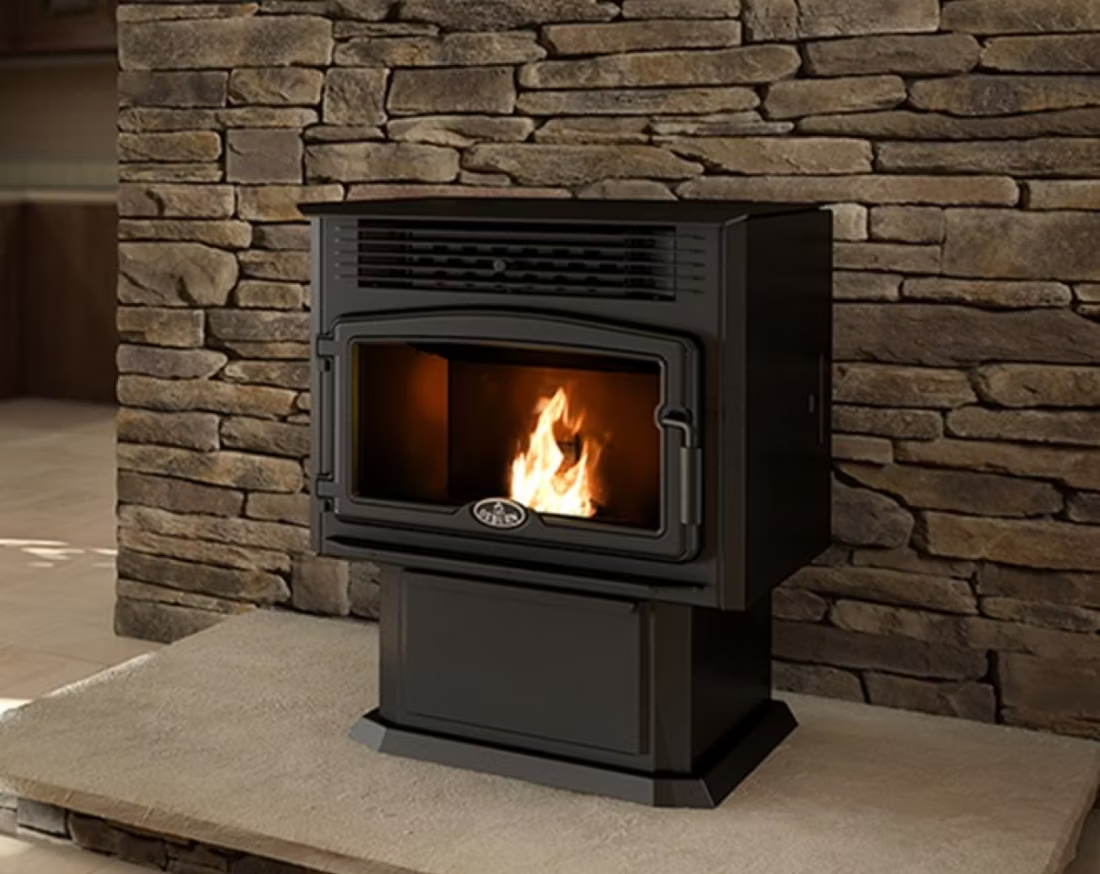
Still, a small number of Williamson County homeowners install pellet stoves—usually for the look and feel of a real fire without the chimney work a wood stove requires, or as backup heat after events like the February 2021 winter storm, when the grid failed across Central Texas for days. Regional pellet brands like Forest Energy and Lignetics are sold locally, but mostly through farm and ranch supply stores stocking cooking pellets for smokers rather than heating-grade tonnage, so anyone installing a stove here should plan fuel purchases ahead of a cold snap rather than assume same-day availability. Oak, pecan, and mesquite dominate the local wood culture, but that's almost entirely a smoker-and-grill tradition, not a heating one—pellet appliances here serve a genuinely different, narrower purpose.
Three steps. No salesperson until you're ready.
Tell us about your project
Your zip code, your situation, and the fuel you're leaning toward—or let the answers point you to one.
See what's actually available
The brands dealers within 100 miles genuinely carry—real options, never a catalog mirage.
Get your dealer & Project Guide
A trusted local dealer, plus the free Project Guide & Parts List that names every component of the job.
Frequently Asked Questions
How much does a pellet stove installation cost in Williamson County?
Expect somewhere in the $3,000 to $6,500 range for a typical pellet stove installation, including the unit, venting, and hearth pad work—in line with national averages, since Williamson County doesn't have the installer density or install-cost data that colder markets do. Because pellet stoves are a specialty item here rather than a stocked product, plan on a slightly longer lead time for parts and possibly a trip charge if your installer is based out of Austin proper rather than Round Rock or Georgetown. A stove going into a home with no existing chimney or vent path will run toward the higher end once venting through an exterior wall is factored in.
Why are pellet stoves uncommon in Williamson County?
With winter lows averaging 38°F and about 1,904 heating degree days annually, most homes in Round Rock, Georgetown, Cedar Park, and the rest of the county simply don't have a heating load that justifies a dedicated pellet appliance—central gas or electric heat covers the handful of cold nights each year without issue. Pellet stoves also require a steady supply of heating-grade pellets, and the county isn't set up with the retail infrastructure for that the way a Northern market is. The homeowners who do install one are usually after supplemental warmth, ambiance, or backup heat for grid outages rather than a primary heat source.
What size pellet stove do I need in a climate like this?
Almost every Williamson County pellet stove install is sized for supplemental or zone heat, not whole-home heating—a small to mid-size unit rated for 1,000 to 1,500 square feet is more than enough to warm a living room or den on the handful of nights that dip near freezing. There's rarely a reason to size up the way you would in a colder climate zone, since the appliance isn't expected to carry the house through a long winter. Your dealer will confirm sizing based on the specific room and insulation, but oversizing is the more common mistake here—a stove built for Northern winters will overheat a Central Texas room fast.
Where can I find a pellet stove dealer near Round Rock or Georgetown?
This is the real bottleneck in Williamson County—most local hearth dealers stock and specialize in gas and electric fireplaces because that's what the market demands, and pellet inventory is thin outside a few specialty shops, often based in Austin proper. Rather than guessing which retailer near Cedar Park or Leander actually has pellet-install experience versus one that just carries a catalog SKU, I match homeowners with a trusted dealer who has genuinely installed pellet appliances in this market, pulls the right permits, and sizes the vent correctly the first time.
Do I need a permit to install a pellet stove in Williamson County?
Yes. If you're inside Round Rock, Georgetown, Cedar Park, or Leander city limits, the permit runs through that city's building department; in unincorporated Williamson County, it goes through the county's building permit office. Either way, the permit covers the venting run and any framing or wall penetration required for the exhaust—pellet stoves vent horizontally through an exterior wall in most cases, unlike a wood stove's vertical chimney, so inspectors will want to confirm clearance to combustibles and proper vent termination. A dealer familiar with the local jurisdiction will typically pull this for you as part of the install.
What's the difference between a pellet stove and a pellet insert?
A pellet stove is a freestanding unit that sits on a hearth pad and vents through a wall or existing chimney—it can go almost anywhere with the right clearances, which is why it's the more common choice in Williamson County homes without an existing fireplace. A pellet insert is built to slide into an existing masonry or prefab fireplace opening, using the chimney you already have. Since relatively few Williamson County homes were built with wood-burning fireplaces to begin with—gas and electric are far more common here—the freestanding stove is the more typical fit for the homeowners who do go this route.
Where can I buy pellet fuel in Williamson County?
Heating-grade pellets aren't stocked at the volume you'd see in a Northern market. Regional brands like Forest Energy and Lignetics show up locally, but mostly at farm and ranch supply stores selling smaller bags aimed at smokers and grills rather than pallets of heating fuel. If you install a pellet stove here, it's worth asking your dealer where they source heating-grade bags locally, or planning to order pallets ahead of the few cold stretches each winter rather than relying on walk-in stock during a cold snap.
Pellet stove vs. gas fireplace—which makes more sense in Williamson County?
For most homes here, gas wins on practicality: natural gas and propane fireplaces are widely available through local dealers, require no fuel storage or hopper loading, and match the instant on-off convenience that fits a climate where you might only run the fireplace a dozen nights a year. Pellet stoves make sense for a narrower group—people who specifically want the visual and radiant feel of a real fire, or who want a heat source that doesn't rely entirely on the electric grid staying up during a winter storm event like February 2021. If backup heat during a grid failure is the priority, it's worth discussing both options with a dealer, since a pellet stove's auger and blower also need electricity to run.
Will a pellet stove work during a power outage in Williamson County?
Not without a battery backup. Pellet stoves rely on an electric auger to feed fuel and a blower to distribute heat, so a standard unit shuts down the moment the power does—which matters here given what happened during Winter Storm Uri in February 2021, when large parts of the ERCOT grid went down for days in freezing temperatures. Some pellet stove models offer an optional battery backup system that can keep the auger and igniter running for a limited time during an outage; if backup heat is your main reason for considering pellet over gas or wood, ask your dealer specifically about battery-backup-compatible models before you buy.
Why is my open fireplace making my house colder?
Open fireplaces suck—literally. As the fire burns, it consumes air your furnace already paid to heat and pulls it out through the chimney, so the house is actually colder after the fire goes out than before you lit it. An insert fixes this: it seals the chimney, puts fixed glass across the front, and turns that hole in your house into a real heat source.
How often does a pellet stove need cleaning?
A clean pellet stove is a happy pellet stove. Plan on cleaning the burn pot about once a week when you're burning regularly—ash and clinkers gum up the air holes just like a pellet barbecue. Most pellet stove problems trace back to skipped cleaning that nobody explained up front. Some designs make it easy with a trapdoor burn pot: pull a lever and the gunk drops into the ash pan.
Can a fireplace actually lower my heating bill?
Yes—by creating a comfort zone. A furnace heats every square foot of the house just to warm the one room you're in; a gas fireplace on low burns roughly a sixth of the gas a typical furnace does. Set the furnace around 55–60 degrees as a baseline, then heat the rooms your family actually uses. Families who heat this way commonly save $20–$60 a month.
How much should I budget for a fireplace?
For an average home—covering the fireplace, the vent pipe, and basic installation—a budget between $3,900 and $5,500 gives you a lot of options across wood, gas, and pellet. By the time you add finish work, gas line, and electrical, the average complete installation lands between $5,000 and $12,000 all-in. In a remodel or new build, a good rule is to put about 2.5% of the total project cost toward the fireplace.
Stove and Fireplace Dealers in Williamson County
Listings include WhyFire partner dealers, dealers we have verified as authorized for the brands we recommend, and established local businesses that carry hearth products. Every listing shows which one it is. The ones marked Preferred run on WhyFire's software, so they can show you real pricing and book your appointment right here. No manufacturer pays for placement. How we verify dealers →
Area – Georgetown, Tx
Georgetown Energy
Parrish & Company Inc - Round Rock
Gas Logs Express & Bbq
Top Hat Chimney Sweeps
Webco Distributing Company, Inc.
Pellet Brands Stocked Around Williamson County
Manufacturers will point you to the nearest stocking dealer.
Find your pellet stove in Williamson County.
Tell me a bit about your home in Round Rock, Georgetown, Cedar Park, or anywhere else in the county, and I'll match you with a trusted local dealer with real pellet-install experience—plus a free Project Guide & Parts List covering the exact parts, including the vent kit, for your project.
Find Your Fireplace →