
Pellet heat isn't the norm in Cedar Park—but it isn't off the table either.
With winter lows averaging 38°F and under 1,900 heating degree days a year, most Cedar Park homes don't need a dedicated wood-pellet heat source. For the households that still want one, we'll match you with a dealer who can get it installed and vented correctly.
Every Project Starts From One of These Five Situations
A climate that rarely asks for it.
Cedar Park sits in climate zone 2A on the edge of the Texas Hill Country, where the average winter low is a mild 38°F and the whole heating season only racks up around 1,904 heating degree days. Compare that to a pellet-stove stronghold like Duluth, Minnesota, which logs more than 8,000 HDD in a typical winter, and it's clear why pellet appliances never became part of everyday hearth culture in Williamson County. Oak, pecan, and mesquite are the wood species Cedar Park homeowners actually seek out—almost always for the smoker, not the living room.
That doesn't mean pellet stoves are unavailable—it means they're a niche purchase here rather than a mainstream one. A small number of Cedar Park homeowners install a pellet insert or freestanding unit for supplemental warmth during the occasional hard freeze, for ambiance, or because they also own a cabin or second home in a colder region and want a familiar appliance in both places. Regional pellet brands like Forest Energy and Lignetics are stocked by hearth dealers who serve the broader Austin metro, even though pellet units make up a small slice of what they install locally compared with gas.
Three steps. No salesperson until you're ready.
Tell us about your project
Your zip code, your situation, and the fuel you're leaning toward—or let the answers point you to one.
See what's actually available
The brands dealers within 100 miles genuinely carry—real options, never a catalog mirage.
Get your dealer & Project Guide
A trusted local dealer, plus the free Project Guide & Parts List that names every component of the job.
Frequently Asked Questions
How much does a pellet stove installation cost in Cedar Park?
Pellet installs are infrequent enough in Cedar Park that most dealers quote them case by case rather than off a standard local price sheet. As a general guide, a freestanding pellet stove with venting typically runs $3,000 to $6,000 installed, and a pellet insert into an existing masonry fireplace often lands in a similar range depending on liner length and electrical work for the auger and blower. Because so few homes here have an existing pellet setup to build from, expect the estimate to lean on national averages rather than a well-worn local baseline.
Why don't more Cedar Park homes have pellet stoves?
The math just doesn't favor it. Cedar Park's winter low averages 38°F and the area logs roughly 1,904 heating degree days a season—mild enough that most homes rely entirely on central HVAC and never need supplemental heat at all. Pellet stoves earn their keep in places with long, hard winters where a steady 20,000+ BTU appliance offsets real heating costs. In a Hill Country winter, that math rarely pencils out, which is why local dealers see far more demand for gas fireplaces and central heat pump work than pellet units.
What do Cedar Park homeowners use instead of pellet stoves?
Gas fireplaces are the standard choice here, whether run on natural gas or propane, since they deliver instant heat with none of the fuel storage or auger maintenance a pellet unit requires. Electric fireplaces and heaters are also common as supplemental or accent heat, especially in newer Cedar Park subdivisions served by Oncor Electric Delivery, Bluebonnet Electric Cooperative, or Bartlett Electric Cooperative, where residential rates run roughly 11.4 to 16.1 cents per kWh depending on provider. For most households, one of those two options covers the need a pellet stove would otherwise fill.
Can I still get a pellet stove installed in Cedar Park if I want one?
Yes. It's a smaller request than a gas fireplace, but hearth dealers who serve the greater Austin area—including Williamson County—carry pellet stoves and inserts from regional suppliers like Forest Energy and Lignetics, and can order a specific model if it's not on the showroom floor. Because pellet installs are less frequent locally, it's worth confirming upfront that the dealer you're working with has actually installed pellet venting before, not just gas or wood units.
Do I need a permit for a pellet stove in Cedar Park?
Yes—a new solid-fuel appliance installation, including a pellet stove or insert, typically requires a mechanical or building permit through the City of Cedar Park's building inspections division (or Williamson County if the property is outside city limits). Most hearth dealers who handle the install will pull the permit and schedule the inspection as part of the job, which is one more reason to work with an established installer rather than a general handyman for this kind of work.
How does a pellet stove compare to a wood stove for a Cedar Park home?
Both are outliers here for the same reason: Cedar Park's mild 2A climate and roughly 1,900 heating degree days rarely justify a dedicated solid-fuel heat source. Where they differ is convenience and fuel supply. A wood stove needs seasoned cordwood—oak, pecan, and mesquite are the locally available species, though they're more commonly sold for smokers than firewood—split, stacked, and dry. A pellet stove uses bagged pellets you can buy by the ton and load into a hopper, with no splitting or seasoning required, but it needs continuous electricity to run the auger and blower. For the rare Cedar Park home that wants solid-fuel backup heat, pellet is usually the lower-maintenance choice.
What's the difference between a pellet stove and a pellet insert?
A pellet stove is a freestanding appliance that sits on its own hearth pad and vents through a wall or roof with small-diameter PL vent pipe—it can go almost anywhere with access to an outside wall. A pellet insert is built to slide into an existing masonry fireplace opening, using the existing chimney chase for a smaller liner while sealing off the old open firebox. Since relatively few Cedar Park homes have a wood-burning masonry fireplace to begin with, most local pellet requests end up being freestanding stoves rather than insert conversions.
Will a pellet stove work during a power outage?
Not without backup power. Pellet stoves rely on an electric auger to feed fuel and a blower to circulate heat, so they shut down the moment the power goes out—unlike a wood stove, which keeps burning regardless. That's a real consideration in Cedar Park given the ERCOT grid strain during winter storm Uri in February 2021, when much of Williamson County lost power for days during a rare hard freeze. Homeowners who want solid-fuel heat specifically as storm backup should ask a local dealer about a battery backup or small generator sized for a pellet stove's electrical draw, or consider a wood-burning alternative instead.
Pellet vs. gas—which is right for a Cedar Park home?
For nearly all Cedar Park homes, gas is the more practical fit. It's readily available through local propane suppliers or natural gas service, lights instantly, requires no fuel storage or hopper refills, and most direct-vent models include a battery-backup ignition that keeps working through a power outage. Pellet only makes sense in the specific case of a homeowner who wants the look and feel of a solid-fuel appliance, doesn't mind sourcing bagged pellets, and has a plan for backup power if the grid goes down. If you're weighing the two, a local dealer can walk through both options against your specific home and budget.
What's the difference between an insert and a zero-clearance fireplace?
An insert is a fireplace that slides into a pre-existing wood-burning fireplace—if you don't have one, there's nothing to insert it into. A zero-clearance fireplace is built into a framed wall, which makes it the answer for remodels and new construction. Simple test: existing masonry fireplace means insert; blank or framed wall means zero-clearance.
How often does a pellet stove need cleaning?
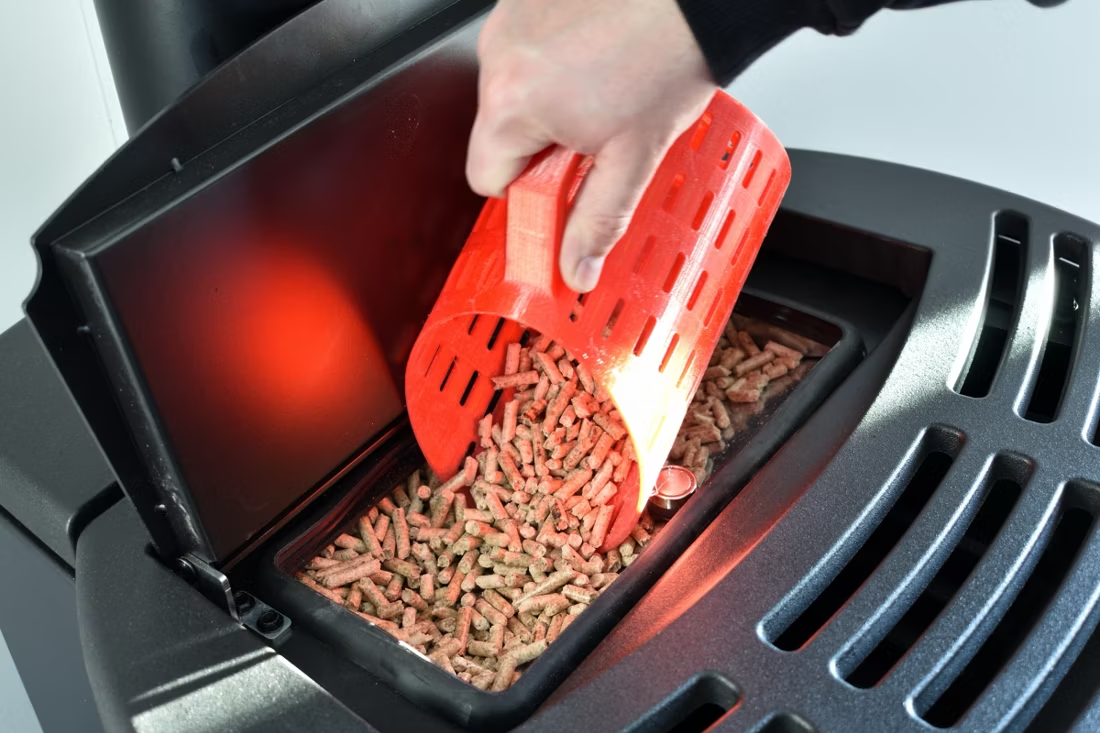
A clean pellet stove is a happy pellet stove. Plan on cleaning the burn pot about once a week when you're burning regularly—ash and clinkers gum up the air holes just like a pellet barbecue. Most pellet stove problems trace back to skipped cleaning that nobody explained up front. Some designs make it easy with a trapdoor burn pot: pull a lever and the gunk drops into the ash pan.
Can I install a fireplace myself?
If you're putting a fire in your house on purpose, it's best to work with an expert. Unless you're genuinely experienced in framing, gas line, vent pipe, and the national code on clearances to combustibles, have a professional do it—and ideally the same company that sells you the fireplace, so warranty, service, and liability all live under one roof.
What is an in-home preview and do I need one?
It's a visit where a hearth professional measures your space, confirms the model you picked actually works in your home, and walks the specs—framing, gas line, venting, finish work—before anything is ordered. Some details you just can't know until you see the house. Never make a down payment without one; it's the single most-skipped step that burns buyers.
Nearby Dealers
Hearth shops serving Cedar Park and the surrounding area.
Pellet Brands Stocked Around Cedar Park
Manufacturers will point you to the nearest stocking dealer.
Find your pellet stove in Cedar Park.
Tell us a bit about your home and we'll match you with a trusted local dealer and send over a free Project Guide & Parts List—the exact equipment, venting, and installation plan for a pellet project in Cedar Park.
Find Your Fireplace →