
Warmth on Demand, Even in a Mild Texas Winter.
With winter lows averaging just 38°F across Round Rock, Georgetown, Cedar Park, and Leander, Williamson County homes don't need a furnace-grade fireplace—they need clean, no-vent ambiance that fits a media wall, a new-construction great room, or a townhome with no chimney at all. Find the right unit and connect with a trusted local dealer.
Every Project Starts From One of These Five Situations
A fast-growing county built for electric, not wood smoke.
Williamson County has grown into one of the fastest-expanding counties in the Austin metro, adding new subdivisions from Round Rock to Georgetown to Leander and Hutto every year. Most of that growth is new construction—homes with drywall chases and prefabricated fireplace boxes rather than the brick chimneys you'd find on an older oak-lined lot. Climate zone 2A keeps things mild: heating degree days sit around 1,904 for the year, and the average winter low hovers near 38°F. That's nowhere close to the sustained cold that makes wood heat a practical necessity, so it's no surprise the county's native oak, pecan, and mesquite are far more likely to end up on a backyard smoker than stacked as cordwood. Wood and pellet heating are essentially non-factors here, even with brands like Forest Energy and Lignetics stocked regionally—electric fireplaces fill the ambiance-and-occasional-warmth role that a woodstove would serve in a colder climate.
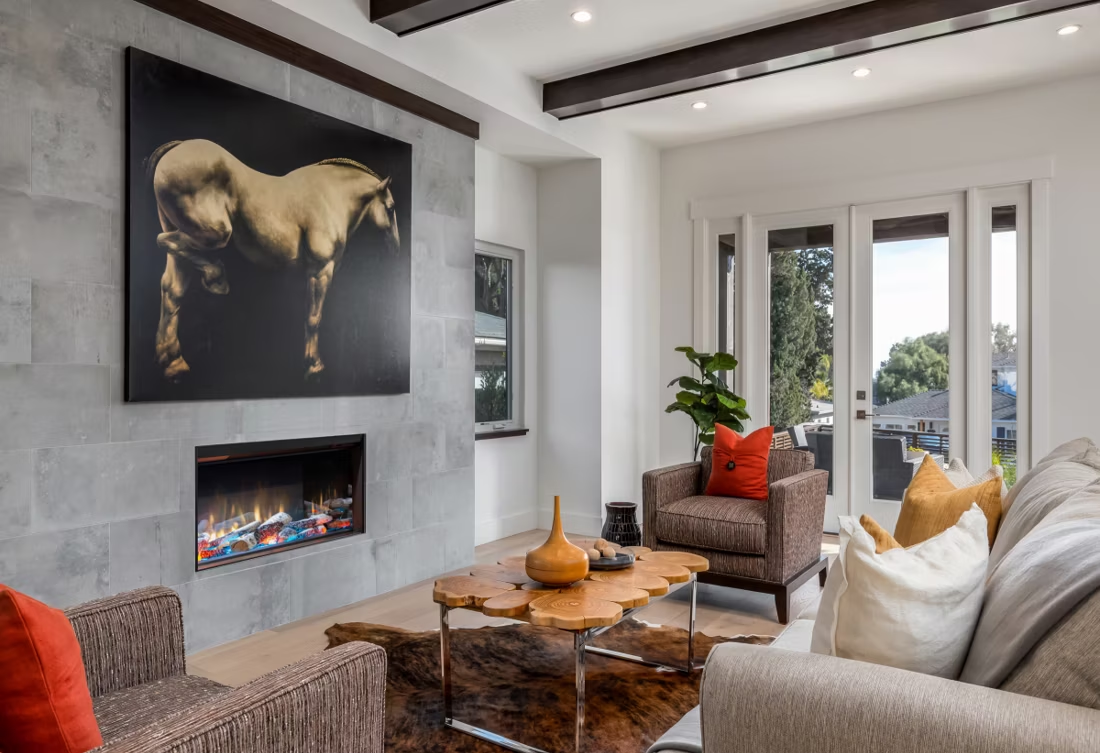
That's exactly where electric fireplaces earn their place. No chimney, no gas line, no combustion byproducts to vent—an electric insert or wall-mounted unit drops into a media wall or existing opening in an afternoon, which matters in a county where a large share of the housing stock is under 15 years old and was never built with a masonry fireplace at all. The one honest caveat: an electric fireplace is only as reliable as the grid behind it. Winter Storm Uri in February 2021 knocked out ERCOT-managed power across Central Texas for days, including much of Williamson County, and a plug-in fireplace does nothing when the outlet goes dark. For most winters that's a non-issue—for the rare hard freeze, homeowners who want true outage backup typically pair electric for daily ambiance with a small gas unit for the handful of nights that actually call for it.
Three steps. No salesperson until you're ready.
Tell us about your project
Your zip code, your situation, and the fuel you're leaning toward—or let the answers point you to one.
See what's actually available
The brands dealers within 100 miles genuinely carry—real options, never a catalog mirage.
Get your dealer & Project Guide
A trusted local dealer, plus the free Project Guide & Parts List that names every component of the job.
Frequently Asked Questions
How much does an electric fireplace installation cost in Williamson County?
Most electric fireplace projects in Williamson County fall into two categories: a plug-in insert or wall-mounted unit that drops into an existing opening or media wall, typically $300 to $1,500 installed, and a built-in electric fireplace with custom framing, a dedicated circuit, and finish carpentry, which usually runs $1,500 to $4,000 depending on unit size and surround complexity. Because electric units skip the chimney, gas line, and venting that wood or gas installs require, labor costs stay lower—most of the spend goes toward the unit itself and any cabinetry or stone work around it. A local dealer can give you a firm number once they see the wall and framing.
Do I need a permit to install an electric fireplace in Williamson County?
In most cases, no—a plug-in electric fireplace or insert that runs off a standard outlet doesn't trigger a building permit in Williamson County or in cities like Round Rock, Georgetown, Cedar Park, or Leander. If your installation calls for a new dedicated circuit, which is common for larger built-in units, an electrician may need to pull an electrical permit through your city's building department, but that's a quick, inexpensive process compared to the venting permits required for gas or wood appliances. Ask your local dealer whether your specific unit needs a dedicated circuit before you buy.
Will my electric fireplace work during a power outage?
No—and that's worth planning around in Williamson County, where the ERCOT grid has shown real vulnerability during hard freezes. Winter Storm Uri in February 2021 left much of Central Texas, including Williamson County, without power for days during the coldest stretch of the year. An electric fireplace, unlike a wood stove or a battery-backed gas unit, does nothing without a live outlet. For the handful of nights a year when the county actually gets cold enough to need backup heat, homeowners who want real outage resilience often look at a gas fireplace with intermittent pilot ignition or keep a propane heater on hand. For the other 360 days a year, electric handles the ambiance just fine.
What's the difference between an electric insert, a wall-mounted unit, and a built-in electric fireplace?
An electric insert slides into an existing fireplace opening—masonry or zero-clearance—and is the simplest upgrade for the smaller share of Williamson County homes that already have a fireplace box. A wall-mounted electric fireplace hangs like a flat-screen TV and needs only a nearby outlet, which is popular in the newer townhomes and condos around Round Rock and Cedar Park that were built without any fireplace at all. A built-in electric fireplace is framed into a wall or media center during a remodel or new build, often the centerpiece of a great room in developments spreading through Georgetown, Leander, and Hutto. All three run on standard household power; the difference is mostly how much custom carpentry surrounds the unit.
Electric vs. gas—which is right for my Williamson County home?
Gas fireplaces make sense in homes that already have natural gas service run for the water heater or range—they produce real, sustained heat, and several models keep working during a power outage with battery-backup ignition. Electric fireplaces cost less to install, need no venting or gas line, and can go anywhere there's an outlet, which is why they're common in newer construction and multi-family units where running gas line isn't practical or where the fireplace is purely for ambiance. Given the mild climate here—average winter lows near 38°F and just under 1,900 heating degree days a year—most Williamson County homeowners choose based on installation simplicity and where they want the visual focal point, not on which one actually heats the house better. Local dealers carry both and can walk you through the tradeoff for your room.
Can I still get a wood or pellet stove in Williamson County?
You can, but they're uncommon here for good reason. With a 2A climate zone, heating degree days under 2,000, and winter lows that rarely dip below the high 30s, Williamson County doesn't have the sustained cold that makes wood or pellet heat practical as a primary source. Local oak, pecan, and mesquite are more commonly reached for smoking barbecue than for stove fuel, and pellet brands like Forest Energy and Lignetics show up on shelves more for grilling than for home heating in this market. A small number of homeowners still install a wood-burning fireplace for the look and occasional use on the county's coldest nights, but electric and gas are the practical day-to-day choices.
What size electric fireplace do I need?
Sizing an electric fireplace is mostly about the visual scale of the room rather than heat output, since even the largest units are supplemental warmth at best. As a general guide: a 30 to 40 inch insert or wall unit suits a bedroom or secondary living space, a 50 to 60 inch unit fills a standard great room wall in the two-story homes common in newer Leander and Hutto subdivisions, and linear units 60 inches and up are typically chosen as the focal point of an open-concept media wall. Because Williamson County's mild winters mean heat output rarely matters, most homeowners size based on the wall and the TV or mantel placement above it rather than square footage.
How much maintenance does an electric fireplace need?
Very little—that's one of the appeal points for Williamson County homeowners comparing electric against gas or wood. There's no chimney to sweep, no gas line to inspect, and no ash to clean. Maintenance is generally limited to dusting the unit, checking the flame-effect LEDs (most modern units are rated for years of continuous use), and confirming the outlet or circuit is functioning properly. Some units eventually need a replacement heating element after years of heavy use, but for a fireplace used mostly for ambiance rather than daily heat, that's rarely an issue.
Where can I buy an electric fireplace in Williamson County?
Big-box stores sell electric fireplaces, but the units are often generic and the staff can't tell you whether one will fit your specific wall opening, what circuit it needs, or how it will actually look once installed. A local hearth dealer serving Round Rock, Georgetown, Cedar Park, and the surrounding county can measure your space, recommend a unit sized to the room and finish you want, and handle any electrical work a larger built-in requires. That local knowledge matters more than it seems—a unit that looks right in a showroom photo can look undersized or oversized once it's actually framed into your wall.
Do electric fireplaces actually produce heat?
Yes—most put out around 4,800–5,000 BTUs from a standard outlet, which comfortably warms a bedroom, office, or den as a comfort-zone heater. What they won't do is carry a whole house the way wood, gas, or pellet can. Think of electric as ambiance-first with honest supplemental heat: flames on with no heat in July, flames plus warmth in January.
Can I put a TV above my fireplace?
Yes—with an asterisk. Fireplaces are hot and TVs don't like heat. Either put a mantel between them to deflect rising warmth, or choose a fireplace with heat-management technology that creates a cool zone on the wall above—the wall stays around 125 degrees, barely warm, while the room still gets full heat. If you like clean lines and don't want a mantel, heat management is the answer.
Can a fireplace actually lower my heating bill?
Yes—by creating a comfort zone. A furnace heats every square foot of the house just to warm the one room you're in; a gas fireplace on low burns roughly a sixth of the gas a typical furnace does. Set the furnace around 55–60 degrees as a baseline, then heat the rooms your family actually uses. Families who heat this way commonly save $20–$60 a month.
Can I install a fireplace myself?
If you're putting a fire in your house on purpose, it's best to work with an expert. Unless you're genuinely experienced in framing, gas line, vent pipe, and the national code on clearances to combustibles, have a professional do it—and ideally the same company that sells you the fireplace, so warranty, service, and liability all live under one roof.
Stove and Fireplace Dealers in Williamson County
Listings include WhyFire partner dealers, dealers we have verified as authorized for the brands we recommend, and established local businesses that carry hearth products. Every listing shows which one it is. The ones marked Preferred run on WhyFire's software, so they can show you real pricing and book your appointment right here. No manufacturer pays for placement. How we verify dealers →
Area – Georgetown, Tx
Georgetown Energy
Parrish & Company Inc - Round Rock
Gas Logs Express & Bbq
Top Hat Chimney Sweeps
Webco Distributing Company, Inc.
Find your electric fireplace in Williamson County.
Tell us a bit about your home and we'll match you with the right electric fireplace, insert, or wall unit—plus a free Project Guide & Parts List with your recommended local dealer in Williamson County.
Find Your Fireplace →