
Instant warmth, no venting required, in Sonterra.
Sonterra's winters are short and mild, which makes electric the simplest way to add real ambiance and supplemental warmth to a room. Find the right unit and get matched with a trusted local dealer.
Every Project Starts From One of These Five Situations
Mild winters, modern convenience.
Sonterra sits in Williamson County along the I-35 growth corridor, in climate zone 2A—hot and humid, with winter lows averaging a mild 36 degrees and only about 1,949 heating degree days a year. Compare that to Duluth, Minnesota, which logs over 10,000 heating degree days a year, and it's clear why full-time wood or pellet heat never took hold here—the data on both is flagged not-applicable for a reason. What Sonterra homes actually need is a few weeks of supplemental warmth during winter cold fronts and a fireplace that looks good the other eleven months of the year.
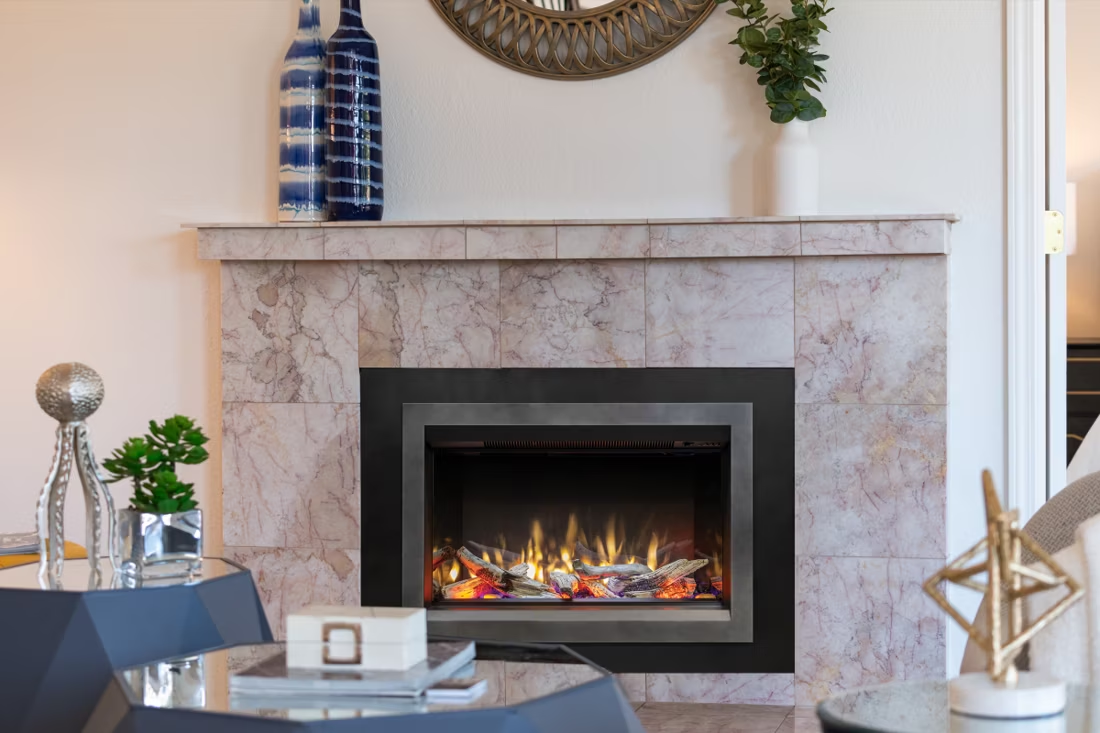
That's exactly what electric fireplaces deliver. There's no chimney to build, no gas line to run, and no combustion byproducts to vent—just a unit that plugs in or wires into a dedicated circuit and produces real, immediate heat with a realistic flame effect. Depending on your exact address, your home is served by Oncor Electric Delivery, Bluebonnet Electric Cooperative, or Bartlett Electric Cooperative, with residential rates in the area running roughly $0.1142 to $0.1609 per kWh. For the newer construction common in Sonterra's subdivisions, an electric fireplace is often the easiest hearth upgrade there is—a weekend project instead of a masonry or venting project.
Three steps. No salesperson until you're ready.
Tell us about your project
Your zip code, your situation, and the fuel you're leaning toward—or let the answers point you to one.
See what's actually available
The brands dealers within 100 miles genuinely carry—real options, never a catalog mirage.
Get your dealer & Project Guide
A trusted local dealer, plus the free Project Guide & Parts List that names every component of the job.
Frequently Asked Questions
How much does it cost to install an electric fireplace in Sonterra?
A plug-in electric fireplace—a mantel package or a freestanding stove-style unit—typically runs $300 to $1,500 installed, since it just needs a standard household outlet. A built-in electric insert or wall-mounted unit that requires a dedicated 20-amp circuit runs higher, usually $1,500 to $3,500 once an electrician's labor is factored in. If new circuit work is needed, it should be pulled as an electrical permit through the appropriate Williamson County or municipal building department depending on your address—a local installer will typically handle that step for you.
Plug-in, insert, or built-in—which type fits my home?
Plug-in units (mantel packages and freestanding stoves) are the fastest and cheapest option and work in any room with a nearby outlet—good for renters or anyone who doesn't want electrical work. Electric inserts are built to slide into an existing masonry fireplace opening, which is useful if a Sonterra home has an old wood-burning fireplace that's rarely used and the owner wants the look without the upkeep. Wall-mounted and built-in linear units are the most design-forward option, framed into a wall or custom cabinetry, but they almost always need a dedicated circuit. A local dealer can walk through which option fits your existing opening, if you have one.
How big a fireplace do I actually need?
Given Sonterra's mild heating load—only about 1,949 heating degree days a year—most homeowners are shopping for supplemental warmth and ambiance rather than a primary heat source. A standard 1,500-watt unit puts out roughly 5,000 BTU, enough to comfortably take the edge off a 300 to 400 square foot room on a cold front. Larger linear units are usually chosen for visual impact in an open-concept living area rather than for heating a bigger footprint—the electric heating element behind the flame effect tops out around the same 1,500-watt draw regardless of the unit's width.
Do I need a permit or special wiring for an electric fireplace?
A cord-and-plug unit that runs off a standard 15- or 20-amp household outlet doesn't need a permit or new wiring. A built-in or wall-mounted unit that draws its own dedicated circuit does require an electrician and, in most cases, an electrical permit through your local building jurisdiction in Williamson County. Whether your service comes from Oncor Electric Delivery, Bluebonnet Electric Cooperative, or Bartlett Electric Cooperative doesn't change the permitting—it just determines who to call if your breaker panel needs a capacity check before adding a new circuit.
What does an electric fireplace cost to run in Sonterra?
A typical 1,500-watt unit draws 1.5 kWh per hour. At Oncor-territory retail rates around $0.1142 per kWh, that's roughly 17 cents an hour; at Bluebonnet or Bartlett Electric Cooperative rates closer to $0.1609 per kWh, it's closer to 24 cents an hour. Most units also let you run the flame effect with the heater off, which draws only a few watts—useful for the many Sonterra evenings when the ambiance is the point and the heat isn't needed at all.
Will an electric fireplace actually heat my room, or is it just for looks?
It provides real, honest heat—typically around 5,000 BTU from a 1,500-watt unit—but it's sized as supplemental heat, not a whole-home furnace replacement. That's a good match for Sonterra's climate: with winter lows averaging 36 degrees and short cold snaps rather than sustained freezes, an electric fireplace can comfortably warm the room it's in during a cold front while your HVAC system handles the rest of the house.
Electric vs. gas fireplace—which makes more sense for a Sonterra home?
Gas fireplaces are common in this part of Williamson County, but most rural Sonterra addresses aren't on a natural gas main, which means a gas fireplace typically means propane—a tank, a delivery contract, and periodic refills. Electric skips all of that: no tank, no fuel deliveries, no venting through the roof or wall. For homeowners who want flame ambiance with the least ongoing hassle, electric is usually the simpler choice; for those who want higher heat output and don't mind managing a propane tank, gas remains a solid option. Either way, a local dealer can confirm what's actually available at your specific address.
How much maintenance does an electric fireplace need?
Very little. There's no chimney to sweep, no ash to clean, and no annual gas-line inspection required. Most upkeep is limited to occasionally dusting the unit, wiping the glass front, and replacing the LED flame bulbs every several years of regular use—a task most homeowners handle themselves. It's the lowest-maintenance hearth option available in Sonterra by a wide margin.
Will my electric fireplace work if the power goes out?
No—an electric fireplace is entirely dependent on grid power, so it will shut off along with everything else during an outage. For homes served by Bluebonnet or Bartlett Electric Cooperative in more rural parts of Williamson County, where outage restoration can take longer than in denser Oncor-served areas, that's worth keeping in mind if backup heat matters to you. Homeowners who want heat during outages sometimes pair an electric fireplace for daily ambiance with a small backup generator, or choose a propane unit for the primary living space instead.
Can I put a TV above my fireplace?
Yes—with an asterisk. Fireplaces are hot and TVs don't like heat. Either put a mantel between them to deflect rising warmth, or choose a fireplace with heat-management technology that creates a cool zone on the wall above—the wall stays around 125 degrees, barely warm, while the room still gets full heat. If you like clean lines and don't want a mantel, heat management is the answer.
Do electric fireplaces actually produce heat?
Yes—most put out around 4,800–5,000 BTUs from a standard outlet, which comfortably warms a bedroom, office, or den as a comfort-zone heater. What they won't do is carry a whole house the way wood, gas, or pellet can. Think of electric as ambiance-first with honest supplemental heat: flames on with no heat in July, flames plus warmth in January.
Can a fireplace actually lower my heating bill?
Yes—by creating a comfort zone. A furnace heats every square foot of the house just to warm the one room you're in; a gas fireplace on low burns roughly a sixth of the gas a typical furnace does. Set the furnace around 55–60 degrees as a baseline, then heat the rooms your family actually uses. Families who heat this way commonly save $20–$60 a month.
How much should I budget for a fireplace?
For an average home—covering the fireplace, the vent pipe, and basic installation—a budget between $3,900 and $5,500 gives you a lot of options across wood, gas, and pellet. By the time you add finish work, gas line, and electrical, the average complete installation lands between $5,000 and $12,000 all-in. In a remodel or new build, a good rule is to put about 2.5% of the total project cost toward the fireplace.
Nearby Dealers
Hearth shops serving Sonterra and the surrounding area. Every listing shows whether it is a WhyFire partner, a dealer we have verified as authorized for the brands we recommend, or a local business carrying hearth products. No manufacturer pays for placement. How we verify dealers →
Area – Georgetown, Tx
Georgetown Energy
Parrish & Company Inc - Round Rock
Top Hat Chimney Sweeps
C&G Products
Tri-Co Propane
Gas Logs Express & Bbq
Electric Service in Sonterra
An electric fireplace's heater draws about 1,500 watts—pennies per hour at local rates.
Oncor Electric Delivery Company LLC
Bluebonnet Electric Coop, Inc
Bartlett Electric Coop, Inc
Find your electric fireplace in Sonterra.
Tell us a bit about your home and wiring situation, and we'll match you with a trusted local dealer and send over a free Project Guide & Parts List for your Sonterra electric fireplace installation.
Find Your Fireplace →