
Real Fireplace Warmth, No Chimney Required.
Cedar Park winters rarely demand serious heat, but an electric fireplace still delivers real flame ambiance and supplemental warmth—with a simple install and no gas line or venting to plan around.
Every Project Starts From One of These Five Situations
Mild winters, maximum flexibility.
Cedar Park sits in Climate Zone 2A at just under 1,000 feet elevation in Williamson County, on the northern edge of the Austin metro. Winter lows average around 38°F, and the city has a light, short heating season overall—compare that to a genuinely cold-climate city like Bozeman, MT, which has a long, intense winter heating season, and it's clear Cedar Park homes need real heat for only a few weeks each winter, if that.
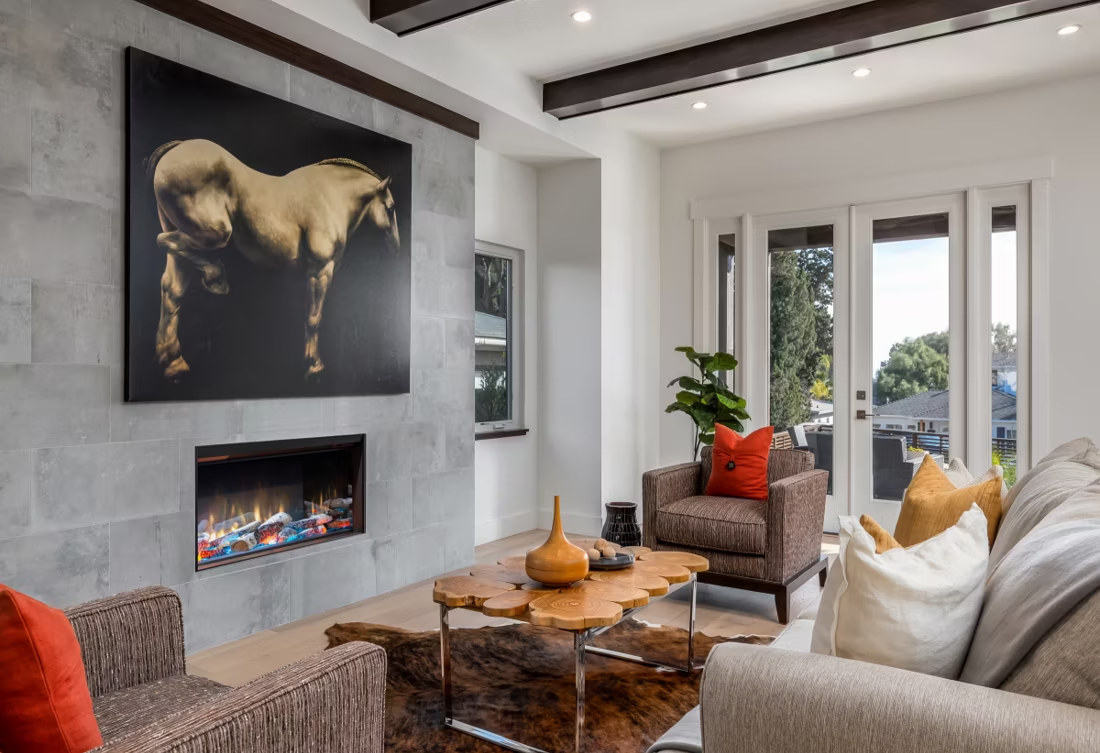
That climate reality shapes which fireplace makes sense here. In Cedar Park's newer master-planned neighborhoods—Buttercup Creek, Anderson Mill, and the growth around 1890 Ranch—electric fireplaces have become a popular choice precisely because they don't require a chimney, gas line, or exterior venting. A wall-mounted or built-in unit slots into a great room or media wall, runs on a standard or dedicated circuit, and delivers ambiance year-round with genuine supplemental heat on the rare cold snap. Depending on your street, your home is served by Oncor Electric Delivery, Bluebonnet Electric Cooperative, or Bartlett Electric Cooperative, with residential rates in the area ranging roughly from 11.4¢ to 16.1¢ per kWh—worth knowing since that range affects what it actually costs to run a unit on a daily basis.
Three steps. No salesperson until you're ready.
Tell us about your project
Your zip code, your situation, and the fuel you're leaning toward—or let the answers point you to one.
See what's actually available
The brands dealers within 100 miles genuinely carry—real options, never a catalog mirage.
Get your dealer & Project Guide
A trusted local dealer, plus the free Project Guide & Parts List that names every component of the job.
Frequently Asked Questions
How much does an electric fireplace installation cost in Cedar Park?
Plug-in electric inserts and freestanding units typically run $300 to $1,500 installed, since most just need a standard outlet and a mantel or surround. Built-in linear electric fireplaces designed into a wall or media center run higher, often $2,500 to $6,000, once framing, a dedicated 240V circuit, and finish work are included. Homes in newer Cedar Park developments with open-concept great rooms tend to lean toward the built-in linear style as a focal point, which pushes the project toward the higher end of that range. A local dealer can quote a firm number once they see your wall and electrical panel.
Do I need a permit for an electric fireplace in Cedar Park?
A simple plug-in unit on an existing outlet generally doesn't require a permit. If your installer is running a new dedicated circuit for a hardwired built-in unit, that electrical work typically does require a permit through the City of Cedar Park's Development Services Department, and it needs to be pulled by a licensed electrician. Most local dealers coordinate this as part of the installation rather than leaving it to the homeowner.
What size electric fireplace do I need for my Cedar Park home?
Because Cedar Park's mild climate rarely calls for a fireplace to carry the whole heating load, most homeowners here size for the room, not the whole house. A 40- to 50-inch linear unit comfortably heats and anchors a typical living room or great room, while smaller 30-inch units work well in bedrooms or secondary spaces. Since heat output tops out around 5,000–10,000 BTUs on most residential electric units—enough for supplemental warmth on the occasional 30-degree morning, not a substitute for your HVAC system—sizing here is really about the visual scale of the wall, not BTU math.
Which electric utility serves my part of Cedar Park, and does it matter?
Cedar Park is split between three providers—Oncor Electric Delivery covers much of the city, with Bluebonnet Electric Cooperative and Bartlett Electric Cooperative serving pockets on the outskirts. It matters mainly for your rate: residential rates across these providers in the area range from about 11.4¢ to 16.1¢ per kWh, so running the same fireplace can cost noticeably different amounts depending on which utility bills your address. Your local dealer can help you estimate operating cost once you know your provider.
How much does it cost to run an electric fireplace day to day?
A typical electric fireplace draws around 1,500 watts on high heat. At Cedar Park-area rates of roughly 11.4¢ to 16.1¢ per kWh, that works out to about 17 to 24 cents per hour of heater use. Most owners in this mild climate run the flame effect alone—which draws only a few watts—far more often than the heater function, since actual heat is only needed on the coldest mornings of the year.
Electric vs. gas fireplace—which fits my Cedar Park home better?
Gas is a standard, well-supported option here too, with natural gas and propane both common in Williamson County homes. Gas delivers higher heat output and a more traditional flame, but it requires venting or a gas line and generally costs more to install. Electric skips the venting and gas work entirely, installs almost anywhere with power, and given how few weeks a year Cedar Park actually needs supplemental heat, many homeowners find the lower install cost and flexibility outweigh the trade-off in flame realism and BTU output. If you want a fireplace primarily for a mantel focal point rather than serious heat, electric is usually the simpler path.
Why don't more Cedar Park homes use wood-burning fireplaces?
Wood heat isn't really practical here—with only a light, short heating season overall and winter lows averaging 38°F, there's rarely enough sustained cold to justify a wood stove or insert as a heat source, and it's a rare install in this market as a result. Interestingly, the oak, pecan, and mesquite that grow throughout Williamson County are prized locally for barbecue smoking, not home heating. If you're drawn to real wood fire ambiance despite the mild climate, a small number of homeowners do install wood-burning units for occasional use, but electric or gas units are the far more common and practical choice for Cedar Park's climate.
Can an electric insert go into my existing masonry fireplace?
Yes—this is one of the most common projects for older homes in the Cedar Park and greater Austin area with an existing wood-burning firebox that's rarely used. An electric insert slides into the existing opening, plugs into a nearby outlet or a newly added one, and instantly converts a cold, unused fireplace into usable supplemental heat and ambiance with no venting changes required. It's typically the fastest and least invasive fireplace upgrade a local dealer can offer.
What features matter most for an electric fireplace in Cedar Park's climate?
Since heat output matters less here than in a true cold-climate market, prioritize flame realism and finish—LED ember beds, adjustable flame speed and color, and a heat function you can run independently of the flame effect (useful since Cedar Park homeowners often want the visual year-round but only the heat occasionally). Look for units with a thermostat and multiple heat settings so you're not stuck choosing between full blast and off on a mild 55-degree evening. A local dealer can walk you through which models handle that flexibility best.
Can I put a TV above my fireplace?
Yes—with an asterisk. Fireplaces are hot and TVs don't like heat. Either put a mantel between them to deflect rising warmth, or choose a fireplace with heat-management technology that creates a cool zone on the wall above—the wall stays around 125 degrees, barely warm, while the room still gets full heat. If you like clean lines and don't want a mantel, heat management is the answer.
Do electric fireplaces actually produce heat?
Yes—most put out around 4,800–5,000 BTUs from a standard outlet, which comfortably warms a bedroom, office, or den as a comfort-zone heater. What they won't do is carry a whole house the way wood, gas, or pellet can. Think of electric as ambiance-first with honest supplemental heat: flames on with no heat in July, flames plus warmth in January.
Can a fireplace actually lower my heating bill?
Yes—by creating a comfort zone. A furnace heats every square foot of the house just to warm the one room you're in; a gas fireplace on low burns roughly a sixth of the gas a typical furnace does. Set the furnace around 55–60 degrees as a baseline, then heat the rooms your family actually uses. Families who heat this way commonly save $20–$60 a month.
What is an in-home preview and do I need one?
It's a visit where a hearth professional measures your space, confirms the model you picked actually works in your home, and walks the specs—framing, gas line, venting, finish work—before anything is ordered. Some details you just can't know until you see the house. Never make a down payment without one; it's the single most-skipped step that burns buyers.
Nearby Dealers
Hearth shops serving Cedar Park and the surrounding area.
Electric Service in Cedar Park
An electric fireplace's heater draws about 1,500 watts—pennies per hour at local rates.
Oncor Electric Delivery Company LLC
Bluebonnet Electric Coop, Inc
Bartlett Electric Coop, Inc
Find your electric fireplace in Cedar Park.
Tell us about your space and we'll match you with a trusted local dealer and send you a free Project Guide & Parts List—the exact components and recommended installer for your Cedar Park electric fireplace project.
Find Your Fireplace →