
Pellet Heat Isn't Common Here—But It's Not Impossible.
White Oak's mild winters and light overall heating load mean pellet heat isn't the local default—but for the right home, it still has a place. Get matched with a vetted local dealer who will tell you honestly whether it fits.
Every Project Starts From One of These Five Situations
White Oak's mild winters rarely call for pellet heat.
White Oak sits in the Piney Woods of Gregg County, just outside Longview, at a modest 356 feet of elevation. Winters here are mild by any national standard—the average winter low hovers around 36°F, and the city has a light overall winter heating load, just a fraction of the heavy, prolonged heating load a place like Duluth, MN sees most winters. That climate reality is the honest starting point for anyone searching for a pellet stove here: this isn't pellet country the way the Upper Midwest or interior Northeast is.
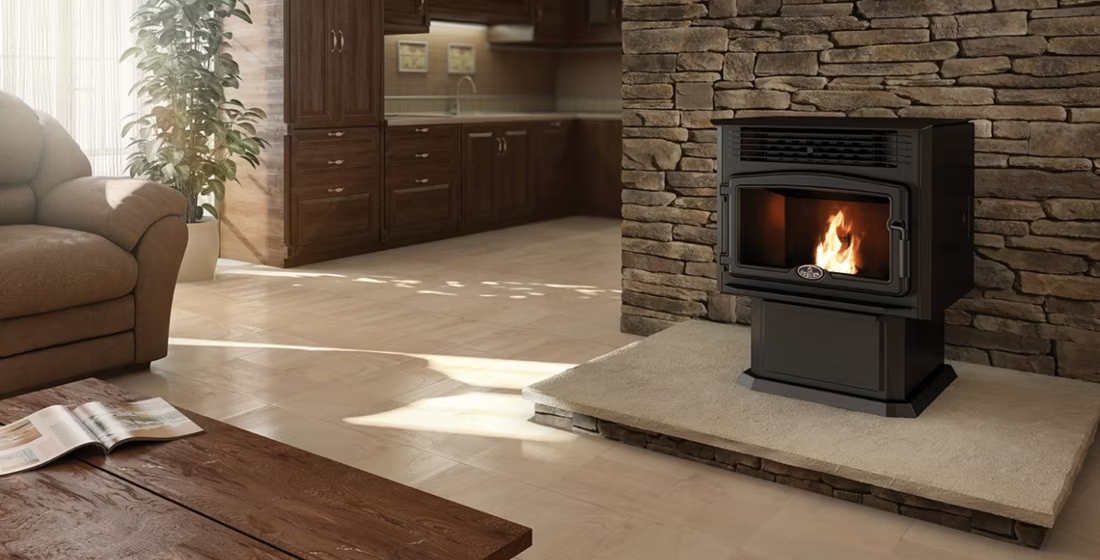
That doesn't mean pellet heat is off the table—it means the use case looks different. A small number of White Oak homeowners install a pellet stove for the look and convenience of a real fire without cordwood storage or chimney sweeping, for supplemental heat in a workshop or bonus room, or because they moved from a colder climate and already own the appliance. Fuel comes through regional suppliers like Forest Energy and Lignetics via Longview-area hearth dealers rather than the every-corner availability you'd find further north, and most owners buy a season's supply in the fall rather than restocking bag by bag. For everyday heating, most East Texas homes still lean on electric heat pumps and propane or gas fireplaces—worth knowing before you commit to pellet.
Three steps. No salesperson until you're ready.
Tell us about your project
Your zip code, your situation, and the fuel you're leaning toward—or let the answers point you to one.
See what's actually available
The brands dealers within 100 miles genuinely carry—real options, never a catalog mirage.
Get your dealer & Project Guide
A trusted local dealer, plus the free Project Guide & Parts List that names every component of the job.
Frequently Asked Questions
How much does a pellet stove installation cost in White Oak?
Pellet installs are uncommon enough in Gregg County that there's no deep local pricing history, but based on what East Texas hearth dealers out of Longview typically quote, a freestanding pellet stove with a short PL-vent run through an exterior wall runs $3,000 to $5,500 installed. That's less than a comparable wood stove install because there's no masonry chimney to build or line—pellet venting is small-diameter pipe that usually runs straight out a wall or rim joist. Jobs needing a longer vent run, a hearth pad upgrade, or a dedicated electrical circuit for the auger and blower motor land toward the higher end.
Can I even get pellet fuel delivered or sold near White Oak?
It's not effortless. White Oak doesn't have the pellet demand of colder markets, so you won't find pallets of fuel stacked at every farm store the way you would further north. Regional brands like Forest Energy and Lignetics are sold through hearth dealers and some feed and farm supply stores around Longview, but supply is seasonal and thinner than in states where pellet heat is standard. Most local owners buy a season's worth—often just one or two tons for occasional use—in the fall rather than restocking bag by bag all winter.
Why aren't pellet stoves more common in White Oak?
The math doesn't favor them here. White Oak has a light winter heating load with winter lows in the mid-30s—a fraction of what a place like Fargo, ND sees with a much heavier, longer heating season and stretches of sub-zero cold. Pellet stoves are built to run for weeks at a stretch as a serious secondary or primary heat source; in a climate where real heating need might only cover a few dozen nights a year, the appliance, venting, and fuel storage investment rarely pays back the way it does further north. Most White Oak homes lean on heat pumps and gas logs instead.
What's a more practical heating choice for White Oak than pellet?
For most homes here, a heat pump—already the default with utilities like Southwestern Electric Power Co, Rusk County Electric Cooperative, and Upshur Rural Electric Cooperative all serving the area at roughly $0.124 to $0.135 per kWh—or a propane gas fireplace covers the occasional cold snap without the fuel storage commitment a pellet stove requires. If you want a real flame and ambiance without chimney maintenance, a direct-vent gas insert is the more common local upgrade. Pellet still makes sense if you specifically want a wood-like fire with hopper convenience; it's just a smaller slice of the market here.
Do I need a permit to install a pellet stove in White Oak?
Yes, in most cases. New venting through an exterior wall and any change to your home's fuel-burning appliances typically requires a building permit through the City of White Oak, and your installer should pull it as part of the job. Because pellet installations are infrequent locally, it's worth confirming directly with the city and with your homeowner's insurance that the specific model and venting method are recognized—a UL-listed pellet appliance installed to manufacturer spec by a certified installer is what both will expect to see.
What size pellet stove makes sense for a mild climate like White Oak?
Smaller than you'd think. Since most White Oak households would use a pellet stove for supplemental heat in a single room or open living area rather than whole-home heating, a small-to-medium unit rated for 1,000 to 1,500 square feet is usually plenty, and sometimes intentionally undersized so it doesn't overheat the room on a mild 45-degree evening. A dealer sizing for East Texas conditions should account for the local design temperature rather than a northern-climate chart—oversizing is the more common mistake here.
How much maintenance does a pellet stove actually require?
Less than a wood stove, but it's not zero. Plan on emptying the ash pan every few days of use, cleaning the burn pot and glass weekly, and having the venting and exhaust fan professionally inspected once a year. Because pellet stoves see lighter, more occasional use in White Oak's mild winters, an annual service often catches components—igniters, gaskets, auger motors—that sit dormant most of the year and benefit from a checkup before each heating season starts.
Will a pellet stove work as backup heat during an East Texas ice storm?
Only partially. Pellet stoves need electricity to run the auger, igniter, and blower, so a standard unit goes dark in the kind of grid outage East Texas saw during Winter Storm Uri in 2021. Some models offer a battery backup or DC-compatible option that can ride out a short outage, and pairing one with a small generator or battery bank restores full function. If your main goal is heat that works with the power out, a vented propane fireplace with a standing pilot is the more reliable backup—pellet is better suited to everyday supplemental heat than storm resilience.
Pellet vs. gas—which fits a White Oak home better?
For most homes here, gas wins on convenience and backup reliability—propane is the standard fuel in areas without piped natural gas, and a direct-vent gas fireplace or insert lights instantly and can run through a power outage with the right ignition system. Pellet stoves offer a more authentic, visible fire and don't rely on a propane tank, but they need electricity to operate and draw on a fuel supply chain that isn't as locally abundant as it is further north. If you're drawn to pellet specifically for the look and feel of a real fire with less mess than cordwood, it remains a legitimate option—just one a local dealer will help you weigh honestly against gas before you commit.
Why is my open fireplace making my house colder?
Open fireplaces suck—literally. As the fire burns, it consumes air your furnace already paid to heat and pulls it out through the chimney, so the house is actually colder after the fire goes out than before you lit it. An insert fixes this: it seals the chimney, puts fixed glass across the front, and turns that hole in your house into a real heat source.
How often does a pellet stove need cleaning?
A clean pellet stove is a happy pellet stove. Plan on cleaning the burn pot about once a week when you're burning regularly—ash and clinkers gum up the air holes just like a pellet barbecue. Most pellet stove problems trace back to skipped cleaning that nobody explained up front. Some designs make it easy with a trapdoor burn pot: pull a lever and the gunk drops into the ash pan.
Can a fireplace actually lower my heating bill?
Yes—by creating a comfort zone. A furnace heats every square foot of the house just to warm the one room you're in; a gas fireplace on low burns roughly a sixth of the gas a typical furnace does. Set the furnace around 55–60 degrees as a baseline, then heat the rooms your family actually uses. Families who heat this way commonly save $20–$60 a month.
How much should I budget for a fireplace?
For an average home—covering the fireplace, the vent pipe, and basic installation—a budget between $3,900 and $5,500 gives you a lot of options across wood, gas, and pellet. By the time you add finish work, gas line, and electrical, the average complete installation lands between $5,000 and $12,000 all-in. In a remodel or new build, a good rule is to put about 2.5% of the total project cost toward the fireplace.
Nearby Dealers
Hearth shops serving White Oak and the surrounding area. Every listing shows whether it is a WhyFire partner, a dealer we have verified as authorized for the brands we recommend, or a local business carrying hearth products. No manufacturer pays for placement. How we verify dealers →
Tdi Air Conditioning
East Texas Brick Co.
Pellet Brands Stocked Around White Oak
Manufacturers will point you to the nearest stocking dealer.
Find your pellet stove in White Oak.
Tell us about your home and we'll give you an honest read on whether pellet heat fits—and if it does, match you with a trusted local dealer plus a free Project Guide & Parts List sized to your space.
Find Your Fireplace →