
Ambiance and Backup Warmth for Mild East Texas Winters.
White Oak rarely sees a hard freeze, but a gas fireplace still earns its place for cool evenings, ice-storm power outages, and the kind of instant, clean heat central HVAC can't match on its own. We'll match you with a trusted local dealer who knows what actually installs well here.
Every Project Starts From One of These Five Situations
A fire for comfort, not survival.
White Oak sits in climate zone 3A at just 356 feet of elevation, with an average winter low around 36 degrees and roughly 2,121 heating degree days a year—a fraction of what a place like Duluth, MN or Fargo, ND racks up in a single January. Wood and pellet heating aren't practical necessities here; oak, pecan, and mesquite are common regional species, but locally they're firewood for the smoker more than fuel for the furnace. Gas is a different story. A gas fireplace or insert gives Gregg County homeowners instant, controllable heat for the handful of genuinely cold nights each winter, plus the visual warmth of a real flame without hauling wood or managing ash.
Because White Oak is a small city (just over 6,200 residents) outside the denser natural gas mains that serve parts of nearby Longview, most gas fireplace installations here run on propane, typically from a home's existing tank or a new one set by a local propane supplier. Electric service comes through Southwestern Electric Power Co., Rusk County Electric Cooperative, or Upshur Rural Electric Cooperative depending on exactly where you sit—worth knowing if you're weighing a gas unit against an electric fireplace for a secondary room. Either way, a properly vented gas fireplace also means you've got real heat on hand during the ice storms that occasionally knock out East Texas power, including the kind of multi-day outages the region saw during Winter Storm Uri.
Three steps. No salesperson until you're ready.
Tell us about your project
Your zip code, your situation, and the fuel you're leaning toward—or let the answers point you to one.
See what's actually available
The brands dealers within 100 miles genuinely carry—real options, never a catalog mirage.
Get your dealer & Project Guide
A trusted local dealer, plus the free Project Guide & Parts List that names every component of the job.
Frequently Asked Questions
How much does a gas fireplace installation cost in White Oak?
For a home already running propane, a direct-vent gas fireplace or insert typically runs $3,500 to $8,000 installed, depending on the unit and venting path. If you need a new propane tank set and a line run to the fireplace location, expect the project to land closer to $6,000 to $9,500. Because White Oak isn't uniformly served by natural gas mains, most quotes from local dealers will start by confirming your existing fuel setup—propane tank size, regulator, and line pressure—before pricing the unit itself.
Is my home more likely to run on natural gas or propane in White Oak?
Most homes in White Oak and the surrounding unincorporated parts of Gregg County run on propane rather than piped natural gas, since the city's small footprint means natural gas mains are limited compared to denser parts of nearby Longview. If you already have a propane tank for a water heater or range, adding a gas fireplace is usually a straightforward tie-in. If you're starting from scratch, your local dealer can help you decide whether a tank lease through a regional propane supplier makes sense for the size of unit you want.
Does a gas fireplace even make sense in a climate this mild?
It's a fair question with only about 2,121 heating degree days a year and winter lows that average in the mid-30s. Here, a gas fireplace isn't doing the job a furnace does in Buffalo, NY—it's supplemental. Most White Oak homeowners install one for a handful of genuinely cold nights each winter, for the ambiance of a real flame in the living room, and as backup heat when ice storms take down the power grid. That's a different use case than a primary-heat wood stove, and it's why a smaller direct-vent unit is usually plenty rather than the large-BTU stoves recommended in colder parts of the country.
Will my gas fireplace still work if the power goes out?
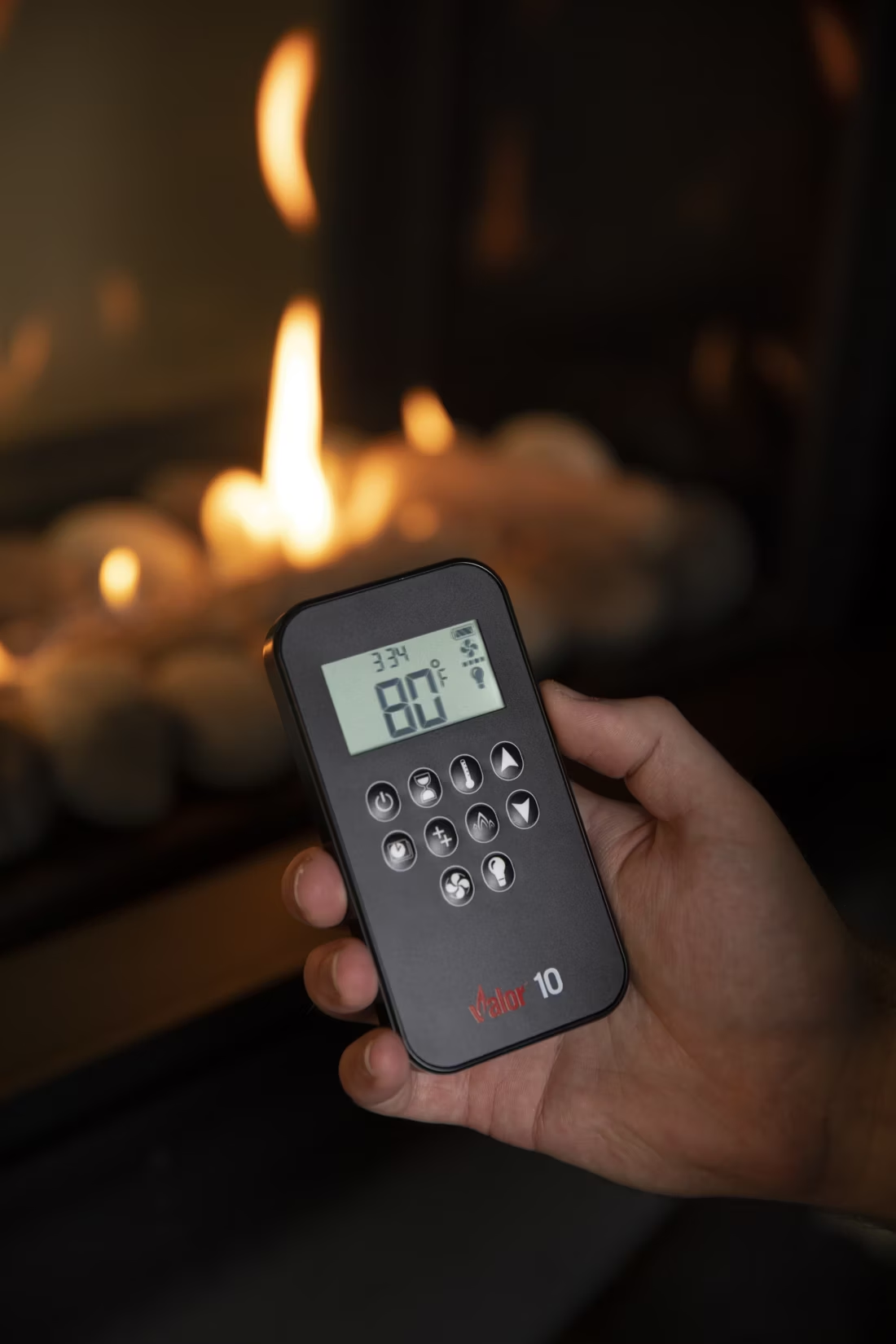
Most direct-vent gas fireplaces with intermittent pilot ignition (IPI) include a battery backup that keeps the unit operable during an outage—you'll want to check those batteries each fall before the season's first cold front. Some manufacturers, like Valor, generate their own electricity from the pilot's thermocouple and never need batteries at all. That reliability matters in Gregg County: the region has seen multi-day outages during major ice events, most notably the 2021 winter storm, and a properly equipped gas fireplace is one of the few heat sources that keeps working when the grid doesn't.
What's the difference between a gas fireplace, insert, and stove?
A gas fireplace is a built-in unit framed into a wall, typically chosen for new construction or a remodel. A gas insert is sized to slide into an existing masonry fireplace opening, sealing it up and venting through the existing chimney with a liner. A gas stove is a freestanding cabinet unit, similar in footprint to a wood stove, that can go almost anywhere with the right clearances. For White Oak homes with an older masonry fireplace that rarely gets used because it's drafty and inefficient, an insert is usually the simplest upgrade—it keeps the look of the fireplace while adding real, controllable heat.
Do I need a permit to install a gas fireplace in White Oak?
Yes—new gas fireplace installations inside city limits require a building permit through the City of White Oak, and any new or modified gas line needs to be run by a licensed gas-fitter or propane technician regardless of jurisdiction. If your property falls outside city limits in unincorporated Gregg County, permitting runs through the county instead. Most local dealers coordinate this as part of the installation, so you're not the one chasing down separate inspections for the gas line and the framing.
Are vent-free gas fireplaces allowed in Texas?
Yes, vent-free (unvented) gas fireplaces are legal in Texas, unlike a handful of states that restrict or ban them outright. They burn without external venting and release some combustion byproducts into the room, so they come with strict room-sizing rules and are best suited to supplemental use in a den or bonus room rather than a primary living space. Direct-vent units, which draw combustion air from outside and exhaust sealed, are still the more common recommendation for a main living room installation in White Oak—ask a local dealer to walk you through both if you're deciding between them.
How often does a gas fireplace need to be serviced?
An annual inspection is the standard recommendation, even for a fireplace that only runs occasionally through a White Oak winter. A technician checks the burner, pilot assembly, gas connections, and venting, and cleans the glass and interior. Because many local units run on propane rather than natural gas, it's also worth having the technician check your regulator and tank connection at the same visit—propane systems can develop different wear points than natural gas hookups over time.
Should I consider a wood-burning fireplace instead of gas?
For most White Oak homes, no—wood heat doesn't fit the climate the way it does farther north. With average winter lows around 36 degrees and just over 2,100 heating degree days a year, there's rarely enough sustained cold to justify the upkeep of a wood stove, even though oak, pecan, and mesquite are all plentiful locally for smoking and grilling. A small number of homeowners still install a wood-burning fireplace for aesthetic reasons or a rural property with land to manage, but gas is the far more practical choice here: instant heat, no wood storage, and battery-backup models that still work when an ice storm takes the power out.
Why is a fireplace insert so efficient?
An insert does two things: it seals the chimney completely, so you stop losing air you already paid to heat, and it radiates warmth into the room through the firebox and glass. Most add a heat-exchange fan that pulls cool room air underneath, wraps it around the hot firebox, and pushes it back out warm. Your home is more efficient before you've even lit the first fire.
Does a gas fireplace work when the power is out?
Yes—modern gas fireplaces have a battery backup for the ignition system that lasts for weeks, so no power equals no problem. Your furnace can't say that: no electricity, no blower, no heat. It's one of the most common reasons families add a fireplace, and worth confirming on any model you're considering.
What is an in-home preview and do I need one?
It's a visit where a hearth professional measures your space, confirms the model you picked actually works in your home, and walks the specs—framing, gas line, venting, finish work—before anything is ordered. Some details you just can't know until you see the house. Never make a down payment without one; it's the single most-skipped step that burns buyers.
Can a fireplace actually lower my heating bill?
Yes—by creating a comfort zone. A furnace heats every square foot of the house just to warm the one room you're in; a gas fireplace on low burns roughly a sixth of the gas a typical furnace does. Set the furnace around 55–60 degrees as a baseline, then heat the rooms your family actually uses. Families who heat this way commonly save $20–$60 a month.
Nearby Dealers
Hearth shops serving White Oak and the surrounding area. Every listing shows whether it is a WhyFire partner, a dealer we have verified as authorized for the brands we recommend, or a local business carrying hearth products. No manufacturer pays for placement. How we verify dealers →
Tdi Air Conditioning
East Texas Brick Co.
Find your gas fireplace in White Oak.
Tell us a bit about your home and propane or gas setup, and we'll put together a free Project Guide & Parts List—the right unit, the exact parts including venting, and a trusted local dealer near White Oak to install it.text
Find Your Fireplace →