
Keep Your Family Warm and Safe—No Matter What
With only a light, short winter heating season and winter lows averaging 47°F, Webb County rarely needs a wood-burning fireplace for warmth. If you still want one—for ambiance, tradition, or a rural property near Laredo—we'll connect you with a local dealer who can tell you straight whether it makes sense.
Every Project Starts From One of These Five Situations
A mild climate that mostly doesn't need it.
Webb County sits in climate zone 2B along the Rio Grande, where winter lows average 47°F and the county sees only a light, short winter heating season—a fraction of what a place like Duluth, MN or Bismarck, ND racks up in a single hard month. Laredo and the surrounding county rarely see hard freezes, and when temperatures do dip, they usually rebound within a day or two. That makes wood as a primary or even meaningful supplemental heat source largely unnecessary here, which is why wood stoves and wood-burning fireplaces are uncommon compared to gas and electric options across the county.
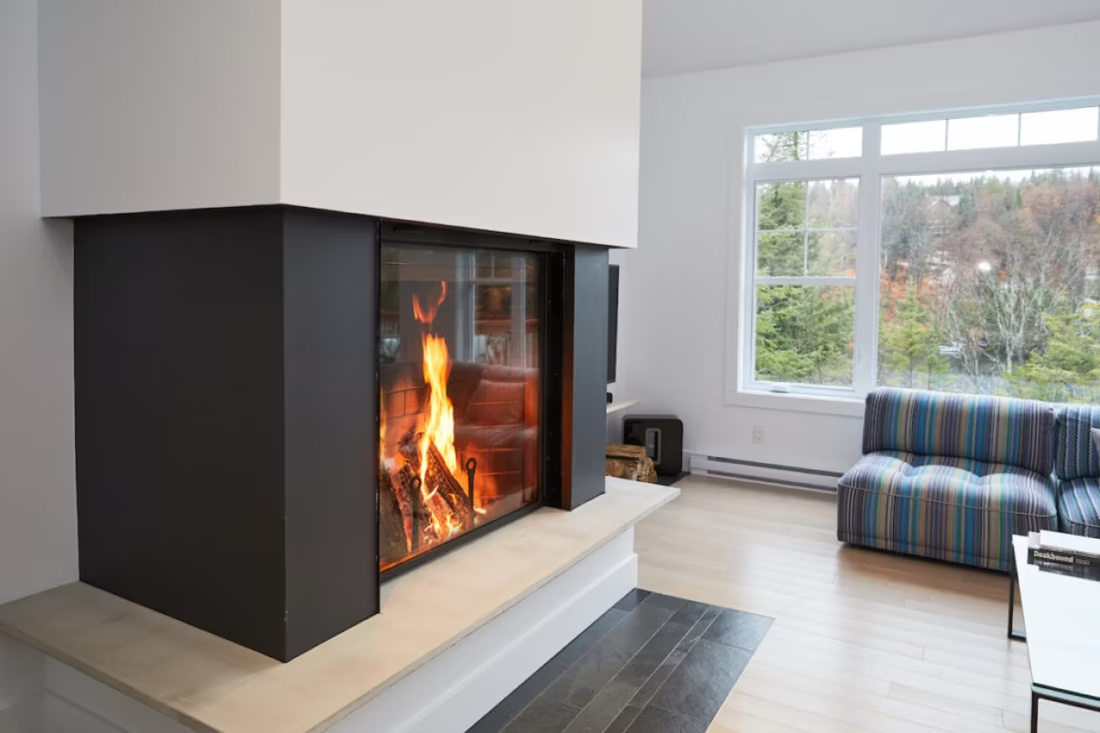
That said, a wood-burning fireplace still shows up in some Webb County homes—usually for the look and feel of a real fire on the handful of genuinely cold nights, or on larger rural properties outside Laredo where a family already has access to local oak, pecan, or mesquite. If that's your situation, the calculus is different than in a cold-climate market: sizing, venting, and clearance still matter, and a local dealer can help you decide whether a wood-burning unit, or a gas alternative that mimics the look with none of the upkeep, is the better fit for how you'll actually use it.
Three steps. No salesperson until you're ready.
Tell us about your project
Your zip code, your situation, and the fuel you're leaning toward—or let the answers point you to one.
See what's actually available
The brands dealers within 100 miles genuinely carry—real options, never a catalog mirage.
Get your dealer & Project Guide
A trusted local dealer, plus the free Project Guide & Parts List that names every component of the job.
Frequently Asked Questions
Are wood-burning fireplaces even common in Webb County?
Not really, and it's worth saying plainly. With winter lows averaging 47°F and only a light, short winter heating season, Webb County doesn't have the sustained cold that makes wood heat practical the way it is in northern states. Most homeowners here who want a fireplace lean toward gas, which lights instantly and doesn't ask you to store or season cordwood in a climate where storage humidity and pests can be an issue. Wood-burning units still get installed occasionally—mostly for ambiance, tradition, or on rural acreage outside Laredo where local oak, pecan, or mesquite is already on hand.
If I still want a wood-burning fireplace, what should I expect to pay in Webb County?
Because wood-burning installs are a niche request here rather than a routine one, pricing tends to track national averages for the equipment and labor rather than a well-established local market rate. Expect the cost to hinge on whether you're installing a factory-built zero-clearance fireplace, a freestanding stove, or retrofitting an existing masonry chimney—and whether that chimney already exists or needs to be built from scratch, which adds significantly to the total. A local dealer serving Laredo and the county can walk you through actual quotes once they see your home.
What wood species are available locally if I do install a wood stove or fireplace?
Oak, pecan, and mesquite are the woods most commonly available around Webb County, and all three burn well once properly seasoned. Mesquite in particular burns hot and dense, which some homeowners like for its aromatic smoke, though it can be harder to source in the volume you'd want for regular heating use. Given how few cold nights the county sees each year, most owners of wood-burning units here use modest amounts of wood compared to a primary-heat household in a colder climate.
Would a gas fireplace make more sense than wood for my Webb County home?
For most homes in and around Laredo, yes. Gas fireplace relevance in Webb County is standard, meaning natural gas or propane service and dealer support for gas units are well established, unlike the more niche wood-burning market. A gas fireplace or insert gives you instant flame at the flip of a switch with no wood storage, no ash cleanup, and no seasoning wait—which matters more in a place where the fireplace gets used on occasional cool evenings rather than through a long winter. A local dealer can show you gas units designed to closely mimic the look of a real wood fire.
Is there any air quality restriction on wood burning in Webb County?
No—Webb County has no listed air quality concerns tied to wood smoke, unlike non-attainment areas in parts of the western U.S. where winter inversions trap smoke and trigger burn curtailments. That said, any wood-burning installation still needs to meet current building code and clearance requirements, and it's worth checking with your municipal or county building department before installation regardless of air quality status.
Can I convert an existing wood fireplace to gas instead?
Yes, and it's a common move in warm-climate markets like Webb County where the ambiance of a fireplace matters more than heat output. A gas insert can typically be installed into an existing masonry firebox using the current chimney as a venting path with a liner, giving you instant-on flame without the wood handling. If you inherited a wood-burning fireplace with a Laredo-area home and rarely use it as-is, this is worth asking a local dealer about before assuming you need to replace the whole unit.
Are pellet stoves a better option than wood in Webb County?
Not particularly—pellet fuel relevance here is also not-applicable, for the same climate reasons that make wood-burning units uncommon. Regional pellet brands like Forest Energy and Lignetics do reach Texas markets, but with only a light, short winter heating season, there's little practical heating need for either wood logs or pellet fuel in Webb County. If you want the visual of a real flame without meaningful heat demand, gas remains the more established local option.
Do I need a permit to install a wood-burning fireplace or stove in Webb County?
Most likely yes, whether you're inside Laredo city limits or in unincorporated Webb County—new hearth appliance installations, including wood-burning units, typically require a building permit and inspection for framing, clearances, and venting. Because wood-burning installs are uncommon here, it's worth confirming directly with your local building department that the reviewer has handled a similar project, and choosing an installer who routinely pulls these permits rather than treating it as a first-time request.
What about electric fireplaces as an alternative to wood in Webb County?
Electric fireplace relevance in Webb County is standard, and it's worth considering seriously. Electric units plug into a standard outlet in many cases, require no venting or chimney, and deliver a realistic flame effect with supplemental heat for the occasional cool night—which is close to how most Webb County homeowners would actually use a fireplace anyway. For a county with mild winters and no real heating load to speak of, electric is often the lowest-hassle way to get the look of a fire without the upkeep of wood or the gas line work of a gas unit.
Why is a fireplace insert so efficient?
An insert does two things: it seals the chimney completely, so you stop losing air you already paid to heat, and it radiates warmth into the room through the firebox and glass. Most add a heat-exchange fan that pulls cool room air underneath, wraps it around the hot firebox, and pushes it back out warm. Your home is more efficient before you've even lit the first fire.
What's the difference between an insert and a zero-clearance fireplace?
An insert is a fireplace that slides into a pre-existing wood-burning fireplace—if you don't have one, there's nothing to insert it into. A zero-clearance fireplace is built into a framed wall, which makes it the answer for remodels and new construction. Simple test: existing masonry fireplace means insert; blank or framed wall means zero-clearance.
Does a fireplace add value to my home?
On average, a fireplace adds back to the home about the same amount you spent installing it. Add the monthly savings from heating the rooms you actually use instead of the whole house—often hundreds of dollars a year—and the value case is strong before you even count what a fire does for how your family uses the room.
How much should I budget for a fireplace?
For an average home—covering the fireplace, the vent pipe, and basic installation—a budget between $3,900 and $5,500 gives you a lot of options across wood, gas, and pellet. By the time you add finish work, gas line, and electrical, the average complete installation lands between $5,000 and $12,000 all-in. In a remodel or new build, a good rule is to put about 2.5% of the total project cost toward the fireplace.
Get a straight answer on wood heat in Webb County.
Tell us about your home and how you'd actually use a fireplace, and we'll match you with a local Laredo-area dealer and send over a free Project Guide & Parts List—including whether wood, gas, or electric genuinely fits your situation.
Find Your Fireplace →