
Keep Your Family Warm and Safe—No Matter What
Laredo rarely needs wood heat to survive winter—but plenty of homeowners still want a real oak or mesquite fire for cool evenings, entertaining, and the occasional hard freeze. We'll match you with a local dealer who knows how to build it right.
Every Project Starts From One of These Five Situations
Laredo doesn't need wood heat—some homes still want a wood fire.
Laredo sits at 499 feet in climate zone 2B with an average winter low of 47°F and just a light winter heating load a year—a fraction of what a place like International Falls, Minnesota logs in a single hard month. Most winters here don't produce a night where a home genuinely needs supplemental heat. The exception is real but rare: events like the February 2021 winter storm brought snow and hard freezes to Webb County, and homes without any backup heat source felt it. For the other 350-plus days a year, a wood-burning fireplace in Laredo is functioning as a design feature and entertaining centerpiece, not a heating system.
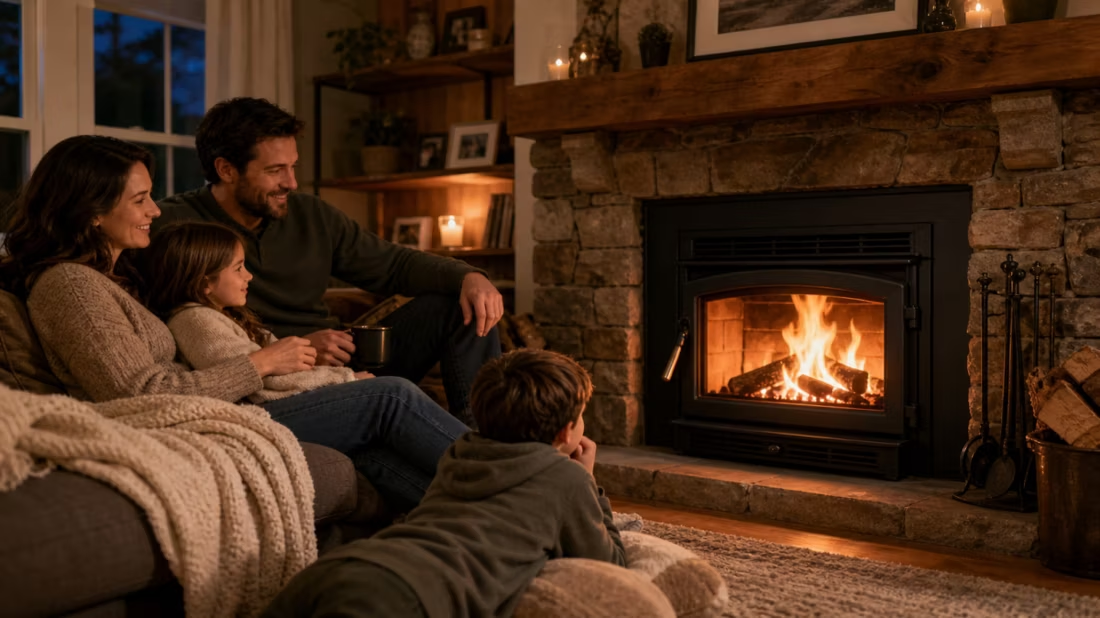
That said, demand exists—particularly on ranch properties in unincorporated Webb County, in custom new builds where a masonry hearth is part of the architecture, and among homeowners who grew up with oak, pecan, and mesquite fires and want that experience in their own living room. Mesquite in particular runs deep in South Texas culture, more associated here with asados and backyard cooking than home heating, and that crossover shows up in how Laredo homeowners think about wood fire—as much about atmosphere and gathering as warmth. Because wood isn't the default fuel here, fewer local dealers stock and install wood-burning units compared to gas or electric—which is exactly where matching with the right local pro, rather than a general contractor, makes the difference between code-compliant work and a fireplace that never quite draws right in our humidity.
Three steps. No salesperson until you're ready.
Tell us about your project
Your zip code, your situation, and the fuel you're leaning toward—or let the answers point you to one.
See what's actually available
The brands dealers within 100 miles genuinely carry—real options, never a catalog mirage.
Get your dealer & Project Guide
A trusted local dealer, plus the free Project Guide & Parts List that names every component of the job.
Frequently Asked Questions
Does a wood-burning fireplace actually make sense in Laredo's climate?
For heating purposes alone, not really—with only a light winter heating load and an average winter low of 47°F, Laredo homes almost never rely on supplemental heat the way a home in Fargo or Bozeman does. What a wood fireplace does deliver here is ambiance on the genuinely cool nights from December through February, and real utility during rare arctic outbreaks like the February 2021 freeze. If your primary goal is dependable heat, a gas fireplace or electric unit—both standard, well-supported options in Laredo—will serve you better day to day. If you want the crackle and smell of an oak or mesquite fire for the handful of nights a year it gets genuinely cold, a wood fireplace is absolutely installable and popular among custom homebuilders here.
How much does a wood-burning fireplace installation cost in Laredo?
Because so few Laredo homes are built with a wood-burning chimney in mind, cost is driven almost entirely by the masonry or chase-and-cap work rather than anything climate-specific. A factory-built, zero-clearance wood fireplace installed during new construction or a remodel—using a prefabricated metal chimney and chase—typically runs in the $6,000 to $12,000 range in the Laredo area. Retrofitting a full masonry wood fireplace into an existing slab-foundation home without any existing chimney runs considerably higher, often $12,000 to $18,000 or more, since you're adding an entire chimney system from the slab up. A local dealer can give you a firm number after seeing your home's construction.
Do I need a permit to install a wood-burning fireplace in Laredo?
Yes. Inside city limits, new fireplace and chimney construction goes through the City of Laredo Building Development Services Department. If your property is in unincorporated Webb County—which covers a lot of the ranch and rural acreage where wood fireplaces are more common—Webb County's building department handles the permit instead. One thing that's genuinely different here versus wood-heating regions: Laredo has no winter inversion or non-attainment air quality concerns, so there are no seasonal burn curtailment periods to plan around. You just need the building permit for the construction itself and a code-compliant install.
What firewood is actually available in and around Laredo?
Oak, pecan, and mesquite are the three species you'll find locally, and mesquite in particular is abundant across the South Texas brush country surrounding Webb County—it's dense, burns hot, and is the same wood many Laredo households already use for grilling and asados. Pecan comes off orchards in the wider Rio Grande region, and oak is common on area ranches. One honest caveat: because wood isn't a primary heat source here, firewood delivery isn't the year-round, high-volume business you'd find in a place like Duluth or Madison. Supply tends to be seasonal and sourced from local ranches or brush-clearing operations rather than dedicated firewood yards, so it pays to line up a supplier before the few cold nights of the year actually arrive.
Should I install a wood fireplace or a gas fireplace instead?
Gas is the more practical everyday choice in Laredo—natural gas and propane infrastructure are standard here, and a gas fireplace gives you instant, push-button heat on the handful of nights a year you'd actually want it, with none of the ash or wood storage. Wood remains the choice for homeowners who want the specific experience of an oak or mesquite fire—the smell, the sound, the tradition—and are less concerned with heating efficiency. Some Laredo homes do both: a gas unit in the main living area for convenience, and a wood-burning fireplace as the centerpiece of a great room or outdoor living space used mainly for gathering.
Would an outdoor wood-burning fireplace make more sense than an indoor one?
For a lot of Laredo homeowners, yes. South Texas entertaining leans heavily outdoors—backyard asados, mesquite-fired grilling, gatherings that run late into cooler evenings—and an outdoor wood-burning fireplace or fire feature fits that lifestyle more naturally than an indoor unit that might only get lit a dozen nights a year. Outdoor installations also sidestep some of the indoor venting and clearance considerations that come with retrofitting a chimney into a home that was never built with one. If entertaining is the primary goal rather than heating a room, it's worth discussing an outdoor option with your local dealer alongside the indoor one.
Will a wood fireplace affect my homeowners insurance or resale value in Laredo?
Insurers generally want to see a code-compliant, permitted installation with proper clearances regardless of climate, so working with a certified local installer matters as much here as anywhere. On resale, a wood-burning fireplace in Laredo tends to be valued by appraisers and buyers as a design amenity—similar to how a pool or outdoor kitchen gets valued—rather than as essential heating infrastructure, since almost no Laredo home depends on wood heat to get through winter. That's not a downside so much as a framing: you're adding a feature buyers will appreciate for its look and use in entertaining, not one they'll price as a necessity.
How often would I realistically use a wood-burning fireplace in Laredo?
With an average winter low of 47°F and only a light winter heating load a year, most Laredo homeowners with a wood fireplace light it somewhere between 10 and 20 nights a season—cool December and January evenings, holiday gatherings, and the occasional cold snap. Genuine hard-freeze events, like the snow and ice Webb County saw in February 2021, are rare outliers rather than a yearly occurrence. Think of it as an occasional-use feature built for atmosphere first, with the bonus of real heat on the nights you least expect to need it.
Is it hard to find a local installer for a wood-burning fireplace in Laredo?
It's less common than finding a gas or electric fireplace installer here, since wood isn't the default fuel in a 2B climate zone like Laredo's. That's precisely where matching with the right dealer matters more than usual—you want someone who regularly builds masonry or prefab wood-burning chimneys into slab-foundation, no-basement South Texas homes and understands the venting and clearance requirements, rather than a general contractor doing it as a one-off. We match you with a trusted local dealer who actually stocks and installs wood-burning units in this market, so you're not the installer's learning project.
What's the difference between an insert and a zero-clearance fireplace?
An insert is a fireplace that slides into a pre-existing wood-burning fireplace—if you don't have one, there's nothing to insert it into. A zero-clearance fireplace is built into a framed wall, which makes it the answer for remodels and new construction. Simple test: existing masonry fireplace means insert; blank or framed wall means zero-clearance.
Why is my open fireplace making my house colder?
Open fireplaces suck—literally. As the fire burns, it consumes air your furnace already paid to heat and pulls it out through the chimney, so the house is actually colder after the fire goes out than before you lit it. An insert fixes this: it seals the chimney, puts fixed glass across the front, and turns that hole in your house into a real heat source.
How much should I budget for a fireplace?
For an average home—covering the fireplace, the vent pipe, and basic installation—a budget between $3,900 and $5,500 gives you a lot of options across wood, gas, and pellet. By the time you add finish work, gas line, and electrical, the average complete installation lands between $5,000 and $12,000 all-in. In a remodel or new build, a good rule is to put about 2.5% of the total project cost toward the fireplace.
What is an in-home preview and do I need one?
It's a visit where a hearth professional measures your space, confirms the model you picked actually works in your home, and walks the specs—framing, gas line, venting, finish work—before anything is ordered. Some details you just can't know until you see the house. Never make a down payment without one; it's the single most-skipped step that burns buyers.
Find your wood fireplace in Laredo.
Tell us about your home and how you plan to use it, and we'll match you with a local Laredo dealer experienced in wood-burning installs—plus a free Project Guide & Parts List with the exact parts, including the vent kit, for your project.
Find Your Fireplace →