
Fireplace resources for every corner of Webb County.
From Laredo out to Rio Bravo and El Cenizo, get matched with a local dealer who knows which fireplace actually makes sense in a border climate this mild—and skip the units that don't.
Every Project Starts From One of These Five Situations
819 heating degree days and a border climate that barely asks for heat at all.
Webb County sits along the Rio Grande in Climate Zone 2B, where average winter lows hover around 47°F and the county logs just 819 heating degree days a year—a fraction of what a place like Fargo, North Dakota racks up before Thanksgiving. Laredo, the county seat, accounts for the bulk of the county's 265,840 residents, and most homes here are built and cooled for summer heat, not winter heat. Oak, pecan, and mesquite are the wood species that grow across the county, but you're far more likely to see them stacked next to a backyard smoker than burning in a living-room fireplace—this is a region built around barbecue wood, not heating wood.
That climate reality shapes which fireplaces actually get installed here. Gas fireplaces and inserts are the standard choice for homeowners who want real, reliable heat on the county's occasional 30-degree mornings, and interest in vented gas units climbed noticeably after Winter Storm Uri knocked out electric heat across South Texas in 2021. Electric fireplaces are just as common, prized less for heat output and more for the clean look and zero-clearance install—no chimney, no gas line, no venting to plan around. Wood-burning fireplaces and pellet stoves, by contrast, are genuinely rare: a handful of older Laredo homes still have a traditional wood-burning fireplace built in, but almost nobody is installing a new one, and pellet stoves—despite regional pellet brands like Forest Energy and Lignetics being sold locally for smokers and grills—don't show up as a home-heating option because the heating season here is too short to justify one. This hub rolls up retailers, technicians, and suppliers across the whole county so you can find what actually fits your address, whether that's central Laredo or out toward Mirando City and Bruni.
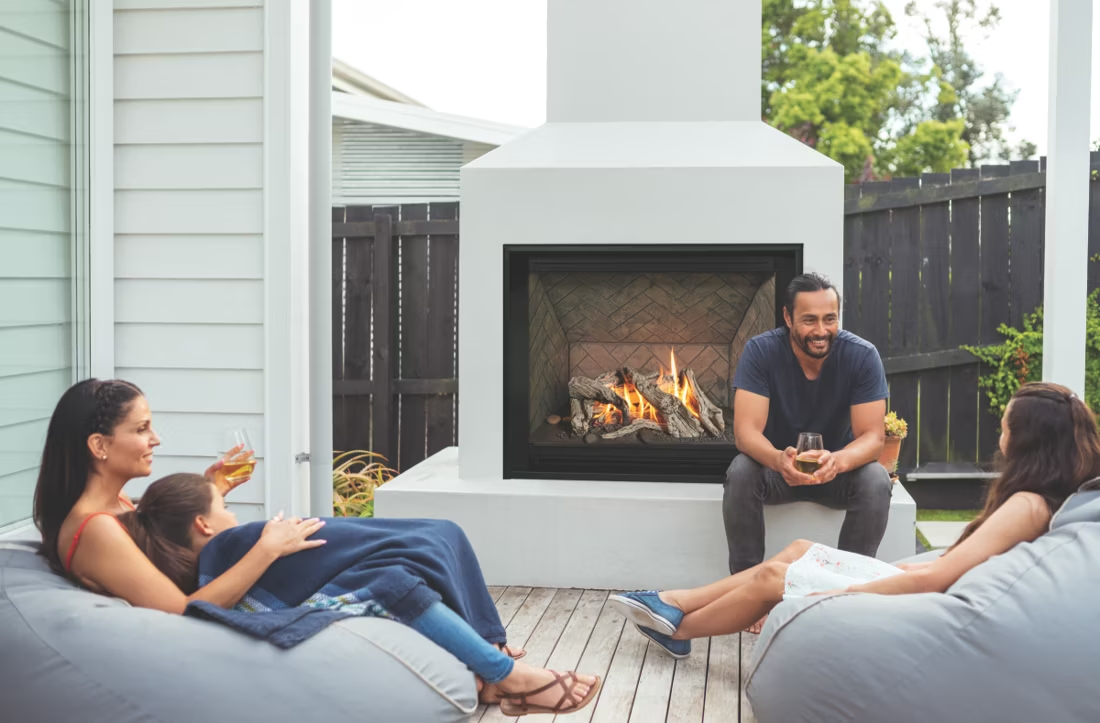
Four fuels. One honest answer for Webb County.
Three steps. No salesperson until you're ready.
Tell us about your project
Your zip code, your situation, and the fuel you're leaning toward—or let the answers point you to one.
See what's actually available
The brands dealers within 100 miles genuinely carry—real options, never a catalog mirage.
Get your dealer & Project Guide
A trusted local dealer, plus the free Project Guide & Parts List that names every component of the job.
Frequently Asked Questions
Which fireplace fuel actually makes sense in Webb County?
Given how mild winters are here—average lows around 47°F and only 819 heating degree days a year—gas and electric are the two fuels that make practical sense. A vented gas fireplace or insert gives you real, on-demand heat for the county's occasional cold snaps without depending on the electric grid, which matters after what South Texas went through during Winter Storm Uri. Electric fireplaces are the other common choice, mostly for the look and the simple, no-venting install rather than for serious heat output. Wood-burning fireplaces and pellet stoves exist in the county, but they're genuinely uncommon as a heating choice—the season just isn't long enough to justify the wood supply, ash cleanup, or hopper refills a wood or pellet setup requires.
Do wood-burning fireplaces still make sense in Laredo?
Not really as a primary heat source, but they're not unheard of either. Some older homes in central Laredo and the historic neighborhoods still have a traditional masonry wood-burning fireplace built in from decades ago, and a small number of homeowners keep them running for atmosphere on the rare cold night. Oak, pecan, and mesquite are the woods you'd burn if you did, but most of that wood in Webb County ends up in a backyard smoker rather than a fireplace—this is barbecue country first. New wood-burning fireplace installs are rare enough that most retailers we work with in the county don't stock them; if you want one, expect to special-order and expect a longer lead time than a gas or electric unit.
Why aren't pellet stoves more common in Webb County?
Pellet stoves need a heating season long enough to justify the hopper, the auger, and the routine bag-buying that comes with them, and Webb County's 819 heating degree days just don't get there—most winters barely require supplemental heat at all. Regional pellet brands like Forest Energy and Lignetics are sold around the county, but you'll find those bags at grill and smoker retailers far more often than at a hearth dealer, since local demand is almost entirely for cooking, not home heating. If you're set on a pellet appliance for a specific reason, a dealer can still special-order one, but it's not a stocked, standard option the way a gas or electric fireplace is here.
Do I need a permit to install a gas or electric fireplace in Webb County?
Gas fireplace installs almost always need a permit—new gas line work goes through the City of Laredo Development Services Department if you're inside city limits, or the Webb County building permits office for unincorporated areas outside the city, and the gas connection itself has to be done by a licensed gas fitter. Electric fireplace installs are usually simpler: a plug-and-play unit typically doesn't need a permit at all, but a hardwired built-in that requires a new dedicated circuit does need an electrical permit and inspection. Most hearth retailers handle this paperwork as part of the install quote, so it's rarely something homeowners have to file themselves.
What does a fireplace installation typically cost in Webb County?
Gas fireplace and insert installs typically run $3,500–$8,500 in Webb County, with the higher end reflecting new gas-line runs for homes without existing service nearby. Electric fireplaces are considerably cheaper—$200–$2,500 for the unit, plus $300–$900 in labor if you're wiring in a built-in rather than plugging in a freestanding unit. If you do go with one of the rare wood-burning fireplace installs, expect costs closer to $6,000–$12,000 once masonry and proper venting are factored in, since so few local crews do that work regularly.
How did Winter Storm Uri change how people in Webb County think about fireplaces?
Uri hit South Texas hard in February 2021, and a lot of homeowners in Laredo and across Webb County spent days without electric heat while temperatures dropped well below the winter average. That's driven real interest in vented gas fireplaces with a standing pilot, since they can keep running through a grid outage without a generator. It's a meaningful consideration even in a county with only 819 heating degree days a year—the risk isn't a long cold season, it's the occasional multi-day freeze event that catches an all-electric home without backup heat.
Does a fireplace add value to my home?
On average, a fireplace adds back to the home about the same amount you spent installing it. Add the monthly savings from heating the rooms you actually use instead of the whole house—often hundreds of dollars a year—and the value case is strong before you even count what a fire does for how your family uses the room.
Can a fireplace actually lower my heating bill?
Yes—by creating a comfort zone. A furnace heats every square foot of the house just to warm the one room you're in; a gas fireplace on low burns roughly a sixth of the gas a typical furnace does. Set the furnace around 55–60 degrees as a baseline, then heat the rooms your family actually uses. Families who heat this way commonly save $20–$60 a month.
How much should I budget for a fireplace?
For an average home—covering the fireplace, the vent pipe, and basic installation—a budget between $3,900 and $5,500 gives you a lot of options across wood, gas, and pellet. By the time you add finish work, gas line, and electrical, the average complete installation lands between $5,000 and $12,000 all-in. In a remodel or new build, a good rule is to put about 2.5% of the total project cost toward the fireplace.
Wood, gas, pellet, or electric—how do I choose?
Match the fuel to your life, not the other way around. Wood: lowest fuel cost and total power-outage independence, but you're hauling and stacking. Gas: press a button, set a thermostat, no maintenance to speak of. Pellet: wood economics with automatic feeding, in exchange for weekly cleaning and a need for electricity. Electric: plugs in anywhere with honest supplemental heat. Nobody regrets the fuel that fits how they actually live.
Get matched with a local Webb County dealer.
Pick your fuel below and we'll put together a free Project Guide & Parts List—the right unit, the parts it needs, and the local dealer we recommend for your project.
Find Your Fireplace →