
Gas fireplace heat for Travis County's mild winters—and the occasional deep freeze.
From downtown Austin condos to Lakeway, Manor, and Del Valle, gas fireplaces give Travis County homeowners instant ambiance most of the year and real backup heat on the rare nights it actually matters. Find the right unit and connect with a trusted local dealer.
Every Project Starts From One of These Five Situations
Ambiance most of the year, backup heat when it matters.
Travis County sits in climate zone 2A with an average winter low of 42°F and only a light winter heating load a year—a fraction of what a place like Duluth, MN or Bismarck, ND racks up in a single cold snap. Most winters here mean a handful of nights near freezing, not months of sustained cold. But Travis County homeowners haven't forgotten February 2021, when Winter Storm Uri knocked out ERCOT-managed power across the region for days and pipes froze from West Lake Hills to Del Valle. That event changed how a lot of local buyers think about a gas fireplace—not as a luxury, but as a heat source that keeps working when the grid doesn't.
Texas Gas Service provides natural gas to most of the City of Austin and the surrounding urbanized parts of Travis County; homeowners further out in unincorporated areas—parts of Spicewood, Volente, and the western Hill Country fringe around Lakeway—more often rely on propane. Many older Austin neighborhoods (Travis Heights, Tarrytown, Zilker) were built with wood-burning masonry fireplaces that see light use given the mild climate; converting one to a gas insert or gas log set is one of the most common projects local hearth dealers handle, trading soot and ash for a fireplace that lights at the flip of a switch and, with the right ignition system, keeps working through a power outage.
Three steps. No salesperson until you're ready.
Tell us about your project
Your zip code, your situation, and the fuel you're leaning toward—or let the answers point you to one.
See what's actually available
The brands dealers within 100 miles genuinely carry—real options, never a catalog mirage.
Get your dealer & Project Guide
A trusted local dealer, plus the free Project Guide & Parts List that names every component of the job.
Frequently Asked Questions
How much does a gas fireplace installation cost in Travis County?
A typical gas fireplace installation in Travis County runs between $3,800 and $9,500, depending on the unit, whether you're converting an existing masonry fireplace or starting from scratch, and how much gas line work is involved. A gas log set or direct-vent insert dropped into an existing fireplace with a gas line already nearby sits toward the lower end. A new built-in gas fireplace in a remodel, or a propane tank installation for homes outside the Texas Gas Service footprint, pushes toward the higher end. Austin's higher labor costs relative to smaller Texas markets can also nudge quotes up slightly compared to statewide averages.
Can I convert my existing wood fireplace to gas?
Yes, and it's one of the most requested projects among Travis County dealers, particularly in older Austin neighborhoods where original masonry fireplaces built decades ago sit mostly unused. A gas insert or vented log set is installed into the existing firebox, typically running your current chimney as the vent path with a liner. Cost usually lands between $3,500 and $7,500 depending on whether the home already has a gas line nearby. Given how rarely wood heat gets real use in a climate this mild, most homeowners find the conversion pays for itself in convenience alone—no hauling oak or pecan logs, no ash, no creosote buildup to worry about.
Do I need natural gas to install a gas fireplace, or can I use propane?
Either works, and which one you use mostly comes down to where in Travis County you live. Inside Austin city limits and most of the surrounding suburbs, Texas Gas Service provides natural gas, so if your home already has a gas range or water heater, adding a fireplace is usually a straightforward tie-in. Out in unincorporated stretches of the Hill Country—parts of Spicewood, Volente, and areas west of Lakeway without gas mains—propane is the standard alternative, either from an existing tank or a new one set by a local propane supplier. Most gas fireplace models can be configured for either fuel; your installer sets the correct orifice and regulator for the one you have.
Will my gas fireplace work during a power outage?
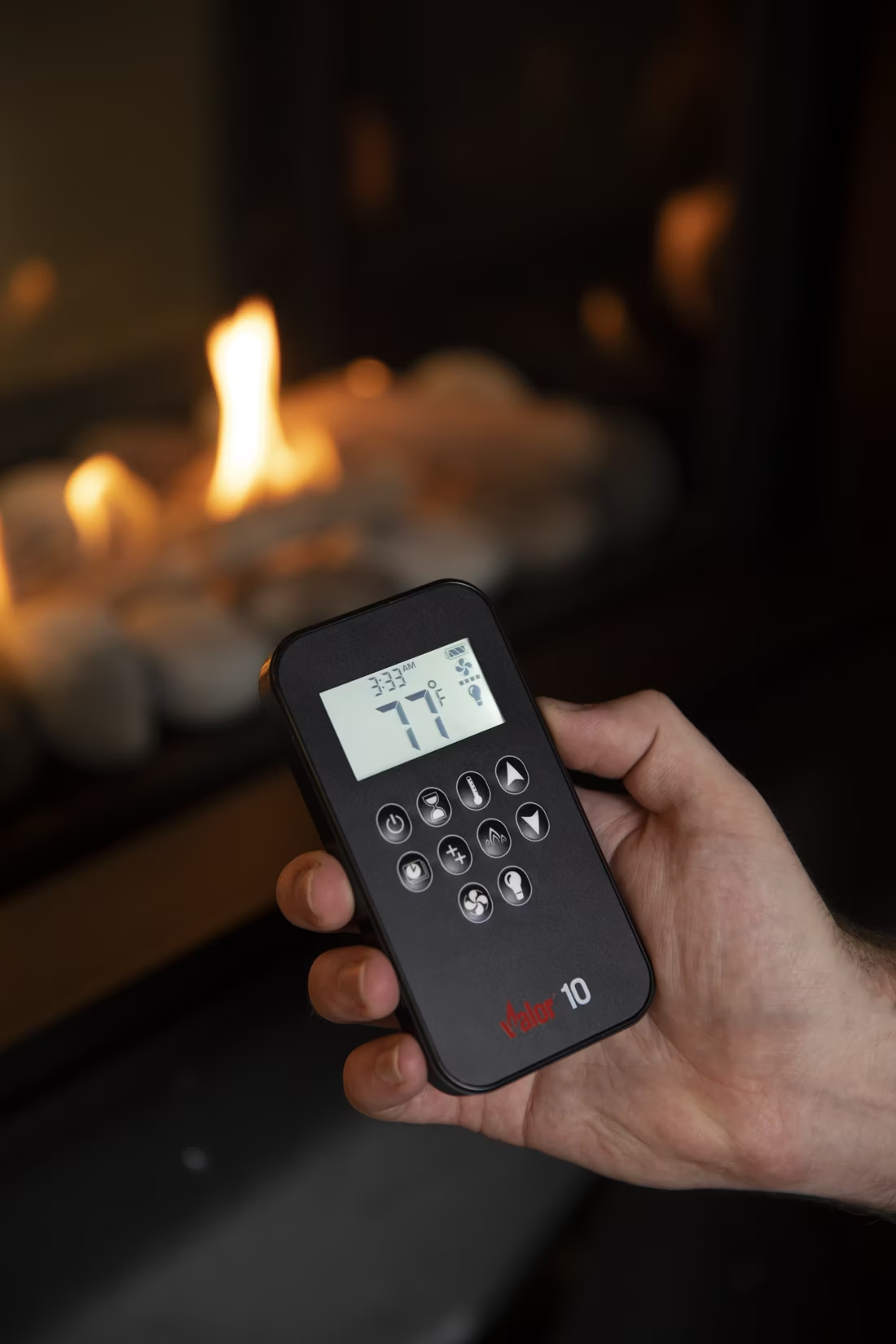
Most modern gas fireplaces will, which matters more in Travis County than the mild average winter suggests. Units with IPI (intermittent pilot ignition) run on a battery backup that kicks in automatically when the power drops, letting the fireplace light on demand just like normal. Valor takes a different approach: their units generate their own electricity through the pilot's thermocouple, so there's no battery to remember at all. After Winter Storm Uri left parts of the county without power for days in February 2021, this has become one of the first questions local buyers ask a dealer—worth raising during your consultation if reliable backup heat is a priority for your home.
What's the difference between a gas fireplace, gas insert, and gas stove?
A gas fireplace is a fully built-in unit framed into a wall, common in Travis County new construction and remodels where there's no existing masonry chimney. A gas insert is built to slide into an existing wood-burning fireplace opening—the more common upgrade in Austin's older housing stock, where masonry fireboxes built decades ago now sit mostly cold. A gas stove is a freestanding unit that sits on the floor like a wood stove but burns gas, a less common choice locally given how rarely a freestanding heat source is needed in a climate this mild. For most Travis County homeowners with an existing fireplace, an insert is the simplest and most cost-effective path.
Do I need a permit to install a gas fireplace in Travis County?
Yes. Inside Austin city limits, permits for gas fireplace work go through the City of Austin's Development Services Department and typically require both a building permit and a licensed gas-fitter for the line work. In unincorporated parts of Travis County, permitting runs through the county's Development Services Department instead. Most local dealers handle this paperwork as part of the installation, coordinating the gas line, venting, and inspection together rather than leaving you to manage separate trades. Travis County has no wood-smoke air quality restrictions to navigate, which simplifies things—but gas line and venting code compliance still applies regardless of fuel.
What's the difference between vented and vent-free gas fireplaces?
Vented gas fireplaces (direct-vent or B-vent) pull combustion air from outside and exhaust gases back outside through a sealed system. Vent-free units burn fuel directly into the room without external venting, releasing water vapor and small amounts of combustion byproducts indoors. Vent-free fireplaces are legal in Texas but come with strict room-sizing requirements and oxygen depletion sensors—and in Travis County's humid climate zone 2A, the added moisture from a vent-free unit can be a real drawback in tightly sealed newer homes already prone to humidity issues. Most Austin-area dealers steer homeowners toward direct-vent units for this reason, reserving vent-free for specific low-use, well-ventilated applications.
How often should my gas fireplace be serviced?
An annual inspection is recommended for any gas fireplace or insert. A technician checks the burner, pilot, gas connections, and venting, and cleans the glass and interior—a quick visit compared to wood chimney sweeping, but still important. In Travis County specifically, it's worth having the technician check the exterior vent termination for wasp or dauber nests, which are common in the region's warm months and can block venting if left unchecked. Local gas appliance service providers typically charge $150 to $250 for a standard annual visit.
Gas vs. wood—which is right for my home?
In Travis County, this isn't a close call for most homes. Wood heat has deep roots here culturally—oak, pecan, and mesquite are prized for smoking brisket more than for heating a house—but with only a light winter heating load a year and winter lows averaging 42°F, there's rarely enough sustained cold to justify a wood-burning appliance as a heat source. A small number of rural Travis County homeowners still keep a wood stove for ambiance or as backup on the coldest nights, but it's the exception rather than the rule. Gas fireplaces make more practical sense locally: instant on-off operation, no ash or wood storage, and with the right ignition system, the ability to keep running through an ERCOT-related outage like the one many residents remember from February 2021.
Is my gas fireplace wasting gas?
If it was installed more than 15 years ago, probably. Older gas fireplaces keep a standing pilot light burning all the time, and that little flame can cost a couple hundred dollars a year. Newer models use pilot-on-demand ignition—the pilot lights only when you use the fireplace and goes out when you turn it off.
Why is a fireplace insert so efficient?
An insert does two things: it seals the chimney completely, so you stop losing air you already paid to heat, and it radiates warmth into the room through the firebox and glass. Most add a heat-exchange fan that pulls cool room air underneath, wraps it around the hot firebox, and pushes it back out warm. Your home is more efficient before you've even lit the first fire.
Does a fireplace add value to my home?
On average, a fireplace adds back to the home about the same amount you spent installing it. Add the monthly savings from heating the rooms you actually use instead of the whole house—often hundreds of dollars a year—and the value case is strong before you even count what a fire does for how your family uses the room.
What is an in-home preview and do I need one?
It's a visit where a hearth professional measures your space, confirms the model you picked actually works in your home, and walks the specs—framing, gas line, venting, finish work—before anything is ordered. Some details you just can't know until you see the house. Never make a down payment without one; it's the single most-skipped step that burns buyers.
Stove and Fireplace Dealers in Travis County
Listings include WhyFire partner dealers, dealers we have verified as authorized for the brands we recommend, and established local businesses that carry hearth products. Every listing shows which one it is. The ones marked Preferred run on WhyFire's software, so they can show you real pricing and book your appointment right here. No manufacturer pays for placement. How we verify dealers →
Backyard & Patio Store - Austin
Jules Design Bar
EarthCore Industries
Webco Distributing Company, Inc.
Tri-Supply - Austin
Crafted Flames
Gas Logs Express & Bbq
Parrish & Company Inc - Round Rock
Georgetown Energy
Quality Fire
Area – Georgetown, Tx
Find your gas fireplace in Travis County.
Tell us a bit about your home and we'll match you with the right gas fireplace, insert, or log set—plus a free Project Guide & Parts List with the exact vent kit and parts your local dealer will need to get it installed right.
Find Your Fireplace →